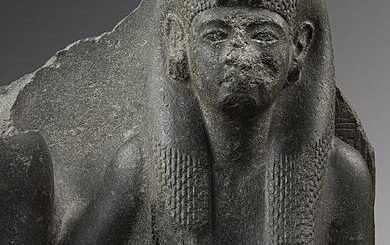
Pharaoh Horemheb
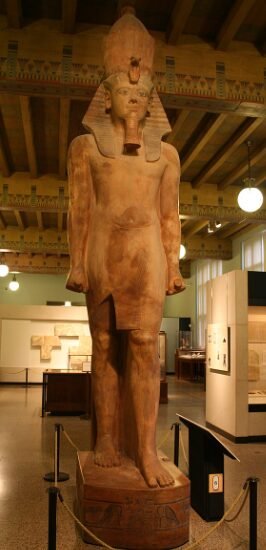
Pharaoh Horemheb’s reign symbolizes resilience, as Egypt emerged from turmoil stronger and more centralized, setting the stage for its New Kingdom zenith under rulers like Ramesses II. Image: Colossal Horemheb statue, excavated in the 1930s, displayed at the Institute for Ancient Cultures.
Horemheb, whose name means “Horus is in Jubilation,” was the final pharaoh of Egypt’s 18th Dynasty, ruling from 1319 BCE to 1292 BCE. Unlike many of his predecessors, he was of common birth, rising to power through his military and administrative expertise. He hailed from Hnes, near the Faiyum, but little is known about his early family life. His ascent to kingship was marked by his remarkable leadership during a time of political instability following the Amarna Period.
READ MORE: Most Famous Egyptian Pharaohs and their Accomplishments
Family Background
Horemheb’s family origins remain obscure, but he married Mutnedjmet, who is often believed to have been the sister of Queen Nefertiti. They had no surviving children, although evidence from Mutnedjmet’s tomb suggests she gave birth multiple times. She likely died in childbirth alongside her last infant. Horemheb’s lack of heirs led him to appoint his vizier, Paramesse, as his successor, establishing the 19th Dynasty.
Early Career
Horemheb began his career under Pharaoh Tutankhamun as commander-in-chief of the army and royal advisor. His tomb at Saqqara highlights his prominent roles, including leading diplomatic missions and securing Egypt’s borders. Tutankhamun recognized his skills, naming him hereditary prince and deputy of the king. Despite this, Horemheb did not immediately succeed Tutankhamun, as Vizier Ay took the throne. Ay’s short reign saw him attempt to bypass Horemheb’s claim by nominating Nakhtmin as his successor.
Ascension to the Throne
Horemheb rose to power after Ay’s death, likely leveraging his military influence. His accession marked the restoration of stability to Egypt after the Amarna Period’s religious and political upheavals. He was determined to reestablish traditional values and strengthen the central authority.
Religious Reforms
One of Horemheb’s first actions was to restore the prominence of Amun’s priesthood, which had been diminished during Akhenaten’s reign. While reinstating traditional religious practices, he limited the priests’ power to prevent them from overshadowing the monarchy. His reforms emphasized a balance between royal authority and religious institutions, crucial for maintaining order.
Administrative Reforms
Horemheb implemented sweeping changes to Egypt’s administration. His “Great Edict of Horemheb,” inscribed on a stela at Karnak, outlined measures to curb corruption and ensure fairness in governance. He divided judicial power between two viziers—one for Upper Egypt and one for Lower Egypt—to decentralize decision-making and reduce abuse of authority.
Actions Against the Amarna Period
Horemheb sought to erase the divisive legacy of the Amarna Period. He dismantled monuments associated with Akhenaten and reused their materials for his own building projects. This symbolic act marked a return to traditional Egyptian values and an effort to unify the nation under the restored cult of Amun.
Architectural Legacy
Horemheb was a prolific builder who left an enduring mark on Egypt’s architectural landscape. At Karnak, he constructed the Second, Ninth, and Tenth Pylons, using talatat blocks from dismantled Amarna-era structures. These pylons showcased Egypt’s recovery and Horemheb’s dedication to restoring Maat, the principle of cosmic order.
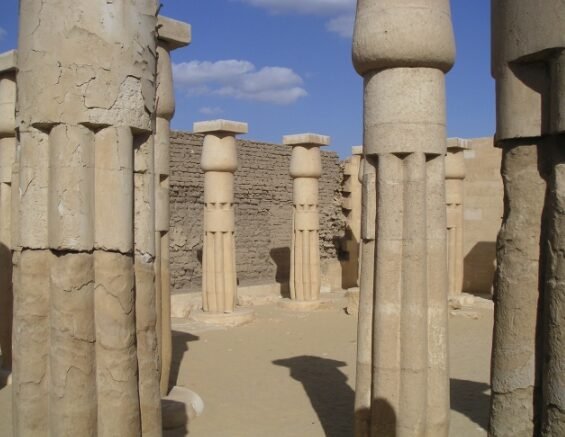
The forecourt of Pharaoh Horemheb’s Memphite tomb at Saqqara.
Tombs and Burial
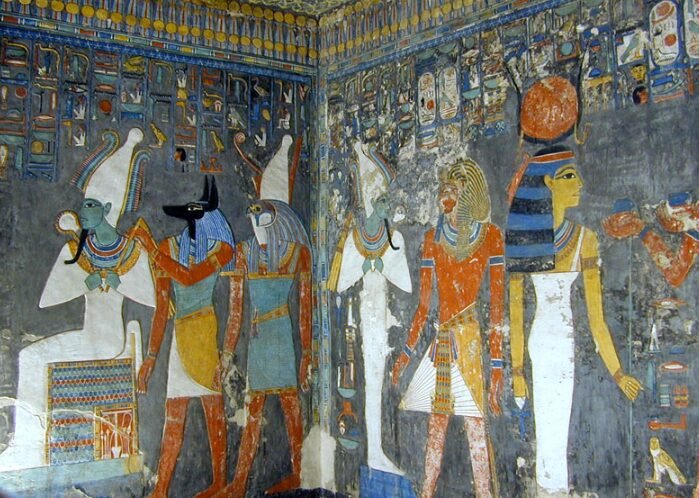
Horemheb’s tomb at Saqqara, built during his time as a nobleman, reflects his rise to prominence. After becoming pharaoh, he commissioned a new tomb in the Valley of the Kings (KV 57). Although unfinished at his death, this tomb introduced innovative decorations, including scenes from the Book of Gates. These depictions emphasized his role as a restorer of order and a protector of the afterlife.
Political Strategy and Succession
Without a direct heir, Horemheb appointed his trusted vizier, Paramesse, as his successor. Paramesse ascended the throne as Ramesses I, founding the 19th Dynasty. This decision ensured continuity and stability, solidifying Horemheb’s legacy as a ruler who prioritized Egypt’s welfare over personal lineage.
Historical Significance
Horemheb is celebrated for stabilizing Egypt after the chaos of the Amarna Period. His reign marked the end of the 18th Dynasty and laid the foundation for the powerful 19th Dynasty. By reestablishing traditional practices and implementing reforms, Horemheb reaffirmed Egypt’s cultural identity and restored order to the kingdom. His leadership during this transitional period ensured that Egypt emerged stronger and more unified, setting the stage for its New Kingdom zenith.

Horemheb’s rise from commoner to king and his transformative reforms exemplify his determination and vision. Image: The gods Osiris, Anubis, and Horus. Wall painting in the tomb of Horemheb (KV57)
Frequently Asked Questions

Horemheb was the last pharaoh of Egypt’s 18th Dynasty, reigning from 1319 BCE to 1292 BCE. He rose from common birth to kingship, demonstrating exceptional leadership skills. Image: Detail of a statue of Horemheb, at the Kunsthistorisches Museum, Vienna
What does Horemheb’s name mean?
Horemheb means “Horus is in Jubilation,” reflecting his connection to the god Horus.
Where was Horemheb from?
Horemheb hailed from Hnes, near the entrance to the Faiyum, in Egypt.
What roles did Horemheb serve before becoming pharaoh?
He was the commander-in-chief of the army, royal spokesperson, and a key advisor under Pharaoh Tutankhamun.
How did Horemheb ascend to the throne?
After the reign of Vizier Ay, Horemheb seized power with the support of the military, leveraging his prominent position as commander-in-chief.
KV 57: the Tomb of New Kingdom Pharaoh Horemheb
What were Horemheb’s major reforms as pharaoh?
He restored the authority of Amun’s priesthood, curbed corruption through the “Great Edict of Horemheb,” and restructured Egypt’s judicial and administrative systems.
How did Horemheb address the Amarna Period’s legacy?
He dismantled monuments of Akhenaten, repurposing them for his own projects, symbolizing a return to traditional Egyptian values.
What architectural contributions did Horemheb make?
He constructed significant structures, including the Second, Ninth, and Tenth Pylons at Karnak, and introduced innovations in tomb decoration at KV 57.
Who succeeded Horemheb, and why?
His vizier, Paramesse (Ramesses I), succeeded him. Horemheb appointed Paramesse due to the absence of an heir, ensuring a smooth transition and establishing the 19th Dynasty.

Horemheb is celebrated for stabilizing Egypt after the chaotic Amarna Period, restoring traditional practices, and setting the stage for the New Kingdom’s golden age under the 19th Dynasty. Image: A wall relief of Horemheb making an offering to Amun on the 10th pylon at Karnak.