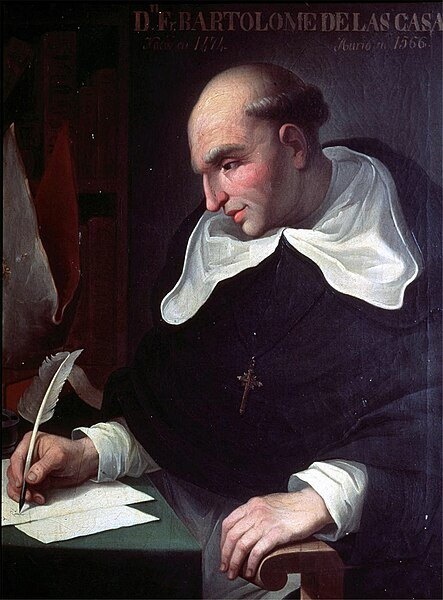
Bartolomé de las Casas
Bartolomé de las Casas (1484–1566) was a Spanish clergyman, writer, and activist best known for his role in advocating for the rights of Indigenous peoples in the Americas. Initially a participant in the colonial economy built on forced Indigenous labor, he later became a fierce opponent of the encomienda system and European abuses in the New World.
His extensive writings, particularly A Short Account of the Destruction of the Indies and Historia de Las Indias, provide firsthand accounts of the atrocities committed against Indigenous populations. He was the first officially appointed “Protector of the Indians” and played a significant role in shaping colonial policies.
In the article below WHE explores Bartolomé de las Casas’s life, beliefs, and impact on history.
Early Life and Education
Born in Seville, Spain, in 1484, Las Casas came from a merchant family. His father, Pedro de las Casas, was part of Columbus’s second expedition, and young Bartolomé witnessed the return of Columbus with Indigenous captives. This exposure to the New World from an early age likely influenced his later advocacy. He studied canon law at the University of Salamanca and was ordained as a priest in 1507.
Bartolomé de las Casas was a pioneering advocate for Indigenous rights whose writings and activism challenged the moral and ethical foundations of Spanish colonialism.
Arrival in the New World and Initial Participation in Colonization
Las Casas arrived in Hispaniola in 1502 and became a landowner and encomendero, participating in the forced labor system that characterized Spanish colonial rule. He took part in expeditions, including the conquest of Cuba in 1513, and benefited from the system he would later denounce. However, in 1514, after reflecting on a passage from the Book of Ecclesiasticus, he underwent a profound moral transformation and renounced his encomienda, choosing instead to advocate for Indigenous rights.
Treaty of Tordesillas and the division of the New World between Spain and Portugal
Advocacy Against the Encomienda System
Las Casas traveled to Spain in 1515, seeking royal intervention against the abuses of the encomienda system. He presented his concerns to King Ferdinand and later to the regents following the king’s death. His efforts led to the appointment of Hieronymite monks as commissioners to oversee reforms, though these efforts largely failed due to resistance from colonial settlers.
The Cumaná Experiment and Joining the Dominican Order
In 1520, Las Casas attempted a peaceful colonization project in Cumaná, Venezuela, which aimed to Christianize the Indigenous population without violence. However, conflicts with Spanish settlers and Indigenous resistance led to its failure. Disillusioned, he joined the Dominican Order in 1522, dedicating himself fully to religious life and the pursuit of justice.
The New Laws of 1542
Las Casas returned to Spain in the 1540s and successfully lobbied for the passage of the New Laws in 1542, which aimed to end Indigenous slavery and phase out the encomienda system. However, these laws met strong resistance from colonial authorities, leading to violent revolts and ultimately the partial revocation of the reforms.
The Valladolid Debate (1550–1551)
One of Las Casas’s most significant contributions to the discourse on Indigenous rights was his participation in the Valladolid Debate against Juan Ginés de Sepúlveda. Sepúlveda argued that Indigenous peoples were naturally inferior and needed Spanish rule to be civilized, while Las Casas maintained that they were rational beings capable of self-governance. Though the debate ended inconclusively, it solidified Las Casas’s reputation as a defender of Indigenous rights.
While Bartolomé de las Casas’s did not achieve all his goals, his work influenced later generations and remains a critical reference in discussions on colonial ethics and human rights.
Later Years and Death
Las Casas continued to advocate for Indigenous rights until his death in 1566. He spent his final years writing Historia de las Indias, a comprehensive account of Spanish colonization. Though he never saw the full realization of his vision, his work laid the foundation for future human rights advocacy.
Legacy and Impact
Las Casas’s writings influenced policies and debates regarding the ethical implications of colonial rule. His efforts contributed to the decline of the encomienda system and encouraged more humane approaches to Indigenous conversion and governance. He remains a controversial figure, particularly for his early endorsement of African slavery, a stance he later renounced. Nevertheless, his legacy endures in discussions on human rights, colonization, and social justice.
Frequently Asked Questions
What was Bartolomé de las Casas’s role in the Spanish colonies?
Initially an encomendero and slave owner, he later became a Dominican friar and actively opposed the mistreatment of Indigenous peoples, advocating for their rights before the Spanish Crown.
What were his most famous writings?
His key works include A Short Account of the Destruction of the Indies, which detailed Spanish atrocities, and Historia de las Indias, a historical account of early colonization.
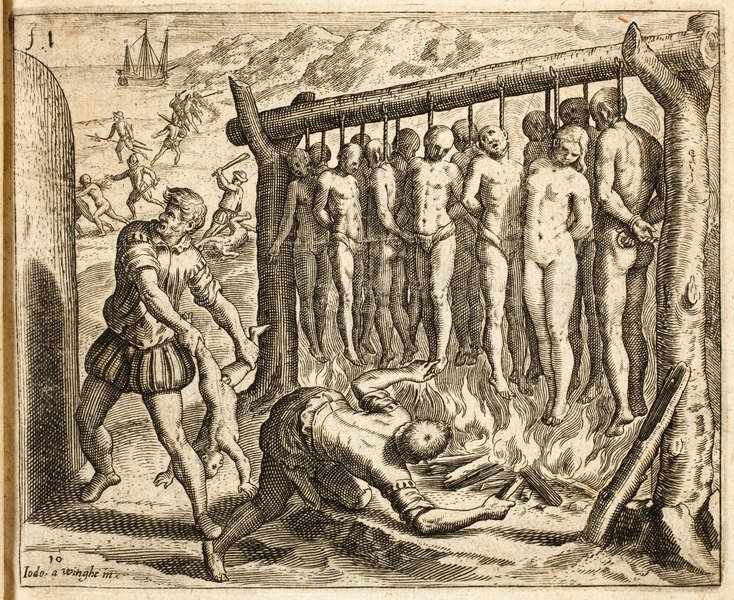
Portrayal of Spanish brutalities during the conquest of Cuba in Las Casas’s “Brevisima Relación de la Destrucción de las Indias.”
What was the encomienda system, and why did he oppose it?
The encomienda system granted Spanish settlers the right to Indigenous labor in exchange for their “protection” and Christianization. Las Casas opposed it due to widespread abuse and forced labor.
Did he support African slavery?
Early in his career, he suggested replacing Indigenous labor with African slaves, believing they were more suited for hard labor. However, he later retracted this position, condemning all forms of slavery.
What were the New Laws of 1542?
A series of reforms enacted by Charles V, influenced by Las Casas, that sought to end the encomienda system and protect Indigenous rights, though they faced resistance from colonists.
What was the Valladolid Debate?
A 1550–1551 debate between Las Casas and Juan Ginés de Sepúlveda, in which Las Casas argued that Indigenous people were fully human and should not be forcibly subjugated.
How did his advocacy impact Spanish colonial policies?
Although he did not fully end colonial exploitation, his efforts led to legal improvements for Indigenous rights and influenced later humanitarian thought.
Why is he associated with the “Black Legend”?
His writings were used by Spain’s rivals (especially Protestants) to depict Spanish colonization as uniquely cruel, fueling anti-Spanish propaganda.