Treaty of Tordesillas and the division of the New World between Spain and Portugal
The Treaty of Tordesillas, signed on June 7, 1494, was a landmark agreement between Spain (i.e. Crown of Castile) and Portugal aimed at resolving conflicts over newly discovered lands in the Age of Exploration. This treaty played a crucial role in shaping the future of global colonization by dividing the non-European world between these two powerful maritime nations. The treaty’s impact reverberated through the centuries, affecting territorial claims, exploration routes, and the cultures of entire continents.

By dividing the newly discovered lands outside Europe between Spain and Portugal, the Treaty of Tordesillas allowed both nations to expand their empires while avoiding direct conflict with one another. Image: The front page of the Treaty of Tordesillas.
Who were the 10 Most Influential Explorers of the Age of Discovery?
Historical Context: The Age of Exploration
The late 15th century marked the dawn of the European Age of Exploration, a period when European nations sought new trade routes and territories beyond their borders. Spain and Portugal, both located on the Iberian Peninsula, were at the forefront of this expansion due to their strong maritime traditions and the desire to find new resources and wealth.

Image: Catholic monarchs – Isabella I of Castile and Ferdinand II of Aragon
Portugal, under the leadership of Prince Henry the Navigator and later monarchs, pioneered exploration down the African coast, eventually reaching India and establishing a lucrative trade network in the Indian Ocean. Meanwhile, Spain, led by Queen Isabella and King Ferdinand, backed Christopher Columbus’ 1492 expedition, which resulted in the discovery of the Americas, though Columbus believed he had found a new route to Asia.
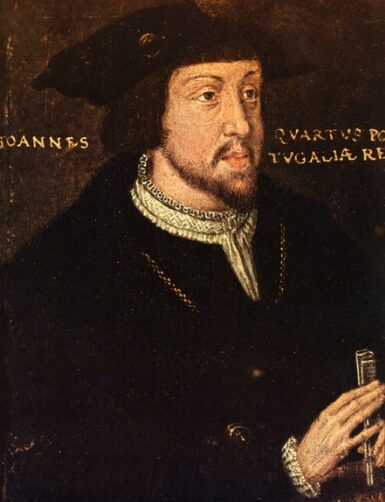
John II of Portugal
Rivalry Between Spain and Portugal
The discoveries made by Columbus ignited a rivalry between Spain and Portugal over claims to the newly found lands. Portugal, which had been leading in exploration, feared that Spain’s newfound territories would threaten its dominance and trade interests, particularly in Africa and Asia. Spain, eager to consolidate its claims, sought to ensure that its rights over the territories discovered by Columbus were recognized.

Image: A portrait of Christopher Columbus.
To prevent conflict between the two nations, Pope Alexander VI, a Spaniard, issued a series of papal bulls in 1493. The most significant of these, Inter Caetera, divided the world into two hemispheres using a meridian located 100 leagues west of the Cape Verde Islands, granting Spain dominion over lands to the west and Portugal control over those to the east. However, the Portuguese were dissatisfied with this division, as it seemed to favor Spain and excluded them from much of the New World.
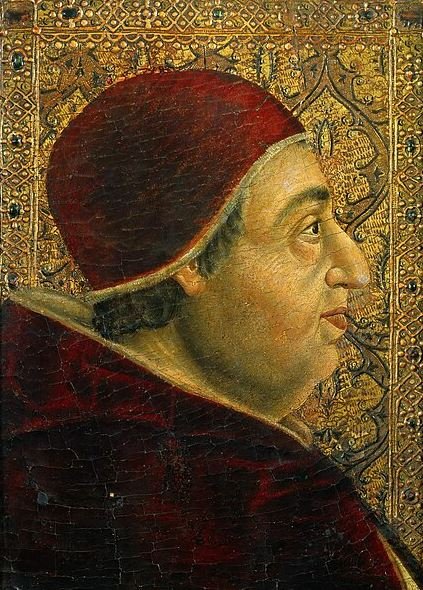
Pope Alexander VI
Negotiating the Treaty
In response to Portuguese dissatisfaction, the two nations entered into negotiations to revise the papal division. These negotiations led to the Treaty of Tordesillas, which moved the line of demarcation further west to 370 leagues west of the Cape Verde Islands. This adjustment gave Portugal more room to explore and claim territories, particularly in South America and the Atlantic Ocean.
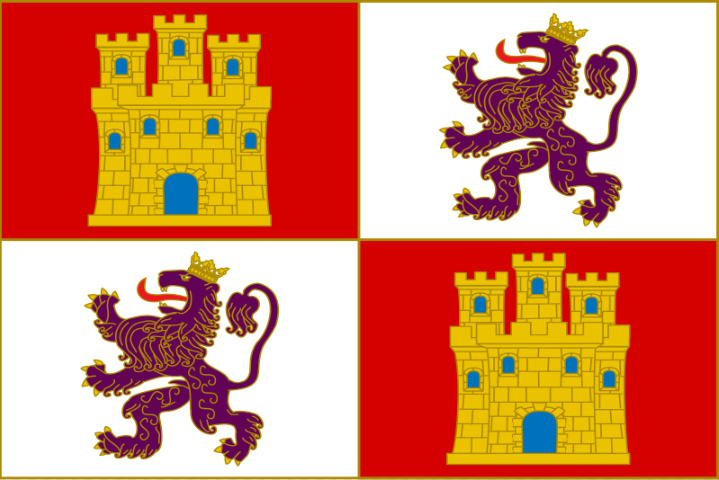
Flag of Castile
On June 7, 1494, the treaty was signed by representatives of Spain and Portugal in the Spanish town of Tordesillas, hence the name. While the treaty was primarily concerned with the division of newly discovered lands, it also set a precedent for future European claims on territories across the globe.

Flag of the Kingdom of Portugal (1495–1521)

Key Provisions of the Treaty
The Treaty of Tordesillas included several key provisions:
- Division of the World: The central provision of the treaty was the establishment of a line of demarcation that divided the non-European world into two halves. Lands to the west of the line were designated for Spain, while lands to the east were reserved for Portugal.
- Recognition of Portugal’s Rights: The treaty officially recognized Portugal’s rights to explore and colonize territories east of the demarcation line. This included the African coast, India, and later territories in Southeast Asia.
- Adjusting the Papal Bull: The treaty modified the earlier papal bull by moving the line of demarcation from 100 leagues to 370 leagues west of the Cape Verde Islands, granting Portugal access to lands that would later become Brazil.
- Future Discoveries: The treaty applied to all future discoveries made by Spain and Portugal. Any new lands found west of the line would belong to Spain, while those to the east would be Portuguese territory.
Consequences of the Treaty
The Treaty of Tordesillas had far-reaching consequences for both Spain and Portugal, as well as for the indigenous peoples of the territories they colonized.
- Impact on Spain: Spain’s position to the west of the line granted it control over most of the Americas, which would become the heart of its colonial empire. This allowed Spain to establish colonies in present-day Latin America, including Mexico, Central America, and large portions of South America. Spain also claimed territories in the Caribbean, where it established lucrative plantations and exploited native populations for labor.
- Portugal and Brazil: Although the treaty was designed to give Spain most of the New World, it inadvertently granted Portugal control over part of South America. In 1500, Portuguese explorer Pedro Álvares Cabral discovered the coast of Brazil, which lay east of the Treaty of Tordesillas line, allowing Portugal to establish a colony there. This was one of the most significant outcomes of the treaty, as Brazil would become a major part of the Portuguese Empire.
- Colonial Expansion in Africa and Asia: While Spain focused its attention on the Americas, Portugal continued its expansion eastward. The treaty solidified Portugal’s control over its African territories, including its coastal trading posts along the Gold Coast, and it also facilitated Portuguese dominance in the Indian Ocean. Portugal established a network of trade routes and colonies in India, Southeast Asia, and even Japan, becoming a key player in global trade.
- Indigenous Peoples: For the indigenous populations of the Americas, Africa, and Asia, the Treaty of Tordesillas had devastating consequences. The division of the world between Spain and Portugal ignored the sovereignty and rights of the people already living in these regions. Colonization by the Spanish and Portuguese often led to the exploitation, enslavement, and displacement of indigenous peoples, as well as the spread of European diseases that decimated populations.
- Long-Term Global Impact: The Treaty of Tordesillas set a precedent for European claims on non-European territories, establishing a framework for colonialism that would continue for centuries. It marked the beginning of the European scramble for colonies and trade routes, influencing the geopolitical landscape well into the modern era.
Challenges and Limitations of the Treaty
While the Treaty of Tordesillas was a significant diplomatic achievement, it faced several challenges and limitations:
- Lack of Knowledge: At the time of the treaty, European knowledge of the geography of the world was limited. The exact location of the line of demarcation was difficult to determine, and the treaty did not account for future discoveries. As European explorers ventured further into the Pacific Ocean and other unknown regions, the treaty’s relevance became more ambiguous.
- Other European Powers: The Treaty of Tordesillas was an agreement between Spain and Portugal, but it did not involve other European powers. Over time, nations such as England, France, and the Netherlands rejected the treaty and began to challenge Spanish and Portuguese dominance in the Americas, Africa, and Asia. These nations eventually established their own colonies, leading to conflicts over territory and trade.
- Portuguese Exploration in Asia: While the treaty focused on the division of territories in the Atlantic and the Americas, Portuguese explorers soon ventured beyond these regions. The treaty did not address the East Indies, where Portugal would later establish colonies and trade networks. This lack of clarity would later lead to disputes between Spain and Portugal in the Far East, particularly in the Philippines and the Moluccas.
- Enforcement and Interpretation: Enforcing the treaty was difficult, as it required precise knowledge of geography and cooperation between Spain and Portugal. Disputes over interpretation of the treaty and the exact location of the demarcation line arose as new lands were discovered. The Treaty of Zaragoza, signed in 1529, further clarified the division of the world in the Pacific, but conflicts still occurred between the two empires.
The Treaty of Zaragoza (1529)
The Treaty of Tordesillas primarily dealt with the division of the Atlantic and the Americas, but as exploration continued, new issues arose, particularly in the Pacific and Asia.
To resolve these disputes, Spain and Portugal signed the Treaty of Zaragoza in 1529. This treaty established a second line of demarcation to the east, dividing the Pacific Ocean between the two nations. Under this treaty, Portugal gained control over the Spice Islands (Moluccas), while Spain retained the Philippines.
The Treaty of Zaragoza was an extension of the principles established in the Treaty of Tordesillas, though it specifically addressed the growing competition between Spain and Portugal in the Far East. It highlighted the ongoing rivalry between the two powers and their efforts to maintain control over their respective spheres of influence.
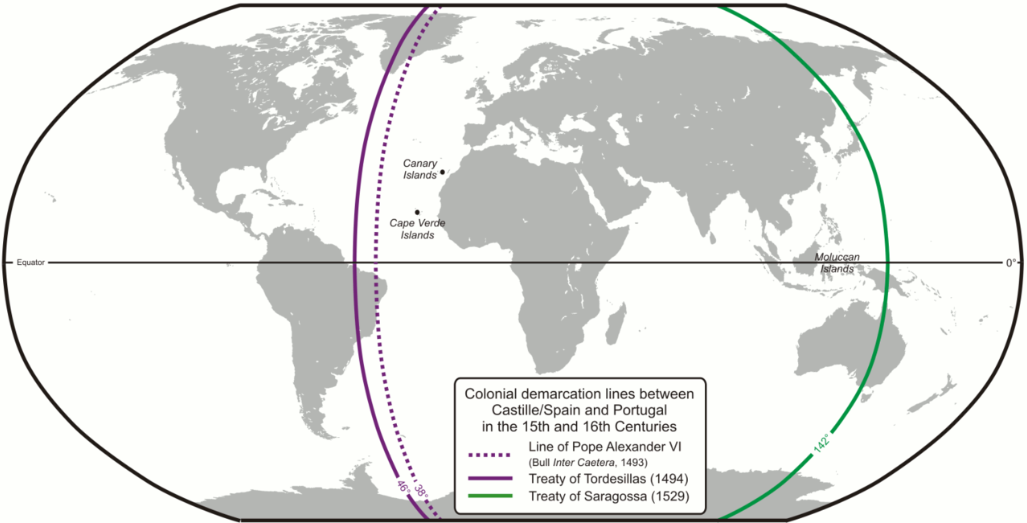
The 1494 Tordesillas meridian (purple) and 1529 Zaragoza antimeridian (green) divided non-Christian territories.
Did you know…?
In 2007, the Treaty of Tordesillas was included in UNESCO’s Memory of the World Programme, recognizing its historical significance. The original treaties are preserved in the General Archive of the Indies in Spain and the Torre do Tombo National Archive in Portugal.
Legacy of the Treaty of Tordesillas
The Treaty of Tordesillas had a lasting legacy that extended well beyond the immediate period of exploration and colonization. It helped establish the concept of dividing the world into spheres of influence, a practice that continued through the colonial era and into the 19th and 20th centuries. The treaty also laid the groundwork for the Spanish and Portuguese empires, which became two of the most powerful colonial empires in history.
In Latin America, the treaty’s division of the continent between Spain and Portugal shaped the linguistic and cultural landscape. Brazil, which fell under Portuguese control due to the treaty, became the only Portuguese-speaking country in South America, while the rest of the continent was dominated by Spanish language and culture. The long-term impact of this division is still evident today in the cultural and linguistic differences between Brazil and its Spanish-speaking neighbors.
Moreover, the treaty’s focus on dividing newly discovered lands without regard for the indigenous populations foreshadowed the exploitative nature of European colonialism. The consequences of European domination and the subjugation of native peoples would shape the history of the Americas, Africa, and Asia for centuries, leaving a legacy of inequality, cultural displacement, and social upheaval.
Questions and Answers about the Treaty of Tordesillas

Why was the Treaty of Tordesillas necessary?
The treaty was needed to resolve territorial disputes between Spain and Portugal over newly discovered lands following Christopher Columbus’s voyage in 1492. Both nations were competing for control of these territories, and the treaty helped avoid conflict by clearly delineating their spheres of influence.
How did the Treaty of Tordesillas modify the earlier papal bull Inter Caetera?
The Treaty of Tordesillas shifted the demarcation line established by Inter Caetera further west, from 100 leagues to 370 leagues west of the Cape Verde Islands. This adjustment gave Portugal more territory, including future claims in Brazil, while Spain retained control over most of the Americas.
What territories did Portugal and Spain gain from the Treaty of Tordesillas?
Portugal gained control over its African trade routes and territories in Asia, as well as the easternmost part of South America, which later became Brazil. Spain gained dominion over most of the Americas, including large parts of South and Central America, such as Mexico and Peru.
What was the Treaty of Zaragoza, and how did it relate to the Treaty of Tordesillas?
The Treaty of Zaragoza, signed in 1529, was an extension of the Treaty of Tordesillas. It established the antimeridian of the Tordesillas line, dividing the Pacific region between Spain and Portugal. This treaty gave Portugal control over the East Indies, while Spain retained the Philippines.
How did the Treaty of Tordesillas affect indigenous populations?
The treaty did not consider the rights of indigenous peoples, who did not recognize the European-imposed borders. The division of lands between Spain and Portugal led to the colonization and exploitation of indigenous populations, resulting in loss of land, culture, and lives.
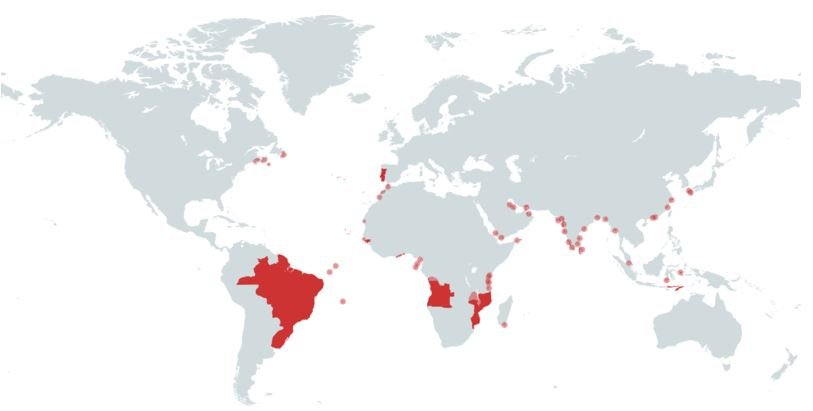
By dividing the non-European world between Spain and Portugal, the Treaty of Tordesillas sought to prevent conflict between the two leading maritime powers of the time. While it succeeded in the short term, the treaty’s limitations and the rise of other European powers eventually led to its erosion. Image: A map showing the regions that made up the Portuguese Empire.
What were the long-term consequences of the Treaty of Tordesillas?
The Treaty of Tordesillas set a precedent for European colonization and expansion, influencing territorial claims and conflicts for centuries. It also contributed to the rise of the Spanish and Portuguese empires, shaping the global geopolitical landscape during the Age of Exploration.
How did other European powers respond to the Treaty of Tordesillas?
Other European powers, such as France, England, and the Netherlands, rejected the division established by the Treaty of Tordesillas. These nations began establishing their own colonies in the Americas, Africa, and Asia, leading to imperial competition during the 16th and 17th centuries.