Battle of Gettysburg: History & Major Facts about the Bloodiest Battle Ever Fought on American Soil
The Battle of Gettysburg, fought from July 1 to July 3, 1863, during the American Civil War (1861 – 1865), is one of the most significant and consequential battles in U.S. history. It not only marked a turning point in the Civil War but also resulted in the largest number of casualties of any battle fought on American soil.
The battle is often viewed as the moment when the momentum shifted in favor of the Union, setting the stage for the eventual defeat of the Confederacy. The events that took place over these three days in Gettysburg, Pennsylvania, have been studied, commemorated, and remembered as a symbol of the immense sacrifices made in the fight to preserve the Union and end slavery.

Image: An illustration of the Battle of Gettysburg by American painter Thure de Thulstrup.
Background
The American Civil War, which lasted from 1861 to 1865, was a conflict primarily between the Northern states (Union) and the Southern states (Confederacy) that seceded from the Union. The causes of the war were complex, but at the core was the issue of slavery and states’ rights.
The Southern states wanted to maintain their system of slavery, which they saw as essential to their economy, while many in the North sought to prevent the spread of slavery into new territories. Tensions escalated into armed conflict in 1861, and the war raged for four brutal years.
By 1863, the war was at a critical point. The Confederate forces, under the command of General Robert E. Lee, had experienced significant victories, including the Battle of Chancellorsville in May 1863. This success emboldened Lee to launch a second invasion of the North, hoping to shift the focus of the war away from the South, gain international recognition, and perhaps compel the Union to negotiate for peace. This campaign would lead to the Battle of Gettysburg.

Union General George Meade’s Army repelled Confederate General Robert E. Lee’s invasion of the North at Gettysburg, thwarting Lee’s hopes of pressuring Northern cities and forcing Union negotiations after his victory at Chancellorsville. Image: George Meade.
The Gettysburg Campaign
The Gettysburg Campaign was Lee’s second attempt to invade the North. His first attempt had been repelled at the Battle of Antietam in 1862, which resulted in a tactical draw but strategic victory for the Union as Lee’s forces were forced to retreat back to the South.
Now, a year later, Lee believed that another invasion could force the Union to the negotiating table, especially as war weariness was growing in the North. The Confederate army was also seeking supplies, and an invasion into Pennsylvania offered the opportunity to relieve pressure on the Southern home front.
Lee’s Army of Northern Virginia consisted of approximately 75,000 men, divided into three corps led by generals James Longstreet, Richard S. Ewell, and A.P. Hill.
On the Union side, General Joseph Hooker had been in command of the Army of the Potomac but was replaced by General George G. Meade just three days before the battle, as President Abraham Lincoln sought more effective leadership after the Union’s earlier setbacks. Meade’s army consisted of around 94,000 men.
The Battle of Gettysburg: Day by Day

Bayonet charge by the 1st Minnesota regiment against a Confederate brigade on July 2, 1863 during the Battle of Gettysburg.
Day 1: July 1, 1863
The battle began almost accidentally on the morning of July 1, 1863, when Confederate forces, searching for supplies, encountered Union cavalry near the small town of Gettysburg. Brigadier General John Buford, commanding the Union cavalry, recognized the strategic importance of the high ground around Gettysburg and decided to make a stand, delaying the Confederate advance until Union infantry reinforcements could arrive.
As the day progressed, more Confederate forces arrived, and the fighting intensified. The Union forces, initially outnumbered, were forced to retreat through the town of Gettysburg and regroup on the heights to the south, including Cemetery Hill, Cemetery Ridge, and Culp’s Hill. This high ground would prove crucial in the coming days. By the end of the first day, the Confederates had achieved a tactical victory, having driven the Union forces from the town, but they had failed to dislodge them from the critical high ground.
Day 2: July 2, 1863
On July 2, the battle resumed with both armies fully assembled. Lee, seeing the Union army entrenched on the high ground in a defensive position, decided to launch a series of coordinated assaults on the Union flanks in an attempt to break their line.
The fighting on the Union’s left flank was some of the most intense of the entire war, with key locations such as Little Round Top, the Wheatfield, Devil’s Den, and the Peach Orchard becoming scenes of bloody conflict. Union General Gouverneur K. Warren, recognizing the vulnerability of Little Round Top, rushed troops to defend it just as the Confederates were preparing to attack. The defense of Little Round Top, particularly the actions of Colonel Joshua Lawrence Chamberlain and the 20th Maine Regiment, became legendary. Outnumbered and running low on ammunition, Chamberlain ordered a bayonet charge that successfully repelled the Confederate forces and secured the Union left flank.
On the Union right, the Confederates launched assaults on Culp’s Hill and Cemetery Hill, but the Union forces, though heavily engaged, managed to hold their positions. By the end of the day, the Union army had withstood Lee’s attacks, but at great cost. Both sides suffered significant casualties, and the battle was far from over.

Day 3: July 3, 1863
The final day of the battle is best known for Pickett’s Charge, one of the most famous and ill-fated assaults in military history. Lee, convinced that the Union center on Cemetery Ridge was vulnerable, ordered an assault that would involve around 12,000 Confederate troops advancing across open fields to attack the entrenched Union forces.
The charge, led by General George Pickett, was a disaster for the Confederates. As the soldiers advanced, they were subjected to withering fire from Union artillery and infantry. Only a small number of Confederate soldiers managed to reach the Union lines, and they were quickly repulsed. The charge resulted in devastating losses for the Confederates, with nearly half of the men involved killed, wounded, or captured.
Pickett’s Charge marked the end of the Battle of Gettysburg. Lee, recognizing the futility of further attacks, ordered his army to retreat back to Virginia on July 4. The Union army, exhausted and bloodied, did not pursue the retreating Confederates, allowing Lee’s army to escape. However, the battle had been a decisive victory for the Union and a turning point in the war.
Casualties and Aftermath
The Battle of Gettysburg was the bloodiest of the Civil War, with an estimated 51,000 casualties, including 7,058 killed, 33,264 wounded, and 10,790 missing or captured. The Union army suffered approximately 23,000 casualties, while the Confederates lost around 28,000 men—more than a third of Lee’s entire army. The sheer scale of the loss was staggering, and the battlefield was left littered with bodies, many of which could not be buried for days.
 For the Confederacy, the defeat at Gettysburg was catastrophic. Lee’s Army of Northern Virginia had been severely weakened, and he would never again attempt a major invasion of the North. The defeat also dampened Confederate hopes of gaining recognition and support from European powers, particularly Britain and France, which had been closely watching the conflict.
For the Union, Gettysburg was a much-needed victory after a series of setbacks in the Eastern Theater. It boosted Northern morale and strengthened the resolve to see the war through to its conclusion. While the war would continue for nearly two more years, Gettysburg is often seen as the beginning of the end for the Confederacy.

Gettysburg National Cemetery, in Gettysburg, Pennsylvania, was created for Union casualties from the July 1-3, 1863, Battle of Gettysburg, the deadliest Civil War battle and a turning point toward Union victory. The cemetery is part of Gettysburg National Military Park, managed by the National Park Service.
What were the sociocultural effects of the American Civil War?
Lincoln’s Gettysburg Address
Several months after the battle, on November 19, 1863, President Abraham Lincoln traveled to Gettysburg to dedicate a cemetery for the Union soldiers who had died in the battle. It was on this occasion that he delivered the Gettysburg Address, one of the most famous speeches in American history.
In just 271 words, Lincoln eloquently honored the fallen soldiers and reaffirmed the principles of liberty and equality for which they had fought. He emphasized that the war was not just about preserving the Union but about ensuring that “government of the people, by the people, for the people, shall not perish from the earth.” The Gettysburg Address transformed the meaning of the war, elevating it from a struggle for political unity to a moral crusade for human equality and the abolition of slavery.
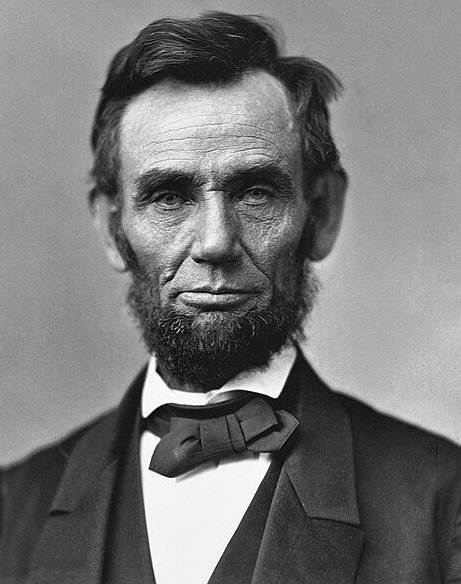
On November 19, 1863, President Abraham Lincoln delivered the Gettysburg Address during the dedication of the Gettysburg National Cemetery, honoring the fallen and redefining the war’s purpose as one centered on liberty and equality. Image: Abraham Lincoln.
Strategic and Historical Significance
The Battle of Gettysburg holds immense strategic and historical significance for several reasons:
- Turning Point of the War: The Union victory at Gettysburg is widely regarded as the turning point of the Civil War. Before Gettysburg, the Confederacy had experienced significant successes, and Lee’s invasion of the North represented a bold attempt to force a negotiated peace. After Gettysburg, the Confederacy was on the defensive for the remainder of the war.
- Impact on Confederate Morale: The loss at Gettysburg dealt a severe blow to Confederate morale. The Army of Northern Virginia, once seen as invincible, had suffered a crushing defeat. Lee’s retreat marked the end of Confederate hopes for a successful invasion of the North, and the Confederacy would never again mount a major offensive campaign.
- International Implications: Before Gettysburg, the Confederacy had hoped to secure recognition and support from European powers, particularly Britain and France. The defeat at Gettysburg, combined with the Union victory at the Battle of Vicksburg (which took place on July 4, 1863), dashed any remaining hopes for foreign intervention in the conflict.
- Preservation of the Union: Gettysburg reaffirmed the Union’s determination to preserve the United States as a single, unified nation. The battle’s outcome strengthened the resolve of Northern leaders, including President Lincoln, to continue the fight and ensure that the Union would emerge from the war intact.
- Moral Imperative: Lincoln’s Gettysburg Address redefined the purpose of the war. While the Union had initially been fighting to prevent the breakup of the United States, the war’s focus now expanded to include the abolition of slavery and the promotion of human equality. The Gettysburg Address became a powerful statement of the Union’s moral resolve to end slavery and establish a more just society.
Key Figures in the Battle of Gettysburg
Several key military leaders played crucial roles in the Battle of Gettysburg, shaping its outcome and leaving lasting legacies:
- General Robert E. Lee: The commander of the Confederate Army of Northern Virginia, Lee was known for his bold and aggressive tactics. However, at Gettysburg, his decision to launch frontal assaults on entrenched Union positions, particularly Pickett’s Charge, has been widely criticized as a grave error. Despite his defeat at Gettysburg, Lee remained a revered figure in the Confederacy.
- General George G. Meade: Meade, who took command of the Union Army of the Potomac just days before the battle, is credited with successfully defending against Lee’s attacks and securing a crucial Union victory. While criticized for not pursuing the Confederate army after the battle, Meade’s leadership at Gettysburg was instrumental in turning the tide of the war.
- General James Longstreet: One of Lee’s most trusted commanders, Longstreet disagreed with Lee’s strategy at Gettysburg, particularly the decision to launch Pickett’s Charge. Longstreet’s reservations proved prescient, as the charge ended in disaster for the Confederates. Despite this, Longstreet remained loyal to Lee and continued to serve with distinction throughout the war.
- Colonel Joshua Lawrence Chamberlain: Chamberlain, commanding the 20th Maine Regiment, became a hero of Gettysburg for his defense of Little Round Top on July 2. His decision to order a bayonet charge when his regiment ran low on ammunition helped secure the Union left flank and prevented a Confederate breakthrough. Chamberlain’s actions earned him the Medal of Honor and cemented his place in Civil War history.
- General John Buford: Buford’s decision to hold the high ground at Gettysburg on the first day of the battle allowed Union forces to establish a strong defensive position. His cavalry played a crucial role in delaying the Confederate advance, buying time for Union infantry to arrive and fortify their positions.
Legacy of the Battle of Gettysburg
The legacy of the Battle of Gettysburg extends far beyond the immediate military and political consequences. It has become a symbol of sacrifice, perseverance, and the struggle for a united nation. The battlefield itself has been preserved as the Gettysburg National Military Park, and each year, thousands of visitors come to walk the hallowed ground where so many lives were lost.
The battle also occupies a central place in the American memory of the Civil War. It is frequently cited as the conflict’s defining moment, where the fate of the nation hung in the balance. The stories of individual heroism, such as Chamberlain’s defense of Little Round Top, and the tragic futility of Pickett’s Charge have become emblematic of the broader themes of courage, loss, and redemption.
Conclusion
The Battle of Gettysburg was a decisive turning point in the American Civil War, both militarily and symbolically. Its outcome not only weakened the Confederate war effort but also strengthened the Union’s resolve to see the war through to its conclusion. The staggering casualties and immense sacrifices made at Gettysburg continue to resonate in the American historical consciousness, serving as a reminder of the costs of war and the enduring struggle for unity and equality. The battle’s legacy, immortalized by Lincoln’s Gettysburg Address, remains a powerful testament to the principles of liberty, democracy, and human dignity.
Questions and Answers about the Battle of Gettysburg

When did the Battle of Gettysburg take place, and why is it significant?
The Battle of Gettysburg occurred from July 1-3, 1863, and is significant as the bloodiest battle of the American Civil War, with over 51,000 casualties. It is widely regarded as the turning point in the war, marking the beginning of the Confederacy’s decline.
Where did the Battle of Gettysburg occur, and how does it rank in terms of Civil War battles?
The battle took place in Gettysburg, Pennsylvania, and is considered the northernmost major battle of the Civil War. It remains the deadliest battle fought on American soil.
What was Confederate General Robert E. Lee’s goal in the Gettysburg Campaign?
Lee aimed to invade the North to force Union politicians into peace negotiations and shift the war away from the South. He hoped that a victory on Northern soil would pressure the Union to abandon its war efforts.

Robert E. Lee was an able tactician and commander who in spite of the 4-year bloody civil war was respected by his men and opposing commanders from the Union Army
Who led the Union forces at Gettysburg, and what was the outcome of the battle?
Union forces were led by Major General George Meade. The Union achieved a decisive victory, forcing Lee’s Confederate army to retreat back to Virginia, marking a turning point in the war.
Why did some historians and contemporaries criticize General Meade’s actions after the battle?
Meade was criticized for not pursuing the retreating Confederate forces after the battle. Some, including President Abraham Lincoln, believed this was a missed opportunity to potentially end the war earlier by forcing a Confederate surrender.
How did the Union victory at Gettysburg impact the morale of the North?
The Union victory at Gettysburg boosted morale at a time when it was desperately needed. It restored hope that the war could be won after several years of grueling conflict and heavy losses.
What effect did the Battle of Gettysburg have on the Confederacy’s hopes for foreign intervention?
The defeat at Gettysburg dashed the Confederacy’s hopes of receiving foreign intervention, particularly from European powers like Britain, which were reluctant to support the South after such a significant loss.
What was the Gettysburg Address, and why is it important?
The Gettysburg Address was a speech delivered by President Abraham Lincoln on November 19, 1863, during the dedication of the Gettysburg National Cemetery. In it, Lincoln honored the fallen soldiers and redefined the war’s purpose, emphasizing equality and the abolition of slavery.
Who was Joshua Lawrence Chamberlain, and what role did he play at Gettysburg?
Joshua Lawrence Chamberlain was a Union officer who commanded the 20th Maine Regiment during the Battle of Gettysburg. He is celebrated for his leadership in defending Little Round Top, ordering a successful bayonet charge that helped secure the Union’s position. He was later awarded the Medal of Honor for his bravery.
What paranormal activity has been reported in Gettysburg since the battle?
Gettysburg is considered one of the most haunted places in the U.S. with numerous reports of paranormal activity. Locations like Pennsylvania Hall, used as a field hospital during the battle, and the Sachs Covered Bridge, where three Confederate soldiers were reportedly hanged, are said to be haunted by the spirits of soldiers who died during the battle.

Gettysburg, shaped by heroes like Joshua Lawrence Chamberlain and the memory of countless lives lost, remains a site of history and reflection. Visitors honor those who fought in America’s bloodiest battle, keeping its legacy alive. Image: Joshua Lawrence Chamberlain in 1860s





