Battle of Rowton Heath (1645): History and Major Facts
The Battle of Rowton Heath, also known as the Battle of Rowton Moor, was fought on 24 September 1645 during the English Civil War. This critical conflict saw Royalist forces, led by King Charles I, attempting to break the siege of Chester, one of the few remaining Royalist strongholds, but they were decisively defeated by the Parliamentarian army under the command of Sydnam Poyntz. The battle marked a significant turning point in the war, hastening the eventual defeat of King Charles I and the Royalist cause.

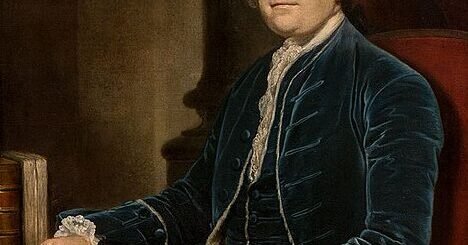
The Battle of Rowton Heath took place near Chester during the English Civil War. Royalist forces, loyal to King Charles I, were defeated by Parliamentarian troops led by Sir William Brereton. Image: A portrait of Charles I.
Historical Context of the English Civil War
The English Civil War (1642–1651) was a series of armed conflicts and political machinations between Royalists (Cavaliers), who supported King Charles I, and Parliamentarians (Roundheads), who sought a more balanced form of government. Tensions between the monarchy and Parliament had been simmering for years, stemming from disagreements over religion, taxation, and the extent of royal authority. These tensions boiled over into a full-scale civil war in 1642, leading to three distinct phases of conflict.
The Royalists, led by King Charles I, believed in the divine right of kings and sought to maintain the king’s absolute authority. Meanwhile, the Parliamentarians, led by figures such as Oliver Cromwell, sought to limit the power of the monarchy and establish a more representative form of governance. By 1645, the war was at a critical juncture, with Parliament’s New Model Army gaining the upper hand and the Royalist cause increasingly desperate.
The Importance of Chester and the Road to Rowton Heath
Chester, a strategic port city in the northwest of England, was of immense importance to the Royalist war effort. As one of the last Royalist-controlled ports, Chester allowed for the movement of troops and supplies from Ireland and other parts of the British Isles. By 1645, however, the Parliamentarians had laid siege to the city, cutting off crucial supply lines and threatening one of the Royalists’ final strongholds.
Before the Battle of Rowton Heath, the Royalists had already suffered a major blow at the Battle of Naseby in June 1645. This decisive Parliamentarian victory severely weakened the Royalist army, and King Charles I found himself increasingly on the defensive. With his forces in disarray, Charles hoped to regroup by linking up with James Graham, the Marquess of Montrose, who was leading a Royalist campaign in Scotland.
Charles’s plan to join Montrose was thwarted, however, by the growing strength of the Parliamentarian forces and the logistical difficulties of crossing into Scotland. Instead, Charles turned his attention to Chester, where he hoped to relieve the besieged garrison and secure a key stronghold that could help revive the Royalist cause.
King Charles’s Plan and the Approach to Battle
In September 1645, with Chester under siege, King Charles I resolved to mount a relief effort. He gathered a force of around 3,000 cavalry under the command of Marmaduke Langdale, one of his most trusted commanders. Charles and Langdale planned a coordinated attack to break the Parliamentarian siege.
On 23 September 1645, King Charles entered Chester with a small contingent of around 600 troops, leaving Langdale and his cavalry to camp outside the city. The plan was for Langdale to attack the besieging Parliamentarians from the rear, while Charles led a breakout from within Chester. Charles believed that this two-pronged assault would be enough to lift the siege and secure the city.
Unbeknownst to Charles, however, the Parliamentarian commander Sydnam Poyntz had been closely following his movements. Poyntz, with approximately 3,000 cavalry, had been ordered by the Committee of Both Kingdoms to pursue the king and prevent him from joining Montrose. Poyntz was only 15 miles (24 km) behind Charles and had learned of the Royalist plan. With this intelligence, Poyntz prepared to strike before the Royalists could execute their attack.
The Battle of Rowton Heath Begins
In the early hours of 24 September 1645, Poyntz launched a surprise attack on Langdale’s forces, which were camped outside Chester. Although Langdale’s cavalry initially managed to repel the first Parliamentarian assault, the situation quickly worsened. The Parliamentarians who were besieging Chester sent reinforcements to assist Poyntz, and Langdale’s position became increasingly precarious.
Langdale, recognizing the danger, withdrew his forces to Rowton Heath, a moor located closer to Chester. From this new position, he hoped to hold out until reinforcements arrived. These reinforcements, led by Charles Gerard and Lord Bernard Stewart, were on their way to join Langdale, but they were blocked from reaching the battlefield.
With Langdale’s forces now isolated at Rowton Heath, Poyntz’s troops, bolstered by the Parliamentarian reinforcements from Chester, launched a renewed attack. Langdale’s men were outnumbered and outmaneuvered, and despite their efforts to resist, they were eventually overwhelmed by the combined Parliamentarian forces.
The Defeat of the Royalists
The Royalists suffered heavy losses during the battle. Approximately 600 Royalist soldiers were killed, including Lord Bernard Stewart, a close confidant of King Charles and one of the most respected Royalist commanders. Additionally, around 900 Royalist soldiers were taken prisoner. Langdale’s attempt to regroup his forces at Chester failed, and by nightfall, the Royalists were in full retreat.
The defeat at Rowton Heath was a devastating blow to the Royalist cause. King Charles I, who had entered Chester with high hopes of breaking the siege, now found himself unable to relieve the city. With his forces in disarray, Charles was forced to withdraw with the remnants of his cavalry, numbering around 2,400. However, their retreat was short-lived.

The defeat at the Rowton Heath weakened the Royalist cause significantly and marked a turning point in the war, with the Parliamentarians gaining the upper hand. Image: Rowton Heath battle ground.
Aftermath and the Further Decline of the Royalist Cause
After the Battle of Rowton Heath, the situation for the Royalists deteriorated even further. King Charles and his remaining cavalry were pursued by Poyntz’s forces, who continued to harry the Royalists as they retreated. On 15 October 1645, at Sherburn-in-Elmet, the majority of the remaining Royalist cavalry was destroyed in an ambush by Poyntz’s troops. This defeat further weakened the Royalist position and left King Charles with few options.
The loss at Rowton Heath also had profound strategic implications. Chester, now effectively cut off from any relief, remained under siege. The city finally fell to the Parliamentarians on 3 February 1646, closing off one of the last Royalist-controlled ports and further tightening the noose around Charles’s forces.
With the fall of Chester, the Royalist cause was all but doomed. King Charles I continued to fight for several more months, but the tide of the war had decisively turned in favor of the Parliamentarians. In May 1646, Charles surrendered to the Scottish army, effectively bringing an end to the First English Civil War.
Significance of the Battle of Rowton Heath
The Battle of Rowton Heath was one of the last significant military engagements of the First English Civil War, and its outcome had far-reaching consequences for both the Royalist and Parliamentarian forces.
A Decisive Parliamentarian Victory
The defeat of the Royalists at Rowton Heath cemented the Parliamentarians’ control over Chester and dealt a severe blow to the Royalist war effort. By cutting off one of the last remaining Royalist-controlled ports, the Parliamentarians eliminated a crucial supply line that King Charles had hoped to use to bolster his forces.
Moreover, the defeat at Rowton Heath further demoralized the Royalist army. Many of the Royalist soldiers who had survived the battle were either captured or killed in subsequent engagements, leaving Charles with a dwindling number of loyal troops.
The Role of Sydnam Poyntz
Sydnam Poyntz, the Parliamentarian commander who pursued and defeated the Royalists at Rowton Heath, played a critical role in securing the victory. His quick and decisive actions prevented Charles from executing his plan to break the siege of Chester and allowed the Parliamentarians to press their advantage.
Poyntz’s successful pursuit of King Charles and his destruction of the remaining Royalist cavalry at Sherburn-in-Elmet further weakened the Royalist cause and contributed to the eventual collapse of Charles’s military forces.
The End of the Royalist Cause
While the Battle of Rowton Heath did not immediately end the English Civil War, it marked the beginning of the end for King Charles I and the Royalists. The defeat at Rowton Heath was followed by a series of setbacks for the Royalist forces, culminating in Charles’s surrender in 1646. The First English Civil War officially ended with the capture of Charles, though subsequent conflicts, including the Second English Civil War and the English Interregnum, would follow.
Legacy of the Battle of Rowton Heath
The Battle of Rowton Heath, like many engagements during the English Civil War, has left a lasting legacy in British history. The battle is often seen as a symbol of the broader struggle between royal authority and parliamentary power, a conflict that would shape the future of the British monarchy and its relationship with the people.
In the centuries since the battle, Rowton Heath has been remembered as one of the key engagements of the English Civil War. While not as famous as battles like Naseby or Marston Moor, it played a crucial role in the final stages of the war and contributed to the downfall of King Charles I.
Conclusion
The Battle of Rowton Heath on 24 September 1645 was a pivotal moment in the English Civil War, marking one of the last major attempts by King Charles I to turn the tide in favor of the Royalists. The defeat of the Royalist forces at Rowton Heath by Parliamentarian commander Sydnam Poyntz not only prevented Charles from relieving the siege of Chester but also hastened the collapse of the Royalist war effort.
With the fall of Chester in February 1646 and the destruction of much of the remaining Royalist cavalry, the Royalist cause was left in tatters, and King Charles was forced to surrender shortly thereafter. The battle’s significance lies not only in its immediate military consequences but also in its contribution to the broader struggle for political power and the eventual rise of parliamentary authority in Britain.
Questions and Answers

What was the significance of the Battle of Rowton Heath during the English Civil War?
The Battle of Rowton Heath was a significant defeat for the Royalists, resulting in heavy losses. It prevented King Charles I from relieving the siege of Chester, one of his last remaining strongholds, and marked one of his final attempts to reverse the Royalist cause in the war.
Who commanded the forces during the Battle of Rowton Heath?
The Royalist forces were personally commanded by King Charles I, with Marmaduke Langdale leading part of the cavalry. The Parliamentarian forces were commanded by Sydnam Poyntz.
What event preceded the Battle of Rowton Heath that weakened the Royalist forces?
The Royalist defeat at the Battle of Naseby in June 1645 significantly weakened their forces and led King Charles to attempt a link-up with the Marquess of Montrose in Scotland. This effort failed and contributed to the overall weakening of the Royalist cause.
What was King Charles I’s plan to relieve the siege of Chester?
King Charles I planned a coordinated attack on the besieging Parliamentarian forces, believing that Poyntz’s cavalry had not followed him closely. He split his forces, with 3,000 cavalry under Marmaduke Langdale camping outside the city, while Charles and 600 men entered Chester.
What was Sydnam Poyntz’s role in the battle?
Sydnam Poyntz was ordered to pursue King Charles and his forces. On 24 September 1645, Poyntz attacked Langdale’s Royalist forces near Chester, and after reinforcements from the Parliamentarian besiegers arrived, he was able to drive Langdale’s men back to Rowton Heath.
Why were Royalist reinforcements unable to join Langdale at Rowton Heath?
Royalist reinforcements led by Charles Gerard and Lord Bernard Stewart were blocked from joining Langdale’s forces. As a result, Langdale and his men were overwhelmed by both Poyntz’s cavalry and the Parliamentarian reinforcements from Chester.
What were the Royalist casualties at the Battle of Rowton Heath?
The Royalists suffered approximately 600 deaths, including Lord Bernard Stewart, and around 900 were taken prisoner.
What was the immediate consequence of the Royalist defeat at Rowton Heath?
The defeat at Rowton Heath effectively ended any hope King Charles I had of lifting the siege of Chester. The city eventually fell to the Parliamentarians on 3 February 1646.
What happened to the remaining Royalist forces after the battle?
King Charles and around 2,400 remaining cavalry retreated. However, on 15 October 1645, the majority of these forces were destroyed in an ambush by Poyntz’s troops at Sherburn-in-Elmet, further weakening the Royalist cause.
How did the Battle of Rowton Heath impact the English Civil War?
The Battle of Rowton Heath was a crucial moment that solidified the Parliamentarian advantage in the English Civil War. It further weakened the Royalist forces and hastened the eventual defeat of King Charles I and his supporters.