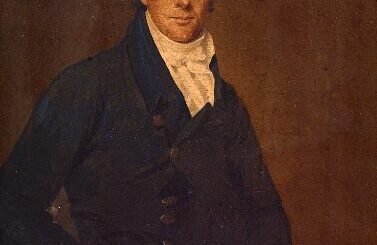
Battle of Veracruz in 1914
The Battle of Veracruz in 1914 stands as a key moment in U.S.-Mexico relations, occurring in the midst of the Mexican Revolution and reflecting the complexities of foreign intervention and diplomacy during a time of significant upheaval in Mexico.
This event, also known as the U.S. occupation of Veracruz, had far-reaching implications, not just in terms of military strategy but also for the political and diplomatic tensions between the two nations.
The U.S. occupation of Veracruz was spurred by the political instability in Mexico, a strained diplomatic climate, and a specific incident known as the Tampico Affair. This conflict involved a series of key military commanders, both American and Mexican, and resulted in significant loss of life, with long-lasting repercussions for relations between the two countries.

A 3″/50 gun bombarding Veracruz
Background: The Mexican Revolution and U.S.-Mexico Relations
By 1914, Mexico had been embroiled in revolution for several years. The overthrow of the long-standing dictator Porfirio Díaz in 1911 had plunged the country into political chaos, with various revolutionary factions vying for control.
Francisco I. Madero became president following Díaz’s departure, but his progressive policies alienated some powerful factions, leading to his assassination in 1913 during the violent coup known as La Decena Trágica (the Ten Tragic Days).
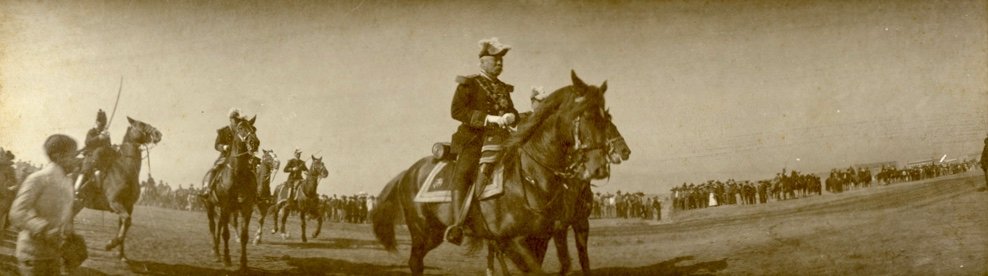
Mexican general and long-term reigning president Porfirio Díaz leading Mexican troops in celebration of Cinco de Mayo in 1902
The Battle of Veracruz (1914) took place during strained U.S.-Mexico relations, linked to the Mexican Revolution.
General Victoriano Huerta seized power after Madero’s death, declaring himself president, but Huerta’s government was widely seen as illegitimate, particularly by U.S. President Woodrow Wilson, who refused to recognize the regime.
The instability in Mexico and the U.S. desire to influence its southern neighbor led to increased tensions. Under Wilson’s leadership, the United States sought to support revolutionary forces opposed to Huerta, particularly those led by Emiliano Zapata and Pancho Villa, by providing them with material assistance.
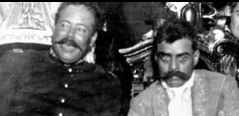
Generals Pancho Villa and Emiliano Zapata
The political and military turmoil in Mexico further worsened diplomatic relations, especially as Huerta attempted to consolidate his power through fraudulent elections.
One of the key events that precipitated the U.S. military intervention at Veracruz was the Tampico Affair. In April 1914, nine American sailors from the USS Dolphin were arrested by Mexican authorities after accidentally entering a restricted area in the port city of Tampico.
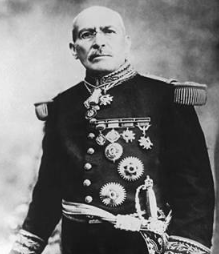
Mexican president Victoriano Huerta
Although the sailors were quickly released, U.S. naval commander Henry T. Mayo demanded an official apology and a 21-gun salute. While the Mexican government issued an apology, it refused to provide the salute, escalating the tension between the two countries.
The U.S. intervention was triggered by the Tampico Affair, in which Mexican forces detained nine American sailors on April 9, 1914.
At the same time, President Wilson was informed of a shipment of weapons bound for the Huerta regime aboard the German-registered ship, the SS Ypiranga. Wilson, fearing that these arms would strengthen Huerta’s military forces, decided to preemptively seize the Mexican port of Veracruz to prevent the weapons from being delivered. This decision led directly to the U.S. military intervention and occupation of Veracruz.

President Woodrow Wilson
Military Commanders and Key Figures
Several military commanders played important roles in the Battle of Veracruz, both on the American and Mexican sides.
United States:

U.S. Military Officers (L-R): Rear Admiral Frank Friday Fletcher, General Frederick Funston, and Colonel Wendell C. Neville
- Rear Admiral Frank Friday Fletcher: Admiral Fletcher was the commander of the U.S. naval forces that led the assault on Veracruz. His orders were to seize the customs house and prevent the arms shipment from reaching Huerta’s government. Fletcher’s actions during the occupation earned him recognition, but the long-term consequences of the intervention would later raise questions about the wisdom of the operation.
- Colonel Wendell C. Neville: As a leader of the U.S. Marine Corps detachment, Neville played a key role in coordinating the landing and assault on strategic locations within Veracruz. His troops were among the first to face resistance from Mexican defenders, and his leadership was critical in securing the city’s waterfront and other key areas.
- General Frederick Funston: Funston took command after the initial occupation and oversaw the transition of control from the U.S. Navy to the U.S. Army. His experience in earlier conflicts, such as the Philippine-American War, made him a key figure in managing the occupation and dealing with the political aftermath.
Mexico:
- General Gustavo Maass: Maass was the Mexican military commander responsible for the defense of Veracruz at the time of the U.S. invasion. Initially ordered to defend the city, Maass quickly realized that he did not have the resources to repel the Americans. He ultimately retreated to the nearby town of Tejería under orders from Mexico City, but not before distributing weapons to civilians and prisoners in an attempt to mount a disorganized defense of the city.
- Commodore Manuel Azueta: Azueta, along with cadets from the Veracruz Naval Academy, played a key role in the defense of the city. Despite being outgunned and outnumbered, Azueta encouraged the cadets to resist the American forces, making them key figures in the initial opposition to the U.S. occupation. Their efforts, although ultimately unsuccessful, became symbols of Mexican patriotism.
- General Aurelio Blanquet: Blanquet was Mexico’s Minister of War at the time and one of the key military officials overseeing the defense of Mexican territory. Blanquet, stationed in Mexico City, advised Maass to retreat in the face of overwhelming U.S. force, but his overall role in the defense of Veracruz was more political than military.
The Occupation of Veracruz
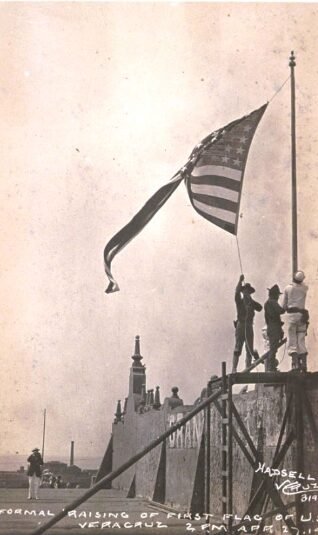
US. Marine John H. Quick raises the American flag over Veracruz
The military assault on Veracruz began on April 21, 1914, when U.S. naval forces, led by Rear Admiral Fletcher, initiated a landing operation on the city’s waterfront. The U.S. strategy focused on quickly seizing key strategic locations, including the customs house, which was vital to intercepting the arms shipment aboard the SS Ypiranga. More than 500 U.S. Marines and Navy sailors participated in the initial landing, with reinforcements arriving throughout the day.
Although the Mexican defenders initially offered little resistance, the situation quickly escalated as General Maass, under orders from the Mexican government, distributed weapons to the civilian population and prisoners from a local jail. However, this hastily assembled force was poorly organized and lacked the training necessary to mount an effective defense. Armed with Mauser rifles, many of the civilian defenders struggled to find the correct ammunition, further hindering their efforts.
The U.S. occupation intensified tensions between the two nations, fueling anti-American sentiment in Mexico and further complicating diplomatic efforts during the ongoing revolution.
As the U.S. forces advanced through Veracruz, sporadic fighting broke out in various parts of the city. One of the key sites of resistance was the Veracruz Naval Academy, where Commodore Manuel Azueta and the cadets mounted a brave but ultimately futile defense. The cadets suffered significant casualties, and the building was heavily shelled by U.S. warships in the harbor. Despite the disorganized defense, the Mexican forces managed to inflict some damage on the invading U.S. troops, with several American casualties reported on the first day of fighting.
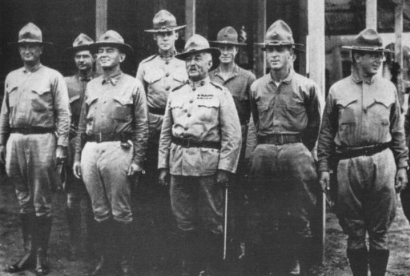
The senior officers of the 1st Marine Brigade in Veracruz, 1914: Front row, left to right: Lt. Col. Wendell C. Neville, Col. John A. Lejeune, Col. Littleton W.T. Waller, and Maj. Smedley Butler.
By April 22, the U.S. had secured most of Veracruz, but the fighting continued in certain pockets of the city. Rear Admiral Fletcher, realizing that it would be impossible to maintain control of the waterfront alone, decided to expand the occupation to the entire city. Additional U.S. forces, including Marines from other ships and Army brigades, were brought ashore to reinforce the occupation.
One of the most challenging aspects of the battle for the U.S. forces was the difficulty of street fighting. The Marines, although experienced in various forms of combat, were not used to urban warfare, while the sailors, trained for naval operations, struggled even more in the unfamiliar environment.
Despite these challenges, the U.S. forces were able to capture the key areas of the city by April 22. By that time, more than 3,000 U.S. troops were stationed in Veracruz, ensuring that the city remained under U.S. control for the duration of the occupation.

US troops enter Veracruz in April 1914
Aftermath and Consequences
The U.S. occupation of Veracruz lasted until November 23, 1914, when the U.S. forces withdrew from the city. During the occupation, U.S. officials declared martial law, and the military administration took control of the city’s governance. Although the occupation achieved its immediate objective of preventing the arms shipment from reaching Huerta, the long-term consequences were far more complicated.
One of the most significant results of the occupation was the deepening of anti-American sentiment in Mexico. Many Mexicans viewed the U.S. intervention as an imperialist action designed to weaken Mexico and assert American dominance over its neighbor. The occupation also further destabilized the already precarious political situation in Mexico, with various revolutionary factions capitalizing on the nationalist backlash against the U.S. presence to strengthen their positions.
The diplomatic fallout from the occupation was also significant. Argentina, Brazil, and Chile, collectively known as the ABC Powers, intervened to mediate between the United States and Mexico. Their efforts helped bring about a resolution to the crisis, culminating in the Niagara Falls Peace Conference. Although the U.S. successfully withdrew from Veracruz, the occupation left a lasting legacy of mistrust and tension between the two nations.
For the United States, the Battle of Veracruz raised questions about the role of military intervention in foreign affairs. While the intervention achieved its immediate goal, it also highlighted the challenges of conducting operations in a politically unstable region. The U.S. occupation of Veracruz is often seen as a reflection of the broader U.S. policy of interventionism in Latin America during the early 20th century, a policy that would continue to shape the region’s history for decades to come.
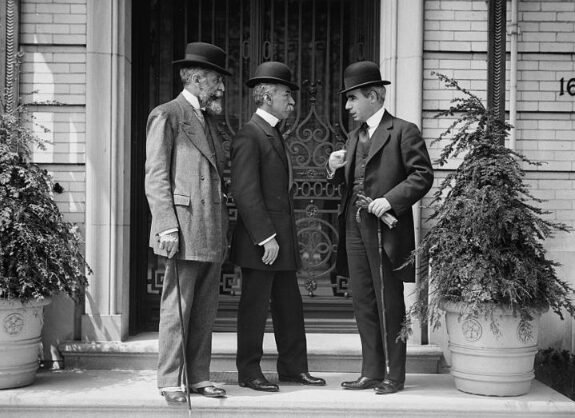
Chilean diplomat Eduardo Suárez Mujica, Brazilian diplomat Domício da Gama and Argentine Romulo S. Naon at the Niagara Falls peace conference in 1914
Major Facts about the Battle of Veracruz
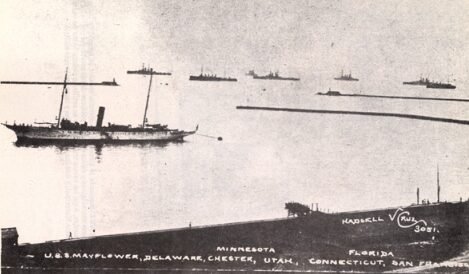
Image: American ships at Veracruz, USS Mayflower in foreground
- Date: The Battle of Veracruz took place between April 21 and April 22, 1914, with the U.S. occupation of the city continuing until November 23, 1914.
- Casualties: The battle resulted in significant casualties on both sides. Nineteen Americans were killed, and several dozen were wounded. Mexican casualties were higher, though estimates vary, with some sources suggesting that hundreds of Mexican defenders, including civilians, were killed or wounded during the fighting.
- Key Objective: The primary objective of the U.S. intervention was to prevent an arms shipment, aboard the SS Ypiranga, from reaching the forces of Victoriano Huerta. The secondary objective was to weaken Huerta’s regime and force his eventual resignation.
- Significant Military Leaders: On the U.S. side, Rear Admiral Frank Fletcher, Colonel Wendell Neville, and General Frederick Funston played major roles. On the Mexican side, General Gustavo Maass, Commodore Manuel Azueta, and General Aurelio Blanquet were key figures in the defense of Veracruz.
- Diplomatic Mediation: The ABC Powers (Argentina, Brazil, and Chile) mediated the conflict, helping to resolve tensions between the United States and Mexico through diplomatic negotiations at the Niagara Falls Peace Conference.
- Long-term Impact: The Battle of Veracruz deepened anti-American sentiment in Mexico and contributed to the broader instability of the Mexican Revolution. It also reinforced the perception of U.S. imperialism in Latin America, a view that would shape future relations between the U.S. and its southern neighbors.
Conclusion
The Battle of Veracruz in 1914 remains an important episode in U.S.-Mexico relations and a symbol of the complexities of foreign intervention during times of political upheaval. While the U.S. occupation achieved its immediate goals, the long-term consequences for both Mexico and the United States were far more profound.
The military action highlighted the volatility of the Mexican Revolution and exacerbated tensions between the two nations, leaving a legacy that would influence U.S.-Mexico relations for years to come. The involvement of key military commanders, both American and Mexican, and the significance of the battle in the broader context of Latin American diplomacy, make the Battle of Veracruz a pivotal moment in early 20th-century history.
Frequently Asked Questions about the Battle of Veracruz in 1914
The 1914 Battle of Veracruz occurred amid tense U.S.-Mexico relations during the Mexican Revolution. Triggered by the Tampico Affair, where Mexican forces detained U.S. sailors, the occupation worsened tensions, heightening anti-American sentiment and complicating diplomacy.
What were the causes of strained relations between Mexico and the United States before the Battle of Veracruz?
Relations between Mexico and the United States were strained due to the aftermath of the Mexican-American War (1846-1848), during which the U.S. seized 55% of Mexico’s territory. This loss fueled long-lasting animosity between the two nations, with Mexico viewing the U.S. as an imperialist aggressor.
How did relations between Mexico and the U.S. improve during Abraham Lincoln’s presidency?
During Abraham Lincoln’s presidency, the U.S. provided military aid to the Mexican government in its war against French occupation. This act of support improved relations between the two nations, creating a foundation for further cooperation.
What role did Porfirio Díaz play in improving Mexico-U.S. relations?
Porfirio Díaz, who ruled Mexico from 1876 to 1911, encouraged U.S. investment in Mexico’s stagnant economy. His administration fostered closer ties between the two nations, benefiting both economically.
What led to the breakdown in relations between Mexico and the U.S. after Díaz’s resignation?
After Porfirio Díaz resigned, U.S. Ambassador Henry Lane Wilson orchestrated a coup to overthrow his successor, Francisco I. Madero, viewing Madero as too reformist. This coup, which installed General Victoriano Huerta as leader, deepened tensions between the U.S. and Mexico.
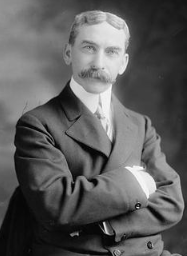
Henry Lane Wilson – United States Ambassador to Mexico (1909 -1913)
How did Woodrow Wilson’s policy toward Mexico differ from his predecessor’s?
Woodrow Wilson, who became U.S. President in 1913, refused to recognize Huerta’s government, withdrew U.S. diplomatic recognition, and imposed an arms embargo on Mexico. He also supported revolutionary forces like Pancho Villa in their efforts to overthrow Huerta.
What was the Tampico Affair, and how did it lead to the U.S. occupation of Veracruz?
The Tampico Affair occurred in April 1914 when nine American sailors were detained by Mexican authorities for entering a restricted area. Though the sailors were released, tensions escalated when U.S. naval commander Henry T. Mayo demanded a 21-gun salute, which was not provided. This standoff led President Wilson to order the seizure of Veracruz to prevent a shipment of arms from reaching Huerta.

U.S. Admiral Henry T. Mayo
What was the significance of the SS Ypiranga in the events leading to the occupation of Veracruz?
The SS Ypiranga was carrying a shipment of arms destined for Huerta’s forces. President Wilson, viewing the arms delivery as a threat, ordered the U.S. Navy to seize Veracruz to block the shipment. This action set off the U.S. occupation of the city.
How did the initial U.S. landing at Veracruz unfold?
On April 21, 1914, U.S. Marines and Navy sailors, under the command of Rear Admiral Frank Friday Fletcher, landed at Veracruz and began seizing key locations, including the customs house and the rail terminal. Though Mexican forces initially retreated, armed civilians and prisoners later mounted a disorganized defense of the city.
What challenges did U.S. forces face during the occupation of Veracruz?
U.S. forces, particularly Navy sailors unaccustomed to street fighting, faced resistance from disorganized Mexican defenders, including civilians and prisoners. Despite these challenges, the Americans eventually secured the city by April 22 with artillery support from warships in the harbor.
What was the impact of the U.S. occupation of Veracruz on U.S.-Mexico relations?
The occupation of Veracruz further strained U.S.-Mexico relations, fueling widespread anti-American sentiment in Mexico. Many Mexicans viewed the U.S. intervention as an imperialist move, and the incident deepened the ongoing revolutionary struggles in Mexico.
How did the occupation of Veracruz come to an end?
The occupation ended on November 23, 1914, after diplomatic mediation by the ABC Powers (Argentina, Brazil, and Chile). These nations helped resolve the conflict through the Niagara Falls Peace Conference, although the long-term damage to U.S.-Mexico relations remained.
What is the lasting significance of the Battle of Veracruz in U.S.-Mexico relations?
The Battle of Veracruz is remembered as a pivotal event in U.S.-Mexico relations, symbolizing the complexities of foreign intervention and revolution. It highlighted the volatility of the Mexican Revolution and left a lasting legacy of mistrust between the two nations.