Tantalus in Greek Mythology: Origin Story & Punishment
Tantalus is one of the more infamous figures in Greek mythology. He is primarily known for the severe punishment he received in the afterlife. His story is significant both in mythological terms and in its representation in Greek art, where it embodies themes of divine retribution, hubris, and eternal suffering. Tantalus’s myth is closely tied to the gods of Olympus, and his punishment stands as a warning about the consequences of defying or offending the gods.

Tantalus, a figure in Greek mythology, was notorious for his punishment in Tartarus. Image: A painting of Tantalus by Italian artist Gioacchino Assereto.
Mythological Background of Tantalus
Tantalus was a king, often referred to as the ruler of Sipylus, a city in Lydia (in present-day Turkiye). He was highly favored by the gods, even being granted the rare honor of dining with them on Mount Olympus. However, his actions during these privileged moments led to his downfall and eternal punishment.
The precise details of Tantalus’s offenses vary across different versions of the myth, but three key transgressions are commonly attributed to him:
- Stealing Ambrosia and Nectar: Ambrosia and nectar were the food and drink of the gods, granting them immortality. Tantalus, in one version of the myth, stole these divine substances from Olympus and brought them to mortals, thus breaching the sacred trust of the gods. By doing so, he committed an act of hubris—seeking to share the divine gifts reserved for the immortals with humanity.
- Divulging Divine Secrets: Another version of the myth accuses Tantalus of revealing divine secrets to mortals. Being allowed to sit among the gods on Olympus gave him access to knowledge that was not meant for human ears. By sharing this forbidden knowledge, Tantalus violated the sacred boundaries between mortals and gods.
- The Sacrifice of Pelops: Tantalus’s most notorious crime was his attempt to test the gods’ omniscience by serving them a gruesome meal. According to this version of the myth, Tantalus killed his own son, Pelops, and served him to the gods during a feast. The gods immediately recognized the nature of the meal, and although Demeter, distracted by the grief over her missing daughter Persephone, ate part of Pelops’s shoulder, the other gods refused to touch the food. Zeus, enraged by this heinous act, ordered Pelops to be brought back to life. The Fates (also known as the Moirai) restored Pelops, and his missing shoulder was replaced with an ivory piece crafted by Hephaestus. Tantalus, however, was condemned to eternal punishment for his crime.
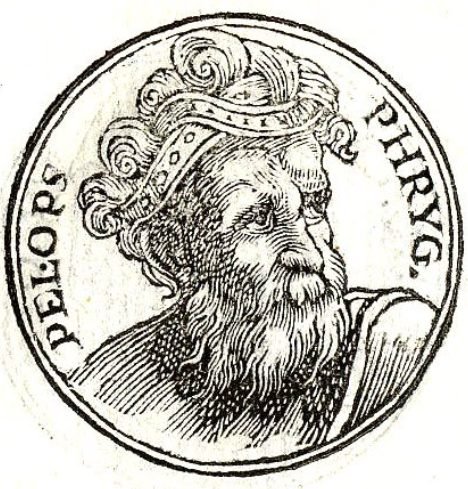
Tantalus was the father of Pelops, Niobe, and Broteas, and was either a son of Zeus or Tmolus. His punishment inspired the term “tantalize,” meaning to tease with unattainable desires.
READ MORE: Birth of the Gods – According to Hesiod
The Punishment of Tantalus
As a result of his actions, Tantalus was sentenced to eternal torment in Tartarus, the deepest part of the Greek underworld, reserved for the most egregious offenders. His punishment was not one of physical pain but rather a psychological torture of unfulfilled desires.
Tantalus was left perpetually thirsty and hungry, unable to satisfy his basic needs despite the tantalizing nearness of sustenance.
Tantalus was made to stand in a pool of water beneath a fruit tree with low-hanging branches. Whenever he bent down to drink from the water, it would recede beyond his reach, and whenever he reached up to grasp the fruit, the branches would rise just beyond his grasp. Thus, Tantalus was left perpetually thirsty and hungry, unable to satisfy his basic needs despite the tantalizing nearness of sustenance. This eternal deprivation of nourishment became a symbol of hopeless, unattainable desires.
In addition to this torment, Tantalus also had a large stone suspended over his head, which threatened to fall and crush him at any moment. This aspect of his punishment, mentioned in Pindar’s Isthmian Odes, symbolizes the ever-present danger that loomed over him, further intensifying his suffering.
The word “tantalize” in English, meaning to torment or tease by presenting something desirable but just out of reach, is derived from Tantalus’s myth and his specific form of punishment.
READ MORE: Most Famous Punishments in Tartarus
Tantalus in Greek Art
The myth of Tantalus, particularly his punishment, captured the imaginations of ancient Greek artists. Though his story is less frequently depicted than those of more famous heroes like Heracles or Perseus, Tantalus appears in various forms of Greek art, from vase paintings to sculptures. These artistic representations focus on key moments in the myth, particularly the banquet of the gods and the aftermath of Tantalus’s crime.
Depictions of the Banquet
One of the most common scenes involving Tantalus in Greek art is the moment when he serves his son, Pelops, to the gods at the banquet. This gruesome act is often depicted with the gods reacting in horror as they realize what has been placed before them.
In these depictions, the gods are shown turning away from the meal, sometimes with Demeter absentmindedly partaking in the flesh of Pelops. This scene represents the moral boundary between mortals and gods, with Tantalus transgressing that line by offering such a vile meal.
A notable example of this scene can be found on ancient Greek vases, where the banquet is often stylized, with Tantalus standing before the gods. The gods’ expressions of disgust or shock emphasize the gravity of his crime.
READ MORE: 15 Lesser-Known Deities in Greek Mythology
Tantalus’s Punishment
The depiction of Tantalus’s punishment in Tartarus is another common theme in Greek art, particularly in vase paintings. In these scenes, Tantalus is often shown standing in the pool of water, reaching for the fruit that continually eludes him. His facial expression typically reflects the agony of his unfulfilled desires, emphasizing the psychological torment he endures.
Ancient Greek artists used these images to convey the themes of eternal suffering and divine retribution. The symbolic nature of Tantalus’s punishment—being perpetually tantalized—was an effective way to express the consequences of hubris and the defiance of the gods. These representations often included other figures from Tartarus, such as Sisyphus, who was similarly condemned to eternal labor, underscoring the moral lesson that the gods’ justice was inevitable and severe.
Tantalus in Sculpture and Reliefs
In Greek sculpture, Tantalus is sometimes depicted in group settings, such as the family of Atreus, which includes his descendants like Agamemnon and Menelaus. Tantalus’s role as the progenitor of this cursed family adds a layer of tragic depth to his portrayal in art. His lineage is marked by suffering, betrayal, and murder, reflecting the long shadow of his crimes.
Some ancient reliefs and sculptures also depict Tantalus alongside his son Pelops, who becomes an important figure in his own right in Greek mythology. These representations often highlight the contrast between Pelops’s restored beauty and Tantalus’s eternal suffering, reinforcing the moral consequences of Tantalus’s actions.
Legacy of Tantalus in Literature and Culture
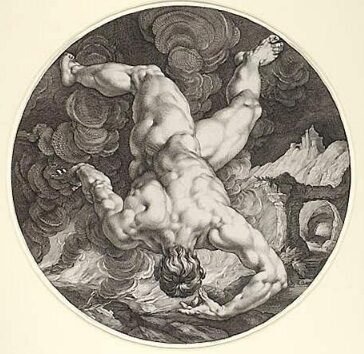
After revealing the gods’ secrets and attempting to trick them into eating his son, Tantalus was condemned to eternal torment. He stood in a pool of water beneath fruit-bearing trees, but whenever he tried to drink or eat, the water receded, and the fruit moved out of reach. Image: Print depicting the fall of Tantalus, preserved in the Ghent University Library.
Tantalus’s story resonated not only in ancient Greek art but also in the literature and culture of the time. His myth appears in the works of several prominent Greek writers, including Homer, Pindar, and Sophocles. In Homer’s Odyssey, for example, Odysseus encounters Tantalus during his journey to the underworld, witnessing his eternal torment. This scene is a reminder of the fate that awaits those who commit great offenses against the gods.
In Pindar’s odes, Tantalus’s punishment is highlighted as a warning against pride and greed, two qualities that often lead mortals to defy the gods. Pindar emphasizes the inevitability of divine justice and the futility of attempting to escape it.
In Greek tragedy, the descendants of Tantalus, particularly the House of Atreus, are central figures. The curse that plagues Tantalus’s family becomes the focus of plays such as Aeschylus’s Oresteia, where the themes of murder, revenge, and divine retribution are explored in great depth. The tragedy of Tantalus and his descendants underscores the long-lasting consequences of his actions, as his hubris reverberates through generations.
READ MORE: The Three Most Acclaimed Greek Tragedians and their Works
The Curse of the House of Atreus
The legacy of Tantalus is intricately tied to the House of Atreus, one of the most tragic dynasties in Greek mythology. Tantalus’s descendants, including his son Pelops and grandsons Atreus and Thyestes, are embroiled in a series of violent and treacherous events that lead to the downfall of their house. The most famous members of this family, Agamemnon and Menelaus, play key roles in the Trojan War and its aftermath, with their fates often seen as the fulfillment of the curse placed upon their family by the gods.
The atrocities committed by Tantalus are echoed in the actions of his descendants, such as Atreus’s murder of Thyestes’s children and the murder of Agamemnon by his wife Clytemnestra. These acts of violence and betrayal serve as a continuation of the moral transgressions that began with Tantalus, and they highlight the inescapable nature of the curse that haunts his lineage.
Symbolism and Moral Lessons
Tantalus’s myth serves as a powerful symbol in Greek mythology, representing the dangers of hubris, the consequences of offending the gods, and the inevitable nature of divine punishment. His story is a reminder that mortals must respect the boundaries set by the gods and that any attempt to overstep those boundaries will result in severe consequences.
The image of Tantalus, forever reaching for sustenance that remains just out of reach, is a poignant metaphor for unfulfilled desire and unattainable goals. His punishment is both physical and psychological, reflecting the depth of his crimes and the gods’ power to inflict eternal suffering.
Tantalus’s role as the progenitor of the cursed House of Atreus further underscores the long-term consequences of moral transgressions. His actions not only doom himself but also condemn his descendants to a life of misery, violence, and betrayal. The curse that follows his family serves as a reminder that the sins of the past can have lasting repercussions, affecting future generations.
Did you know…?
- Tantalus’s name, as interpreted by Plato in the Cratylus, is derived from the Greek word τάλας (tálas), meaning “wretched” or “who has to bear much,” implying that Tantalus was destined to endure suffering.
- It has been suggested that the name Tantalus may have a historical connection to the Hittite kings, particularly Hantili, suggesting a possible Anatolian origin for the myth of Tantalus.
Conclusion
Tantalus is a figure whose story is rich with themes of hubris, punishment, and divine retribution. In both mythology and art, he is portrayed as a tragic character who, despite his initial favor with the gods, falls from grace due to his arrogance and transgressions. His eternal punishment in Tartarus serves as a powerful symbol of the consequences of defying the gods, and his legacy, through the House of Atreus, continues to resonate in Greek literature and tragedy. Tantalus’s story is a lasting reminder of the fragile balance between mortals and the divine, and the dangers of overstepping that boundary.
Frequently Asked Questions
Tantalus’s story is one of hubris, betrayal, and divine retribution. As a favored mortal who betrayed the gods, his eternal punishment serves as a powerful reminder of the consequences of defying divine authority. Image: Engraving by Hendrik Goltzius and C. Cornelius (1588)
Where was Tantalus believed to have ruled?
Tantalus is believed to have ruled over an Anatolian city, possibly called Tantalís or Sipylus, located in western Anatolia, which later became known as Lydia.
Who was Tantalus’s father according to different sources?
Some sources name his father as Tmolus, a king of Lydia, while others suggest that Tantalus was the son of Zeus and Pluto, an earth deity associated with wealth and the underworld.
What were some of the crimes Tantalus committed against the gods?
Tantalus committed several crimes, including stealing ambrosia and nectar from the gods to bring to mortals, revealing divine secrets, and offering his son Pelops as a sacrificial meal to test the gods’ omniscience.
What was the infamous crime Tantalus committed involving his son Pelops?
Tantalus killed his son Pelops, cut him into pieces, and served him to the gods at a banquet. The gods, realizing the nature of the meal, refused to eat it, except for Demeter, who absentmindedly consumed part of Pelops’s shoulder. Pelops was later revived with an ivory shoulder crafted by Hephaestus.
Pelops went on to become the ruler of Pisa in the Peloponnesus and was the namesake of the Peloponnesian region. His descendants, the House of Atreus, were central to many Greek tragedies, including the stories of Agamemnon and Menelaus.

The most famous of Tantalus’s children, Pelops became a central figure in Greek mythology. He was resurrected by the gods after Tantalus killed and served him at a banquet. Image: Pelops and Hippodamia racing in a bas-relief (Metropolitan Museum of Art, New York City)
Who were the other children of Tantalus?
In Greek mythology, Tantalus had several notable children, who played significant roles in various myths. The most prominent of his children other than Pelops are:
- Niobe: Niobe was the daughter of Tantalus who boasted of her superiority over Leto, the mother of the gods Apollo and Artemis, because she had many children (the Niobids). In response, Apollo and Artemis killed all or most of Niobe’s children as punishment for her hubris. Niobe was transformed into a stone, eternally weeping for her lost offspring.

A 1772 painting by French painter Jacques-Louis David shows Niobe shielding her children from Apollo and Artemis’s attack.
- Broteas: Broteas is a lesser-known son of Tantalus, who was believed to have been a skilled hunter. According to some myths, Broteas refused to honor Artemis, and in retaliation, he was driven mad and either threw himself into a fire or was consumed by flames.
How was Tantalus punished for his crimes?
Tantalus was condemned to eternal punishment in Tartarus, where he stood in a pool of water with fruit hanging above him. Whenever he tried to drink or eat, the water and fruit would recede out of reach, symbolizing unfulfilled desires. Additionally, a large stone loomed above his head, threatening to crush him at any moment.
What is the significance of the stone in Tantalus’s punishment?
The stone hanging over Tantalus’s head symbolizes the constant threat of destruction and eternal torment, similar to the punishment of Sisyphus, who was condemned to roll a boulder up a hill repeatedly.
What is the “Golden Dog Incident” involving Tantalus?
In another version of the myth, Tantalus was involved in the theft of a golden dog that either guarded the infant Zeus or a temple of Zeus. Tantalus either stole the dog himself or kept it for his friend Pandareus. When asked to return it, he denied having it, leading to further punishment from the gods.
How did Tantalus’s legacy continue through his descendants?
Tantalus’s legacy continued through his son Pelops, who became a central figure in Greek mythology. Tantalus was the progenitor of the cursed House of Atreus, a family marked by murder and betrayal, with figures like Agamemnon and Menelaus playing significant roles in the Trojan War.
What geographical features are associated with Tantalus in ancient mythology?
Geographical features associated with Tantalus include Mount Sipylus and Lake Karagöl (Lake Tantalus) near İzmir, where Pausanias mentions a tomb of Tantalus. His influence extended to other regions in Anatolia, such as Lesbos, where a hero shrine was dedicated to him.

Karagöl in Mount Yamanlar, İzmir, Turkey