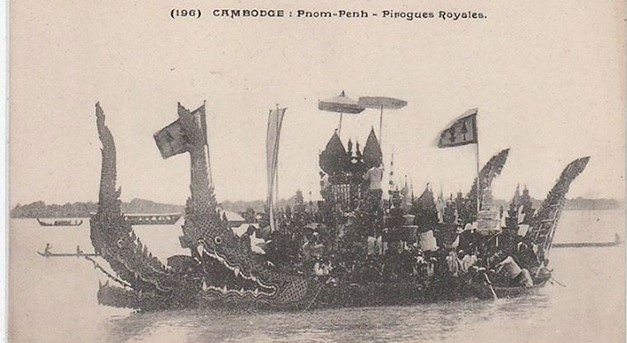
Cambodian Water Festival Celebrations in the Capital, Phnom Penh.
Bon Om Touk, or the Cambodian Water Festival, is one of Cambodia’s most significant annual celebrations. Marking the end of the monsoon season and the reversal of the Tonlé Sap River’s flow, the festival is a three-day event filled with boat races, illuminated float processions, moon worship ceremonies, and traditional performances. Celebrated in late October or early November, the festival coincides with the full moon of the Buddhist lunar calendar and has deep historical, cultural, and spiritual significance for Cambodians.
Historical Background
The roots of Bon Om Touk trace back to the reign of Jayavarman VII (1181 AD), one of Cambodia’s most celebrated kings. It is believed that the festival originated as a tribute to the Khmer navy, which played a crucial role in defending the kingdom from external threats. The boat races, a central feature of the festival, are thought to reenact naval battles fought against the Cham forces on the Tonlé Sap Lake.
During the reign of King Ang Chan I in the 16th century, the festival gained greater significance as a national event. Later, under the French colonial administration, Bon Om Touk was recognized as a major Cambodian tradition, appearing in French publications such as Le Magasin Pittoresque (1873) and Les Colonies Françaises (1887). Despite periods of disruption due to war, political turmoil, and the Khmer Rouge regime, the festival has been revived and remains a significant annual event.
Bon Om Touk is not just a celebration; it is a cultural, spiritual, and historical event that embodies the identity of Cambodia.
Significance of Bon Om Touk
Bon Om Touk is celebrated not just for its historical roots, but also for its spiritual and agricultural importance. The festival represents:
- The End of the Monsoon Season – The festival signals the transition from Cambodia’s wet season to the dry season.
- The Reversal of the Tonlé Sap River – This rare natural phenomenon is crucial for Cambodia’s ecosystem, ensuring abundant fish supply and fertile lands.
- A Tribute to the Goddess Ganga – Inspired by Hindu mythology, Cambodians honor Preah Mae Kongkea, the water goddess, for blessing the land with prosperity.
- A Celebration of Cambodian Naval History – The boat races symbolize Cambodia’s naval strength and commemorate past military victories.
Major Events and Rituals
The Royal Boat Races (Om Touk)
The most anticipated part of Bon Om Touk is the longboat races along the Sisowath Quay riverfront in Phnom Penh. Hundreds of elaborately designed boats, each with up to 78-80 rowers, compete in fierce yet symbolic races. The races date back to ancient times when Khmer warriors demonstrated their prowess in naval warfare.
Each province of Cambodia sends its best rowers to compete in these races, and the winning teams are honored with prizes from the King of Cambodia. Some boats are adorned with dragon motifs, representing mythological creatures such as Nāga (serpents) and Makara (sea dragons).
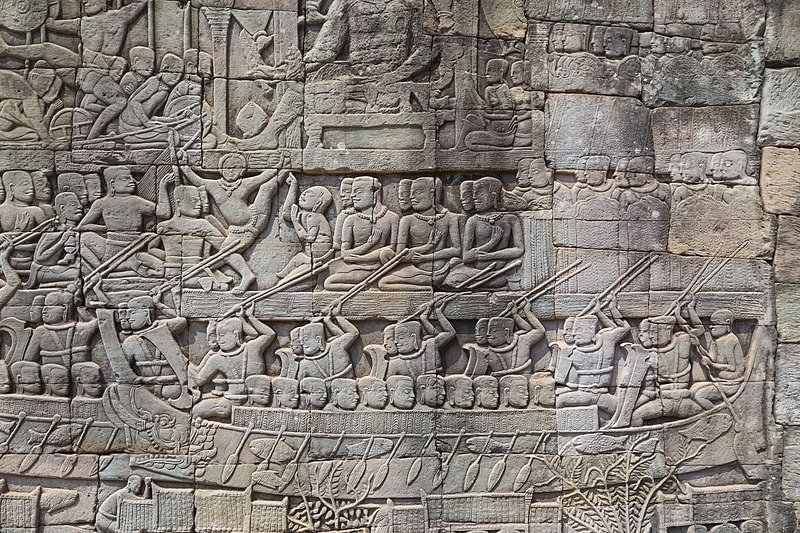
The Battle of Tonle Sap: Khmer warriors navigating a long naval boat.
The Festival of Illuminated Floats (Bondet Bratib)
As night falls, illuminated floats (Bratib) are released onto the Tonlé Sap River. These ornately decorated floats, representing different Cambodian ministries and institutions, are designed to pay homage to the river and its importance in Cambodian life. Fireworks displays and candle-lit lantern releases further enhance the spectacle.
This ritual is linked to Hindu traditions of Ganga puja, where people express gratitude to the Goddess Ganga for life-giving waters. The Buddhist influence is also evident, as illuminated floats symbolize the spiritual guidance of the Buddha.
The Moon Worship Ceremony (Sampeah Preah Khae)
On the second night of the festival, Cambodians gather in temples and public squares to pay respects to the full moon. The Moon, believed to house Preah Purthisat (the Buddha in a past life) and a legendary rabbit, is worshipped through offerings of Og Ambok (flattened rice), bananas, and coconut milk.
The Og Ambok Ceremony
This tradition involves eating flattened rice mixed with coconut and bananas at exactly 12:12 AM. Families and friends gather to eat Og Ambok, symbolizing community unity and abundance. A playful game accompanies the ritual, where participants must make each other laugh, and the loser must eat more Ambok.
Closing Ceremony: Ribbon Cutting
On the final day of the festival, the King of Cambodia or high-ranking officials cut a ceremonial ribbon, symbolizing the end of the boat races and the festival itself. This act signifies gratitude to the water spirits and marks the official transition into the dry season.
Symbolism in Bon Om Touk
The Tonlé Sap River
The Tonlé Sap River, which reverses its flow during the monsoon season, represents the cyclical nature of life, abundance, and renewal. Cambodians believe the river holds a sacred life-giving force that must be honored.
The Dragon Boats
Each boat in the festival has symbolic eyes painted on the bow, giving it a spiritual presence. Some boats resemble Nāga (serpent deities), while others depict Makara (mythical sea creatures), believed to protect Cambodia from evil spirits.
The Rabbit on the Moon
According to Khmer Buddhist legend, the image of a rabbit can be seen on the Moon’s surface. The tale tells of a selfless rabbit who offered himself as food to a starving Brahmin, later revealed to be Indra in disguise. As a reward for his generosity, Indra placed his image on the Moon forever.
Cambodians continue to honor their ancestral traditions by ensuring Bon Om Touk remains a cherished symbol of unity, gratitude, and renewal for generations to come.
Modern Adaptations and Challenges
While Bon Om Touk remains deeply rooted in tradition, it has evolved with modern influences. Television broadcasts, digital promotions, and large-scale sponsorships have expanded its reach beyond Cambodia. However, the festival has also faced several challenges:
- Suspensions Due to Tragedies and Politics – The 2010 Koh Pich stampede, which resulted in over 345 deaths, led to temporary suspensions. Political tensions and natural disasters have also impacted the festival.
- Environmental Concerns – Pollution from festival waste has raised concerns, with viral videos showing garbage being swept into the river.
- Drought and Climate Change – Changes in the Mekong River’s flow and dam construction upriver have affected the Tonlé Sap’s seasonal reversal, threatening the ecosystem and fish stocks.
Frequently Asked Questions about Bon Om Touk
When is Bon Om Touk celebrated?
It is held in late October or early November, aligning with the full moon of the Buddhist lunar calendar.
What are the main activities during the festival?
The festival features dragon boat races along Sisowath Quay, fireworks, evening concerts, and traditional ceremonies like Bondet Bratib and Og Ambok.
What is the historical significance of the boat races?
The races date back to at least the reign of King Jayavarman VII (1181 AD) and commemorate Khmer naval victories, particularly against the Cham forces.
Who is Preah Mae Kongkea?
Preah Mae Kongkea, derived from Hindu mythology’s Ganga, is the goddess of water in Khmer tradition, worshipped during the festival for bountiful fishing and agricultural prosperity.
READ MORE: What are the Principal Deities in Hinduism?
What is the Og Ambok ceremony?
Og Ambok, held at midnight on the second day, involves eating flattened rice with coconut and bananas while playing a game where participants try to make each other laugh.
What is the significance of the Moon in Bon Om Touk?
The festival coincides with the full moon and includes the Sampeah Preah Khae ritual, where people offer food to the Moon, symbolizing gratitude and good fortune.
Why is Bondet Bratib important?
This illuminated boat ceremony, held in the evenings, symbolizes prayers for peace and gratitude to the river, with each ministry launching a decorated lantern float.
Has the festival ever been suspended?
Yes, it has been suspended multiple times due to political unrest, natural disasters, the 2010 Koh Pich bridge stampede, and the COVID-19 pandemic.
What is the legend of the Moon Rabbit in Khmer culture?
According to Khmer Buddhist tradition, the Moon Rabbit, Pothisat, sacrificed himself to feed a hungry Brahmin (actually the god Indra), who honored his virtue by placing his image on the Moon.





