British General William Howe
William Howe, 5th Viscount Howe, was a prominent British Army officer and military leader whose career spanned several major conflicts, including the War of the Austrian Succession, the Seven Years’ War, and the American War of Independence. Born into an aristocratic and militarily distinguished family, Howe played pivotal roles in shaping British military strategies, though his leadership in the American War of Independence remains controversial.
Early Life and Military Beginnings
William Howe was born on August 10, 1729, into a family with deep military traditions. He was the third son of Emanuel Scrope Howe, 2nd Viscount Howe, and Mary Sophia von Kielmansegg. His elder brother, Richard Howe, became a celebrated admiral in the Royal Navy. The Howe family’s prominence and connections provided young William with a direct pathway into the British Army.
Howe joined the army in 1746, during the latter stages of the War of the Austrian Succession. Commissioned as a junior officer, he quickly gained experience in conventional European warfare. These formative years provided the foundation for his later successes and challenges as a military leader.

Image: An engraving of William Howe by English painter Henry Bryan Hall.
Seven Years’ War and Early Campaigns
During the Seven Years’ War (1756–1763), Howe emerged as a capable and daring officer. He participated in several critical campaigns, earning recognition for his contributions to Britain’s imperial expansion.
Louisbourg (1758)
Howe was part of the British force that captured the French fortress of Louisbourg on Cape Breton Island. The victory was a key strategic gain, securing British control over access to the St. Lawrence River and paving the way for further offensives against French Canada.
Quebec (1759)
Perhaps his most famous achievement during this period was his role in the capture of Quebec. Howe led a force that scaled the cliffs at Anse-au-Foulon, allowing British troops under General James Wolfe to surprise the French and win the decisive Battle of the Plains of Abraham. This victory marked the turning point in the war for control of Canada.
Belle Île and Havana (1761–1762)
Howe participated in the capture of Belle Île off the French coast and later played a role in the British conquest of Havana, Cuba. These campaigns further demonstrated his versatility as an officer capable of operating in diverse environments.
For his accomplishments, Howe was appointed Lieutenant-Governor of the Isle of Wight in 1768, a ceremonial position he held until 1795.
Arrival in North America
In March 1775, as tensions escalated between Britain and its American colonies, Howe was sent to North America as a senior military commander. Arriving in May, he joined British forces just after the outbreak of the American War of Independence. His initial engagement in the conflict was at the Battle of Bunker Hill (June 1775).
Battle of Bunker Hill
Howe led British troops in a frontal assault against fortified American positions on Breed’s Hill. Although the British ultimately secured the ground, they suffered significant casualties, highlighting the challenges of the conflict. The heavy losses deeply influenced Howe’s approach to future engagements.
Commander-in-Chief
In September 1775, Howe succeeded General Thomas Gage as Commander-in-Chief of British land forces in North America. His appointment marked a shift in British strategy, with Howe tasked with suppressing the rebellion while balancing political and military considerations.
Campaigns in New York and Philadelphia
Howe’s tenure as Commander-in-Chief was marked by a mix of brilliant tactical victories and strategic controversies.
New York Campaign (1776)
Howe orchestrated a series of successful maneuvers to capture New York City, defeating George Washington’s Continental Army in battles at Long Island, Harlem Heights, and White Plains. These victories secured British control of a critical strategic hub and demonstrated Howe’s ability to execute large-scale operations effectively.

Image: George Washington
Philadelphia Campaign (1777)
Howe’s decision to focus on capturing Philadelphia, the American capital, defined the following year’s operations. He won battles at Brandywine and Germantown, enabling British forces to occupy the city. Despite these tactical successes, the campaign drew criticism for diverting resources from supporting General John Burgoyne’s northern campaign. Burgoyne’s defeat at Saratoga proved disastrous for Britain, leading to France’s entry into the war on the American side.
Controversies and Resignation
Howe’s leadership during the Philadelphia campaign has been the subject of significant historical debate. Critics argue that his decision to prioritize Philadelphia over coordinating with Burgoyne was a strategic blunder that contributed to the broader British failure in 1777. Others contend that unclear directives from London and logistical challenges constrained Howe’s options.
The growing criticism of Howe’s leadership, combined with his dissatisfaction with the lack of support from the British government, led him to resign his command in 1777. He was replaced by Sir Henry Clinton and returned to England in 1778.
Later Career and Political Life
After leaving America, Howe remained active in Britain, though his military and political roles diminished in prominence.
Defensive Duties
Howe held various defensive postings, overseeing preparations for the potential invasion of Britain during the Napoleonic Wars.
Political Career
Howe represented Nottingham in the House of Commons from 1758 to 1780. His political career allowed him to advocate for military reforms and policies, though his influence was limited compared to his military role.
Inheritance and Final Years
In 1799, Howe inherited the title of Viscount Howe upon the death of his brother, Richard, who had no direct heirs. William Howe, however, also had no children, and the viscountcy became extinct upon his death on July 12, 1814.
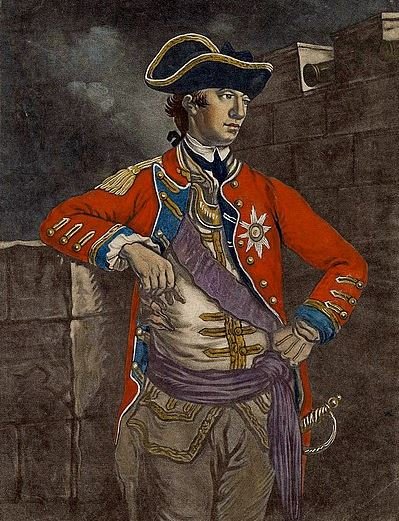
Image: A 1777 artwork depicting Howe.
Legacy and Historical Assessment
William Howe’s military career is characterized by both significant achievements and enduring controversies.
Strengths
- Howe demonstrated tactical brilliance in engagements such as the New York campaign and the capture of Quebec.
- His ability to lead large-scale operations and adapt to diverse combat environments highlighted his versatility.
Weaknesses
- Howe’s strategic decisions during the American War of Independence, particularly in 1777, are widely debated. Critics argue that his focus on personal victories, such as Philadelphia, undermined Britain’s overall war effort.
- His reluctance to engage in prolonged offensive operations against Washington’s Continental Army allowed the Americans to regroup and sustain the rebellion.
Enduring Debate
- The degree to which Howe was responsible for British failures in the American War of Independence remains a topic of historical discussion. Some historians view him as a scapegoat for broader systemic issues, including inconsistent directives from London and the logistical challenges of waging war across the Atlantic.
Conclusion
William Howe, 5th Viscount Howe, played a central role in some of the most critical campaigns of the 18th century. His successes in the Seven Years’ War showcased his tactical skill, while his leadership during the American War of Independence highlighted the complexities of commanding in a revolutionary conflict. Though his career ended amidst controversy, Howe’s contributions to British military history remain a testament to the challenges and triumphs of 18th-century warfare.
Frequently Asked Questions

What were William Howe’s early military achievements?
Howe gained recognition during the War of the Austrian Succession and the Seven Years’ War, including his roles in the capture of Louisbourg (1758), Belle Île (1761), Havana (1762), and his leadership at Quebec in 1759.
What was William Howe’s role in the capture of Quebec?
Howe led British forces to seize the cliffs at Anse-au-Foulon, enabling James Wolfe to secure victory over the French at the Battle of the Plains of Abraham in 1759.
What position did Howe hold before the American War of Independence?
Howe served as Lieutenant-Governor of the Isle of Wight from 1768 to 1795.
When did William Howe arrive in North America during the American War of Independence?
He arrived in North America in May 1775, shortly after the outbreak of the war.
What was Howe’s first significant engagement in the American War of Independence?
Howe led British forces to a costly victory at the Battle of Bunker Hill in June 1775, showcasing the challenges of the conflict despite the tactical success.
What were Howe’s major victories during the American War of Independence?
He achieved notable victories with the capture of New York City in 1776 and Philadelphia in 1777.
Why was Howe criticized for his role in the 1777 campaigns?
Howe’s decision to prioritize Philadelphia over supporting General John Burgoyne’s Saratoga campaign has been criticized as a strategic misstep that contributed to Burgoyne’s defeat and France’s entry into the war.
What were the consequences of Howe’s resignation as Commander-in-Chief?
Howe resigned his command in 1777 and returned to England in 1778, marking the end of his active involvement in the American conflict.
Did William Howe hold political office?
Yes, Howe served as a Member of Parliament for Nottingham from 1758 to 1780.
What happened to the viscountcy after William Howe’s death?
Howe inherited the title of Viscount Howe in 1799 upon his brother Richard’s death, but the viscountcy became extinct upon William’s death in 1814 as he had no children.
How is William Howe’s legacy assessed?
Howe’s military career is viewed as a mix of success and controversy. While his tactical skill was evident in battles like New York and Philadelphia, his strategic decisions, particularly in 1777, are debated as contributing to British failures in the American War of Independence.





