Buffalo Bill: History and Major Facts
Buffalo Bill, born William Frederick Cody on February 26, 1846, in Le Claire, Iowa, is a significant figure in American history known for his roles as a frontiersman, scout, and showman. His life and career have become emblematic of the American Old West, and his contributions to American popular culture are considerable.
Early Life and Frontier Experiences
Cody’s early years were marked by hardship and adventure. His family moved several times during his childhood, finally settling in Kansas Territory. Cody’s father, Isaac Cody, was a vocal anti-slavery advocate, which led to tensions and violence in the region, particularly during the “Bleeding Kansas” period. This environment of conflict and instability influenced young William and his future endeavors.
At the age of 11, following his father’s death, Cody began working to support his family. His early jobs included serving as a messenger and wrangler for a freight company, which exposed him to the rugged life of the frontier. By his teenage years, Cody had also worked as a teamster, a trapper, and a prospector, gaining invaluable experience and skills that would later define his legendary status.
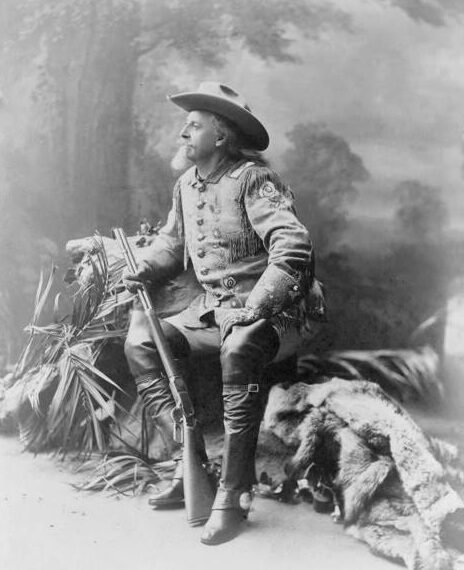
Image: A 1903 picture of Buffalo Bill.
The Pony Express and Military Service
One of the defining moments in Cody’s early career was his involvement with the Pony Express in 1860. As a rider, he covered vast distances, enduring harsh weather and dangerous terrain to deliver mail. The Pony Express played a critical role in connecting the Eastern and Western United States, and Cody’s participation further solidified his reputation as a fearless and skilled frontiersman.
During the American Civil War, Cody served in the Union Army as a scout. His knowledge of the plains and his experience with Native American tribes made him an invaluable asset. After the war, he continued his service as a civilian scout for the U.S. Army, participating in various campaigns against Native American tribes. His bravery and skill in these roles earned him recognition and acclaim.
Earning the Nickname “Buffalo Bill”
Cody’s nickname, “Buffalo Bill,” originated from his work as a buffalo hunter. From 1867 to 1868, he hunted buffalo to supply meat for the Kansas Pacific Railroad construction crews. According to some accounts, he killed over 4,000 buffalo during an 18-month period. This feat not only contributed to the near-extinction of the American bison but also bolstered Cody’s growing legend.
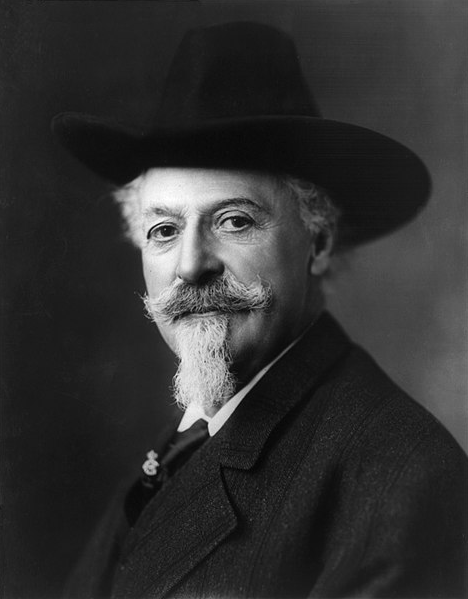
Image: A 1911 portrait of Buffalo Bill.
Buffalo Bill’s Wild West Show
Perhaps the most enduring aspect of Cody’s legacy is his creation of Buffalo Bill’s Wild West show. In 1883, he launched this traveling show, which blended elements of theater, circus, and rodeo to depict the American frontier. The show featured dramatic reenactments of historical events, such as the Battle of Little Bighorn and the Pony Express rides, as well as displays of sharpshooting, horse riding, and Native American culture.
Cody’s Wild West show became an international sensation, touring the United States and Europe for over three decades. It provided audiences with a romanticized view of the American West, complete with cowboys, Native American warriors, and legendary figures like Annie Oakley and Sitting Bull. The show’s popularity helped shape the world’s perception of the American frontier and its people.
Legacy and Cultural Impact
Buffalo Bill’s impact on American culture and history is profound. He played a pivotal role in popularizing the mythology of the Wild West, influencing literature, film, and popular culture. His Wild West show introduced audiences to a dramatized version of frontier life, contributing to the enduring allure of the American cowboy and the untamed wilderness.
Cody also had a significant impact on Native American representation. While his shows often perpetuated stereotypes, they also provided a platform for Native Americans to participate in and share their culture with audiences worldwide. Figures like Sitting Bull, who participated in Cody’s show, were able to use this platform to advocate for their people’s rights and present their perspectives, albeit within the constraints of the show’s narrative.
Later Years and Death
In his later years, Cody faced financial difficulties despite his fame. The costs of running the Wild West show, combined with his generous spending habits and various business ventures, led to significant debt. In 1913, he declared bankruptcy, and the show was sold off.
Buffalo Bill died on January 10, 1917, in Denver, Colorado. He was buried on Lookout Mountain, near Golden, Colorado, with a view overlooking the Great Plains. His death marked the end of an era, but his legacy lived on through the continued fascination with the Wild West and the enduring image of the American cowboy.
Major Facts and Controversies
- Cody’s Scouting and Military Role: Buffalo Bill’s contributions as a scout for the U.S. Army were significant, particularly during the Indian Wars. He was awarded the Medal of Honor in 1872 for his service, although it was controversially revoked in 1917 (along with those of other civilian scouts) and later reinstated in 1989.
- Wild West Show’s Cultural Significance: The Wild West show played a crucial role in the development of American entertainment and the portrayal of the American West. It combined elements of performance art with historical reenactments, setting the stage for future Western-themed shows and films.
- Representation of Native Americans: While Buffalo Bill’s Wild West show included Native American performers and attempted to showcase their culture, it often did so through a lens of exoticism and stereotype. However, some argue that the show provided a platform for Native American performers to share their stories and perspectives.
- Contribution to the Myth of the West: Cody’s storytelling and showmanship were instrumental in creating the mythos of the Wild West. He was a key figure in popularizing the image of the rugged cowboy and the untamed frontier, which became central to American cultural identity.
- Humanitarian Efforts: Despite the controversies surrounding his depiction of Native Americans, Cody supported their rights and was known for his charitable work. He advocated for fair treatment of Native Americans and supported various philanthropic causes.
Bass Reeves (1838 – 1910): The first black deputy U.S. marshal west of the Mississippi River
Questions and Answers
Buffalo Bill Cody’s life and career encapsulate the spirit and contradictions of the American frontier. He was a skilled scout, a successful showman, and a key figure in the creation of the Wild West mythology.
When and where was William Frederick Cody, also known as Buffalo Bill, born?
Buffalo Bill was born on February 26, 1846, in Le Claire, Iowa Territory.
What are the main occupations that Buffalo Bill was known for?
Buffalo Bill was known as a soldier, bison hunter, and showman.
At what age did Buffalo Bill begin performing in shows, and what themes did these shows depict?
He began performing in shows at the age of 23, depicting cowboy themes and scenes from the frontier and Indian Wars.
What was the name of the traveling show established by Buffalo Bill, and when was it founded?
The show was called Buffalo Bill’s Wild West, and it was founded in 1883.
In addition to touring the United States, where else did Buffalo Bill’s Wild West show tour, and when did this international tour begin?
The show toured Europe, beginning in 1887.
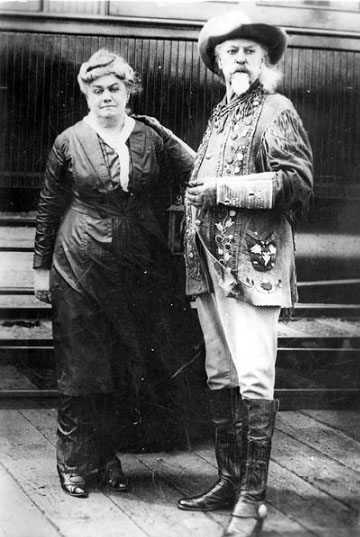
Buffalo Bill was born in Le Claire, spent part of his childhood in Mississauga, Ontario, Canada, and later moved with his family to the Kansas Territory. After his father’s death, he began working at the age of 11 to support his family. Image: Buffalo Bill (right) with his wife, Louisa (left).
What was Buffalo Bill’s role in the Pony Express, and at what age did he begin this work?
He became a rider for the Pony Express at the age of 15, delivering mail across long distances in dangerous conditions.
What was Buffalo Bill’s involvement in the American Civil War?
He served in the Union Army from 1863 until the end of the war in 1865.
What recognition did Buffalo Bill receive for his actions during the Indian Wars, and what happened to this recognition in 1917 and 1989?
Buffalo Bill was awarded the Medal of Honor in 1872 for his actions during the Indian Wars. The award was rescinded in 1917, but it was reinstated by Congress in 1989.
How did Buffalo Bill’s Wild West show influence American culture and the perception of the Old West?
The show brought the excitement and drama of frontier life to audiences worldwide, helping to shape the perception of the American cowboy and the Old West, despite often romanticizing and dramatizing these themes.