U.S. States that derive their names from Native American languages
The names of these U.S. states not only preserve the languages and heritage of the Native American tribes who originally inhabited these lands but also serve as a reminder of the rich cultural history that predated European colonization. Each name carries a story of the people and their connection to the land, highlighting the diverse and intricate tapestry of indigenous cultures across North America.
In this comprehensive guide, World History Edu will delve into the origins, meanings, and historical significance of each state’s name, highlighting the rich cultural heritage of the Native American tribes associated with these names.
Alabama

The name “Alabama” is derived from the Alabama tribe, a Muskogean-speaking people.
Origin and Meaning: The name “Alabama” comes from the Alabama tribe, a Muskogean-speaking people. The name is believed to derive from the Choctaw words “Alba” (vegetation, plants) and “Amo” (gatherer, picker), which together mean “vegetation gatherers” or “plant clearers.”
Historical Significance: The Alabama tribe originally lived in the area now known as Alabama and played a significant role in the region’s pre-colonial history. Their name reflects their agricultural practices and connection to the land.
Alaska

“Alaska” is derived from the Aleut word “Alyeska,” meaning “great land” or “mainland.”
Origin and Meaning: “Alaska” is derived from the Aleut word “Alyeska,” meaning “great land” or “mainland.” The Aleut people are indigenous to the Aleutian Islands and parts of Alaska.
Historical Significance: Alaska’s name reflects its vast and diverse landscape, which has been home to various indigenous peoples for thousands of years, including the Aleut, Inuit, and Tlingit, among others. These groups have adapted to the harsh climates and developed unique cultures and traditions.
Arizona
Origin and Meaning: The name “Arizona” is thought to originate from the O’odham word “Ali ṣona-g,” which means “small spring.” The O’odham people are native to the southwestern United States.
Historical Significance: Arizona’s name highlights the importance of water sources in the arid desert environment of the region. The O’odham people have a deep connection to the land and its scarce water resources.
Arkansas
Origin and Meaning: The origin of Arkansas’s name is uncertain. One account states the name was derived from the Quapaw word “akakaze,” meaning “land of downriver people.” The Quapaw were a Siouan-speaking tribe that lived along the Arkansas River.
As with many Native American words, it has various spellings, including Alkansia, Alkansas, and Akamsea. Some believe it is of Algonquin origin with an unknown meaning, while others suggest it is a French interpretation of “Kansas,” a Sioux word meaning “south wind people.”
Historical Significance: The name reflects the geographical location of the Quapaw people and their relationship with the river systems that were crucial for transportation and sustenance.

“Arkansas” is derived from the Quapaw word “akakaze,” meaning “land of downriver people.”
Connecticut
Origin and Meaning: The name “Connecticut” comes from the Mohegan-Pequot word “Quinnehtukqut,” meaning “long tidal river.” The Mohegan and Pequot are Algonquian-speaking tribes.
Historical Significance: The name emphasizes the significance of the Connecticut River, which was a vital resource for the indigenous peoples in the region for fishing, transportation, and trade.

Derived from the Indian word “Quonoktacut” (also “Quonecktacut”), Connecticut means “long river,” “the river whose water is driven by tides or winds,” or “long river place.”
Dakota (North and South Dakota)
Origin and Meaning: Both North Dakota and South Dakota derive their names from the Dakota Sioux tribe. The word “Dakota” means “friend” or “ally” in the Sioux language.
Historical Significance: The Dakota Sioux were one of the dominant tribes in the northern plains, known for their rich culture and history. The names of these states honor the heritage and alliances of the Dakota people.
Illinois

“Illinois” comes from the French version of the Algonquin word “Illiniwek,” which means “tribe of superior men.”
Origin and Meaning: “Illinois” comes from the French version of the Algonquin word “Illiniwek,” which means “tribe of superior men.” The Illiniwek, or Illinois Confederation, was a group of Algonquian-speaking tribes.
Historical Significance: The name reflects the Illinois tribes’ self-identification and the respect they commanded among other tribes and early French explorers.
Iowa
Origin and Meaning: The name “Iowa” is derived from the Ioway tribe, a Siouan-speaking people. The word “Ioway” is believed to mean “sleepy ones.”
Historical Significance: The Ioway people were among the first Native American tribes encountered by French explorers in the region. The state’s name commemorates their presence and history.
Kansas
Origin and Meaning: “Kansas” comes from the Kansa tribe, a Siouan-speaking people. The name “Kansa” is thought to mean “people of the south wind.”
Historical Significance: The Kansa tribe lived along the Kansas River, and their name reflects the geographical and climatic features of their homeland.
Kentucky
Origin and Meaning: The name “Kentucky” is believed to originate from the Iroquoian word “Ken-tah-ten,” meaning “land of tomorrow” or “meadowland.”
Historical Significance: Kentucky’s name signifies the promise and potential seen in the land by the Native American tribes, particularly the Iroquois, who inhabited the region.
Massachusetts
Origin and Meaning: “Massachusetts” comes from the Massachusett tribe, whose name means “at or about the great hill.” This likely refers to the Blue Hills, a range of hills in the area.
Historical Significance: The Massachusett tribe lived in the region around present-day Boston. The name highlights the local geography and the tribe’s connection to their homeland.

Massachusetts, the first state with an Indian name, comes from the Algonquin “Massadchu-es-et,” meaning “great-hill-small-place,” likely referring to Boston’s surrounding hills.
Michigan
Origin and Meaning: “Michigan” is derived from the Ojibwe word “Mishigamaa,” meaning “large water” or “large lake.” The Ojibwe are an Algonquian-speaking tribe.
Historical Significance: The name reflects Michigan’s proximity to the Great Lakes, which have been central to the region’s indigenous cultures for transportation, fishing, and trade.
Minnesota
Origin and Meaning: “Minnesota” comes from the Dakota Sioux word “Mnisota,” meaning “cloudy water” or “sky-tinted water.” This refers to the Minnesota River.
Historical Significance: The state’s name emphasizes the natural beauty and significance of its waterways, which were crucial to the Dakota Sioux’s way of life.
Mississippi
Origin and Meaning: The name “Mississippi” is derived from the Ojibwe word “Misi-ziibi,” meaning “great river.”
Historical Significance: The Mississippi River has been a vital artery for transportation, trade, and sustenance for numerous indigenous tribes, including the Ojibwe, Choctaw, and Natchez.

Meaning “great river” or “gathering-in of all the waters,” the Mississippi was called “Michi Sepe” by Tonti, indicating its vastness to the Indians.
Missouri
Origin and Meaning: “Missouri” comes from the Missouri tribe, whose name means “town of the large canoes” in the Illinois language.
Historical Significance: The Missouri tribe, part of the Siouan-speaking people, lived along the river that now bears their name. The name reflects their skills in river navigation and canoe building.
Nebraska
Origin and Meaning: “Nebraska” is derived from the Otoe word “Ñí Brásge,” meaning “flat water,” referring to the Platte River.
Historical Significance: The name emphasizes the geographical feature of the Platte River, which was a critical resource for the Otoe and other Plains tribes.
Ohio
Origin and Meaning: “Ohio” comes from the Iroquoian word “O-Y-O,” meaning “great river” or “large creek.”
Historical Significance: The Ohio River was a major waterway for transportation, trade, and sustenance for the Iroquoian-speaking tribes, including the Seneca, Shawnee, and Delaware.
Oklahoma
Origin and Meaning: “Oklahoma” is derived from the Choctaw words “Okla” and “Humma,” meaning “red people.”
Historical Significance: The name reflects the Choctaw’s self-identification and was chosen to honor the Native American tribes who were forcibly relocated to the area during the Trail of Tears.
Tennessee
Origin and Meaning: The name “Tennessee” comes from the Cherokee village name “Tanasi,” which was located on the Tennessee River.
Historical Significance: The name reflects the Choctaw’s self-identification and was chosen to honor the Native American tribes who were forcibly relocated to the area during the Trail of Tears. The state’s name serves as a reminder of the region’s Native American heritage and the significant historical events that took place there.

The Cherokee were one of the dominant tribes in the southeastern United States. The state’s name preserves the memory of one of their important settlements.
Texas
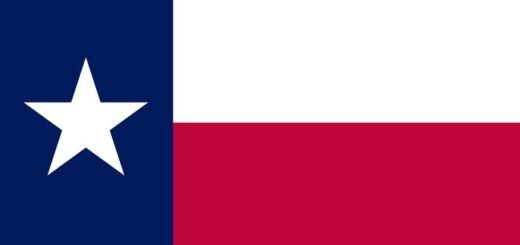
Origin and Meaning: “Texas” is derived from the Caddo word “Tejas,” meaning “friends” or “allies.”
Historical Significance: The Caddo were a confederation of tribes that lived in the region. The name reflects the friendly relations and alliances among the Caddo people and between them and the early Spanish settlers. The state’s name emphasizes the importance of cooperation and alliance in the region’s history and culture.

The Caddo were a confederation of tribes that lived in the region. The name reflects the friendly relations and alliances among the Caddo people and between them and the early Spanish settlers.
The Six Flags that have flown over Texas: History and Major Facts
Utah
Origin and Meaning: “Utah” comes from the Ute tribe, whose name means “people of the mountains.”
Historical Significance: The Ute people lived in the mountainous regions of what is now Utah. The state’s name honors their connection to the rugged terrain of the area.
Wisconsin
Origin and Meaning: “Wisconsin” is derived from the Miami word “Meskonsing,” meaning “it lies red,” likely referring to the red sandstone formations along the Wisconsin River.
Historical Significance: The name reflects the natural landscape and the presence of the Miami and other Algonquian-speaking tribes in the region.
Wyoming
Origin and Meaning: “Wyoming” is derived from the Munsee word “xwé
ənk,” meaning “at the big river flat” or “on the great plain.”
Historical Significance: The Munsee were part of the Lenape (Delaware) people. The name reflects the wide open plains and river valleys that characterize the state.
Did you know…?
An intriguing example is the State of Franklin, named for Benjamin Franklin. Formed in 1784 from western North Carolina, it elected its own legislature and governor. For three years, it was nearly at war with North Carolina. Although it petitioned Congress for recognition, it was denied. In 1790, Franklin was ceded to the federal government, became Tennessee in 1796, and was admitted to the Union.
Frequently Asked Questions about U.S. States

The origins of state names might seem clear, but tracing them reveals elusiveness and controversy. Often, loose translations explain the meanings, especially for names of Native American origin. Information comes from various sources, including state historical societies, the Bureau of American Ethnology, academic departments, and individual researchers.
These questions cover a wide range of topics related to the U.S. states, providing interesting trivia and important information about their geography, history, and cultural significance.
- How many U.S. states are there?
- There are 50 states in the United States of America.
- What is the largest U.S. state by area?
- Alaska is the largest state by area.
- What is the smallest U.S. state by area?
- Rhode Island is the smallest state by area.
- Which state has the largest population?
- California has the largest population among all the U.S. states.
- Which state has the smallest population?
- Wyoming has the smallest population among all the U.S. states.
- What was the first state to join the Union?
- Delaware was the first state to join the Union on December 7, 1787.
- What was the last state to join the Union?
- Hawaii was the last state to join the Union on August 21, 1959.
- Which state is known as the “Sunshine State”?
- Florida is known as the “Sunshine State.”
- Which state is known as the “Empire State”?
- New York is known as the “Empire State.”
- What is the capital of California?
- Sacramento is the capital of California.
- What is the capital of Texas?
- Austin is the capital of Texas.
- Which state is famous for its potatoes?
- Idaho is famous for its potatoes.
- What is the state bird of Minnesota?
- The Common Loon is the state bird of Minnesota.
- Which state has the most national parks?
- California has the most national parks.
- What is the highest point in the United States?
- Denali (Mount McKinley) in Alaska is the highest point in the United States.
- Which state has the longest coastline?
- Alaska has the longest coastline.
- What is the state flower of Texas?
- The Bluebonnet is the state flower of Texas.
- Which state is known as the “Land of 10,000 Lakes”?
- Minnesota is known as the “Land of 10,000 Lakes.”
- What is the state motto of New York?
- The state motto of New York is “Excelsior,” which means “Ever Upward.”
- Which state is known for its maple syrup production?
- Vermont is known for its maple syrup production.
- What is the capital of New York?
- Albany is the capital of New York.
- Which state is known as the “Peach State”?
- Georgia is known as the “Peach State.”
- Which state is home to the Grand Canyon?
- Arizona is home to the Grand Canyon.
- What is the state tree of California?
- The California Redwood (Coast Redwood and Giant Sequoia) is the state tree of California.
- Which state is known as the “Bluegrass State”?
- Kentucky is known as the “Bluegrass State.”
- What is the state capital of Hawaii?
- Honolulu is the capital of Hawaii.
- Which state is known for its bourbon production?
- Kentucky is known for its bourbon production.
- What is the state bird of Alaska?
- The Willow Ptarmigan is the state bird of Alaska.
- Which state is known as the “Beehive State”?
- Utah is known as the “Beehive State.”
- What is the state animal of Colorado?
- The Rocky Mountain Bighorn Sheep is the state animal of Colorado.
- Which state has the nickname “The Last Frontier”?
- Alaska has the nickname “The Last Frontier.”
- What is the state flower of Florida?
- The Orange Blossom is the state flower of Florida.
- Which state is known as the “Hawkeye State”?
- Iowa is known as the “Hawkeye State.”
- What is the state gemstone of Oregon?
- The Sunstone is the state gemstone of Oregon.
- Which state is known for its dairy production, earning the nickname “America’s Dairyland”?
- Wisconsin is known for its dairy production and is often called “America’s Dairyland.”
- What is the state bird of Maryland?
- The Baltimore Oriole is the state bird of Maryland.
- Which state is known as the “Volunteer State”?
- Tennessee is known as the “Volunteer State.”
- What is the state flower of Georgia?
- The Cherokee Rose is the state flower of Georgia.
- Which state is known as the “Silver State”?
- Nevada is known as the “Silver State.”
- What is the capital of Ohio?
- Columbus is the capital of Ohio.
- Which state is known as the “Show-Me State”?
- Missouri is known as the “Show-Me State.”
- What is the state motto of California?
- The state motto of California is “Eureka,” which means “I have found it.”
- Which state is known for its seafood, particularly lobsters?
- Maine is known for its seafood, particularly lobsters.
- What is the state bird of New Mexico?
- The Greater Roadrunner is the state bird of New Mexico.
- Which state is known as the “Golden State”?
- California is known as the “Golden State.”
- What is the state tree of Texas?
- The Pecan Tree is the state tree of Texas.
- Which state is home to Mount Rushmore?
- South Dakota is home to Mount Rushmore.
- What is the state fish of Hawaii?
- The Humuhumunukunukuapua’a (Reef Triggerfish) is the state fish of Hawaii.
- Which state is known as the “Constitution State”?
- Connecticut is known as the “Constitution State.”
- What is the state flower of Nevada?
- The Sagebrush is the state flower of Nevada.