Chief Justice Roger B. Taney
Roger Brooke Taney (March 17, 1777 – October 12, 1864) was a significant figure in American legal and political history. His life and career were marked by accomplishments, controversy, and...
The US Supreme Court is the highest federal court in the United States and serves as the final interpreter of federal constitutional law.
Here are some FAQs about this important institution:
The Supreme Court is composed of nine justices: one Chief Justice and eight Associate Justices.
Justices are nominated by the President of the United States and must be confirmed by the US Senate.
Once confirmed, justices serve for life, unless they resign, retire, or are impeached.
The Chief Justice presides over the Court’s public sessions and also sets the agenda for the Court’s meetings.
The Court receives thousands of petitions each year and selects a small percentage to hear. They typically choose cases that have national significance or address conflicting decisions from lower courts.
Judicial review is the Supreme Court’s authority to review and potentially invalidate governmental actions that violate the Constitution.
An opinion explains the decision of the Court regarding a particular case, including the legal reasoning behind the decision.
A majority opinion reflects the view of the majority of the justices. A dissenting opinion represents the viewpoints of the minority of justices who disagree with the majority. A concurring opinion agrees with the majority’s conclusion but for different reasons.
Originally, the Court had six justices. It has fluctuated in size but has remained at nine justices since 1869.
Yes, but it’s rare. Decisions can be overturned by future Supreme Court decisions or by constitutional amendments.
The Court’s term begins on the first Monday in October and lasts until the end of June the following year.
Yes, the Supreme Court building in Washington, D.C., is open to the public, and oral arguments are open to the public on a first-come, first-served basis.
The Court has played a pivotal role in shaping civil rights in the U.S., with landmark decisions on issues like segregation (Brown v. Board of Education), interracial marriage (Loving v. Virginia), and same-sex marriage (Obergefell v. Hodges).
The primary distinction is its role as the final arbiter of constitutional questions. While other federal courts can declare laws unconstitutional, their decisions can be appealed to and reviewed by the Supreme Court.

Roger Brooke Taney (March 17, 1777 – October 12, 1864) was a significant figure in American legal and political history. His life and career were marked by accomplishments, controversy, and...

John Marshall (1755–1835), one of America’s most influential Founding Fathers, was a statesman, lawyer, and jurist whose life, career, and accomplishments profoundly shaped the early United States. Serving as the...

Salmon Portland Chase was a prominent American politician and jurist who played a significant role in the political and legal landscape of the United States during the mid-19th century. His...

Chief Justice Earl Warren served as the 14th Chief Justice of the U.S. Supreme Court from 1953 to 1969. Under his leadership, the Court issued landmark decisions, most notably in...

Owing to increased civic education, more and more people continue to have a particular fascination with the U.S. Supreme Court, particularly its members. While you may know of the current...

Fast Facts: Sandra Day O’Connor Born: Sandra Day Date of Birth: March 26, 1930 Place of birth: El Paso, Texas, U.S. Mother: Ada Mae (Wilkey) Father: Harry Alfred Day Siblings:...

In addition to being a prominent Founding Father and a statesman, John Jay was the first Chief Justice of the United States of America. Here is a quick look at...

In addition to being a prominent Founding Father, John Jay was the first Chief Justice of the United States of America. A leading expert on foreign policy, the New-York born...

Here is a quick look into the history and major facts of the nation’s highest court – the U.S. Supreme Court: The first Judiciary Act In 1789, Congress passed the...

Believe it or not: there was a time when abortion was illegal in the country. It was a time when majority of the states across the nation policed it, leaving...
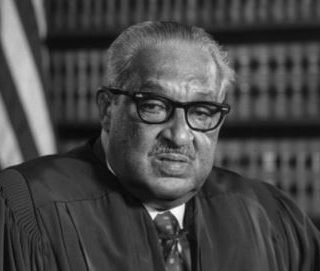
Fast Facts: Thurgood Marshall Born: Thoroughgood Marshall Date of Birth: July 2, 1908 Place of birth: Baltimore, Maryland, U.S. Death: January, 24, 1993; Bethesda, Maryland, U.S. Burial Place: Arlington National...





