6 Important Facts about Queen Zenobia
Queen Zenobia was a 3rd-century AD queen of the Palmyrene Empire in Syria. She is remembered as one of the most powerful women in the ancient world, recognized both for...

Queen Zenobia was a 3rd-century AD queen of the Palmyrene Empire in Syria. She is remembered as one of the most powerful women in the ancient world, recognized both for...

From Palmyra on the eastern borders of the Roman Province, Queen Zenobia observed the Roman Empire during the third century’s Imperial Crisis (also known as the Crisis of the Third...

The Babylonian creation myth is primarily found in the “Enuma Elish,” an ancient Babylonian epic that describes the creation of the universe and the establishment of Marduk, the patron god...

Marduk was the chief deity of the city of Babylon and eventually became one of the most important deities in the Mesopotamian pantheon. As the national god of the Babylonians,...
Marduk’s conflict with Tiamat is one of the most central and defining myths in ancient Mesopotamian religion. It is narrated in the Babylonian epic “Enuma Elish,” also known as the...

In ancient Egyptian mythology, a number of deities were associated with creation, and their roles and stories varied depending on the city or region. Here’s a summary of some of...
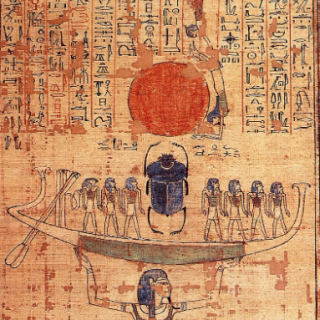
Egyptian mythology offers several versions of cosmogony, each associated with a different city or religious center. However, there are recurring themes and motifs throughout these narratives. One of the most...

Both Duamutef and Anubis are ancient Egyptian deities associated with the death and afterlife, but they have distinct roles and significances in the pantheon. In the article below, WHE explores...

Anubis and Osiris are both central figures in the Egyptian pantheon related to death and the afterlife, but their roles and significance differ substantially. Anubis, the god of funeral and...

Anhur, also known as Onuris, is a war deity in ancient Egyptian mythology. His role in the Egyptian pantheon underscores the cultural significance of war and protection in the ancient...

Known by her epithet “Pourer”, ancient Egyptian goddess Satis was revered for being the consort Khnum, a famed deity in Upper Egypt. Together with Khnum and her issue Anuket, Satet...
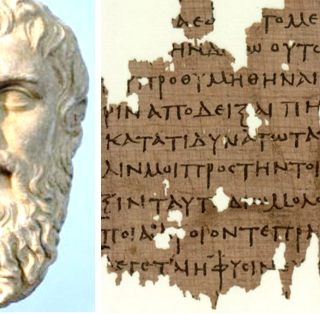
Plato‘s Republic is a foundational philosophical text exploring justice, the ideal state, and the nature of reality through a series of dialogues, notably introducing concepts like the philosopher-king and the...
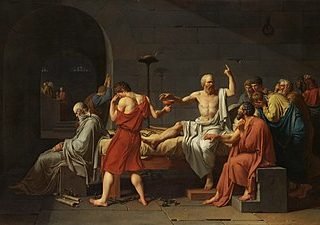
Socrates, the foundational figure of Western philosophy, lived in Athens during the 5th century BC. Renowned for his Socratic method, he was tried for impiety and corrupting the youth. Found...
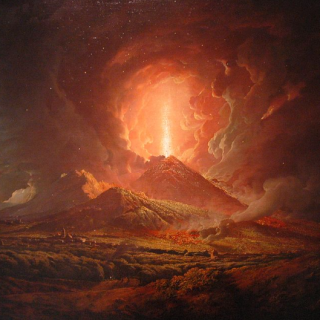
The eruption of Mount Vesuvius in 79 AD preserved Pompeii in a unique way, encapsulating the city beneath layers of ash and pumice. This tragic event paradoxically ensured that much...
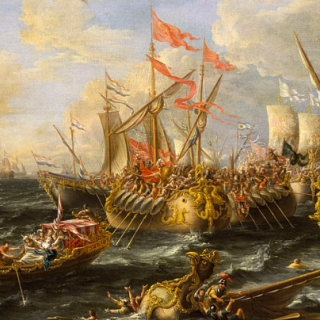
The Battle of Actium, which took place in 31 BC, was a pivotal naval confrontation between the forces of Octavian (later known as Augustus) and the combined might of Mark...





