Æthelred the Unready
Æthelred II, known as “the Unready,” was King of the English from 978 to 1013 and again from 1014 until his death in 1016. His epithet originates from the Old...
English monarchs have been subjects of interest for centuries, and many questions arise about their reigns, personal lives, and historical contexts.
Here, World History Edu present some frequently asked questions about English monarchs, along with their answers:
The first king to rule over a unified England was King Æthelstan in 924, though some argue it’s King Alfred the Great of Wessex, who played a major role in unifying parts of England against Viking invasions.
Queen Elizabeth II holds the record for the longest reign, having ascended the throne in 1952. The English queen reigned for over seven decades. She was succeeded to the throne by her eldest son, Charles III.
The Tudors were: Henry VII (reigned: 22 August 1485 – 21 April 1509), Henry VIII (reigned: 22 April 1509 – 28 January 1547), Edward VI (reigned: 28 January 1547 – 6 July 1553), Mary I (often called “Bloody Mary”; reigned: July 1553 – 17 November 1558), and Elizabeth I (reigned: 17 November 1558 –
24 March 1603).
The reasons varied: he sought a male heir, his marriages were politically motivated, or he fell in love. His six wives were Catherine of Aragon (divorced), Anne Boleyn (beheaded), Jane Seymour (died), Anne of Cleves (divorced), Catherine Howard (beheaded), and Catherine Parr (survived).
After Elizabeth I died without an heir, the crown passed to her cousin, James VI of Scotland, who became James I of England. He was the first monarch of the Stuart dynasty.

The English Civil War (1642-1651) was a series of conflicts between the monarchy (Cavaliers) led by King Charles I and Parliament (Roundheads). It ended with the trial and execution of Charles I. The monarchy was briefly abolished, and Oliver Cromwell ruled as Lord Protector.
King George III earned this nickname due to his periodic episodes of mental illness. He reigned during significant events like the American Revolution.
King Richard III was the last English monarch to die in battle, at the Battle of Bosworth Field in 1485.
King John signed the Magna Carta in 1215 after being pressured by his barons.
Victoria’s reign marked the height of the British Empire and a period of great industrial, cultural, political, and military change in the UK. Her era, known as the Victorian Era, saw significant advancements and reforms.
No, Elizabeth I remained unmarried throughout her life and was often referred to as the “Virgin Queen.”
As of 2023, the core members include King Charles III, his sons Prince William (Prince of Wales) and Prince Harry (Duke of Sussex), and their families.
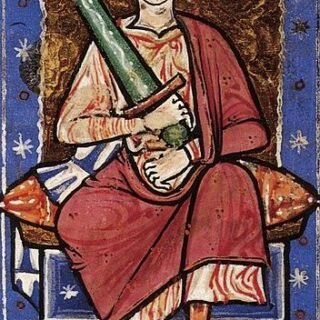
Æthelred II, known as “the Unready,” was King of the English from 978 to 1013 and again from 1014 until his death in 1016. His epithet originates from the Old...

Generally seen as one of the last Anglo-Saxon kings of England, Edward the Confessor reigned from 1042 to 1066 following a long period of Danish rule in England. After the...

Alfred the Great: Fast Facts Date of Birth: 849 Place of Birth: Wantage, Berkshire Date of Death: 899 Burial place: Winchester Parents: Æthelwulf and Osburh Siblings: Æthelbald, Æthelberht and Æthelred, Spouse: Ealhswith Children:...

Here are 25 very important facts about Mary I of England (1516-1558), the cold-blooded, fanatic queen of England who spent her 5-year reign burning Protestants at the stake. Owing to...

Worldhistoryedu.com digs deep into the major events and crucial facts about the life, reign and dark legacy of Mary I of England – one of England’s bloodiest and most ruthless...

Henry the Eighth (Henry Tudor) was a 16th century English ruler whose reign lasted through Renaissance England. Born in June 1491, Henry VIII was the son of King Henry VII...





