Cecilia Payne-Gaposchkin
Cecilia Payne-Gaposchkin (1900–1979) was one of the most influential astrophysicists of the 20th century. Her groundbreaking work on the composition of stars fundamentally changed our understanding of the universe, and her discovery that hydrogen and helium are the most abundant elements in stars laid the foundation for modern astrophysics.
Despite the barriers she faced as a woman in science, Payne-Gaposchkin’s achievements paved the way for future generations of female astronomers. Her life was one of intellectual brilliance, perseverance, and trailblazing success, and her work continues to inspire scientists today.
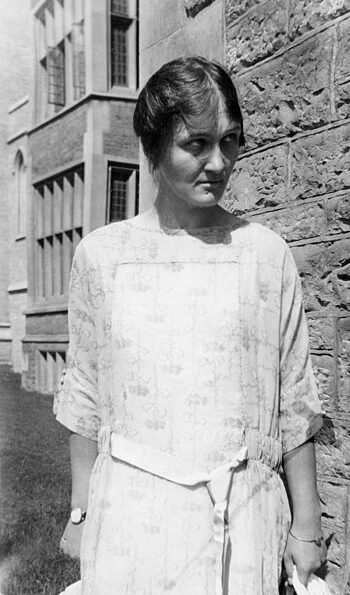
Cecilia Payne-Gaposchkin was a pioneering astronomer whose 1925 thesis revealed stars are primarily hydrogen and helium, revolutionizing astrophysics. Image: Payne-Gaposchkin.
Early Life and Education
Cecilia Helena Payne was born on May 10, 1900, in Wendover, Buckinghamshire, England, to Edward John Payne, a London barrister, historian, and musician, and Emma Leonora Helena (née Pertz), who came from a distinguished Prussian family.
Cecilia was one of three children. Her younger brother, Humfry Payne, later became a noted archaeologist, while her sister Florence pursued a career in music as a pianist. Cecilia’s father died when she was just four years old, leaving her mother to raise the family on her own.
Payne’s early education was typical of the time for girls from educated families. She began her schooling at a private institution in Wendover run by Elizabeth Edwards, where she developed a love for learning. When she was twelve, her family moved to London so that her brother could attend school. Cecilia continued her education at St. Mary’s College, Paddington, where her exposure to mathematics and science was limited, but she excelled in other subjects.
In 1918, Payne transferred to St. Paul’s Girls’ School, a prestigious institution where she was taught by figures such as composer Gustav Holst, who encouraged her to pursue music. However, Payne’s interest lay in science, and she began to focus on scientific studies instead of music. Her growing passion for science led her to apply for a scholarship to Newnham College, Cambridge University.
Cambridge University and the Spark of Astronomy
In 1919, Cecilia Payne was awarded a scholarship to Newnham College at Cambridge University, where she studied botany, physics, and chemistry. However, her true calling emerged when she attended a lecture by astronomer Arthur Eddington, who had just returned from a famous expedition to the island of Príncipe in the Gulf of Guinea to observe a solar eclipse. Eddington’s observations had confirmed Einstein’s general theory of relativity, and the lecture deeply influenced Payne, sparking her lifelong passion for astronomy.
Eddington’s lecture made a profound impact on Payne. She later wrote, “The result was a complete transformation of my world picture… My world had been so shaken that I experienced something very like a nervous breakdown.” After the lecture, Payne decided to devote her career to astronomy, and she dropped her botany studies to focus entirely on physics and astronomy.
Despite her academic success at Cambridge, Payne was unable to receive a degree, as the university did not award degrees to women until 1948. Faced with limited career options in the UK, Payne realized that the most promising opportunities for pursuing astronomy would be found abroad.
Harvard College Observatory and Doctoral Work
In 1923, Cecilia Payne moved to the United States to work at the Harvard College Observatory, which had recently established a graduate program in astronomy under the leadership of Harlow Shapley. Payne was introduced to Shapley by a mutual acquaintance, and he offered her a fellowship to study at Harvard. At the time, the observatory had begun offering fellowships to encourage women to study there, and Payne became the second woman to receive one of these fellowships, following Adelaide Ames.
Under Shapley’s guidance, Payne began her doctoral studies, focusing on the properties of stars. In 1925, she became the first person to earn a Ph.D. in astronomy from Radcliffe College, which was then affiliated with Harvard University. Her dissertation, titled Stellar Atmospheres, was a monumental work in which she applied the ionization theory of Indian physicist Meghnad Saha to explain the spectral classes of stars in terms of their temperatures.
In her thesis, Payne demonstrated that the variations in stellar absorption lines were due to different ionization levels of the elements, not differences in their abundances. Most notably, she concluded that hydrogen was the most abundant element in stars, contrary to the prevailing view that stars had the same elemental composition as Earth. Her findings showed that stars are composed primarily of hydrogen and helium, a revolutionary conclusion that upended the existing understanding of stellar composition.
However, despite the groundbreaking nature of her work, Payne was discouraged from presenting her findings as definitive. Henry Norris Russell, a prominent astronomer at the time, advised her to downplay her conclusion about hydrogen’s abundance, as it contradicted accepted scientific beliefs.
Russell later confirmed Payne’s results through his own independent research, publishing them in 1929 and acknowledging Payne’s earlier work only briefly. While Russell received much of the credit at the time, Payne’s dissertation is now recognized as one of the most significant contributions to astrophysics.
Continued Research and Contributions to Astronomy
After completing her Ph.D., Payne remained at the Harvard College Observatory, where she continued to make significant contributions to the field of astronomy. She initially focused on studying stars of high luminosity, hoping to gain a better understanding of the structure of the Milky Way. She undertook a comprehensive survey of all stars brighter than the tenth magnitude and later extended her research to variable stars.
Payne’s work on variable stars, which she conducted with her husband, Russian-born astrophysicist Sergei I. Gaposchkin, whom she married in 1934, became one of her most significant contributions to the field. The couple worked together to collect extensive data on variable stars, particularly in the Magellanic Clouds, where they made over 2,000,000 observations. Payne and her team meticulously documented these observations, helping to establish the foundational knowledge needed to understand the evolutionary paths of stars.
Throughout her career, Payne published a number of influential books, including The Stars of High Luminosity (1930), which detailed her research on bright stars, and Variable Stars (1938), which was based on her work with Sergei Gaposchkin. These publications helped solidify her reputation as one of the foremost astronomers of her time.
Challenges as a Woman in Science
Despite her extraordinary achievements, Cecilia Payne faced significant challenges throughout her career due to her gender. In the early 20th century, women were often excluded from prestigious academic positions, and Payne was no exception. For many years, she was unable to hold an official professorship at Harvard, despite her prolific research and contributions to the field. Instead, she was given low-paid research positions that did not reflect the caliber of her work.
In 1938, Payne was finally given the title of “Astronomer” at Harvard, a position that recognized her expertise but still did not grant her the full academic standing she deserved. It was not until 1956 that Payne became the first woman to be promoted to full professor in Harvard’s Faculty of Arts and Sciences, a landmark achievement for women in science. Two years later, she was appointed the Phillips Professor of Astronomy, becoming the first woman to head a department at Harvard.
Despite the barriers she faced, Payne’s persistence and dedication to her work helped her break through the male-dominated academic hierarchy. Her success opened doors for future generations of women in astronomy and paved the way for greater gender equality in the sciences.
Personal Life and Legacy
Cecilia Payne married Sergei I. Gaposchkin in 1934, and the couple settled in Lexington, Massachusetts, near Harvard University. Together, they had three children: Edward, Katherine, and Peter. Despite the demands of her academic career, Payne remained a dedicated mother, and her daughter later described her as an “inspired seamstress, an inventive knitter, and a voracious reader.”
Payne’s personal life was deeply intertwined with her academic career. She and Sergei collaborated extensively on their research, particularly their work on variable stars. The couple’s professional partnership was a testament to their shared passion for astronomy and their commitment to advancing the field.
Throughout her life, Payne was also deeply committed to education and mentorship. She trained a generation of astronomers, many of whom went on to make significant contributions to the field. Her students included notable figures such as Helen Sawyer Hogg, Frank Drake, and Harlan Smith. Astrophysicist Joan Feynman, the sister of physicist Richard Feynman, credited Payne’s work with inspiring her to pursue a career in science, despite societal discouragement.
In addition to her scientific achievements, Payne remained active in her local community. She was a member of the First Unitarian Church in Lexington, where she taught Sunday school, and she also participated in Quaker activities. Payne’s intellectual curiosity and deep sense of community extended beyond her professional life, and she was admired by those who knew her for her warmth, generosity, and dedication to helping others.
Later Years and Honors
Cecilia Payne retired from teaching in 1966 and was appointed Professor Emerita of Harvard. However, she continued her research at the Smithsonian Astrophysical Observatory and remained an active figure in the astronomical community. During her later years, Payne edited several journals and books for Harvard Observatory and compiled the lectures of Walter Baade into the book Evolution of Stars and Galaxies (1963).
Payne’s contributions to astronomy were widely recognized during her lifetime, and she received numerous honors and awards for her work. In 1934, she was awarded the Annie J. Cannon Award in Astronomy, becoming the first recipient of the prestigious prize. She was elected a Fellow of the American Academy of Arts and Sciences in 1943 and received the Henry Norris Russell Lectureship from the American Astronomical Society in 1976, one of the highest honors in the field of astronomy.
In 1979, the asteroid 2039 Payne-Gaposchkin was named in her honor, a fitting tribute to her contributions to the understanding of the universe. Payne’s legacy as a trailblazer for women in science and a pioneering astrophysicist remains enduring.
Did you know…?
In 1931, Payne became a U.S. citizen, holding joint citizenship with the UK.
Religious Beliefs
In her autobiography, Cecilia Payne recounted an experiment she conducted in school to test the efficacy of prayer. She divided her exams into two groups, praying for success on one set and leaving the other as a control. Ironically, she scored higher on the control group. Later, Payne identified as an agnostic.
Marriage and Children
While touring Europe in 1933, Cecilia Payne met Russian astrophysicist Sergei I. Gaposchkin, whom she helped secure a U.S. visa. They married in 1934 and settled in Lexington, Massachusetts, close to Harvard. They had three children: Edward, Katherine, and Peter. Payne was remembered by her daughter as a skilled seamstress, knitter, and avid reader.
She and her family were members of the First Unitarian Church in Lexington, where she taught Sunday school, and she was also involved with the Quakers.
Death
Cecilia Payne-Gaposchkin passed away in Cambridge, Massachusetts, on December 7, 1979, at the age of 79. Shortly before her death, she privately printed her autobiography, The Dyer’s Hand, which was later reprinted. Payne’s younger brother, Humfry, was an archaeologist, and her granddaughter, Cecilia Gaposchkin, is a professor at Dartmouth College.
Conclusion
Cecilia Payne-Gaposchkin’s life and career were marked by groundbreaking discoveries, intellectual brilliance, and an unwavering commitment to the advancement of science. Her revolutionary work on the composition of stars laid the foundation for modern astrophysics, and her determination to succeed in the face of gender-based discrimination opened doors for future generations of women in science. Today, Payne is remembered as one of the most important astronomers of the 20th century, and her work continues to inspire scientists around the world.
Question and Answers
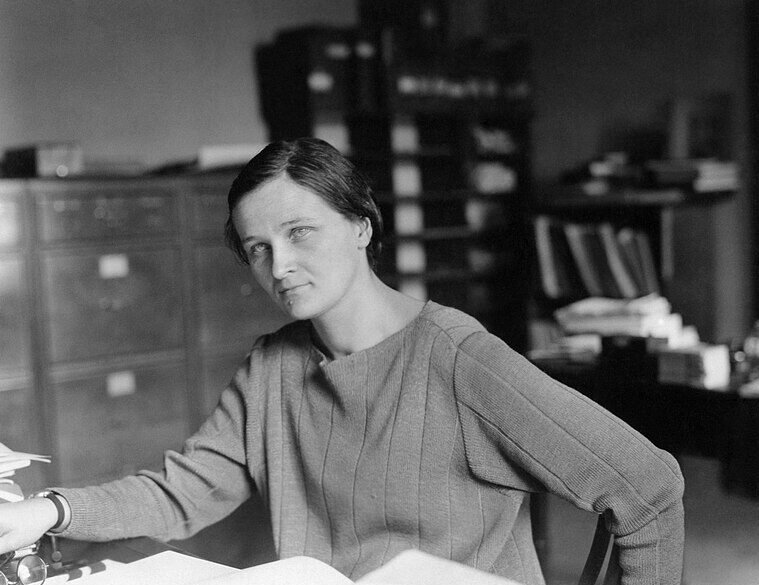
Cecilia Payne-Gaposchkin’s career marked a turning point for women in astronomy. Her research, Ph.D., and subsequent professorship opened doors for future generations of women in science, and her discovery of hydrogen’s abundance in stars laid the foundation for modern astrophysics. Image: Payne-Gaposchkin at work.
Where and when was Cecilia Payne-Gaposchkin born?
Cecilia Payne-Gaposchkin was born in Wendover, Buckinghamshire, England, on May 10, 1900.
Cecilia Payne’s parents were Emma Leonora Helena (née Pertz) and Edward John Payne. Her father was a London barrister, historian, and musician.
How did Payne’s early family life influence her education?
Payne’s father died when she was four years old, leaving her mother to raise the children alone. Despite the challenges, her mother moved the family to London to support her brother’s education, allowing Cecilia access to better schooling.
Gustav Holst, who taught music at St. Paul’s Girls’ School, encouraged Cecilia Payne to pursue a career in music. However, Payne chose to focus on science instead.
What event sparked Cecilia Payne’s interest in astronomy?
Cecilia Payne’s interest in astronomy was sparked after attending a lecture by Arthur Eddington about his 1919 expedition to observe a solar eclipse as a test of Einstein’s theory of general relativity.
Why didn’t Payne receive a degree from Cambridge University despite completing her studies?
Payne completed her studies at Cambridge University, but Cambridge did not award degrees to women at the time, so she did not receive an official degree.
How did Payne begin her career in the United States?
Payne moved to the United States in 1923 on a fellowship to study at the Harvard College Observatory, where Harlow Shapley had established a graduate program in astronomy.
Cecilia Payne’s doctoral dissertation focused on stellar atmospheres. She concluded that hydrogen was the most abundant element in stars, a groundbreaking discovery that challenged the prevailing belief that the Sun and Earth had similar elemental compositions.
Henry Norris Russell initially advised Payne to downplay her conclusion about hydrogen’s abundance, as it contradicted established beliefs. However, a few years later, Russell confirmed her findings through his research, though he received much of the credit at the time.
What areas of research did Payne focus on after earning her Ph.D.?
After her Ph.D., Payne focused on studying stars of high luminosity, the structure of the Milky Way, and variable stars, conducting extensive observations that contributed to the understanding of stellar evolution.
What challenges did Payne face in her academic career at Harvard College Observatory?
Payne faced challenges due to her gender, as women were not allowed to hold professorships at Harvard at the time. She worked in lower-paid research positions for years before being promoted.
In 1956, Cecilia Payne became the first woman to be promoted to full professor in Harvard’s Faculty of Arts and Sciences.
Who were some of Payne’s notable students?
Some of Payne’s notable students included Helen Sawyer Hogg, Frank Drake, and Harlan Smith, all of whom made significant contributions to astronomy.
How did Cecilia Payne inspire astrophysicist Joan Feynman?
Joan Feynman was inspired by Cecilia Payne’s work, which she discovered in an astronomy textbook. Seeing Payne’s published research convinced Feynman that she could pursue a career in science despite discouragement from her family.
What was Payne’s role after her retirement from teaching in 1966?
After retiring from teaching in 1966, Payne continued her research at the Smithsonian Astrophysical Observatory and edited journals and books for Harvard Observatory.