Dorothea Klumpke
Dorothea Klumpke Roberts was a trailblazing astronomer whose life and career spanned several important developments in science and astronomy, from the late 19th to the early 20th century.
Born on August 9, 1861, in San Francisco, California, she would go on to become the first woman to earn a Doctorate in Science from the prestigious Sorbonne in Paris, and her work in astrophotography and stellar measurements left a lasting legacy.
Her life not only reflects personal achievement but also the influence of a family deeply committed to the arts and sciences, particularly during an era when women faced significant barriers to careers in scientific fields.
Early Life and Family
Dorothea Klumpke was born into a family of high achievers, many of whom were accomplished in various disciplines of the arts and sciences. Her father, John Gerard Klumpke, was a German immigrant who moved to California during the Gold Rush in 1850.
Although he initially came in search of fortune, like many others during that time, he eventually established himself as a successful real estate broker in San Francisco. In 1855, he married Dorothea Mathilda Tolle, and the couple had seven children: five daughters and two sons.
All of the Klumpke sisters achieved significant success in their respective fields. For instance, Dorothea’s sister Anna Elizabeth Klumpke was a well-known painter and the companion of the famous French animal painter Rosa Bonheur. Another sister, Julia Klumpke, was a violinist and composer, while Mathilda Klumpke became an accomplished pianist who studied under the renowned French music teacher Marmontel. The youngest of the sisters, Augusta Klumpke, was a neurologist who, alongside her husband Joseph Jules Dejerine, contributed greatly to the field of neuroscience, establishing a clinic and writing numerous research papers.
This familial atmosphere of achievement and intellectual pursuit undoubtedly influenced Dorothea’s future. Encouraged by her parents, who valued education, and bolstered by her sisters’ successes, Dorothea’s ambitions were supported early on, leading her to explore various fields of study.
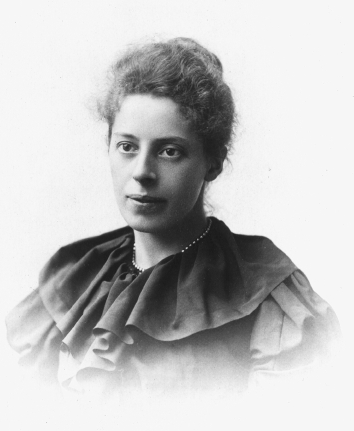
Dorothea Klumpke Roberts’ legacy continues to inspire scientists and scholars worldwide. Image: Dorothea Klumpke.
Move to Paris and Academic Journey
In 1877, at the age of 16, Dorothea moved to Paris, France, where her academic career truly began. Her decision to relocate to Paris was not only influenced by the city’s status as a major intellectual hub but also by the educational opportunities available in Europe. While her sisters pursued their educations in Germany and Switzerland, Dorothea initially focused on music, a reflection of the Klumpke family’s strong ties to the arts. However, her interests soon shifted from music to science, particularly astronomy—a field that captivated her.
Dorothea enrolled at the University of Paris (the Sorbonne) and began her formal education in astronomy. At a time when women were rarely encouraged to enter scientific fields, Dorothea’s determination was extraordinary. In 1886, she earned her bachelor’s degree, a significant achievement in itself.
However, her greatest academic milestone came in 1893, when she became the first woman to earn a Doctorate in Science from the Sorbonne. Her dissertation, titled L’étude des Anneaux de Saturne (Study of the Rings of Saturn), was groundbreaking, and it earned her considerable recognition within the academic community. Her study focused on the complex structure of Saturn’s rings, using observational data and theoretical analysis to deepen understanding of this planetary feature.
Career at the Paris Observatory
After earning her bachelor’s degree, Dorothea began working at the Paris Observatory in 1887, where she collaborated with several prominent figures in astronomy. The Paris Observatory was one of the leading institutions for astronomical research at the time, and Dorothea’s role there was significant.
She worked alongside astronomers such as Guillaume Bigourdan and Lipót Schulhof, as well as astrophotographers Paul and Prosper Henry. During her time at the observatory, Dorothea’s primary responsibilities included measuring the positions of stars, processing astrophotographs, and studying stellar spectra and meteorites.
One of the most notable projects she contributed to was the Carte du Ciel (Map of the Sky) project. This ambitious international endeavor, initiated in 1887, aimed to photograph the entire sky and create an atlas of stars as faint as the 14th magnitude.
The Paris Observatory played a central role in this project, with Dorothea overseeing a significant portion of the data collection and measurement processes. She was appointed Director of the Bureau of Measurements at the observatory, a position she held for ten years. In this role, she supervised a team of women scientists, an unusual and progressive responsibility for a woman at the time.

Eclipse Observation and Meeting Isaac Roberts
In 1896, Dorothea had the opportunity to participate in a major scientific event: the observation of a solar eclipse. She sailed to Norway aboard the Norwegian vessel Norse King to observe the solar eclipse on August 9, 1896. During this trip, she met Dr. Isaac Roberts, a 67-year-old Welsh astronomer and astrophotography pioneer. Isaac Roberts had already made a name for himself as an entrepreneur and a leading figure in the emerging field of astrophotography. He had also attended the Carte du Ciel Congress in Paris, where Dorothea had been working.
The meeting between Dorothea and Isaac Roberts proved to be a pivotal moment in her life. The two shared a passion for astronomy, and in 1901, they were married. Dorothea left her position at the Paris Observatory to join her husband at his home in Sussex, England. Together, they embarked on a project to photograph all 52 of the Herschel “areas of nebulosity”—regions in the sky identified by astronomer William Herschel as containing nebulous objects. Unfortunately, Isaac Roberts passed away in 1904, just a few years into their marriage. Despite this loss, Dorothea inherited all of his astronomical equipment and materials, as well as a significant financial estate.
Completing Isaac Roberts’ Work
After Isaac’s death, Dorothea continued the work they had started together. She completed the project to photograph the Herschel areas of nebulosity, using the equipment Isaac had left her. She also took over the processing of the data and published several papers on their findings. Her dedication to this project culminated in the 1929 publication of The Isaac Roberts Atlas of 52 Regions, which provided a comprehensive guide to William Herschel’s fields of nebulosity. This work earned her the prestigious Hélène-Paul Helbronner prize in 1932 from the French Academy of Sciences.
Dorothea’s contribution to astronomy did not stop there. In honor of her late husband, she made a generous donation to the Société Astronomique de France (the French Astronomical Society), which led to the establishment of the Prix Dorothea Klumpke-Isaac Roberts. This biennial award, first given in 1931, was created to encourage the study of wide and diffuse nebulae, as well as the obscure objects cataloged by Barnard and other cosmic clouds identified by R.P. Hagen. The award is still given today, a testament to Dorothea’s lasting impact on the field of astronomy.
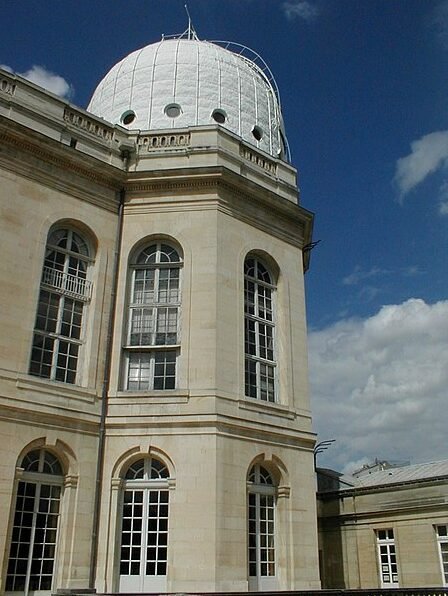
Dorothea started working at Paris Observatory in 1887, collaborating with prominent astronomers. Image: Paris Observatory
Later Life and Honors
Dorothea Klumpke Roberts was the first woman to receive several prestigious honors. In 1893, she was awarded the title of Officier d’Académie by the French Academy of Sciences, marking the first time this honor had been bestowed upon a woman. She was also the recipient of the Prix de Dames from the Société Astronomique de France in 1897. Perhaps her most significant recognition came in 1934, when she was elected a Chevalière de la Légion d’Honneur (Knight of the Legion of Honor), one of France’s highest distinctions. The French President presented her with the Cross, a proud moment in her career.
Later in life, Dorothea returned to San Francisco, where she lived with her sister Anna. Although she had left her career at the Paris Observatory, she remained connected to the scientific community and made several endowments to institutions that had supported her work, including the Paris Observatory, the Astronomical Society of the Pacific, and the University of California. These endowments were meant to support aspiring astronomers and further the field she had devoted her life to.
Legacy
Dorothea Klumpke Roberts passed away on October 5, 1942, in San Francisco. Her contributions to astronomy and her pioneering role as a woman in science are remembered as groundbreaking achievements. She was honored by having two asteroids named after her—Asteroids 339 Dorothea and 1040 Klumpkea. The Klumpke-Roberts Award, established by the Astronomical Society of the Pacific, continues to recognize outstanding contributions to astronomy and serves as a reminder of her lasting impact.
Dorothea’s life was one of remarkable achievements. From her early education in Paris to her role at the forefront of international astronomical projects, she paved the way for future generations of women scientists. Her work in astrophotography and stellar measurements, along with her contributions to major scientific projects, left a profound mark on the field of astronomy. Through her legacy, Dorothea Klumpke Roberts continues to inspire scientists and scholars around the world.
Questions and Answers
Where was Dorothea Klumpke Roberts born, and who were her parents?
Dorothea Klumpke Roberts was born in San Francisco to John Gerard Klumpke, a German immigrant who came to California during the Gold Rush, and Dorothea Mathilda Tolle.
How many siblings did Dorothea Klumpke Roberts have, and what were their areas of expertise?
She had five sisters, all of whom excelled in the arts and sciences, including a painter, a violinist, a pianist, and a neurologist.
When did Dorothea Klumpke Roberts move to Paris, and what did she initially study?
She moved to Paris in 1877 and initially studied music before shifting her focus to astronomy.
What degrees did Klumpke earn, and what was the focus of her doctoral dissertation?
Klumpke earned a bachelor’s degree in 1886 and a PhD in 1893, with a dissertation on the rings of Saturn.
What was Dorothea Klumpke’s role at the Paris Observatory?
She worked at the Paris Observatory, measuring star positions, processing astrophotographs, and studying stellar spectra and meteorites. She later became the Director of the Bureau of Measurements.
What significant project did Klumpke contribute to at the Paris Observatory?
She played a key role in the Carte du Ciel project, which aimed to photograph the entire sky.
Who did Dorothea Klumpke marry, and how did she contribute to his work?
She married Isaac Roberts, a widower and pioneer in astrophotography, in 1901. She assisted him in photographing the Herschel “areas of nebulosity.”
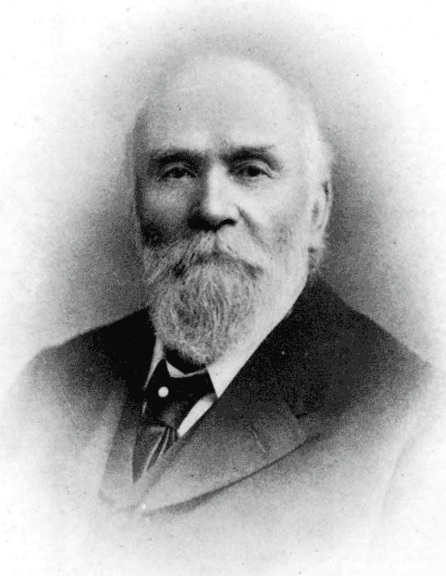
Image: Isaac Roberts
What major work did Klumpke complete after her husband’s death?
After her husband’s death, she completed his photographic project and published The Isaac Roberts Atlas of 52 Regions in 1929.
What award did Klumpke establish, and what was its purpose?
She established the Prix Dorothea Klumpke-Isaac Roberts, a biennial award for the study of nebulae, granted by the French Astronomical Society.
What were some of the honors Klumpke received during her lifetime?
She was the first woman to earn a doctorate in science from the Sorbonne in 1893 and was elected a Chevalière de la Légion d’Honneur in 1934.
What legacies did Klumpke leave behind after her death in 1942?
Asteroids 339 Dorothea and 1040 Klumpkea were named in her honor, as well as the Klumpke-Roberts Award of the Astronomical Society of the Pacific. She also made endowments to several astronomical institutions.





