Chandragupta Maurya: Origins, Rise to Power, and Major Accomplishments
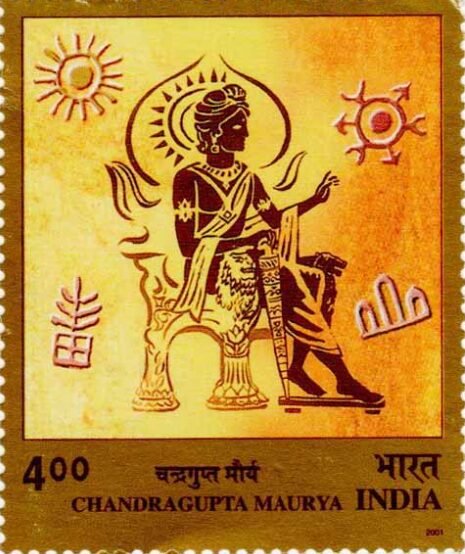
According to Buddhist and Jain traditions, Chandragupta hailed from a modest background, with some sources associating him with the Moriya clan, linked to peacocks. Image: 2001 Indian postage stamp commemorating Chandragupta Maurya
Origins
Chandragupta Maurya’s early life remains steeped in legend, with conflicting accounts about his ancestry. Brahmanical, Buddhist, and Jain texts vary in their depiction of his origins. Some describe him as of humble origin, while Buddhist sources claim he descended from the noble Shakya clan of the Buddha. Greek sources, such as Justin, refer to him as a man of humble birth with miraculous events marking his ascent. A common thread in these narratives is his association with Chanakya (Kautilya), a brilliant strategist and philosopher who recognized Chandragupta’s potential and became his mentor.
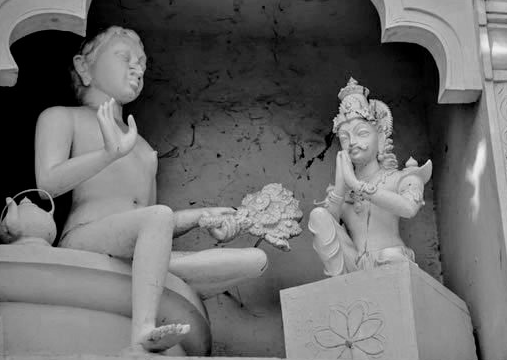
Buddhist texts suggest his lineage was tied to the Shakya clan of Gautama Buddha. Contrarily, Brahmanical texts portray his rise as a restoration of justice after the perceived misrule of the Nandas. Image: A statue depicting Chandragupta Maurya (right) with his spiritual mentor Acharya Bhadrabahu at Shravanabelagola.
Rise to Power
Chandragupta’s rise coincided with the disarray following Alexander the Great’s death in 323 BCE. The Greek satraps left behind by Alexander governed parts of northwest India, while the Nanda dynasty ruled Magadha in eastern India. The Nandas were unpopular due to their oppressive taxation and autocratic rule, creating an opportunity for a challenger to seize power.
Chanakya played a pivotal role in Chandragupta’s ascent. Disillusioned by an insult from the Nanda court, Chanakya vowed to overthrow the dynasty. He trained Chandragupta in military tactics, politics, and statecraft, assembling an army to challenge the Nandas.
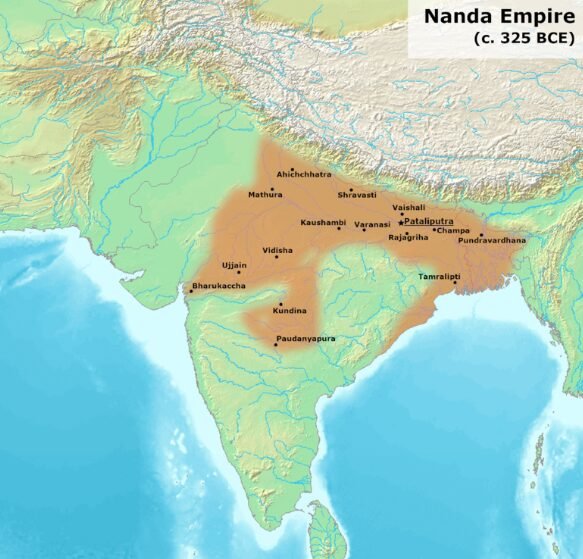
The Nanda dynasty ruled the heartland of Magadha (modern-day Bihar). According to historical and semi-historical sources, Chandragupta first focused on the northwest, seizing opportunities amidst the chaos of Alexander’s departure. Image: Map of the Nanda Empire in the 4th century BCE.
Conquest of Magadha
Chandragupta’s campaign against the Nanda dynasty involved strategic guerrilla warfare and alliances with local powers. Around 322 BCE, he defeated the Nandas and seized control of Magadha, establishing his capital at Pataliputra. This marked the foundation of the Maurya Empire.
Consolidation of the Punjab
After securing Magadha, Chandragupta turned his attention to the northwest, confronting the Greek satraps. By 317 BCE, he had expelled the Greeks from the eastern Indus Valley, solidifying his control over Punjab and laying the groundwork for further expansion.

Chandragupta’s rise coincided with a period of immense political flux in India. Following Alexander the Great’s retreat from the northwest in 325 BCE, the region was left fragmented under Greek governors. Image: Chandragupta Maurya’s footprints on Chandragiri Hill commemorate his Jain practice of Sallekhana and his enduring legacy.
Major Accomplishments
Chandragupta’s most significant achievement was unifying much of the Indian subcontinent under a centralized administration. His empire stretched from the Hindu Kush in the northwest to the Bay of Bengal in the east and possibly included parts of present-day Gujarat and Karnataka in the south.
Chandragupta’s confrontation with Seleucus I, a successor of Alexander, was a critical moment in his reign. Around 305 BCE, Seleucus attempted to reclaim territories in the Indus Valley but was defeated. The resulting treaty established a dynastic marriage alliance and ceded territories to Chandragupta in exchange for 500 war elephants. This agreement not only expanded Mauryan influence but also facilitated cultural exchanges between the Greeks and Indians.
Chandragupta’s governance was inspired by Persian Achaemenid principles and guided by Chanakya’s Arthashastra, which emphasized administrative efficiency and intelligence networks.
Chandragupta implemented a sophisticated administrative system, decentralizing governance across provinces and cities. He established a council of ministers (Mantriparishad) to advise the king and ensured efficient management of resources through state control of key sectors like trade and agriculture. The Mauryan Empire was known for its structured bureaucracy and standardized systems of taxation, weights, and measures.
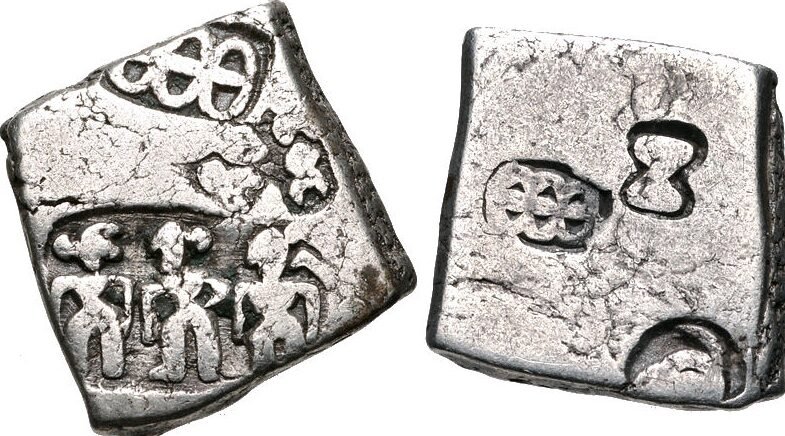
Greek and Roman texts, such as those of Justin and Plutarch, hint at Chandragupta’s defiance of both Greek and Indian rulers. Justin mentions his role in liberating the Indian people from Greek domination while also establishing his rule over the territories. Image: Chandragupta Maurya period Karshapana coin, circa 315-310 BCE.
The Mauryan Empire under Chandragupta saw extensive infrastructure projects. Roads connected key regions, facilitating trade and military movement. Irrigation networks supported agriculture, while cities like Pataliputra became hubs of economic and cultural activity. These initiatives laid the foundation for sustained prosperity during the Mauryan period.
Chandragupta’s empire, stretching from the Himalayas and Afghanistan to the Vindhya Range, was one of history’s largest.
Chandragupta’s reign fostered a pluralistic society where Vedic traditions coexisted with Buddhism, Jainism, and Ājīvika. Though he initially supported Brahmanical rituals, Jain texts recount his later conversion to Jainism. According to these accounts, Chandragupta abdicated his throne and migrated to Shravanabelagola in Karnataka, where he practiced Sallekhana, the Jain ritual of fasting unto death.
The Mauryan state encouraged economic growth by promoting trade and agriculture. Chandragupta’s administration established trade routes that connected the empire internally and to neighboring regions. His policies ensured stability and economic self-sufficiency, enabling the empire to sustain a large army and support public works.
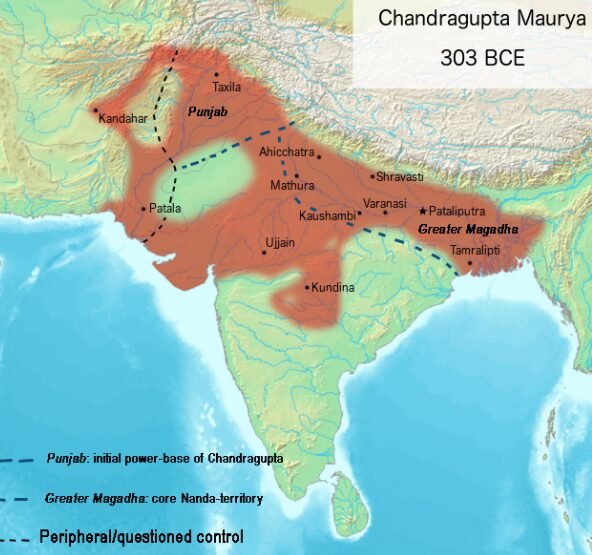
The campaign against the Nandas is described in various ways across texts. Some sources depict a swift military conquest, while others describe a prolonged struggle involving guerrilla tactics and political cunning. Ultimately, Chandragupta overthrew the Nanda dynasty, with Dhana Nanda as its last ruler, and established the Maurya Empire, with Pataliputra as its capital.
Later Life and Succession
Legacy
By unifying a vast territory and establishing a centralized administration, Chandragupta Maurya laid the groundwork for his successors, particularly his grandson Ashoka, to build upon. The Mauryan Empire became a model of governance and cultural synthesis, influencing Indian history for centuries.
Frequently Asked Questions

Chandragupta Maurya, the founder of the Maurya Empire, came to prominence during the late 4th century BCE in the Indian subcontinent. While definitive historical details about his early life are scarce, numerous legends and textual sources provide glimpses of his origins. Image: A modern statue depicting Chandragupta Maurya, Laxminarayan Temple, Delhi
What was Chandragupta Maurya’s significance in Indian history?
Chandragupta Maurya (c. 320–298 BCE) was the founder of the Maurya Empire, uniting much of the Indian subcontinent and establishing a centralized administration, laying the groundwork for a unified Indian polity.
How did Chandragupta rise to power?
Chandragupta, guided by his mentor Chanakya, overthrew the unpopular Nanda dynasty in Magadha and capitalized on the political unrest following Alexander the Great’s departure to build his empire.
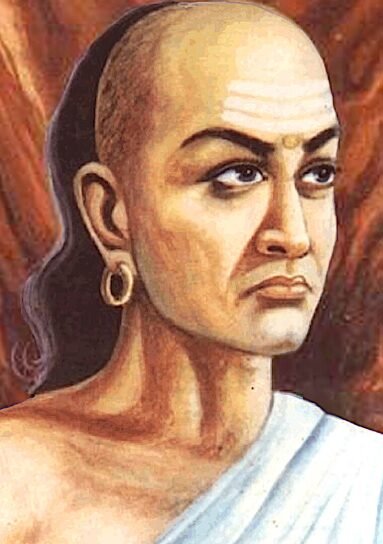
Aligning with Chanakya’s guidance, Chandragupta is believed to have built an army, consolidating support among disaffected regions and local republics like the Yaudheyas. Image: Chanakya as depicted on the cover of R. Shamasastry’s 1915 translation of Arthashastra
What role did Chandragupta play in conflicts with the Greeks?
Chandragupta expelled the Greek satraps left by Alexander the Great and later formed a treaty with Seleucus I Nicator, gaining territory in exchange for 500 war elephants.
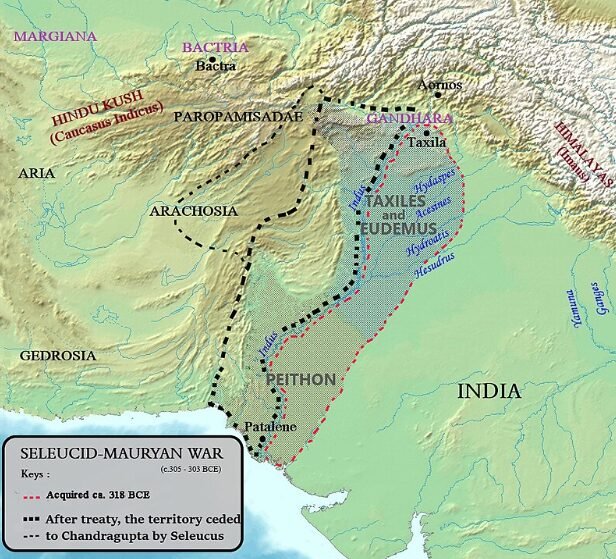
Following Alexander the Great’s death, Chandragupta expanded his empire, securing the Punjab and defeating Seleucus I Nicator in 305 BCE, forging a treaty that strengthened Indo-Greek relations.
What were the key features of Chandragupta’s administration?
He implemented a decentralized system with provinces governed by officials, a council of ministers, and a focus on infrastructure like roads, irrigation, and trade routes to strengthen the economy.
What was Chandragupta’s relationship with Chanakya?
Chanakya, his mentor and minister, was instrumental in Chandragupta’s rise, offering strategic counsel and authoring the Arthashastra, a treatise on statecraft often associated with Mauryan governance.
What role did religion play during Chandragupta’s reign?
While supporting Vedic traditions, his reign saw the coexistence of Buddhism, Jainism, and Ājīvika. Later Jain accounts describe his renunciation of power and practice of Sallekhana.
How did Chandragupta’s reign influence infrastructure and economy?
He initiated large-scale infrastructure projects like irrigation systems and roads, which boosted agriculture, trade, and military mobility, fostering economic prosperity.
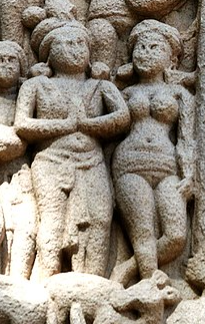
Chandragupta’s establishment of the Maurya Empire and its administrative systems influenced subsequent Indian history. His grandson Ashoka expanded on this legacy, promoting cultural and religious growth. Image: Emperor Ashoka and his Queen at the Deer Park. Sanchi relief





