How and why did the Christmas Truce of 1914 occur?
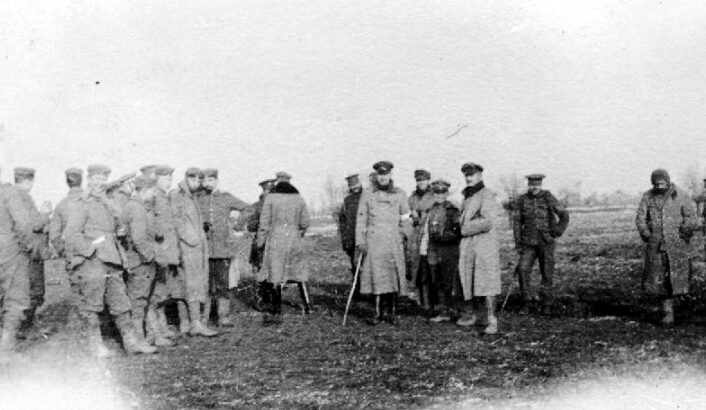
Though the 1914 truce was the most notable, similar, smaller-scale ceasefires occurred in the following year. However, they were not as widespread as those in 1914. Image: British and German soldiers met in no man’s land during the unofficial Christmas truce (Northumberland Hussars, 7th Division, Bridoux–Rouge Banc Sector).
The Christmas Truce of 1914 is one of the most extraordinary and iconic events of World War I. It occurred in December 1914, along the Western Front, where soldiers from opposing sides—primarily British and German, but also French—laid down their weapons and fraternized in an unofficial ceasefire. This spontaneous and widespread cessation of hostilities stands as a rare moment of humanity amidst one of the deadliest conflicts in history.
Understanding how and why this truce occurred requires examining the context of the war, the conditions on the battlefield, the cultural and social dynamics of the soldiers involved, and the unique circumstances surrounding Christmas 1914.
Context of the War in Late 1914
World War I, which began in July 1914, quickly descended into a brutal and grinding conflict. By December, just five months into the war, both sides had become bogged down in a deadly stalemate along the Western Front, which stretched from the North Sea to the Swiss border. The initial rapid advances by both the German and Allied forces had come to a halt following the “Race to the Sea,” where both sides attempted to outflank each other. As neither could gain a decisive advantage, trench warfare emerged as the defining feature of the conflict.
The conditions in the trenches were appalling. Soldiers lived in cold, wet, and unsanitary conditions, surrounded by mud, rats, and the constant threat of artillery bombardment, sniper fire, and gas attacks. Casualties were high, morale was often low, and the soldiers on both sides were beginning to realize that the war would not be over quickly, as many had initially believed. This was the backdrop against which the Christmas Truce unfolded.
The Lead-Up to the Truce
By December, the Western Front had settled into a pattern of sporadic fighting, with neither side able to gain significant ground. The deadlock, coupled with the freezing winter conditions, contributed to a temporary lull in the intensity of combat in some sectors. As Christmas approached, there were signs that soldiers on both sides were eager for a break from the relentless fighting, at least temporarily.
Rumors of a Christmas truce had been circulating even before December. Pope Benedict XV had called for an official ceasefire during the Christmas season in early December 1914, appealing to the belligerent nations to pause the hostilities and reflect on the season of goodwill. His plea was rejected by the governments involved, who believed that any break in fighting might weaken their resolve or give the enemy an advantage. However, the soldiers in the trenches had their own ideas, and the truce ultimately happened in spite of official disapproval.
Cultural and Social Factors
One of the key reasons the Christmas Truce occurred was the cultural and social dynamics among the soldiers on both sides. Many of the soldiers, particularly on the German and British fronts, shared a common cultural heritage. Both nations had strong Christian traditions, and Christmas was a significant holiday for soldiers and civilians alike. The idea of peace and goodwill associated with Christmas resonated deeply with the men on the front lines, many of whom had been raised with similar values of compassion, charity, and religious observance.
German soldiers, in particular, brought with them customs that helped set the stage for the truce. In the lead-up to Christmas, German troops began decorating their trenches with candles and Christmas trees, singing carols such as “Stille Nacht” (“Silent Night”). These displays of festivity caught the attention of British soldiers across no man’s land, and in many places, the two sides began calling out to each other across the trenches, exchanging Christmas greetings. The mutual recognition of a shared holiday helped to humanize the enemy and create a sense of connection, however fleeting.
The Start of the Truce
The truce was not a coordinated or uniform event across the Western Front; it unfolded differently in various sectors, with some areas experiencing more extensive fraternization than others. The truce is generally considered to have begun on Christmas Eve, December 24, 1914, and lasted through Christmas Day, though in some areas, it extended beyond December 25.
In many places, the truce began with small, tentative gestures. German and British soldiers called out to each other across no man’s land, shouting greetings and sometimes singing Christmas carols. Soon, soldiers from both sides ventured into no man’s land, the desolate and dangerous strip of land between the opposing trenches, to meet and converse.
They exchanged gifts, such as cigarettes, food, and souvenirs, and shared stories about their lives back home. In some sectors, there were joint burial ceremonies for fallen soldiers, and in others, soldiers swapped prisoners. There were even reports of impromptu football matches, though these may have been less widespread than often portrayed in popular accounts.
While the truce was most prominent between British and German troops, French soldiers also participated in some sectors, though the truce was generally less extensive along the French-German front. The French soldiers, whose homeland was occupied by German forces, may have been less inclined to fraternize with the enemy, but in some areas, they too took part in the ceasefire and exchanged greetings with German soldiers.
Reasons for the Truce
The Christmas Truce occurred for several reasons, many of which were specific to the conditions of the war in 1914:
- Exhaustion and Disillusionment: By December 1914, soldiers on both sides were physically and mentally exhausted. The war had already proven to be far more brutal and prolonged than most had expected. Many soldiers had entered the war believing it would be over by Christmas, and the reality of the trench stalemate was sinking in. This exhaustion and disillusionment created a desire for a temporary reprieve from the violence, even if only for a day.
- Shared Humanity: The truce was a powerful expression of the shared humanity between the soldiers on both sides. Despite being enemies, they were all young men far from home, enduring the same hardships, and facing the same dangers. The common bond of Christmas, with its themes of peace and goodwill, allowed them to see each other not as faceless adversaries but as fellow human beings.
- Cultural Traditions: As mentioned earlier, Christmas was a significant holiday for both the British and German soldiers. The holiday’s religious and cultural significance, combined with the soldiers’ shared Christian traditions, created a sense of solidarity that transcended national boundaries. The singing of Christmas carols, the exchange of gifts, and the symbolic meaning of Christmas as a time of peace contributed to the atmosphere of the truce.
- Frustration with Command: There was also an undercurrent of frustration with the high command on both sides. Many soldiers felt that they were being used as pawns in a war of attrition with no clear end in sight. The truce represented a subtle form of rebellion against the orders of their commanders, who had explicitly discouraged any fraternization with the enemy.
- The Proximity of the Front Lines: The close proximity of the opposing trenches, often just a few hundred yards apart, made the truce more likely. Soldiers could hear each other’s voices, see each other’s movements, and even recognize individual faces across the lines. This physical closeness contributed to a sense of familiarity and a recognition that, despite being enemies, they shared a common experience.
The Limits of the Truce
It is important to note that the Christmas Truce was not universal. In some sectors, fighting continued as usual, and not all soldiers were willing to participate in the ceasefire.
In other areas, the truce was limited to small gestures, such as the recovery of bodies or brief conversations across the lines, rather than full fraternization. Moreover, while the truce was a remarkable event, it did not signal a broader shift in the war. Hostilities resumed in most areas by the end of Christmas Day, and the war continued with undiminished ferocity.
The Role of Commanders
The Christmas Truce was an entirely unofficial and unsanctioned event, and it occurred against the explicit orders of military commanders on both sides. The high command was deeply concerned about the implications of such fraternization, fearing that it could undermine discipline and morale. In the aftermath of the truce, commanders issued stern warnings to their troops, emphasizing that such ceasefires were unacceptable and would not be tolerated in the future.
In subsequent years, efforts were made to prevent any recurrence of the Christmas Truce. Soldiers were rotated out of the front lines before Christmas, and artillery bombardments were intensified during the holiday season to ensure that no similar ceasefires could take place. By 1915 and 1916, the war had become even more bitter and brutal, and the possibility of another truce faded as the conflict dragged on.
The Legacy of the Christmas Truce
The Christmas Truce of 1914 has since become one of the most enduring and poignant symbols of World War I. It is often remembered as a moment of hope and humanity amidst the horrors of war, a brief glimpse of peace in a conflict that would ultimately claim millions of lives. The truce has been immortalized in books, films, songs, and plays, and it continues to capture the imagination of people around the world.
One of the reasons the Christmas Truce resonates so strongly is that it stands in stark contrast to the overall trajectory of World War I. The war, which began with a sense of optimism and national pride, soon descended into a grim and seemingly endless slaughter.
The Christmas Truce offers a counter-narrative to the dominant story of the war, showing that even in the midst of violence, there was still room for compassion, empathy, and a shared sense of humanity.
In many ways, the Christmas Truce is remembered not for what it changed—after all, the war continued for four more years—but for what it represented. It was a fleeting moment when the soldiers on both sides chose peace over violence, however briefly, and recognized their common humanity. This brief cessation of hostilities serves as a reminder that even in the darkest of times, there is always the possibility of understanding, reconciliation, and peace.

Though the truce did not lead to a broader peace or a change in the course of the war, its legacy endures as a symbol of the potential for compassion and understanding, even in the most difficult and violent circumstances. Image: Football Remembers memorial at the National Memorial Arboretum in Staffordshire.
Conclusion
The Christmas Truce of 1914 occurred because of a combination of exhaustion, disillusionment, cultural traditions, and a desire for a brief respite from the horrors of war. It was made possible by the close proximity of the front lines, the shared experiences of the soldiers, and the universal significance of Christmas as a time of peace and goodwill. While the truce was an unofficial and spontaneous event, it has since become one of the most iconic moments of World War I, remembered for its powerful message of humanity amidst the violence.
Questions and Answers about the Christmas Truce of 1914

The Christmas Truce of 1914 was a series of unofficial ceasefires along the Western Front during World War I, where soldiers from opposing sides, particularly the French, British, and German armies, temporarily ceased hostilities to celebrate Christmas. Image: British and German soldiers exchange friendly conversation and swap headgear, as depicted in an artist’s impression from The Illustrated London News on 9 January 1915.
When did the Christmas Truce take place?
The truce occurred in December 1914, five months after the outbreak of World War I. It began on Christmas Eve and continued through Christmas Day, though in some areas, the ceasefire extended longer.
What triggered the Christmas Truce?
The truce emerged as soldiers from both sides, exhausted by months of brutal trench warfare, initiated contact in the days leading up to Christmas. They exchanged greetings, carolled, and eventually ventured into no man’s land to meet, share food, and exchange gifts.
What activities took place during the Christmas Truce?
During the truce, soldiers from both sides met in no man’s land, exchanged gifts and food, held joint burial services for the dead, engaged in prisoner swaps, and in some cases, carolled together. There were even reports of football matches between the troops, although these were limited.
Did fighting stop everywhere along the Western Front during the Christmas Truce?
No, fighting did not cease everywhere. In some sectors, hostilities continued, while in others, only temporary arrangements were made, such as ceasefires to recover the bodies of fallen soldiers.
Did similar truces occur after 1914?
Similar but smaller-scale ceasefires took place in 1915. However, they were much less widespread due to orders from military commanders forbidding fraternization. By 1916, as the war became increasingly bitter, soldiers were less willing to participate in truces.
What were the broader sentiments behind the Christmas Truce?
The truce reflected a broader “live and let live” attitude that sometimes emerged during World War I, where soldiers in close proximity would pause fighting, engage in conversation, and make informal agreements to avoid unnecessary violence.
Why is the Christmas Truce considered significant?
The Christmas Truce is significant because of the large number of soldiers involved and the unprecedented sight of men from opposing armies openly congregating in no man’s land during daylight. It is remembered as a symbol of peace and shared humanity in the midst of one of history’s most destructive conflicts.
Why did military commanders discourage future truces?
Military commanders feared that fraternization could weaken discipline and morale. They issued orders prohibiting further truces to ensure that soldiers remained focused on the war effort.
How is the Christmas Truce remembered today?
The Christmas Truce has become a powerful symbol of peace and compassion during wartime. It is often depicted in books, films, and plays, highlighting the shared humanity of soldiers even amid the horrors of war.

A cross was placed in Saint-Yves, Belgium, in 1999, commemorating the Christmas Truce with the inscription: “1914 – The Khaki Chums Christmas Truce – 1999.”