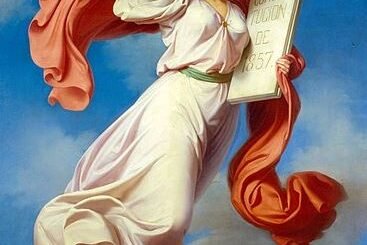
Life and major facts about President Benito Juárez
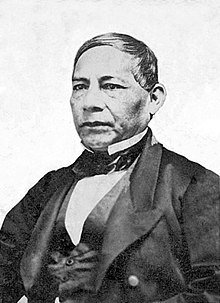
In Latin American history, Juárez stands out as a beacon of progress and resilience. His story serves as an inspiration, not just for Mexicans but for all who value democracy, justice, and the upliftment of the downtrodden.
Benito Juárez, often referred to as the “Builder of Modern Mexico,” stands tall among the pantheon of Latin American leaders. His life’s journey, from indigenous Zapotec origins to the presidency of Mexico, is a testament to his unwavering determination, resilience, and commitment to justice and progress.
World History Edu provide a comprehensive overview of Juárez’s life and his significant contributions to Mexico.
Early Life and Education
Benito Pablo Juárez García was born on March 21, 1806, in the village of San Pablo Guelatao, situated in the state of Oaxaca, Mexico. Of Zapotec descent, Juárez’s early life was marked by hardship. He lost both parents at the age of three and was raised by his grandparents until their passing when he was orphaned again at the age of twelve.
Despite these adversities, young Juárez recognized the importance of education. Moving to the city of Oaxaca at the age of 12, he pursued his education with fervor. Initially studying for the priesthood, Juárez later shifted his focus to law, a decision that would significantly influence Mexico’s trajectory. He enrolled in the Institute of Sciences and Arts in Oaxaca and earned his law degree in 1834.

Juárez, with his sister María Josefa (left) and wife Margarita Maza, on their wedding day in 1843, shortly after photography reached Mexico.
Political Ascent
Juárez’s legal career became a springboard for his political ascent. Beginning as a lawyer, he soon entered politics, getting elected as a city council member in Oaxaca. His unwavering dedication to liberal values and reforms led to his rising prominence within the Liberal Party.
In the turbulent world of 19th-century Mexican politics, Juárez navigated through various positions, including a judge and governor of Oaxaca. His governance in Oaxaca was marked by progressive reforms, especially in education and indigenous rights.
However, the larger political landscape of Mexico was characterized by a struggle between conservative and liberal factions. The central conflict revolved around issues like church-state relations, land reforms, and federalism versus centralism.
Years of Struggle: The Reform War and French Intervention
Juárez’s staunchly liberal stance put him at odds with the conservatives. The tensions culminated in the Reform War (1857-1861), a civil war between liberals and conservatives. At the heart of this conflict was the Constitution of 1857, promulgated by the liberals, which aimed at reducing the Catholic Church’s power, among other reforms.
Juárez became the de facto leader of the liberal side and, in 1859, while the war raged, assumed the presidency of Mexico. The liberals emerged victorious in 1861. However, the aftermath of the war left Mexico economically strained.
The subsequent suspension of foreign debt payments by Juárez provided European powers an excuse for intervention. While Britain and Spain negotiated and withdrew, Napoleon III of France, with ambitions of establishing a puppet empire in the Americas, launched a full-scale invasion. This led to the significant event of the Battle of Puebla in 1862, where Mexican forces achieved an unlikely victory. However, the French advanced further and, by 1863, had installed Maximilian of Austria as the emperor of Mexico.
But Juárez, recognized by many as the legitimate president, did not relent. He led a guerilla resistance against the French-backed monarchy. By 1867, with changing global circumstances and U.S. support for Juárez, the French withdrew. Maximilian was captured and executed, restoring the republican government with Juárez at its helm.
Reforms and Legacy
Juárez’s governance was marked by the ‘Laws of Reform,’ a series of measures to establish a clear separation between church and state. The reforms nationalized church lands, curtailed the military’s privileges, and established civil registries and secular schools.
These measures were not without controversy. While they aimed at reducing the power of traditionally dominant institutions like the church and military, they also sparked resistance from these very entities.
Juárez’s commitment to federalism, civil liberties, and indigenous rights also stands out. As an indigenous Zapotec, he held deep empathy for Mexico’s native populations and aimed at integrating them into the national fabric.
His tenure as president was not free from criticisms. His centralization of power and the decision to run for an unprecedented term raised eyebrows. Nevertheless, his overall legacy is overwhelmingly positive in the annals of Mexican history.
Juárez’s personal motto, “Respect for the rights of others is peace,” encapsulates his governance’s guiding principle. He passed away in 1872, but his influence endured.
Conclusion
Benito Juárez’s life is a remarkable tale of determination, resilience, and an unwavering commitment to justice, progress, and nation-building. From humble beginnings in a Zapotec village to the highest office in Mexico, Juárez navigated through personal adversities and the turbulent waters of 19th-century Mexican politics to leave an indelible mark.
His leadership during some of Mexico’s most challenging times, notably the Reform War and the French Intervention, showcased his mettle and vision. His reforms, especially those separating church and state, laid the groundwork for modern Mexico’s secular and federal character.
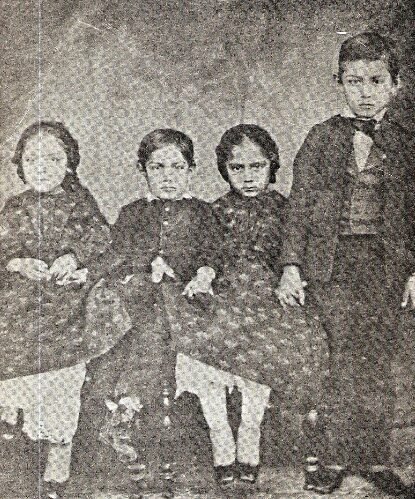
Children of Benito Juárez
Questions and Answers about Benito Pablo Juárez García
Benito Pablo Juárez García was a Mexican politician and statesman who served as the 26th president of Mexico from 1858 until his death in 1872. He was the first and only Indigenous president of Mexico and the first democratically elected Indigenous leader in the postcolonial Americas.
What is Juárez’s significance in Mexican history?
Juárez is seen as a symbol of Mexican nationalism and resistance to foreign intervention. His leadership during pivotal moments like the Reform War and the Second French Intervention solidified his legacy as one of Mexico’s most important historical figures.
What were Juárez’s origins?
Juárez was born into a poor Indigenous family of Zapotec ancestry in rural Oaxaca. He was orphaned at a young age and raised by his uncle. At 12, he moved to Oaxaca City to work as a domestic servant, where his employer sponsored his education.
How did Juárez’s education shape his career?
Juárez initially entered a seminary to become a priest but later shifted his focus to law, attending the Institute of Sciences and Arts. There, he became active in Liberal politics, which paved the way for his rise in the legal and political spheres, eventually becoming a judge and later the Governor of Oaxaca.
What key role did Juárez play in Mexican politics after the fall of Antonio López de Santa Anna?
Juárez was appointed Minister of Justice under Liberal president Juan Alvarez. He was instrumental in passing the Juárez Law as part of the constitutional reforms known as La Reforma, which aimed to reduce the influence of the Catholic Church and military in civil matters.
How did Juárez become president of Mexico?
Juárez, as head of the Supreme Court, assumed the presidency after the resignation of Liberal president Ignacio Comonfort during the Reform War. He led the Liberal forces to victory against the Conservatives after three years of conflict.
What was the Second French Intervention, and how did Juárez respond?
The Second French Intervention was an attempt by France to overthrow Juárez’s government and establish a French-aligned monarchy in Mexico. Despite being forced to flee north, Juárez continued to lead the resistance. The French-backed Second Mexican Empire collapsed in 1867, allowing Juárez to return to Mexico City and continue his presidency.
What were some controversial actions Juárez took during his presidency?
Juárez made several controversial decisions, including negotiating the McLane–Ocampo Treaty, which would have granted the U.S. perpetual rights across the Isthmus of Tehuantepec. He also extended his presidential term during the French Intervention and proposed constitutional reforms to strengthen the federal government. His decision to run for reelection in 1871 led to a rebellion by Porfirio Díaz.
What were Juárez’s core political beliefs?
Juárez championed civil liberties, equality before the law, the separation of church and state, and civilian control over the military and the Catholic Church. He believed in a strong federal government and worked to limit the influence of powerful institutions on the Mexican state.
How is Juárez remembered today?
Juárez is celebrated as a hero of Mexican independence and reform. The city of Oaxaca added “de Juárez” to its name in his honor, and his birthday, March 21, is celebrated as a national holiday. Numerous cities, streets, and institutions, including Ciudad Juárez, are named after him. He is regarded as one of Mexico’s most popular 19th-century presidents.
What was the Plan de la Noria, and how did it relate to Juárez?
The Plan de la Noria was a rebellion led by Porfirio Díaz in 1871, opposing Juárez’s reelection. Díaz, a fellow Liberal from Oaxaca, believed Juárez had become too autocratic and sought to challenge his rule.
What legacy did Juárez leave in Mexico after his death?
Juárez is remembered for his role in preserving Mexico’s sovereignty and advancing liberal reforms. His leadership during the fight against foreign intervention and his promotion of civil liberties made him a revered figure in Mexican history. Many locations and institutions are named after him, and he remains an iconic symbol of resistance and reform.
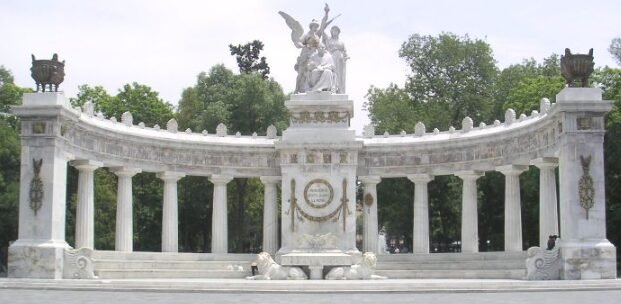
Benito Juárez truly remains the embodiment of the Mexican spirit and continues to be celebrated as a national hero. Image: Porfirio Díaz, Juárez’s former political rival, built a monument in central Mexico City to commemorate the centenary of Juárez’s 1806 birth.