Cretan Revolt (1897–1898): History and Major Facts
The Cretan Revolt of 1897–1898 marked a turning point in the struggle of the Greek Orthodox population of Crete against Ottoman rule. This insurrection, fueled by decades of religious and political tension, ultimately led to Crete’s autonomy under nominal Ottoman sovereignty. Support from both the Kingdom of Greece and later intervention by European Great Powers played critical roles in the revolt’s outcome.
Background
Crete fell under Ottoman control in 1669 following the prolonged siege of Candia. Despite their dominance, the Ottomans faced persistent resistance from the Greek Christian majority, who aspired to union (enosis) with Greece after its independence in 1830. Major uprisings occurred in 1866–1869 and 1878, but both were suppressed.
In 1895, representatives from key Cretan provinces issued a memorandum calling for a Christian governor and European intervention to protect Christian Greeks. The Ottomans responded by appointing Alexander Karatheodoris, a Christian governor, but this incited unrest among Muslim Cretans, leading to massacres of Christians. Greek communities retaliated, escalating the conflict.
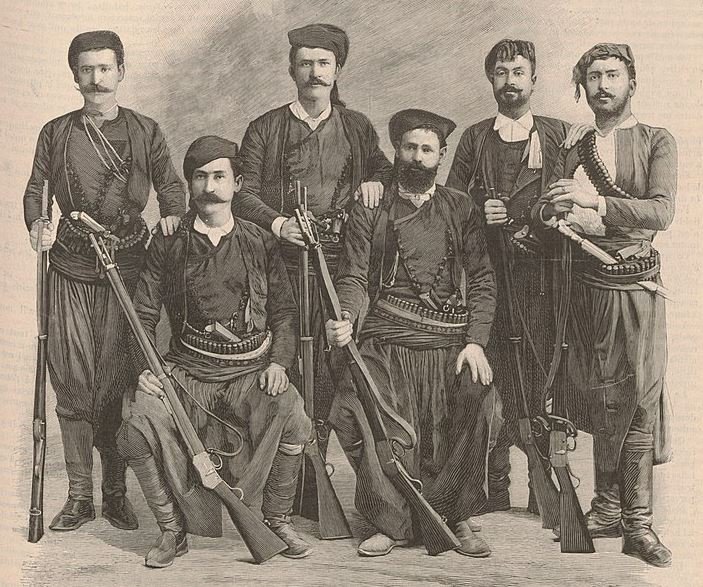
A painting depicting the rebel leaders of Cretan.
Cretan Unrest (1895–1896)
In September 1895, the Greek Cretans formed a revolutionary assembly advocating autonomy under a Christian governor. Ottoman forces attempted to suppress the movement but were repelled in battles such as Vryses (1895) and Vamos (1896). The violence reached new heights when Muslim factions targeted Christians, prompting European powers to intervene diplomatically.
A new constitution for Crete was proposed in 1896, granting limited autonomy while maintaining Ottoman suzerainty. Both sides tentatively agreed, and George Berovich Pasha was appointed governor. However, simmering tensions persisted.
The Revolt (1897–1898)
In January 1897, Muslims in Chania burned Christian neighborhoods, triggering a full-scale uprising. Eleftherios Venizelos, a prominent leader, established a provisional government in Akrotiri and raised the Greek flag, declaring Crete’s union with Greece.
Greek Prime Minister Theodoros Diligiannis ordered troops and supplies to support the insurgents. Prince George of Greece led a fleet to blockade Ottoman supply routes. By February 1897, Greek volunteers and soldiers had bolstered the rebel forces, capturing strategic locations such as Voukolias.
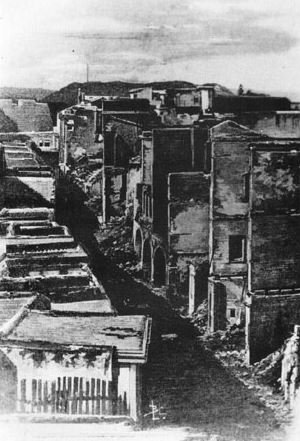
Chania following the Turkish-led destruction of Christian neighborhoods.
European Involvement
The Great Powers (United Kingdom, France, Italy, Austria-Hungary, Germany, and Russia) sought to prevent a broader conflict. They deployed naval forces to Crete and proposed autonomy as a compromise. In March 1897, the Powers shelled the Akrotiri camp, demanding the removal of the Greek flag. Despite such measures, the rebels persisted.
On March 20, 1897, the Great Powers declared Crete autonomous under Ottoman suzerainty. A blockade was imposed to isolate the island, forcing Greece to recall its troops. However, Venizelos and his forces vowed to continue the struggle until the Ottomans withdrew completely.
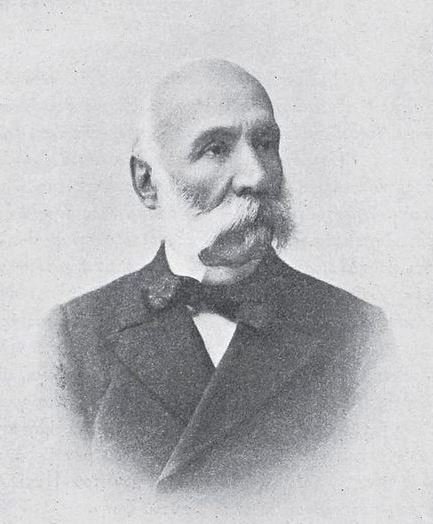
Portrait of Theodoros Diligiannis.
Political Developments
By mid-1897, a revolutionary assembly led by Venizelos began drafting plans for an independent administration. Proposals included appointing a European prince as governor. Despite Ottoman reinforcements, the Great Powers tightened their blockade, effectively neutralizing Ottoman efforts.
The turning point came in September 1898 when British forces clashed with Ottoman authorities in Candia, leading to widespread violence. The Great Powers issued an ultimatum for Ottoman withdrawal, which was accepted in October 1898.
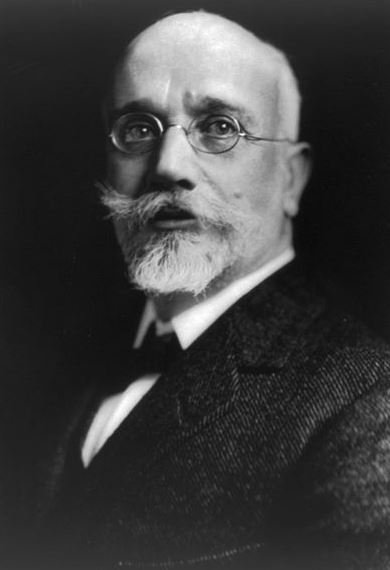
A 1919 portrait of Venizelos
Resolution and Aftermath
On December 9, 1898, Prince George of Greece was installed as High Commissioner of Crete under European supervision. A constitution was adopted in 1899, and elections were held to establish a representative government.
The Cretan Revolt not only reshaped Crete’s future but also set a precedent for nationalist movements in the Balkans.
While autonomy marked a significant victory, the ultimate goal of union with Greece remained unfulfilled. Tensions between Venizelos and Prince George culminated in the 1905 Theriso Revolt, advocating for enosis. This goal was finally achieved in 1913, during the Balkan Wars, when Crete was officially incorporated into Greece.
Key Outcomes
- Autonomy of Crete: The island gained self-governance under Prince George, with nominal Ottoman sovereignty.
- Ottoman Retreat: Ottoman forces and many Turkish Cretans left the island.
- European Influence: The Great Powers played a decisive role in mediating and enforcing the settlement.