Cuneiform Writing: History, Meaning, Symbols, and Facts

Cuneiform – the world’s oldest writing
Cuneiform was a writing system invented by the ancient Sumer people of the Mesopotamian region (ancient Middle East). According to historians, this form of writing emerged about 5,000 years ago, making it the world’s first-known written language. For over 3,000 years, the cuneiform script remained the dominant written language in the known world, before it was replaced by alphabetical scripts.
Rise and Fall of Sumer, the first-known empire in world history
In the article below, World History Edu takes an in-depth look into the history, meaning, and significance of cuneiform writing.
Origin story of Cuneiform writing
Many consider the origin of writing as the origin of Sumerian cuneiform due to how old the cuneiform writing system is.
The ancient Sumerians of southern Mesopotamia (located in what is now southern Iraq) are widely held as the civilization that invented cuneiform writing around 3500 BCE. The writing form would then span from the early Bronze Age to the Common Era, around 75 CE.
Cuneiform was used by all the great civilizations that emerged from ancient Mesopotamia, including the Akkadians, the Babylonians, the Assyrians, the Elamites, Hatti, and the Persians. For centuries, those inscriptions on clay tablets were used by city administrators and priests of temples to keep record of ration allocation and the grain, sheep and other forms of goods that were received.
Cuneiform writing was also used to take records of activities pertaining to business and trade. It was also the primary writing language used by story writers, poets, and letter writers.
Beginning around 100 BCE, cuneiform script stated getting replaced by alphabetic script, primarily the Aramaean alphabet.
Read More: 12 Major Achievements of ancient Babylonian civilization
Meaning
Due to the wedge-shaped stylus that was used in writing, the cuneiform system is sometimes known as the ancient wedge-shaped impressions of the Mesopotamians. The origin of the word has been stated to come from the Latin word cuneus which means ‘wedge’. The Latin word most likely stemmed from the cuneiform writing style in the first place.
The cuneiform writing was generally made with a writing implement/tool – i.e. a reed stylus – which was then pressed into a soft clay to give wedge-like impressions
Cuneiform tablets and how they were made
Based on archaeological findings, historians reason that Sumerian city of Uruk was the birthplace of the cuneiform writing system. It began with proto-cuneiform, a pictorial writing system that historians believe was used on many of the earliest cuneiform tablets.
After a wedge-tipped stylus is pushed into wet clay to make the writing, the tablet is then placed in kilns in order to for it to be baked hard. The writers that did not want to leave a permanent record used moist clay, allowing them to easily alter the record at later date.
Archaeologists opine that many of the discovered cuneiform tablets that we see today were likely preserved by chance after invading armies burnt down buildings that contained a relatively moist clay tablet. The fire acted like an oven, baking those clay tablets into what we see today.

Cuneiform – The Kish tablet, a limestone tablet from Kish with pictographic, early cuneiform, writing, 3500 BC. Possibly the earliest known example of writing. Ashmolean Museum.
Cuneiform and Egyptian hieroglyphs
Cuneiform, along with the ancient Egyptian hieroglyphs, constitutes the oldest known writing system. However, the Egyptian hieroglyphs are believed to have emerged a few centuries after the birth of the Sumerian proto-cuneiform. Some historians posit that the hieroglyphs may have taken some inspiration from the Mesopotamian cuneiform writing.
Ancient Mesopotamian rulers had the habit of inscribing cuneiform script into commemorative stelae, detailing how mighty a ruler they were, or in some cases, how divine their rule was.
- 12 Most Famous Ancient Mesopotamian Gods and Goddesses
- 10 Most Famous Kings of Ancient Mesopotamia
- 9 Greatest Ancient Mesopotamian Cities
Evolution of Cuneiform writing
The pre-cuneiform writing was not advanced enough to convey more than concrete and visible subjects. It relied solely on pictographic technique. This was around the late 4th millennium BCE. Those pictographic techniques were in turn influenced by near eastern token system, which dates to the 9th millennium BCE. This type of cuneiform writing spanned from 3400 BCE to 3100 BCE.
With the passage of time, the subjects on the cuneiform tablets became more complex and difficult (i.e. from a modern scholar’s perspective) to interpret. Those changes started with the proto-cuneiform writing of around 3100 BCE, when slight syllabic elements began to appear in the writing. On the back of the introduction of a modified wedge-tipped stylus around 2500 BCE, early dynastic cuneiform writing became relatively easier and quicker to produce.
As signs in the cuneiform system changed from pictograms to syllabograms, the ancient Mesopotamians could convey subjects like immortality and the commands of the gods. This was starkly different from the previous versions that could only note down things and objects. Say there was a bird and the god Marduk pictorially used in the system, readers would struggle to decipher what those objects tell in relation to each other. Was the bird an embodiment of Marduk? Or was the bird being sacrificed to Marduk?
The early dynastic cuneiform system of around the late 3rd millennium BCE was a bit more refined and could communicate grammatical relationships and syntax. It could easily convey ideas as it combined word-signs and phonograms. This allowed for the writing system to be used communicating ideas in religion, economics, politics and literature.
Also, the characters were reduced from more than 1000 to 600 in order to allow for more clarity. By the 23rd Century BCE, cuneiform had reached a point where emotional concepts like loyalty, trust, love, fear, hate, hope, and anger could be communicated. This explains how Enheduanna, the famous priestess of Inanna, in Ur (a Sumerian city) could write her poems and hymns in praise of the Mesopotamian goddess Inanna.

Proto-cuneiform tablet, Jemdet Nasr period, c. 3100–2900 BCE
When were cuneiform inscriptions deciphered?
For several centuries, Common Era scholars worked day and night trying to decipher cuneiform writings. For example Arabo-Persian historians of the Islamic Golden Age (8th century to 14th century CE) tried their hardest to unravel the mysteries of cuneiform writings littered across Mesopotamia region. All of those attempts ended in disappointment.
Many Middle Ages European scholars – like the Venetian explorer Giosafat Barbaro and theology professor Antonio de Gouvea – share with the rest of Europe about how they had encountered very strange writing in a number of ancient ruins in the Middle East, particularly in Persepolis (present-day Iran). In the 17th century, English traveler and historian Sir Thomas Herbert rightly stated how those strange characters were not Egyptian hieroglyphics. Sir Thomas noted that they were words and syllables instead of letters.
In the 18th century, scholars such as German cartographer and explorer Carsten Niebuhr and French Indologist Anquietil-Duperron paved the way for the likes of George Smith, Edward Hincks, Jules Oppert (1825-1905), and Henry Creswicke Rawlinson (1810-1895) to properly decipher the various ancient Mesopotamian cuneiforms. For example Rawlinson finished deciphering Old Persian cuneiform in the 1830s. Hincks contributed tremendously in analyzing the patterns and vowels found in Persian cuneiform.
Borrowing on the techniques used to decipher Old Persian cuneiform, scholars were able to decipher Akkadian and then Sumerian cuneiforms.
It is worth mentioning that George Smith played an instrumental role in translating those cuneiforms into English. The acclaimed historian and archaeologist died at the age of 36 while deeply engrossed in his work during the excavation of Nineveh (what is now Kuyunjik) in 1876. Smith is praised for having taught himself how to translate cuneiform.

Cuneiform writing | English archaeologist George Smith is most known for translating the ancient Mesopotamian epic, The Epic of Gilgamesh
Most famous cuneiform literature
Since the mid-19th century CE, archaeologists have discovered many cuneiform tablets that contain Mesopotamian literature and epics like the Atrahasis, The Myth of Etana, The Enuma Elish and The Epic of Gilgamesh.
The Library of Ashurbanipal, which was discovered by English traveler and archaeologist Sir Austen Henry Layard and Hormuzd Rassam in 1849, had a collection of more than 30,000 clay tablets, mostly written in Akkadian language. The library, which was built by King Ashurbanipal of the Assyrian Empire, contained the famous Epic of Gilgamesh.
The 1933 discovery of a collection of close to 20,000 cuneiform tablets in Persepolis, Iran was welcomed with joy by the archeology community.
The Epic of Gilgamesh
Critically acclaimed Assyriologist George Smith (1840-1876) is credited with translating The Epic of Gilgamesh in 1872 CE. It turned out that the account of the Great Flood was not original to the Book of Genesis in the Bible. Smith’s numerous trips and excavations of the Library of Ashurbanipal in Nineveh (Kuyunjik in present-day Iraq) unearthed a number of cuneiform clay tablets relating to ancient Mesopotamian creation story. Those discoveries and many other more opened the flood gates for other cuneiform tablets to be translated. It enabled historians objectively reinterpret the history of those ancient civilizations.
Gilgamesh, the legendary king of Uruk who wanted to be immortal
Significance
Cuneiform writing system was significant in the sense that it helped many Mesopotamian civilizations convey a great chunk of knowledge and history. It ranks as the most important contribution of the Sumerian civilization, influencing the culture, scholarship and religion of ancient Egyptians, ancient Greeks and Romans.
After cuneiform tablets were deciphered, historians gained access to a great chunk of human history that was penned in cuneiform. This transformed how historians understood the history of those ancient civilizations.
Cuneiform writing and the Bible
Before the discovery of cuneiform on ancient Mesopotamian clay tablets, it was widely accepted that the Bible, specifically the Song of Solomon, was the oldest book in the world. The Song of Solomon for example was seen as the oldest love poem. With the discovery of cuneiform, that title currently belongs to the ancient Mesopotamian love poem titled The Love Song of Shu-Sin. This particular poem goes all the way back to around 2000 BCE.
The deciphering and translation of cuneiform challenged the Bible’s authority on the creation story and the original sin. It also meant that historians no longer considered the Bible as the oldest known-authoritative book in human history.
Many stories and texts in the Bible that were thought original to the Bible turned out to have been adapted from Mesopotamian stories as shown in the discovered cuneiform tablets. For example, the stories about The Fall of Man and the Great Flood in the biblical Book of Genesis were said to have been given to human beings by God, making them appear as being written by God. Archaeological findings show that many of those stories were adapted from Mesopotamian myths. The Hebrew scholars garnished them to make them fit the narrative of the prevailing religion at the time.
The Garden of Eden story in the Bible and the Book of Job were most likely derived from Mesopotamian myths The Enuma Elish and Ludlul-Bel-Nimeqi respectively. The gospels of the New Testament – i.e. the concept of a deity or superhuman dying and resurrecting – likely came from the Mesopotamian poem The Descent of Inanna.

Cuneiform writing | The invention of writing according to an ancient Mesopotamian poem, Enmerkar and the Lord of Aratta (c. 1800 BCE). Kulaba is the name for the ancient Mesopotamian city of Uruk
More facts about cuneiform
- As late as 75 AD, cuneiform writing was still in usage.
- The Sumerian city of Uruk (located east of the Euphrates River in present-day Iraq) holds the title of being the first-known place to have the first recorded writing. The writing was done around the 4th millennium BCE.
- Famed English orientalist Thomas Hyde (1636-1703) was the first scholar to term the characters “cuneiform”. However, he opined wrongly that the inscriptions were used by the ancient Mesopotamians for decorative purposes.
- More than 500,000 cuneiform tablets have been discovered so far in modern times, many of them are housed in museums across the world. With more than 130,000 cuneiform tablets, the British Museum has the largest collections of cuneiform tablets in the world. Other museums that possess considerable number of cuneiform tablets include the Vorderasiatisches Museum Berlin, the Istanbul Archaeology Museums (in Eminonu, Istanbul, Turkey), the Yale Babylonian Collection, Penn Museum in Philadelphia, U.S., and the Louvre in France.
Questions and Answers
Cuneiform is a logo-syllabic writing system used in several languages of the Ancient Near East. It features wedge-shaped impressions that form its signs.
Below are some frequently asked questions about cuneiform writing:
When was cuneiform used?
Cuneiform was in use from the early Bronze Age until the beginning of the Common Era.
Where did cuneiform originate?
Cuneiform was originally developed to write the Sumerian language in southern Mesopotamia, modern-day Iraq.
What is the earliest known writing system?
Cuneiform is the earliest known writing system.
Which language’s texts dominate the cuneiform record?
Akkadian texts, dating from the 24th century BCE, dominate the cuneiform record.
Which languages other than Sumerian used cuneiform?
In addition to Sumerian, cuneiform was adapted for Akkadian, Hittite, Eblaite, Elamite, Hurrian, Luwian, and Urartian.
Are the Old Persian and Ugaritic alphabets related to cuneiform?
No, while the Old Persian and Ugaritic alphabets use cuneiform-like signs, they are distinct from the original cuneiform script.
When was the last known cuneiform tablet created?
The last known cuneiform tablet dates back to 75 CE.
When was cuneiform rediscovered?
Cuneiform was rediscovered in the early 17th century with the publication of the Achaemenid royal inscriptions at Persepolis.
When was cuneiform first deciphered?
Cuneiform was first deciphered in the early 19th century.
What is Assyriology?
Assyriology is the modern study of cuneiform and the cultures that used it. The field is named after early excavations in ancient Assyria.
How many cuneiform tablets are held in museums worldwide?
Approximately half a million cuneiform tablets are housed in museums around the world.
Which museums hold the largest collections of cuneiform tablets?
The largest collections are held by the British Museum, the Vorderasiatisches Museum Berlin, the Louvre, the Istanbul Archaeology Museums, the National Museum of Iraq, the Yale Babylonian Collection, and Penn Museum.
How many cuneiform tablets are in the British Museum?
The British Museum houses over 125,000 cuneiform tablets.

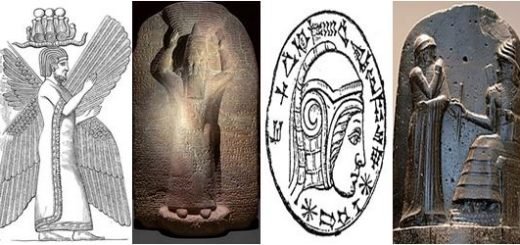





Irrefutable proof that the christian church has been stealing and rebranding information much earlier than previously proven.