Utnapishtim in Ancient Mesopotamia
In ancient Mesopotamian mythology, Uta-napishtim—whose name in Akkadian means “he has found life”—holds a special place as the man who survived the Great Flood. He was once the king of...
Whenever the name “Mesopotamia” pops up, many people assume that it was this giant and unified empire that gave us civilized ways of doing things. Yes, Mesopotamia did usher the world into a civilized era. However, ancient Mesopotamia was far from being a single unified empire. It was a geographic region where most of the world’s ancient civilizations sprung out.
The Mesopotamians started off as a thriving group of people. They settled on a large and dry region where two great rivers, the Euphrates and Tigris, meanders through. As a result of this, their lands got fertile; and soon, the settlements grew bigger to form city-states. These cities, in turn, formed multiple empires. Most famous among them were the Sumerians, the Akkadians, the Assyrians, the Babylonians, and the Persians.
Out of those empires came equally great leaders and kings such as Gilgamesh, Hammurabi, Sargon, Darius I, and Xerxes.
Our world as we know it today is a huge beneficiary of Mesopotamian inventions and ideas.
The following posts comprehensively paints a picture of what it was like to live in ancient Mesopotamia from the year 5500 BCE to 7 CE. We explore a plethora of cultural, social, political, religious, economic and geographic conditions that made Mesopotamia become the birthplace of human’s civilization.

In ancient Mesopotamian mythology, Uta-napishtim—whose name in Akkadian means “he has found life”—holds a special place as the man who survived the Great Flood. He was once the king of...

The Star of Ishtar, also known as the Star of Inanna, stands as one of the most iconic symbols of the ancient Mesopotamian pantheon. It is chiefly associated with the...

Among the most compelling and historically rich artworks of the ancient Near East are the Assyrian wall reliefs from the palace of Ashurnasirpal II (r. 883–859 BCE), displayed prominently at the British Museum. These panels,...

In the vast and storied history of ancient Mesopotamia, the Sumerian civilization stands as one of the earliest and most influential. Among its notable rulers was King Shulgi of Ur...
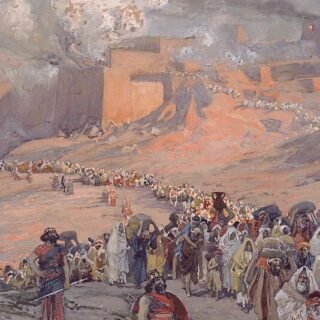
The Jewish spirit—the elusive yet resilient force that has defined the survival and transformation of the Jewish people across millennia—has its most ancient roots buried deep in the fertile crescent...
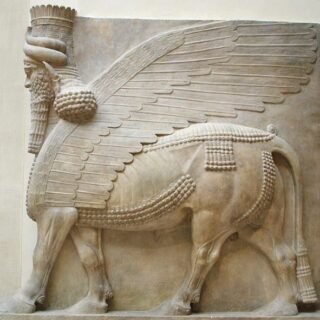
Dur-Sharrukin, known as “Fortress of Sargon” in Neo-Assyrian Akkadian, was a grand capital city built under the reign of Sargon II of Assyria. Situated in present-day Khorsabad, northern Iraq, approximately...
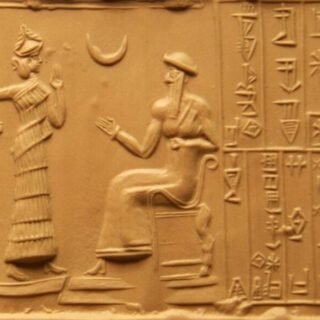
Ur-Nammu was also known as Ur-Namma, Ur-Engur, or Ur-Gur. He was a significant figure in ancient Mesopotamian history. He reigned from approximately 2114 BC to 2092 BC, marking the beginning...
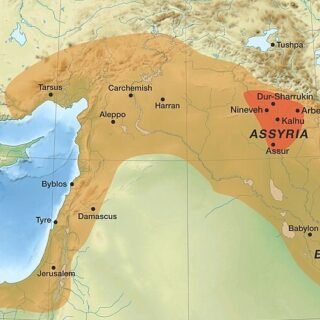
The Neo-Assyrian Empire was the fourth and penultimate stage of Assyrian history, emerging in 911 BC and becoming the dominant power in the Near East, ruling over Mesopotamia, the Levant,...

The Marduk Prophecy is an ancient Mesopotamian text, written in Akkadian cuneiform, that narrates the travels of the statue of the god Marduk from Babylon and its eventual return. It is part of a...

The Anunnaki, derived from the Sumerian words “da-nuna” or “da-nuna-ke4-ne,” meaning “princely offspring” or “offspring of An,” were a group of deities central to the ancient Mesopotamian pantheon. They appeared...

Enūma Eliš, meaning “When on High,” is an ancient Babylonian creation myth that outlines the origins of the cosmos, the rise of the god Marduk, and the creation of humanity....

Larsa is known in Sumerian as UD.UNUGKI and referred to as Larancha or Laranchon by the Greek historian Berossos. This ancient Sumerian city-state is located approximately 24 kilometers southeast of...
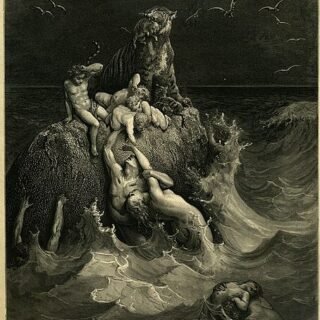
The Eridu Genesis, also known as the Sumerian Creation Myth, delves into humanity’s creation, the origins of kingship, the establishment of the first cities, and a global flood narrative. It...

Eannatum was a prominent Sumerian ensi (ruler or king) of Lagash, reigning around 2500–2400 BCE. He established one of the earliest recorded empires, extending his influence across Sumer, Akkad, and...

Lagash (modern Al-Hiba, Iraq) was one of the most prominent city-states in ancient Sumer, flourishing as a center of power, culture, and religion in the Ancient Near East. Located near...





