What was Czechoslovakia? – History and Major Facts
The Czechoslovak Socialist Republic (CSSR) emerged in 1948, following the February Coup, where the Communist Party of Czechoslovakia (KSČ) seized power with support from the Soviet Union. This event marked the end of a democratic system and ushered in a communist regime aligned with the Soviet bloc. The Ninth-of-May Constitution, enacted later that year, formalized the country as a socialist state, initiating over four decades of communist rule.
Changes in Identity
The state’s identity underwent modifications, reflecting its ideological shifts. Initially called the Czechoslovak Republic, the 1960 Constitution renamed it the Czechoslovak Socialist Republic to symbolize the triumph of socialism. These changes were accompanied by new state symbols emphasizing the communist ideology.
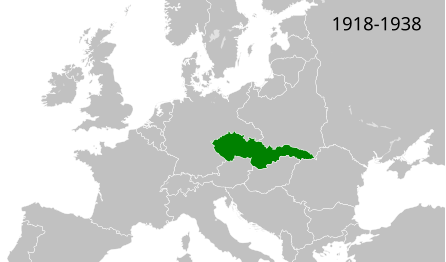
Map of Czechoslovakia between 1918 and 1938
Governance and Political Structure
Governance in the CSSR was monopolized by the Communist Party, led by figures such as Klement Gottwald and later Gustáv Husák. Political plurality was effectively eliminated, with other parties subordinated under the National Front, a coalition dominated by communists. The KSČ maintained strict control over political appointments through cadre and nomenklatura systems, ensuring loyalty to party directives.
The late 1940s and 1950s were marked by Stalinist purges, targeting political opponents and perceived ideological deviations. Prominent trials, such as those involving Rudolf Slánský and Vladimír Clementis, reflected the regime’s paranoia. Many of those accused faced imprisonment or execution, demonstrating the harshness of communist rule.

A 1989 picture of Gustáv Husák.
Central Planning and Challenges
Czechoslovakia’s economy was centrally planned, prioritizing heavy industry over consumer goods. This focus aimed to align the economy with Soviet economic models. Key industries included machinery, metallurgy, and chemical production, contributing to trade within the Eastern Bloc.
Economic growth was significant during the early years, particularly in the 1950s, when living standards improved. However, inefficiencies in energy usage, technology adoption, and resource management hampered sustained progress. By the 1980s, the economy faced stagnation, with shortages of consumer goods and declining industrial productivity.

Map of Czechoslovakia, from 1945 to 1992.
Social Policies and Suppression of Dissent
The communist regime implemented extensive social welfare programs, including free healthcare and education. Rural healthcare services improved in the 1960s, addressing disparities between urban and rural areas. Housing and social infrastructure were expanded to support a growing population.
Despite these advancements, dissenting voices were repressed. Dissident movements, led by figures like Václav Havel, emerged in response to restrictions on free expression and political participation. These movements, though marginalized, played a crucial role in fostering resistance against the regime.
Alignment with the Eastern Bloc
As a satellite state of the Soviet Union, the CSSR was deeply integrated into Eastern Bloc institutions, including the Warsaw Pact and Comecon. These alliances reinforced its strategic and economic ties to the Soviet sphere of influence.
The CSSR maintained active membership in international organizations such as the United Nations and the Non-Aligned Movement. These affiliations reflected its efforts to maintain a global presence despite its alignment with Soviet interests.
Key Events and Turning Points
The Prague Spring (1968)
A brief period of political liberalization known as the Prague Spring occurred in 1968 under Alexander Dubček’s leadership. Reforms aimed to introduce “socialism with a human face,” relaxing censorship and promoting civic freedoms. However, this movement was swiftly suppressed by a Warsaw Pact invasion, reinstating authoritarian control.
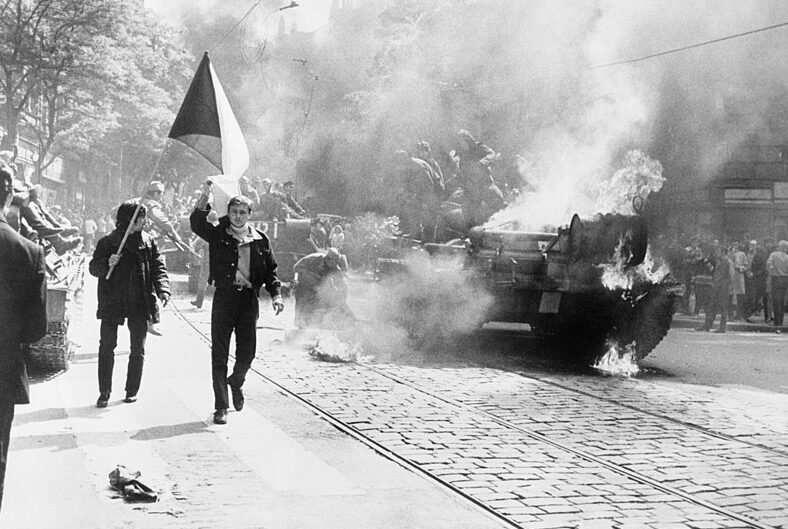
Czechoslovaks carry their national flag in Prague during the Prague Spring.
The Velvet Revolution (1989)
The Velvet Revolution marked the peaceful end of communist rule. Massive public demonstrations, driven by dissatisfaction with economic stagnation and political repression, led to the resignation of communist leaders. In April 1990, the country was renamed the Czech and Slovak Federative Republic, signaling a return to democratic governance.
Territorial Extent and Federal Structure
The CSSR was located in Central Europe, bordered by Poland, East Germany, the Soviet Union, Hungary, Austria, and West Germany. Its geography facilitated economic and cultural exchanges but also placed it at the heart of Cold War tensions.
In 1969, the country was reorganized into a federative system comprising the Czech Socialist Republic and the Slovak Socialist Republic. Although federalization addressed regional disparities, centralized political control under the KSČ limited its practical impact.
Population Composition and Religious Landscape
Czechoslovakia’s population was predominantly Czech and Slovak, with minority groups including Hungarians, Germans, and Roma. These diverse ethnicities contributed to the cultural richness of the country, although tensions occasionally arose due to differing political and social priorities.
Religion faced significant oppression under communist rule, with many religious organizations dissolved or heavily monitored. Despite this, Roman Catholicism remained a significant cultural force, particularly in Slovakia.
Legacy and Dissolution
The Velvet Revolution facilitated a smooth transition to democracy, with free elections held in 1990. The dissolution of the CSSR followed in 1992, resulting in the establishment of the Czech Republic and Slovakia as independent states on January 1, 1993.
The CSSR’s history reflects broader trends in Cold War politics, including the interplay between Soviet influence and national sovereignty.
Frequently Asked Questions
What triggered Communist rule in Czechoslovakia?
The 1948 coup d’état led by the Communist Party with Soviet support.
What was the significance of the Ninth-of-May Constitution?
It established Czechoslovakia as a socialist state, giving the Communist Party absolute power.
What was the Prague Spring?
A 1968 liberalization attempt under Alexander Dubček, ended by a Warsaw Pact invasion.
What was the Velvet Revolution?
A 1989 peaceful movement that ended communist rule and transitioned the country to democracy.
Why was the country federated in 1969?
To address inequities between the Czech and Slovak regions, creating two socialist republics.
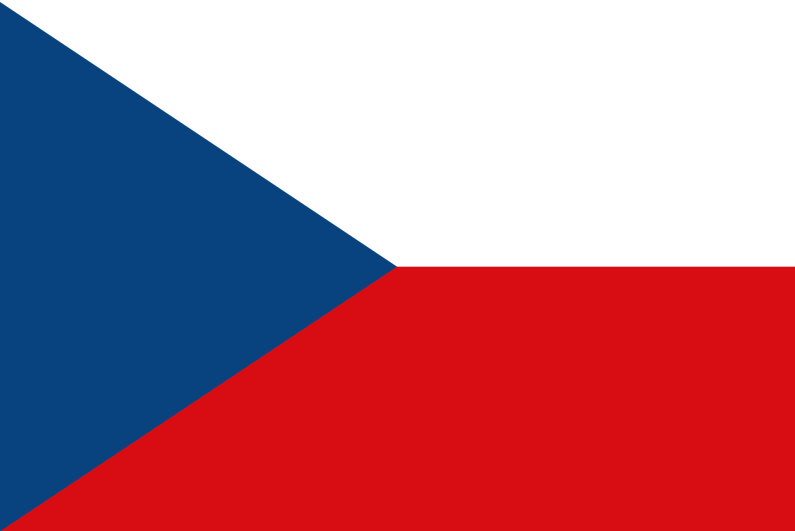
Flag of Czechoslovakia
What role did the Communist Party play?
It had a political monopoly, controlling all aspects of governance through the KSČ and National Front.
What characterized the economy?
A centrally planned system favoring industrial production over consumer goods, leading to inefficiencies.
Also, media was state-controlled, religion was suppressed, and dissidents faced harassment.
How did international relations shape its policies?
As a member of Comecon and the Warsaw Pact, it aligned closely with Soviet interests.
What led to the state’s dissolution?
Democratic reforms post-1989 and the peaceful split into the Czech Republic and Slovakia in 1993.





