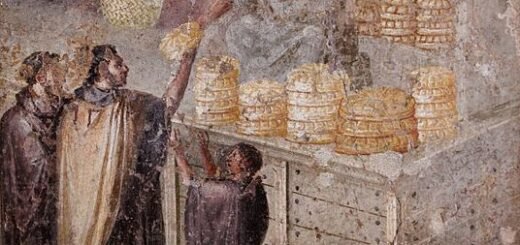
Roman Wall Painting
Roman wall painting, a vital aspect of Roman art, developed over centuries and evolved through various styles that offer insight into Roman culture, aesthetics, and daily life. Roman murals and wall paintings were particularly popular between the 1st century BCE and the 1st century CE, often decorating the walls of both private homes and public buildings. These paintings were not merely decorative; they held significant cultural, social, and symbolic importance.
In the article below, World History Edu explores the origins, types, techniques, and styles of Roman wall painting, along with notable examples, materials, and symbolism that made this art form remarkable.
Origins and Influences
The practice of decorating walls with murals was influenced heavily by Greek painting traditions, but it developed uniquely in Roman society. When Rome expanded its territory and absorbed Greek culture, Greek artisans brought their artistic knowledge with them.
Early Roman painting in the Etruscan period had its own characteristics but evolved rapidly under Greek influence. As Rome conquered more regions, particularly in the eastern Mediterranean, it incorporated diverse artistic styles and techniques.

Roman fresco at the Villa of the Mysteries in Pompeii.
Types of Roman Wall Paintings
Roman wall paintings can be divided into several themes:
- Many murals featured mythological scenes, often drawing from the tales of Greek and Roman gods and heroes. These scenes were both decorative and instructive, offering moral or philosophical messages.
- Landscape paintings were common, depicting gardens, fountains, trees, and sometimes even rural or urban scenes. These paintings created the illusion of openness, bringing nature inside.
- Romans painted still lifes, which included representations of food, household items, and luxurious objects. These paintings showcased the wealth and taste of the homeowner.
- Portraiture was another major theme, although less common in murals than in other art forms. Portraits often honored ancestors or significant figures.
- Romans were fond of creating illusions with painted architecture, using pillars, columns, and other structures to give a sense of depth and space to a room.
Techniques and Materials
Roman wall painting was usually executed using the fresco technique, which involved applying pigment to wet plaster, allowing the colors to be absorbed by the wall. This technique required speed and skill, as the artist had to work while the plaster was still moist. The colors came from natural sources: ochres for yellows and reds, charcoal for black, and malachite for green. This technique not only allowed the paintings to endure over time but also gave them a unique texture and appearance.
A variant of fresco, called fresco secco, involved applying pigment to dry plaster. However, this technique was less durable as the pigment would eventually flake off.
Styles of Roman Wall Painting
Roman wall painting has been classified into four main styles, each with unique characteristics:
First Style (Incrustation Style) – c. 200-60 BCE
The First Style, also known as the Masonry Style, aimed to imitate marble panels. Artists created illusions of marble blocks and columns, using plaster to build a relief and then painting it in vibrant colors. This style was mainly decorative, mimicking the appearance of costly stonework in a cost-effective manner.
Second Style (Architectural Style) – c. 80-20 BCE
In the Second Style, artists aimed to create a sense of depth and three-dimensional space. They painted architectural elements, like columns, windows, and archways, giving the illusion of looking into another world beyond the wall. This style often depicted mythological scenes and landscapes, taking the viewer into distant realms. One of the most famous examples is the Villa of the Mysteries in Pompeii, which uses this style to depict mysterious rituals.
Third Style (Ornate Style) – c. 20 BCE-60 CE
The Third Style abandoned the three-dimensional illusions of the Second Style in favor of flat, monochromatic backgrounds, often black or red. Delicate, thin, and intricate designs, like candelabras and floral motifs, were painted on these backgrounds. Small, framed pictures often occupied the center of these panels, giving them a more refined, elegant look. This style was about sophistication rather than grandeur.
Fourth Style (Intricate Style) – c. 60-79 CE
The Fourth Style combined elements of all previous styles, bringing back architectural illusions, while also embracing the ornamental details of the Third Style. This eclectic style allowed artists to mix mythological scenes with still lifes, landscapes, and architectural elements. The Fourth Style is prominent in the remains of Pompeii and Herculaneum, where walls are filled with vibrant compositions.
Social and Cultural Significance
Roman wall paintings were more than decorative; they reflected the status, education, and sophistication of the homeowner. By displaying mythological themes, the wealthy could associate themselves with the ideals and virtues represented by the gods and heroes. Similarly, landscape paintings brought nature indoors, often symbolizing the owner’s appreciation for the natural world and the peaceful, civilized life.
Moreover, wall paintings helped to create an ambiance that affected daily life. Dining rooms were often adorned with scenes of banquets or still lifes that reflected abundance, heightening the dining experience. In bedrooms, serene garden scenes or idyllic landscapes fostered a peaceful environment, conducive to relaxation.
Notable Examples and Sites
- House of the Vettii, Pompeii: Known for its Fourth Style paintings, this house features vivid mythological scenes and architectural illusions, showcasing the height of Roman wall painting artistry.
- Villa of the Mysteries, Pompeii: This villa is famous for its Second Style paintings, especially the ritual scenes in the “Mystery Room,” which depict a Dionysian initiation ceremony.
- Villa of Livia at Prima Porta: This villa’s garden room features remarkable Second Style paintings with lush landscapes and wildlife, giving the impression of an open, idyllic garden.
- Herculaneum: Similar to Pompeii, Herculaneum contains a wealth of well-preserved frescoes that offer insight into Roman life and aesthetics.
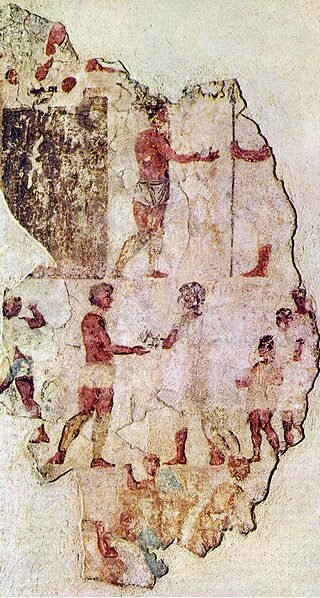
Roman fresco from the Tomb of Esquilino.
Preservation and Rediscovery
The eruption of Mount Vesuvius in 79 CE buried the cities of Pompeii and Herculaneum, preserving their buildings and wall paintings under layers of ash and pumice. When these cities were rediscovered in the 18th century, the wall paintings provided invaluable insight into Roman art and society. The frescoes survived due to the sudden burial, which protected them from the elements.
Preservation of these works remains a challenge, as exposure to air and light can deteriorate pigments. Conservation efforts focus on maintaining stable conditions, controlling humidity and temperature, and using non-invasive techniques for restoration.
Symbolism in Roman Wall Paintings
Roman wall paintings were rich in symbolic meaning, often intended to convey ideas about power, spirituality, and morality. Mythological scenes, for example, were not just stories but carried moral lessons. Venus, Mars, and Cupid could be symbols of love, desire, or war, while Bacchus represented indulgence and the pleasures of life.
Gardens and landscapes symbolized fertility, prosperity, and the harmony between humans and nature. Painted architectural features, like columns or doorways, could imply an opening to another world, symbolizing the connection between the physical and spiritual realms.
Frequently asked questions
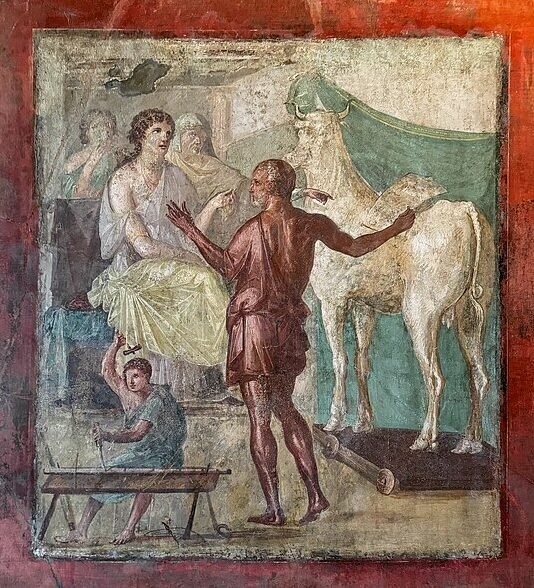
Daedalus presents wooden cow, a Roman fresco from the House of the Vettii.
What types of buildings commonly featured Roman wall paintings by the 1st century BCE?
Roman wall paintings decorated public buildings, private homes, temples, tombs, and even military structures across the Roman Empire.
What were the typical subjects of Roman wall paintings?
Subjects included portraits, mythological scenes, architectural illusions, and landscapes, often creating immersive panoramas that made small rooms feel expansive.
How were Roman wall paintings created, according to Vitruvius and Pliny the Elder?
The process began with several layers of mortar, made from lime and sand or volcanic pozzolana, followed by layers of lime mixed with crushed marble. The wall was polished with materials like glass and marble, then painted while wet (fresco) for durability, with tempera added for final details.
What technique was used for painting on wooden surfaces?
On wooden surfaces, pigments were dissolved in wax and applied with a spatula.
What colors were commonly used in Roman wall paintings?
Earthy colors like deep reds, yellows, and browns were popular, as well as blues and blacks for simpler designs. Evidence from Pompeii also shows a wide range of available color shades.
What are some common themes and decorative motifs found in Roman wall paintings?
Common themes included Greek mythology, gladiator battles, landscapes, gardens, and still lifes. Decorative motifs included fruit, foliage, theater masks, and architectural elements like columns.
What are the four styles of Roman wall painting?
- Style I (Incrustation Style): Mimicked marble panels using stucco for a 3D effect, with typical designs like dado sections and decorative cornices.
- Style II (Architectural Style): Used architectural illusions with columns, pediments, and framed scenes, focusing on perspective and religious scenes.
- Style III (Ornate Style): Featured abstract elements and symmetrical designs, with colors like black, red, and yellow on plainer backgrounds.
- Style IV (Intricate Style): Combined previous techniques with large central panels, floral borders, and enhanced perspective, seen prominently in Pompeii.
How did Roman wall painting styles evolve in the 3rd century CE?
By the 3rd century, there was a shift towards marble veneers and tempera, which are less durable. Christian themes appeared in catacomb paintings, and murals often featured dividing lines on white backgrounds for simplicity.
What is notable about the garden scene in Livia’s Villa in Rome?
Livia’s Villa features a 360° panorama of a lush garden, complete with plants, birds, and insects against a blue sky, creating an illusion of an open garden using clever perspective.
What type of scenes are depicted in the House of the Vetti in Pompeii?
The House of the Vetti features vivid red walls with panels showing cupids in various activities, culminating in a Dionysian procession. This exemplifies the intricate and lively scenes of Roman wall art.