David Ramsay: The First American Politician to be Assassinated
David Ramsay, an accomplished American physician, historian, and public official, was a prominent figure during the Revolutionary War and the formative years of the United States. His contributions to politics, medicine, and historical scholarship have left an enduring legacy, making him one of the most influential figures of his era.
Early Life and Education
David Ramsay was born on April 2, 1749, in Lancaster County, Pennsylvania, into a family of Scottish heritage. His father, James Ramsay, was a farmer, and his upbringing emphasized education, discipline, and intellectual curiosity. Ramsay’s early academic potential was recognized, leading him to Princeton College (then the College of New Jersey).
He graduated in 1765 at the age of 16, earning a reputation for his intellectual rigor and ambition. Ramsay pursued further studies in medicine at the University of Pennsylvania, earning his medical degree in 1773. His education in medicine and exposure to Enlightenment ideas profoundly influenced his later work in public service and historiography.
After completing his education, Ramsay settled in Charleston, South Carolina, where he quickly established a successful medical practice. Charleston’s vibrant intellectual and political atmosphere provided fertile ground for Ramsay’s burgeoning career. His reputation as a skilled physician and thoughtful commentator on public affairs grew steadily.
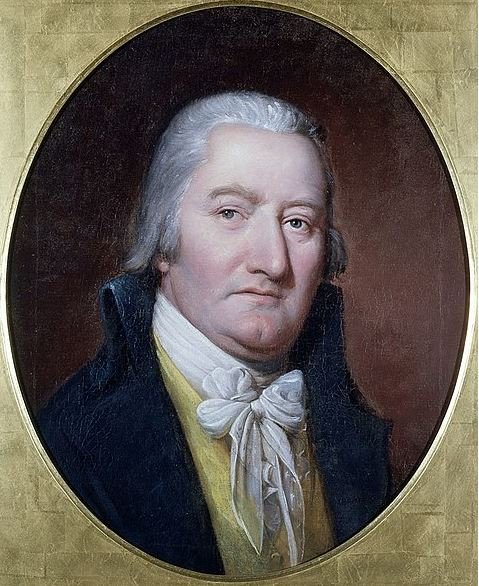
Image: Portrait of Ramsay by Rembrandt Peale.
Family Life
David Ramsay’s personal life was marked by notable marriages and family connections that linked him to influential figures of the Revolutionary era. His first two marriages, to Sabina Ellis and Frances Witherspoon, ended tragically with the early deaths of both wives.
In 1787, Ramsay married Martha Laurens, the daughter of Henry Laurens, a wealthy planter, Revolutionary War statesman, and former president of the Continental Congress. Through his marriage to Martha, Ramsay became connected to some of the most prominent families in South Carolina, including the Rutledges, Izards, and Pinckneys.
David and Martha Laurens Ramsay had eleven children, eight of whom survived to adulthood. Martha’s intellectual and social stature complemented Ramsay’s own ambitions, and she played a significant role in his personal and professional life until her death in 1811. Ramsay honored her memory by publishing Memoirs of the Life of Martha Laurens Ramsay, a poignant account that offered insights into the life of a well-educated Southern woman during the Revolutionary era.
Political Career and Revolutionary Service
Ramsay’s involvement in public affairs began during the American Revolution, where he emerged as a dedicated patriot and influential political figure. He served as a member of the South Carolina legislature from 1776 to 1783, participating actively in efforts to support the Continental Army and organize the state’s defenses. Ramsay’s medical expertise also found application during the war; he served as a field surgeon with the South Carolina militia during the Siege of Charleston in 1780.
When Charleston fell to the British in May 1780, Ramsay was captured and imprisoned in St. Augustine, Florida. He endured nearly a year of captivity before being exchanged, returning to South Carolina to resume his political and medical responsibilities.
After the war, Ramsay’s political career reached the national stage. He was elected as a delegate to the Continental Congress, serving from 1782 to 1786. During his tenure, Ramsay played a key role in the transition from wartime governance to peacetime administration under the Articles of Confederation. In the absence of John Hancock, Ramsay served as president pro tempore of the Congress of the Confederation from November 1785 to May 1786, overseeing important legislative proceedings.
A prominent Revolutionary War historian, David Ramsay served in the South Carolina legislature, the Continental Congress, and the state House and Senate.
Ramsay continued to serve in South Carolina politics during the 1790s, holding three terms in the state Senate and becoming its president. His nomination to the U.S. Senate was ultimately defeated due to his abolitionist leanings, which clashed with the prevailing pro-slavery sentiment in South Carolina.
History and Major Facts about the Second Continental Congress
Contributions as a Historian
David Ramsay is best remembered as one of the first major historians of the American Revolution. Drawing on his firsthand experience and access to key political figures, Ramsay authored a series of influential works that chronicled the Revolutionary era and the early years of the United States.
- History of the Revolution of South Carolina (1785): This two-volume work offered a detailed account of South Carolina’s role in the Revolution, combining military, political, and social analysis. It was one of the first comprehensive state histories of the period.
- History of the American Revolution (1789): Ramsay’s History of the American Revolution was among the earliest national histories of the conflict. It emphasized Enlightenment ideals, portraying the Revolution as a rational and moral struggle for liberty rather than an exceptionalist departure from European traditions. The work was widely praised for its objectivity and breadth.
- History of South Carolina (1809): This two-volume account traced the state’s development from its founding through the Revolutionary period, providing valuable insights into South Carolina’s political, economic, and social evolution.
- History of the United States (1816–1817): Published posthumously, this three-volume work marked a shift in Ramsay’s perspective. While his earlier writings championed active civic engagement and reform, this later work reflected a more conservative outlook, emphasizing societal stability and institutional preservation.
- Memoirs of the Life of Martha Laurens Ramsay (1811): This deeply personal work commemorated his late wife and offered a unique glimpse into the life of an educated Southern woman during the Revolution and early republic.
Ramsay’s historical works are notable for their reliance on primary sources and their effort to present a balanced, Enlightenment-inspired narrative. While later historians criticized Ramsay for lacking the dramatic flair of 19th-century nationalist historians, his works remain valuable for their early perspective and commitment to accuracy.
Intellectual and Philosophical Views
Ramsay was deeply influenced by Enlightenment thought, particularly its emphasis on reason, progress, and the role of government in promoting public welfare. His early writings championed the active involvement of citizens in shaping society, reflecting the republican ideals of the Revolutionary period.
However, as Ramsay aged and became more entrenched in South Carolina’s political and economic institutions, his views shifted toward conservatism. He grew wary of populist movements and emphasized the importance of preserving stability and order.
Assassination
David Ramsay’s life came to a tragic end in 1815 when he was assassinated by William Linnen, a mentally ill tailor. Linnen had a history of erratic behavior and had been declared “deranged” by Ramsay in a court-ordered examination after attempting to attack his attorney. Released after a period of apparent recovery, Linnen harbored resentment toward Ramsay.
On May 6, 1815, Linnen encountered Ramsay on Broad Street in Charleston and shot him twice. Ramsay, demonstrating remarkable composure even in his final moments, publicly declared Linnen to be mentally ill and absolved him of guilt. Ramsay succumbed to his injuries two days later, on May 8, becoming the first American politician to be assassinated.
Legacy
David Ramsay’s legacy encompasses his contributions to American historiography, his dedication to public service, and his commitment to Enlightenment principles. His works remain foundational to the study of the American Revolution, providing valuable insights into the era’s political and social dynamics.
Ramsay’s ability to balance his roles as a physician, politician, and historian reflects his intellectual versatility and deep commitment to the ideals of the Revolution. While his assassination cut short a life of remarkable achievement, his writings and public service continue to inspire scholars and citizens alike.
Ramsay is buried at the Circular Congregational Church in Charleston, South Carolina, a testament to his enduring significance in the region and the nation. His works remain an essential resource for understanding the Revolutionary War and the founding of the United States, ensuring his place among the leading figures of early American history.
Frequently Asked Questions
Where and when was David Ramsay born?
David Ramsay was born on April 2, 1749, in Lancaster County, Pennsylvania.
What was Ramsay’s educational background?
He graduated from Princeton College in 1765 and earned a medical degree from the University of Pennsylvania in 1773.
What notable connections did Ramsay have through his marriages?
Ramsay’s third marriage was to Martha Laurens, the daughter of Henry Laurens, a prominent Revolutionary War statesman. This marriage connected Ramsay to influential families, including the Rutledges and Pinckneys.
What role did Ramsay play during the Revolutionary War?
He served as a field surgeon with the South Carolina militia during the Siege of Charleston in 1780. He was captured by British forces and spent nearly a year imprisoned in St. Augustine, Florida, before being exchanged.
What were Ramsay’s contributions to politics after the Revolutionary War?
He served as a delegate to the Continental Congress from 1782 to 1786 and was elected president pro tempore of the Congress of the Confederation in 1785–1786. He also served three terms in the South Carolina Senate during the 1790s and became its president.
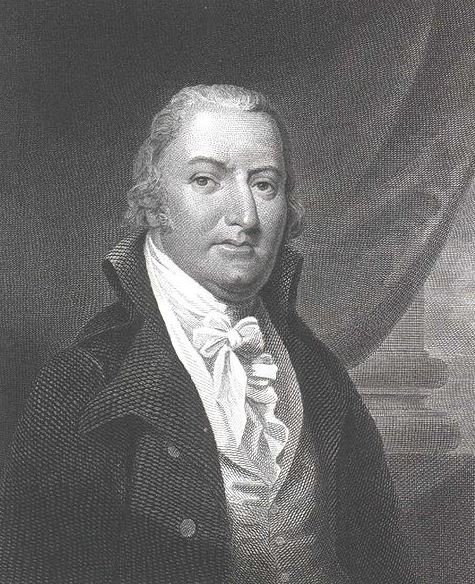
Image: Ramsay was shot by mentally ill William Linnen in 1815.
Why was Ramsay’s nomination to the U.S. Senate defeated?
Ramsay’s nomination to the U.S. Senate was defeated due to his abolitionist leanings, which were controversial at the time.
What are some of Ramsay’s major historical works?
- History of the Revolution of South Carolina (1785)
- History of the American Revolution (1789)
- History of South Carolina (1809)
- History of the United States (1816–1817, published posthumously)
- Memoirs of the Life of Martha Laurens Ramsay (1811)
How did Ramsay’s historical writing evolve over time?
His earlier works emphasized active citizen engagement and reform, while his later writings reflected a more conservative view focused on institutional stability, influenced by early 19th-century nationalism.
What led to David Ramsay’s assassination in 1815?
Ramsay examined and declared William Linnen, a mentally ill tailor, a danger to society. Linnen later harbored resentment and shot Ramsay on Broad Street in Charleston. Ramsay succumbed to his wounds on May 8, 1815.
What was notable about Ramsay’s reaction to being shot?
Ramsay maintained composure and declared Linnen a lunatic free of guilt before succumbing to his injuries, demonstrating remarkable dignity.
What is David Ramsay’s lasting legacy?
Ramsay’s works remain foundational to the study of the American Revolution. His dedication to public service, pioneering historical accounts, and commitment to Enlightenment ideals solidified his impact on early American history. He is buried at the Circular Congregational Church in Charleston, South Carolina.





