William Wirt: The Longest-Serving Attorney General in U.S. history
William Wirt (1772–1834) was a prominent American lawyer, author, and statesman who played a critical role in shaping the early legal and political landscape of the United States. Renowned for his eloquence, legal expertise, and public service, Wirt served as the ninth Attorney General of the United States for an unprecedented 12 years, earning the distinction of being the longest-serving individual in the office’s history. His career highlights include transforming the Attorney General’s role into a position of national influence, participating in landmark legal cases, and his symbolic third-party presidential candidacy in 1832.
Early Life and Education
William Wirt was born on November 8, 1772, in Bladensburg, Maryland. Orphaned at a young age, Wirt was raised by his uncle and later educated in Georgetown. Despite limited formal education, Wirt displayed an early aptitude for learning and developed a strong foundation in literature, law, and oratory. His intellectual curiosity and dedication to self-improvement became defining traits throughout his life.
At the age of 20, Wirt was admitted to the Virginia bar in 1792 after studying law and began practicing in Culpeper County, Virginia. He quickly gained a reputation for his legal skill and persuasive speaking abilities, which set the stage for his future prominence.

In 1832, Wirt became the Anti-Masonic Party’s presidential nominee, opposing Freemasonry’s perceived threat to democracy.
Early Legal Career and Rise to National Prominence
Wirt’s legal career flourished in Virginia, where he held several public positions. He served as clerk of the Virginia House of Delegates and later as a member of the House of Delegates in 1808. His growing reputation as an attorney and public servant was solidified in 1807 when he was appointed prosecutor in one of the most high-profile cases of the time: the treason trial of former vice president Aaron Burr.
The Aaron Burr Trial
In the trial, Wirt demonstrated exceptional legal skill and oratory as he prosecuted Burr for allegedly conspiring to create an independent nation in the western territories. Though Burr was ultimately acquitted, Wirt’s eloquent argumentation in the case, particularly his memorable “Rainbow Speech,” brought him national attention and cemented his status as one of the leading lawyers of his era.
Appointment as United States Attorney General (1817–1829)
Wirt’s legal success and growing prominence led to his appointment as U.S. Attorney for the Eastern District of Virginia in 1816. The following year, President James Monroe appointed Wirt as the ninth Attorney General of the United States. Wirt would go on to serve in this role under both Monroe and John Quincy Adams, from 1817 to 1829, making him the longest-serving Attorney General in American history.

James Monroe (1758 – 1831)
Transforming the Role of Attorney General
When Wirt assumed office, the position of Attorney General was relatively minor, with limited influence on national policy. Wirt transformed the role into a critical part of the executive branch, advising the president and cabinet on legal matters, representing the government in significant court cases, and shaping the development of U.S. constitutional law. His tenure established many of the precedents and responsibilities that define the modern Attorney General’s office.
Key Contributions as Attorney General
- Advancing Constitutional Law: Wirt argued several landmark cases before the Supreme Court, helping to define the boundaries of federal authority and individual rights. These cases included:
- McCulloch v. Maryland (1819): Wirt supported the federal government’s position that states could not tax federal institutions, helping to affirm the supremacy of federal law.
- Gibbons v. Ogden (1824): Wirt’s advocacy reinforced federal authority over interstate commerce, a pivotal decision in the development of U.S. commerce regulation.
- Infrastructure Development: Wirt aligned with Monroe’s vision of “internal improvements,” advocating for federal involvement in building roads, canals, and other infrastructure to promote national unity and economic growth.
- Elevating the Office: Wirt professionalized the Attorney General’s position, making it an integral part of national governance and setting a high standard for future officeholders.
Post-Tenure Legal Career and Cherokee Nation Advocacy
After leaving office in 1829, Wirt returned to private practice, where he continued to distinguish himself in high-profile cases. One of his most notable cases was Cherokee Nation v. Georgia (1831), in which Wirt represented the Cherokee Nation in their struggle to resist Georgia’s attempts to impose state laws on their territory. Although the Supreme Court ultimately ruled against the Cherokee on jurisdictional grounds, Wirt’s advocacy brought national attention to the plight of Native Americans and underscored his commitment to justice.
Presidential Nomination by the Anti-Masonic Party (1832)
In 1832, Wirt entered the national political stage as the presidential nominee of the Anti-Masonic Party, the first third-party movement in U.S. history. The Anti-Masonic Party was formed in response to widespread suspicion of Freemasonry, a secretive fraternal organization that critics viewed as a threat to democratic institutions.
A Controversial Candidacy
Ironically, Wirt himself was a former Freemason. While he accepted the nomination, he refused to denounce Freemasonry publicly, creating tensions within the party. Wirt’s campaign was largely symbolic, as he did not actively campaign for the presidency. Nonetheless, the Wirt-Amos Ellmaker ticket carried Vermont, marking the first time a third-party presidential candidate won a state.
Legacy of the Anti-Masonic Campaign
Although Wirt’s campaign did not pose a serious challenge to incumbent President Andrew Jackson, it represented an important milestone in American politics. The Anti-Masonic Party’s participation in the election highlighted the growing influence of third-party movements and their potential to disrupt the two-party system.
Later Years and Legacy
After the 1832 election, Wirt continued to practice law, focusing on cases that aligned with his principles of justice and federal authority. He passed away on February 18, 1834, leaving behind a legacy as one of the most influential legal minds and public servants of his time.
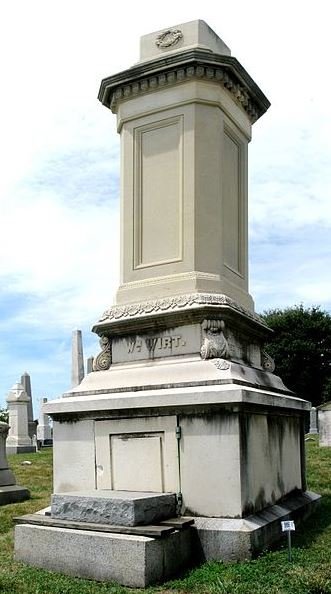
The William Wirt Monument honors the renowned lawyer and politician in Washington D.C.’s Congressional Cemetery.
Contributions to American Law and Politics
- Transforming the Attorney General’s Role: Wirt elevated the position from a minor advisory role to a cornerstone of the executive branch, shaping its modern responsibilities.
- Landmark Legal Advocacy: His work in cases like McCulloch v. Maryland and Cherokee Nation v. Georgia helped define the evolving relationship between federal and state governments and the rights of marginalized groups.
- Symbolic Third-Party Leadership: As the first third-party presidential candidate to win a state, Wirt played a pivotal role in expanding the democratic process and challenging the dominance of major political parties.
Honors and Memorials
In recognition of his contributions, Wirt County, West Virginia, was named in his honor. His legacy endures as a testament to the power of dedication, eloquence, and public service in shaping a nation.
Conclusion
William Wirt’s life and career exemplify the ideals of early American statesmanship. From his humble beginnings in Maryland to his transformation of the U.S. Attorney General’s office, Wirt’s dedication to the law and public service left an indelible mark on the United States. His achievements in advancing constitutional law, advocating for justice, and contributing to political innovation continue to resonate as part of the enduring fabric of American history.
Questions and Answers

How did Wirt’s early life influence his career?
Orphaned at a young age, Wirt was raised by his uncle and received his education in Georgetown. Despite limited resources, he displayed an aptitude for learning, passed the Virginia bar in 1792, and quickly became a prominent lawyer.
What public offices did Wirt hold before becoming U.S. Attorney General?
Wirt served as clerk of the Virginia House of Delegates, was elected to the Virginia House of Delegates in 1808, and worked as a U.S. Attorney in 1816. He also gained national attention as the prosecutor in Aaron Burr’s treason trial.
What role did Wirt play in the Aaron Burr treason trial?
He served as the prosecutor in the 1807 trial of former vice president Aaron Burr. Although Burr was acquitted, Wirt’s legal skill in presenting the case highlighted his acumen and elevated his national reputation.
When did Wirt serve as U.S. Attorney General, and under which presidents?
William Wirt served as U.S. Attorney General from 1817 to 1829, under Presidents James Monroe and John Quincy Adams.
How did Wirt transform the role of the Attorney General?
Wirt elevated the office from a minor position to a key part of the executive branch. He provided legal advice to the president and cabinet and represented the government in significant Supreme Court cases.
What notable contributions did Wirt make as Attorney General?
- Elevating the Attorney General’s Role: He redefined the position as a central part of the executive branch.
- Legal Advocacy: He argued landmark Supreme Court cases that shaped constitutional law and solidified federal authority.
- Support for Infrastructure Projects: He backed federal involvement in infrastructure development.
What was Wirt’s role in Cherokee Nation v. Georgia (1831)?
After leaving office, Wirt represented the Cherokee Nation in a Supreme Court case opposing Georgia’s attempts to impose its laws on Cherokee lands. While the court declined to issue a definitive ruling, the case underscored Wirt’s commitment to justice.
Why was Wirt nominated for president by the Anti-Masonic Party?
In 1832, Wirt became the presidential nominee of the Anti-Masonic Party, the first third party in U.S. history. Although a former Freemason himself, he accepted the nomination but did not actively campaign or denounce Freemasonry.
What was the outcome of Wirt’s presidential campaign?
Wirt and his running mate Amos Ellmaker carried Vermont, making theirs the first third-party presidential ticket to win a state. However, Andrew Jackson won re-election, and the campaign served more as a symbolic introduction of third-party politics.

Image: Andrew Jackson during the 1830s.
What is Wirt’s legacy in American history?
- Attorney General’s Role: Wirt transformed the office into a significant executive branch role.
- Landmark Legal Work: His contributions to important legal cases helped shape U.S. constitutional law.
- Third-Party Politics: His 1832 presidential campaign marked a pivotal moment in introducing third-party competition.
How is Wirt commemorated today?
Wirt County, West Virginia, is named in his honor, preserving his contributions to American law and politics. William Wirt remains respected for his legal brilliance and dedication to public service.





