Elgin Marbles: History & Major Facts
The Elgin Marbles, also known as the Parthenon Sculptures, are a collection of ancient Greek sculptures, architectural fragments, and inscriptions that were originally part of the Parthenon and other buildings on the Acropolis of Athens. These artifacts were removed from Greece in the early 19th century by Thomas Bruce, the 7th Earl of Elgin, during his time as the British ambassador to the Ottoman Empire, which then controlled Greece. The removal and subsequent transportation of these marbles to Britain led to one of the most famous and enduring cultural controversies in modern history.
Today, the majority of the Elgin Marbles are housed in the British Museum in London, but Greece continues to press for their return, arguing that they were taken illegally and belong in their country of origin. This long-standing dispute between the United Kingdom and Greece has raised broader issues about the repatriation of cultural artifacts, colonialism, and the role of museums in preserving global heritage.
In this comprehensive explanation, World History Edu explores the history of the Elgin Marbles, their removal, transportation to Britain, the legal and ethical debates surrounding them, and their cultural significance to both Greece and the UK.

The Elgin Marbles are not just ancient sculptures; they are at the center of a complex and passionate debate about cultural heritage, national identity, and the ethics of historical acquisition. Image: A collection of Elgin Marbles at the British Museum in London.
Historical Background of the Parthenon and the Acropolis
The Parthenon, completed in 432 BC, was the centerpiece of the Acropolis of Athens and one of the most magnificent architectural achievements of ancient Greece. It was built to honor Athena, the goddess of wisdom and war, and served both as a religious sanctuary and a symbol of Athenian power and culture. The Parthenon was designed by the architects Ictinus and Callicrates, while the famous sculptor Phidias oversaw the creation of its sculptures and decorations.
The Parthenon was adorned with a variety of intricate sculptures, including the frieze, which depicted a procession in honor of Athena, the metopes, which showed mythological battles, and the pediments, which represented key events in Greek mythology. The Parthenon and its sculptures were celebrated not only for their artistic excellence but also for their reflection of Greek values, such as democracy, civic pride, and the power of the gods.
Over the centuries, the Parthenon and other structures on the Acropolis suffered from neglect, natural disasters, and human conflict. By the time the Ottomans took control of Athens in the 15th century, the Parthenon had been converted into a mosque, and many of its sculptures had been damaged or destroyed.
READ MORE: Most Famous Mosques from the Ottoman Empire
Elgin’s Role and the Removal of the Marbles
In 1799, Thomas Bruce, the 7th Earl of Elgin, was appointed as the British ambassador to the Ottoman Empire, which then included Greece. Elgin had a deep interest in classical Greek art and architecture, and he sought to document and preserve what remained of the ancient structures on the Acropolis. With this goal in mind, Elgin obtained a controversial firman (a permit) from the Ottoman authorities, which allowed him to carry out certain activities on the Acropolis.
The exact wording and scope of this firman have been a central point of dispute. Elgin claimed that the Ottoman authorities had given him permission to remove sculptures from the Acropolis, including pieces from the Parthenon. However, the surviving copies of the firman are vague, and many scholars argue that it granted permission only for Elgin to make drawings and take casts of the sculptures, rather than to physically remove them.
Between 1801 and 1812, Elgin’s agents, led by an Italian painter named Giovanni Battista Lusieri, removed about half of the surviving sculptures from the Parthenon, as well as sculptures from other buildings on the Acropolis, including the Erechtheion, the Temple of Athena Nike, and the Propylaia. These artifacts were transported to Britain, where Elgin initially intended to display them in a private museum.
The removal of the marbles was a complicated and risky endeavor. The sculptures were cut from the Parthenon’s walls using primitive tools, and some of them were damaged during the process. Additionally, transporting the heavy marble pieces from Athens to Britain required significant logistical effort. Some of the marbles were lost or damaged at sea, but the majority eventually made their way to London.
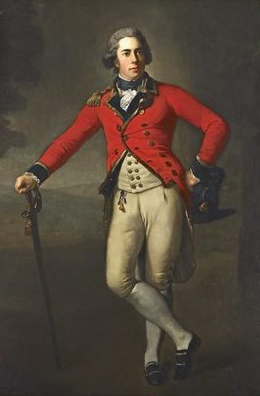
Image: Thomas Bruce
Legal and Ethical Controversy
The removal of the Elgin Marbles sparked immediate controversy, both in Britain and abroad. Many critics, including prominent figures like the poet Lord Byron, condemned Elgin’s actions as looting and cultural vandalism. Byron, in particular, was a passionate advocate for Greek independence and viewed the removal of the marbles as a desecration of Greece’s cultural heritage. He famously referred to Elgin as a “vandal” in his poem “Childe Harold’s Pilgrimage.”
Despite the backlash, Elgin defended his actions by arguing that he had saved the marbles from potential destruction. At the time, the Parthenon and the Acropolis were in a state of disrepair, and there was concern that the sculptures could be further damaged or lost due to neglect, conflict, or natural disasters. Elgin also emphasized that he had obtained permission from the Ottoman authorities, who were the ruling power in Greece at the time.
In 1816, a UK parliamentary inquiry was held to investigate the legality of Elgin’s acquisition of the marbles. After examining the evidence, the inquiry concluded that Elgin had acted within the law and had obtained the marbles legally. As a result, the British government purchased the marbles from Elgin for £35,000 (a significant sum at the time), and they were placed under the trusteeship of the British Museum, where they have remained ever since.
Greece’s Request for the Return of the Marbles
The issue of the Elgin Marbles’ rightful ownership has remained a source of tension between Greece and the UK for over 200 years. Greece has long argued that the marbles were taken illegally during a time of foreign occupation and should be returned to their homeland. According to the Greek government, the marbles are an integral part of Greece’s cultural heritage and would be best appreciated in their original context, reunited with the other remaining Parthenon sculptures in Athens.
In 1983, the Greek government formally requested the return of the marbles, with Melina Mercouri, then-Greek Minister of Culture, leading the campaign. Greece’s argument for repatriation is based on the notion that the marbles were removed without the consent of the Greek people and that their continued presence in Britain is a reminder of foreign domination and cultural loss. Greece has also emphasized the symbolic importance of the Parthenon and its sculptures to Greek identity and national pride.
To strengthen its case, Greece built the Acropolis Museum, which opened in 2009. This state-of-the-art museum was designed specifically to house the Parthenon sculptures and provide an appropriate setting for their display. The museum features a dedicated gallery for the Parthenon marbles, with space reserved for the pieces currently held in the British Museum. The idea is that the sculptures could be reunited and viewed in proximity to the Parthenon itself, allowing visitors to experience them in their historical and architectural context.
The British Museum’s Position
The British Museum and the UK government have consistently resisted Greece’s calls for the return of the Elgin Marbles. They argue that the marbles were acquired legally under the laws that governed Athens at the time and that returning them would set a dangerous precedent for the repatriation of other cultural artifacts held in museums around the world. The British Museum also contends that it provides a unique, international context for viewing the marbles, as they are displayed alongside artifacts from other ancient civilizations, such as Egypt, Mesopotamia, and Rome.
According to the museum, this broader context allows visitors to gain a deeper understanding of the interconnectedness of ancient cultures and appreciate the global significance of the marbles. The British Museum further argues that the marbles are well cared for in London and accessible to a large, global audience, which enhances their educational and cultural value.
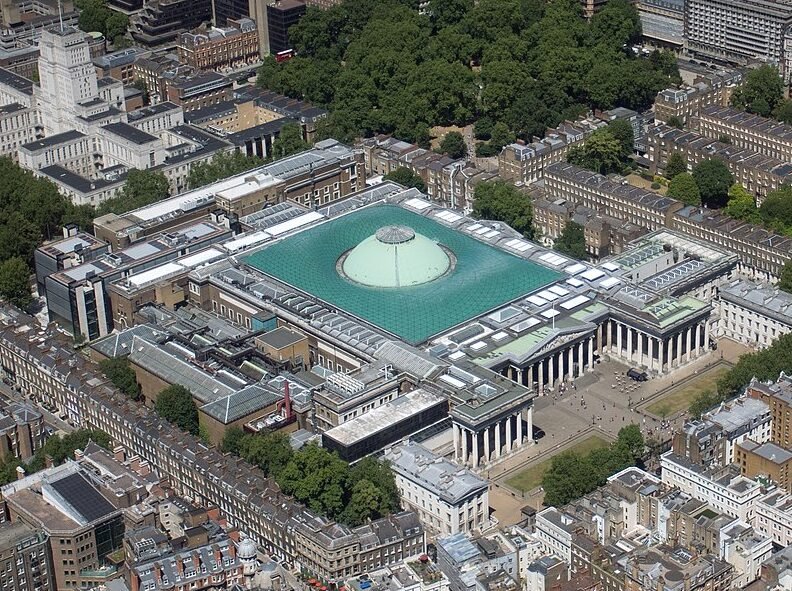
Image: Aerial view of the British Museum.
UNESCO Mediation and the 2021 Call for Resolution
The dispute over the Elgin Marbles has garnered international attention, with UNESCO (the United Nations Educational, Scientific, and Cultural Organization) becoming involved in efforts to mediate between Greece and the UK. In 1983, Greece listed the dispute with UNESCO, and since then, the organization has attempted to facilitate dialogue between the two countries.
In 2021, UNESCO called on the UK government to engage in discussions at the intergovernmental level to resolve the issue. This marked a significant escalation in international pressure on Britain to consider returning the marbles. However, both the British government and the British Museum declined UNESCO’s offer of mediation, reiterating their position that the marbles were legally acquired and that their return would have broader implications for the world’s major museums.
Cultural Significance of the Elgin Marbles
The Elgin Marbles are not just a collection of ancient sculptures; they are a powerful symbol of cultural identity, national pride, and the broader debates surrounding the ownership and repatriation of cultural heritage. For Greece, the marbles are a tangible link to the country’s rich history and a reminder of its ancient past as the cradle of democracy, philosophy, and art. Reuniting the marbles with the Parthenon would, in Greece’s view, restore a sense of wholeness to one of the world’s most important cultural monuments.
For the UK and the British Museum, the Elgin Marbles represent the complexities of cultural heritage in a globalized world. The museum argues that its role is to preserve and present artifacts from different cultures in a way that fosters cross-cultural understanding and appreciation. In this context, the marbles are seen as part of a broader narrative of world history, rather than the exclusive property of a single nation.
Arguments for the Return of the Marbles
Proponents of the return of the Elgin Marbles to Greece make several key arguments:
- Cultural Integrity: The marbles were an integral part of the Parthenon, and their removal disrupted the unity of the monument. Returning them to Greece would allow for a more cohesive display of the surviving Parthenon sculptures, enhancing their cultural and historical value.
- Symbolic Importance: The Parthenon and its sculptures are a symbol of Greek identity and national pride. Reuniting the marbles with the other artifacts in Athens would restore a sense of ownership and cultural integrity to the Greek people.
- Ethical Considerations: Many argue that the marbles were taken without the proper consent of the Greek people and during a period of foreign occupation. Therefore, their continued presence in Britain is seen as an ongoing injustice.
- Acropolis Museum: Greece has built a world-class facility to house the marbles, demonstrating its commitment to preserving and displaying them in a manner that respects their historical and cultural significance.
Arguments Against the Return of the Marbles
Opponents of the return of the Elgin Marbles to Greece also present several key points:
- Legal Acquisition: The British Museum and UK government maintain that the marbles were acquired legally under the laws of the time and that returning them would undermine the legal framework that governs museum collections worldwide.
- Global Context: The British Museum argues that the marbles are best appreciated in a global context, where they can be viewed alongside artifacts from other ancient civilizations. This setting allows visitors to gain a broader understanding of the interconnectedness of ancient cultures.
- Precedent: Returning the Elgin Marbles could set a precedent for the repatriation of other artifacts held in museums around the world. This could lead to the disintegration of major museum collections and limit the ability of global audiences to access important cultural heritage.
- Preservation and Accessibility: The British Museum has cared for the marbles for over 200 years, ensuring their preservation and making them accessible to millions of visitors from around the world. Opponents argue that the museum’s stewardship has protected the marbles and allowed them to be appreciated by a global audience.
Ongoing Discussions and Potential Resolutions
Despite the longstanding nature of the dispute, discussions between the UK and Greek governments continue. In recent years, there have been hints of potential compromise, including proposals for long-term loans of the marbles to Greece or joint exhibitions between the British Museum and the Acropolis Museum. However, no formal agreement has been reached, and both sides remain firm in their positions.
The issue of the Elgin Marbles remains one of the most high-profile cultural heritage debates in the world, symbolizing the broader challenges of balancing national pride, historical justice, and the role of museums in preserving and interpreting the past.
Frequently Asked Questions about the Elgin Marbles

Who was responsible for removing the Elgin Marbles from Greece?
The Elgin Marbles were removed by agents of Thomas Bruce, the 7th Earl of Elgin, between 1801 and 1812 when Greece was under Ottoman rule.
What is the Parthenon Marbles?
The Parthenon Marbles refer specifically to sculptures from the Parthenon, including the frieze, metopes, and pediments. They are part of the Elgin Marbles collection and are currently housed in the British Museum and the Acropolis Museum in Athens.
How did Elgin justify removing the marbles from Greece?
Elgin claimed he had permission from the Ottoman authorities, who ruled Athens at the time, to remove the sculptures. However, the exact terms of this permission have been debated for over two centuries.
Why has the removal of the Elgin Marbles been controversial?
The removal has been controversial because many, including poet Lord Byron, viewed it as cultural vandalism and looting. The legality and ethics of Elgin’s actions have been questioned, particularly regarding whether the Ottomans had the right to give such permission.
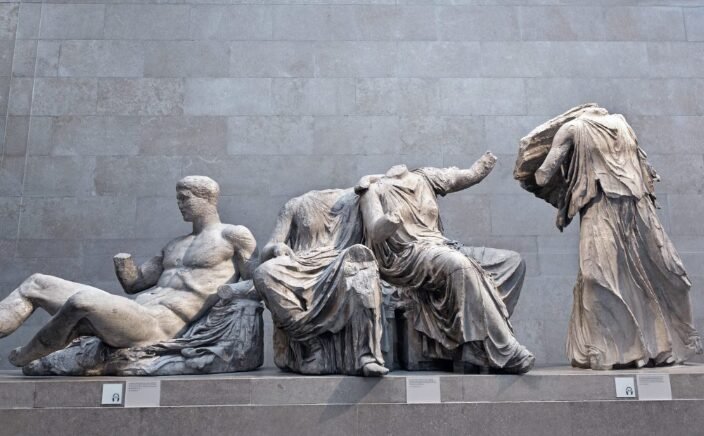
The Parthenon Marbles
What was the outcome of the 1816 UK parliamentary inquiry into the Elgin Marbles?
The UK parliamentary inquiry concluded that Elgin had acquired the marbles legally based on the documentation he provided from the Ottoman authorities. Elgin then sold the marbles to the British government, and they were placed in the British Museum.
What has the Greek government requested regarding the Elgin Marbles?
Since 1983, the Greek government has officially requested the return of the Elgin Marbles, arguing that they were obtained illegally or unethically and that they hold immense cultural significance for Greece.
What is UNESCO’s role in the dispute over the Elgin Marbles?
UNESCO has attempted to mediate the dispute between the UK and Greece, offering to facilitate negotiations. However, the UK government and British Museum have declined these mediation offers, maintaining that the marbles were legally acquired.
What arguments does Greece present for the return of the Elgin Marbles?
Greece argues that the marbles were taken without the consent of the Greek people and should be reunited with other Parthenon artifacts at the Acropolis Museum in Athens. They believe this would offer a more cohesive and culturally significant display.
What arguments does the British Museum present for retaining the Elgin Marbles?
The British Museum asserts that the marbles were obtained legally under Ottoman law and that returning them could set a precedent for repatriating other artifacts. They also argue that displaying the marbles in London alongside other ancient civilizations offers a broader, more global context for their appreciation.
What are the ongoing discussions between the UK and Greece regarding the Elgin Marbles?
Discussions between the UK and Greek officials continue, with occasional proposals for compromise, such as long-term loans or joint exhibitions. However, no formal agreement has been reached, and the debate remains unresolved.
Why is the Elgin Marbles dispute one of the most prominent cultural heritage debates in the world?
The dispute raises complex questions about the legality and ethics of removing cultural artifacts, the rights of modern nations to reclaim their heritage, and the role of museums in preserving and presenting world culture. These issues make the Elgin Marbles a focal point in discussions about cultural heritage repatriation.





