Most Famous Mosques from the Ottoman Empire
The Ottoman Empire, which ruled vast territories across Europe, Asia, and Africa from the late 13th century until the early 20th century, left an indelible mark on world history. One of the most visible and enduring aspects of Ottoman cultural and architectural heritage is its mosques.
These structures, grand in scale and rich in detail, not only served as places of worship but also as symbols of imperial power, cultural sophistication, and architectural innovation. Ottoman mosques are renowned for their grandeur, intricate design, and the seamless blending of Byzantine, Persian, and Islamic architectural traditions.
In the article below, World History Edu delves into some of the most famous mosques constructed during the Ottoman era, exploring their historical context, architectural features, and cultural significance.
READ MORE: Most Influential Ottoman Sultans and their Accomplishments
Sultan Ahmed Mosque (Blue Mosque) – Istanbul, Turkey
The Sultan Ahmed Mosque, commonly known as the Blue Mosque, is one of the most iconic and celebrated mosques of the Ottoman Empire. Located in Istanbul, the mosque was commissioned by Sultan Ahmed I and built between 1609 and 1616. It remains an active mosque today, attracting millions of visitors annually.
Architectural Features:
- Six Minarets: The Blue Mosque is unique for having six minarets, a feature that caused controversy during its construction, as the only other mosque with six minarets was the Masjid al-Haram in Mecca. To resolve the issue, Sultan Ahmed I ordered the construction of a seventh minaret for the mosque in Mecca.
- Blue Iznik Tiles: The interior of the mosque is adorned with over 20,000 handmade ceramic tiles from Iznik in shades of blue, which give the mosque its popular nickname. The tiles feature floral motifs, reflecting the traditional Ottoman art style.
- Domes and Semi-Domes: The mosque’s central dome, flanked by smaller semi-domes, creates an impressive visual effect. The use of cascading domes was a hallmark of Ottoman architecture, adding both structural support and aesthetic grandeur.
Cultural Significance:
The Blue Mosque was built to rival the Hagia Sophia, located just across the square. It symbolized the empire’s desire to project power and religious devotion. The mosque also serves as an important cultural and religious landmark, with its courtyard being the largest of any Ottoman mosque.

Image: Sultan Ahmed Mosque
Süleymaniye Mosque – Istanbul, Turkey
Commissioned by Sultan Suleiman the Magnificent and designed by the renowned architect Mimar Sinan, the Süleymaniye Mosque is one of the most significant architectural achievements of the Ottoman Empire. Completed in 1557, it dominates the skyline of Istanbul and reflects the zenith of Ottoman imperial architecture.
Architectural Features:
- Central Dome: The mosque features a massive central dome that is 53 meters high and 27.5 meters in diameter. This dome, supported by half-domes and arches, showcases Sinan’s mastery of space and light.
- Four Minarets: The mosque’s four minarets, symbolizing Suleiman as the fourth sultan to reign after the conquest of Constantinople, are slender and elegant. The mosque’s layout is balanced and harmonious, reflecting the careful planning that went into its construction.
- Interior Design: The mosque’s interior is bathed in natural light thanks to its numerous windows, creating a serene and spacious atmosphere. The combination of marble, granite, and decorative tiles adds to the mosque’s beauty.
Cultural Significance:
Süleymaniye Mosque is more than just a place of worship; it was designed as a complex (külliye) that included a hospital, library, school, kitchen, and baths, serving the needs of the community. It is also the final resting place of both Suleiman the Magnificent and his wife, Hürrem Sultan. The mosque stands as a symbol of Suleiman’s powerful reign and the architectural genius of Sinan.

Image: Süleymaniye Mosque
Most Influential Ottoman Princesses and their Accomplishments
Selimiye Mosque – Edirne, Turkey
The Selimiye Mosque, located in the city of Edirne, is another masterpiece of Mimar Sinan, who regarded it as his crowning achievement. Built between 1568 and 1575 during the reign of Sultan Selim II, the mosque is a UNESCO World Heritage Site and a stunning example of Ottoman imperial architecture.
Architectural Features:
- Central Dome: The dome of Selimiye Mosque is an architectural marvel, measuring 31.25 meters in diameter and supported by eight columns. Sinan designed the mosque to ensure that the dome appeared perfectly balanced and floating above the structure.
- Tall Minarets: The mosque has four minarets, each standing at 83 meters tall, making them some of the highest in the world at the time. These slender, needle-like minarets enhance the mosque’s verticality and grace.
- Octagonal Layout: The mosque’s floor plan is based on an octagon, a novel design that allows for a spacious and harmonious interior. The open central space, combined with the vast dome, creates a sense of grandeur and awe.
Cultural Significance:
The Selimiye Mosque is considered one of the finest examples of Islamic architecture in the world. Sinan himself referred to it as his greatest work, surpassing even the Süleymaniye Mosque in Istanbul. The mosque symbolizes the artistic and cultural heights of the Ottoman Empire during the 16th century, and it continues to inspire architects and visitors alike.

Selimiye Mosque in Edirne is Mimar Sinan’s Ottoman architectural masterpiece.
Yeni Cami (New Mosque) – Istanbul, Turkey
The Yeni Cami, or New Mosque, is situated at the southern end of the Galata Bridge in Istanbul, overlooking the Golden Horn. Although its construction began in 1597 under Safiye Sultan, the mother of Sultan Mehmed III, it was not completed until 1665 under the reign of Sultan Mehmed IV. The mosque stands as a significant symbol of female patronage in the Ottoman Empire.
Architectural Features:
- Twin Minarets: The mosque’s twin minarets are characteristic of classical Ottoman mosque architecture. Their height and symmetry give the mosque an imposing presence.
- Domes and Semi-Domes: The mosque has a large central dome surrounded by four semi-domes, a common feature in Ottoman architecture that helps distribute the weight of the main dome while maintaining the mosque’s aesthetic balance.
- Interior Decor: The interior of the Yeni Cami is decorated with intricate tilework, marble, and gold leaf. The use of blue and green Iznik tiles in geometric and floral patterns reflects the Ottoman love for artistic expression.
Cultural Significance:
The Yeni Cami is not only an architectural gem but also a testament to the role of women in the patronage of Ottoman public works. Safiye Sultan’s involvement in its construction is a reminder of the influence wielded by the women of the Ottoman court. The mosque is a major landmark in Istanbul and is part of a larger complex that includes a market, hospital, and school.
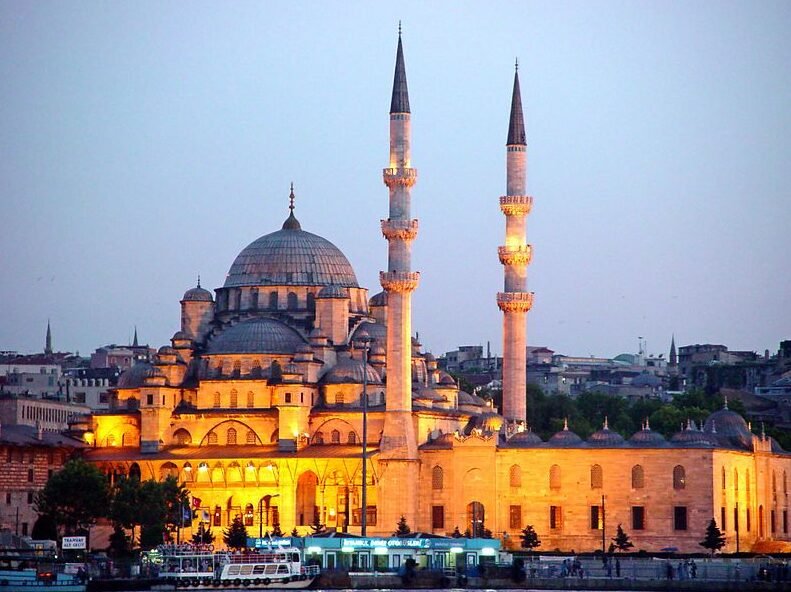
Yeni Cami stands by Istanbul’s Galata Bridge.
Rüstem Pasha Mosque – Istanbul, Turkey
Located in the bustling Tahtakale district of Istanbul, the Rüstem Pasha Mosque is a smaller but equally impressive example of Ottoman architecture. Commissioned by Rüstem Pasha, the Grand Vizier and son-in-law of Suleiman the Magnificent, and designed by Mimar Sinan, it was completed in 1563.
Architectural Features:
- Iznik Tile Decoration: One of the most distinctive features of the Rüstem Pasha Mosque is its extensive use of Iznik tiles, which cover the walls, mihrab, and minbar in intricate floral and geometric designs. The vibrant blue and red tiles are among the finest examples of Ottoman ceramic art.
- Central Dome: The mosque has a central dome supported by four semi-domes, creating a balanced and symmetrical layout.
- Elevated Structure: Due to the limited space available in the bustling marketplace where it was built, the mosque is elevated above street level, with shops located beneath it, a common practice in Ottoman urban design.
Cultural Significance:
Though smaller in scale compared to other Ottoman mosques, the Rüstem Pasha Mosque is highly regarded for its exquisite tilework, which exemplifies the peak of Iznik ceramic production. The mosque also reflects the close relationship between the Ottoman ruling class and architectural patronage, with Rüstem Pasha using his wealth and influence to leave a lasting legacy.
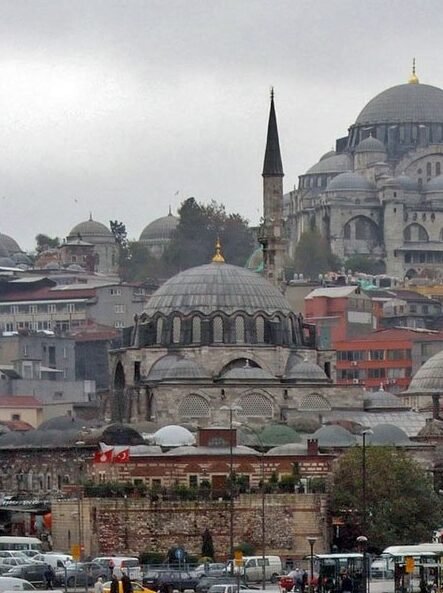
Rüstem Pasha Mosque showcases stunning Ottoman architecture in Istanbul’s Tahtakale district.
Fatih Mosque – Istanbul, Turkey
The Fatih Mosque, located on the third hill of Istanbul, is another important mosque of the Ottoman period. It was built between 1463 and 1470 by order of Sultan Mehmed II, also known as Mehmed the Conqueror, after his successful conquest of Constantinople in 1453. The mosque was part of a larger complex, which included schools, a hospital, a library, and markets.
Architectural Features:
- Byzantine Influence: The original design of the Fatih Mosque featured a large central dome supported by semi-domes, a design inspired by the Hagia Sophia. However, after being damaged by earthquakes and rebuilt in the 18th century, the mosque’s design now reflects more classical Ottoman architecture.
- Two Minarets: The mosque has two slender minarets, which were typical of early Ottoman mosque architecture. They provide a sense of symmetry and elegance to the mosque’s silhouette.
- Courtyard and Portico: The mosque features a large courtyard with a marble ablution fountain at its center, surrounded by a portico with columns.
Cultural Significance:
The Fatih Mosque holds great symbolic value as it was built by the conqueror of Constantinople. It is not only a place of worship but also a symbol of the Ottoman Empire’s transition from a conquering state to an imperial power with a clear cultural and religious mission. The complex around the mosque played a central role in the social and educational life of the city.

Fatih Mosque’s design, inspired by Hagia Sophia, features big central dome.
Ortaköy Mosque – Istanbul, Turkey
The Ortaköy Mosque, officially known as the Büyük Mecidiye Mosque, is one of the most picturesque and well-known mosques in Istanbul. Located on the banks of the Bosphorus, it was commissioned by Sultan Abdülmecid and designed by architects Garabet and Nigoğayos Balyan. It was completed in 1856 during the Ottoman Empire’s late period, marked by European influences in architecture.
Architectural Features:
- Neo-Baroque Style: The mosque’s architecture reflects the influence of European styles, particularly the Baroque and Rococo movements. Its ornate decoration, curved lines, and elaborate windows set it apart from more traditional Ottoman mosques.
- Waterfront Location: The mosque’s location on the Bosphorus makes it a striking landmark. Its position at the edge of the water adds to its grandeur, with the reflection of the mosque in the waters of the strait creating a stunning visual effect.
- Large Windows: One of the mosque’s distinguishing features is its large, arched windows, which allow for abundant natural light and provide views of the Bosphorus.
Cultural Significance:
The Ortaköy Mosque is a symbol of the late Ottoman Empire’s embrace of Western architectural styles while maintaining Islamic and Ottoman traditions. It is one of the most photographed buildings in Istanbul, and its iconic location has made it a popular tourist attraction. The mosque’s construction during the Tanzimat period, a time of significant reform in the Ottoman Empire, reflects the cultural shifts happening within the empire as it sought to modernize while retaining its identity.
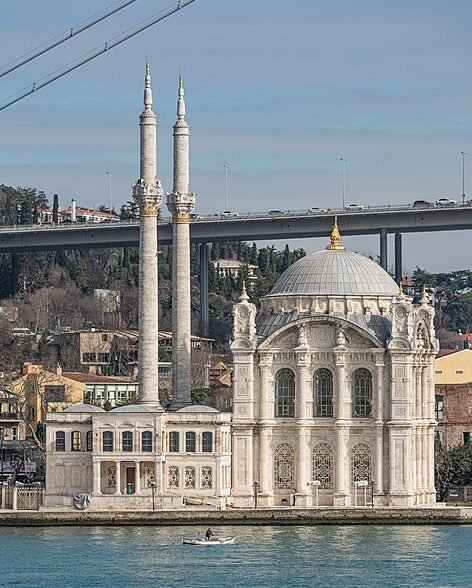
The Ortaköy Mosque is often photographed for its distinctive view of the Bosphorus Strait in Istanbul.
Bayezid II Mosque – Edirne, Turkey
The Bayezid II Mosque, located in Edirne, was commissioned by Sultan Bayezid II and completed in 1488. It is part of a larger complex known as the Bayezid II Külliye, which included a hospital, medical school, bathhouse, and guesthouse. The mosque is notable for its impressive size and the integration of architectural and social services within its complex.
Architectural Features:
- Single Dome: The mosque features a single large dome supported by semi-domes, a design that became more common in Ottoman architecture during this period.
- Courtyard and Arcade: The mosque is surrounded by a spacious courtyard, which is bordered by a colonnaded arcade. The courtyard serves as a gathering space for worshippers before and after prayers.
- Mihrab and Minbar: The mosque’s mihrab (prayer niche) and minbar (pulpit) are intricately decorated with marble and wood, showcasing the fine craftsmanship typical of the period.
Cultural Significance:
The Bayezid II Mosque is significant not only for its architectural beauty but also for the social services provided by the complex surrounding it. The hospital, in particular, was renowned for its advanced medical treatments, including care for mental illnesses. This holistic approach to urban design, where religious, educational, and social services were integrated, is a hallmark of Ottoman urban planning and reflects the empire’s commitment to the welfare of its citizens.
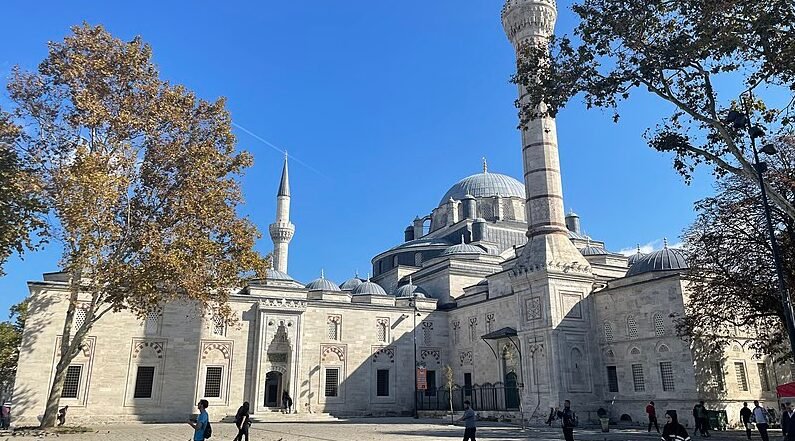
Image: Bayezid II Mosque
Conclusion
The mosques of the Ottoman Empire are not merely places of worship; they are symbols of the empire’s political power, cultural achievements, and architectural innovation. From the grandeur of the Blue Mosque and the Süleymaniye Mosque in Istanbul to the refined elegance of the Selimiye Mosque in Edirne, these structures stand as monuments to the artistic and architectural genius of the Ottomans.
Each mosque reflects a unique blend of Islamic and Byzantine influences, with innovations such as large central domes, slender minarets, and intricate tilework becoming defining features of Ottoman architecture. Furthermore, many of these mosques were part of larger complexes that served the community’s social and educational needs, illustrating the Ottoman commitment to integrating public service with religious devotion.
Today, these mosques continue to inspire awe and admiration, drawing visitors from around the world to witness the beauty and grandeur of Ottoman architecture. They are not only significant in terms of their historical and cultural impact but also as enduring symbols of the empire’s legacy.
Frequently Asked Questions (FAQs) about the Ottoman Empire
Who founded the Ottoman Empire?
The Ottoman Empire was founded by Osman I, a leader of a small Turkish principality in Anatolia (modern-day Turkey). The empire is named after Osman, whose descendants ruled the empire for its entire existence. Osman I began the process of expanding his territory, which eventually led to the creation of one of the largest empires in history.
What was the significance of the Ottoman Empire in world history?
The Ottoman Empire played a crucial role in world history for several reasons:
- Military Power: The empire was a dominant military force, particularly in the 15th and 16th centuries. Its conquest of Constantinople in 1453 marked the end of the Byzantine Empire and established the Ottomans as a major power.
- Cultural and Architectural Influence: The Ottomans contributed significantly to art, architecture, and culture, especially through their impressive mosques and buildings, including the Blue Mosque and Topkapi Palace.
- Religious Influence: The Ottoman Empire was an Islamic caliphate for centuries, with the sultans acting as caliphs, which influenced the religious and political landscapes of the Muslim world.
- Trade: The empire controlled key trade routes between Europe and Asia, making it an economic powerhouse.
- Impact on Europe: The Ottoman Empire played a significant role in European politics, particularly during the Renaissance and the Reformation. It was both a military threat and a partner in trade and diplomacy for various European states.
What was the capital of the Ottoman Empire?
The capital of the Ottoman Empire was Constantinople, which the Ottomans renamed Istanbul after its conquest in 1453. Before this, the capital was located in Edirne (Adrianople) and Bursa during earlier periods of the empire.
How did the Ottoman Empire expand?
The Ottoman Empire expanded through a combination of military conquests, alliances, and strategic marriages. Key military victories, such as the conquest of Constantinople in 1453 and the expansion into Europe, North Africa, and the Middle East, allowed the empire to grow. Ottoman rulers used both diplomacy and force to bring vast territories under their control.
Who were some of the most famous Ottoman sultans?
Some of the most famous Ottoman sultans include:
- Osman I (1299–1326): Founder of the Ottoman Empire.
- Mehmed II (1451–1481): Known as Mehmed the Conqueror, he captured Constantinople in 1453.
- Suleiman the Magnificent (1520–1566): Known for the empire’s greatest territorial expansion and cultural achievements.
- Selim I (1512–1520): Expanded the empire into Egypt, the Levant, and Arabia, and claimed the title of Caliph.
- Abdulhamid II (1876–1909): The last effective sultan who tried to maintain the empire’s power before its decline.
What was life like in the Ottoman Empire?
Life in the Ottoman Empire was highly diverse, as it was a multi-ethnic, multi-religious empire. The population included Turks, Arabs, Greeks, Armenians, Jews, Kurds, Slavs, and many other groups. Muslims were the dominant group, but Christians and Jews were granted certain freedoms under the millet system, which allowed religious communities some degree of autonomy.
The empire was highly centralized, with the sultan holding ultimate authority. However, provincial governors (pashas and beys) and military elites also wielded significant power. The legal system was a mixture of Islamic law (Sharia) and local customs.
What was the millet system in the Ottoman Empire?
The millet system was a method of governance in the Ottoman Empire that allowed different religious communities to govern themselves according to their own laws and customs. Each religious group (such as Christians, Jews, and Muslims) was considered a “millet,” or nation, and had its own leadership that dealt with issues such as marriage, education, and religious affairs.
This system helped maintain order in the diverse empire by allowing religious minorities a certain level of autonomy. In return, the millets paid taxes and pledged loyalty to the Ottoman sultan.
When and how did the Ottoman Empire end?
The Ottoman Empire officially ended in 1922 following its defeat in World War I and the subsequent partitioning of its territories by the Allied Powers. The empire had been in decline for centuries, and its participation in the war on the side of the Central Powers (Germany and Austria-Hungary) led to its downfall.
In 1923, the Republic of Turkey was established by Mustafa Kemal Atatürk, marking the formal end of the Ottoman Empire. Atatürk’s reforms aimed to modernize Turkey, abolishing the monarchy and the caliphate and transforming the country into a secular republic.
What territories did the Ottoman Empire control?
At its height in the 16th and 17th centuries, the Ottoman Empire controlled vast territories, including:
- Southeastern Europe: Greece, the Balkans, Hungary, Romania, Bulgaria, and parts of Ukraine.
- Middle East: Modern-day Turkey, Syria, Iraq, Lebanon, Israel, Palestine, and the Arabian Peninsula.
- North Africa: Egypt, Libya, Algeria, and Tunisia.
- Parts of Asia: Western parts of Iran, the Caucasus, and parts of the Arabian Peninsula.
What was the role of religion in the Ottoman Empire?
Islam was the dominant religion of the Ottoman Empire, and the sultan was also considered the caliph, the leader of the Muslim world. Islamic law (Sharia) played a significant role in the empire’s legal and social systems. However, the Ottomans were relatively tolerant of other religions, particularly Christianity and Judaism. Under the millet system, non-Muslim communities were allowed to govern themselves in matters of religion and personal law.
What was the Janissary corps?
The Janissaries were an elite military corps in the Ottoman Empire, originally composed of Christian boys taken from their families in the Balkans through the devshirme system.
These boys were converted to Islam, trained, and educated to serve as soldiers and administrators. The Janissaries became a powerful political and military force in the empire and played a crucial role in Ottoman military campaigns.
However, by the 17th century, the Janissary corps became increasingly corrupt and resistant to reform. In 1826, Sultan Mahmud II dissolved the Janissaries in what became known as the “Auspicious Incident,” replacing them with a modernized army.





