Elymas: The False Prophet in Acts of the Apostles
Elymas, also known as Bar-Jesus, is a figure in the New Testament who appears in Acts of the Apostles, chapter 13. Described as a mágos (translated as “sorcerer” or “magician”) and a false prophet, Elymas is most notable for his encounter with the Apostle Paul and Barnabas during their mission in Cyprus. This episode, marked by his opposition to the Christian message and subsequent punishment, reflects early Christian views on divine authority and the rejection of deception.
Elymas in the Biblical Narrative
In Acts 13, Paul and Barnabas travel to Paphos, a city on the island of Cyprus, at the request of the Roman proconsul Sergius Paulus. Interested in hearing their teachings about Jesus, Sergius Paulus is described as an intelligent man seeking truth. However, Elymas, who is referred to as a false prophet and sorcerer, attempts to hinder their mission. He opposes Paul and Barnabas, likely fearing the loss of influence over Sergius Paulus if the proconsul were to embrace Christianity.
Elymas’s opposition and subsequent blindness highlight themes of divine power, spiritual conflict, and the triumph of Christianity over false prophecy.
Paul, now using his Roman name for the first time in scripture, openly rebukes Elymas. He accuses him of deceit and opposition to righteousness, declaring that he is an enemy of God’s work. Paul prophesies Elymas’s temporary blindness as a sign of divine judgment, and a cloud of darkness immediately obstructs his sight. This miraculous event convinces Sergius Paulus of the truth of Paul’s message, leading to his conversion to Christianity.

A painting by Italian artist Raphael titled “Elymas Struck Blind”
Later Accounts in Tradition
The story of Elymas does not end with the Book of Acts. According to The Golden Legend, a medieval collection of hagiographies, Elymas later incites unrest in Salamis, another city in Cyprus. Here, he reportedly stirs up both Jews and pagans against Barnabas, resulting in Barnabas’s martyrdom. This apocryphal account adds further dimensions to Elymas’s role as a persistent antagonist to the Christian mission, though it is not supported by canonical texts.
Interpretation of His Name
The name Elymas holds linguistic and cultural significance. Acts 13:8 states, “Elymas the mágos (for so his name is translated) opposed them.” The term mágos originates from Greek and can mean “magician,” “wise man,” or “sorcerer.” The title “Bar-Jesus,” by which he is also known, translates from Aramaic as “Son of Joshua” or “Son of Jesus.” This name may have suggested to early Christian audiences a false association with Jesus, making his opposition to Paul even more pointed.
Etymologically, “Elymas” is thought to derive from the Arabic ‘alīm, meaning “learned” or “wise.” If this interpretation is correct, it underscores a possible irony in his characterization—presented as a “wise man,” Elymas opposes the true wisdom of God as revealed through Paul.
Symbolism of Blindness
Elymas’s punishment of blindness is rich in symbolic meaning. Blindness in biblical literature often signifies spiritual ignorance or opposition to divine truth. By rendering Elymas temporarily blind, Paul demonstrates the power of God while providing a physical manifestation of Elymas’s moral and spiritual state. This act serves as a contrast to Sergius Paulus, who is depicted as enlightened through faith. The event underscores the triumph of Christian teachings over deception and manipulation.
Cultural Legacy
The story of Elymas has inspired artistic interpretations, most notably Raphael’s cartoon, Elymas the Sorcerer Struck with Blindness. This work, created as a design for a Vatican tapestry, captures the dramatic moment of Elymas’s punishment. The vivid depiction of his blindness highlights the event’s significance in asserting divine authority and discrediting false prophets. Such artworks emphasize the story’s enduring appeal as a narrative of spiritual victory.
Historical and Theological Context
Elymas’s depiction reflects early Christian attitudes toward magic and sorcery, which were often associated with pagan practices and viewed as incompatible with the monotheistic worship of God. By portraying Elymas as a deceiver and adversary of the faith, the narrative reinforces the primacy of Christian teachings over other forms of spiritual or mystical authority. This theme aligns with broader biblical warnings against false prophets and the use of occult practices.
The episode in Acts 13 serves as a powerful narrative of spiritual triumph, where the blindness of Elymas contrasts with the enlightenment of Sergius Paulus.
Additionally, the confrontation between Paul and Elymas serves as a testament to the apostles’ authority and divine mandate. The miraculous nature of Elymas’s blindness underscores the power of God working through Paul, while the conversion of Sergius Paulus marks a milestone in the spread of Christianity within the Roman Empire.
Frequently Asked Questions
What is his role in the biblical narrative?
Elymas tried to prevent the Roman Proconsul Sergius Paulus from converting to Christianity. Paul declared that God would blind Elymas, and he immediately lost his sight.
What was the outcome of Elymas’s blindness?
After Elymas was blinded, Sergius Paulus, witnessing the event, converted to Christianity, affirming the power of Paul’s message.
What does “Elymas” mean?
The name “Elymas” likely derives from the Arabic word ‘alīm meaning “learned” or “wise,” possibly linked to his title as a sorcerer (mágos).
What does “Bar-Jesus” signify?
Bar-Jesus means “Son of Joshua” or “Son of Jesus” in Aramaic, reflecting his cultural and linguistic context.
What later legends involve Elymas?
According to The Golden Legend, Elymas incited a riot in Salamis, leading to the martyrdom of Barnabas.
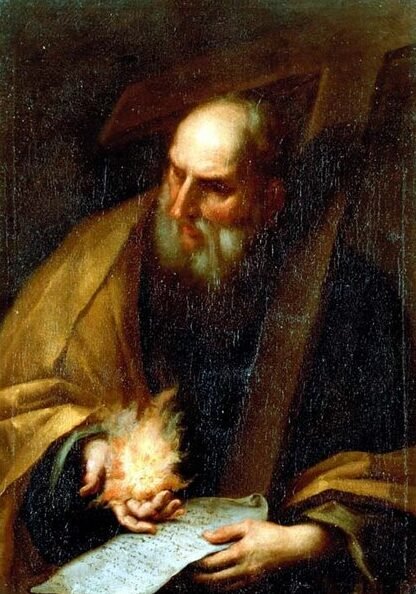
Portrait of Barnabas
How is Elymas portrayed in art?
The event of Elymas’s blinding is depicted in Raphael’s famous cartoon, “Elymas the Sorcerer Struck with Blindness,” inspiring Vatican tapestries.