Mount Golgotha: Where is it, and how significant is it in Christianity?
Calvary (Latin: Calvariae or Calvariae locus) and Golgotha (Biblical Greek: Γολγοθᾶ) refer to the site where Jesus Christ was crucified, according to the four canonical gospels of Christianity. This location, described as “the place of the Skull,” has held profound significance for Christian believers and has been a site of pilgrimage since the early medieval period.
Traditionally, Calvary is associated with a location now enclosed within the Church of the Holy Sepulchre in Jerusalem. Identified by Empress Helena, the mother of Constantine the Great, during her visit to the Holy Land in 325 CE, this site remains one of the most revered in Christianity. Alternative theories propose other possible locations for Golgotha, including areas near the Garden Tomb or other spots within modern Jerusalem.
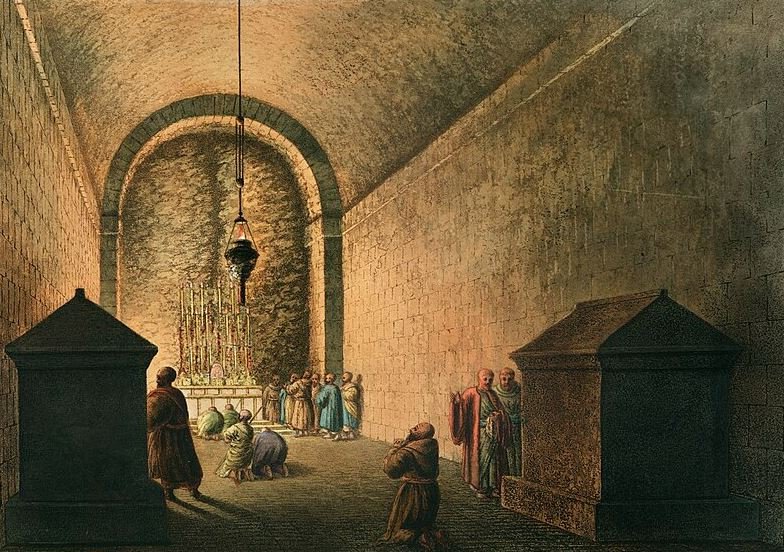
A painting depicting the Chapel of Mount Calvary by Italian artist Luigi Mayer.
Biblical References and Linguistic Origins
The New Testament provides four primary descriptions of Golgotha in the gospels of Matthew, Mark, Luke, and John. Each describes Golgotha as the site of the crucifixion and uses terms that mean “the place of the Skull.” The gospel accounts emphasize the location’s accessibility and its visibility to passers-by, highlighting its public nature.
- Matthew 27:33: “And when they were come unto a place called Golgotha, that is to say, a place of a skull…”
- Mark 15:22: “And they bring him unto the place Golgotha, which is, being interpreted, The place of a skull.”
- Luke 23:33: “And when they were come to the place, which is called Calvary, there they crucified him.”
- John 19:17: “And he bearing his cross went forth into a place called the place of a skull, which is called in the Hebrew Golgotha.”
The English names Calvary and Golgotha derive from:
- Latin: Calvariae (“skull” or “place of a skull”), used in Jerome’s Vulgate translation.
- Greek: Golgothâ, likely derived from the Aramaic Golgolta (skull).
- Hebrew: Gulgōleṯ, meaning “skull,” related to the verb galal (“to roll”).
The imagery of a skull may refer to the shape of the hill or its historical use as a site of execution. Early Christian tradition also connected Golgotha with the burial site of Adam’s skull, intertwining biblical narratives of death and redemption.
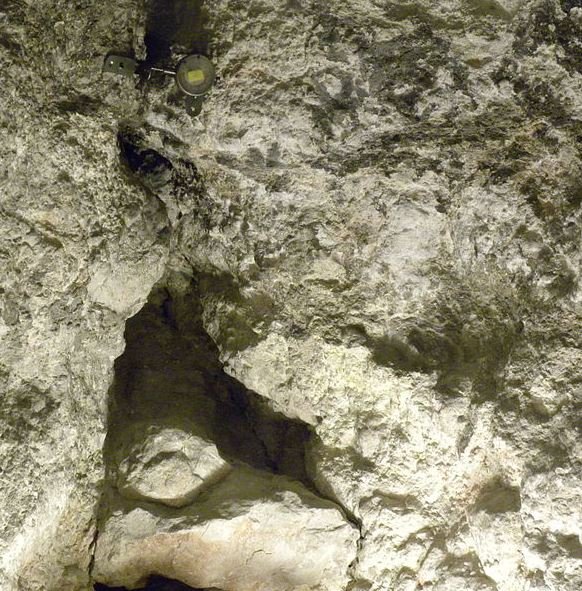
Stone of Golgotha
Location of Golgotha
The Church of the Holy Sepulchre, established by Constantine the Great, has long been considered the site of Golgotha. The proximity of the traditional location to the tomb of Jesus further underscores its significance. Archaeological findings support this association:
- First-century tombs discovered near the site suggest it was outside the city walls during Jesus’ time, fulfilling biblical descriptions.
- Constantine’s mother, Helena, identified the site during her pilgrimage in 325 CE, leading to the construction of a basilica.
Alternative Proposals
- Garden Tomb (Skull Hill): Proposed in the 19th century, this site lies approximately 500 meters north of the Church of the Holy Sepulchre. The rocky cliff resembles a skull, leading to its association with Golgotha. Nearby, the Garden Tomb is sometimes suggested as the burial site of Jesus, though archaeological evidence dates it to the 7th century BCE.
- Joan Taylor’s Hypothesis: Modern historian Joan Taylor suggests a location 175 meters south-southeast of the Garden Tomb, based on textual and archaeological analyses.
- Jeremiah’s Goʿah: Some scholars link Golgotha with a site mentioned in Jeremiah 31:39, hypothesized to be near the modern Damascus Gate.
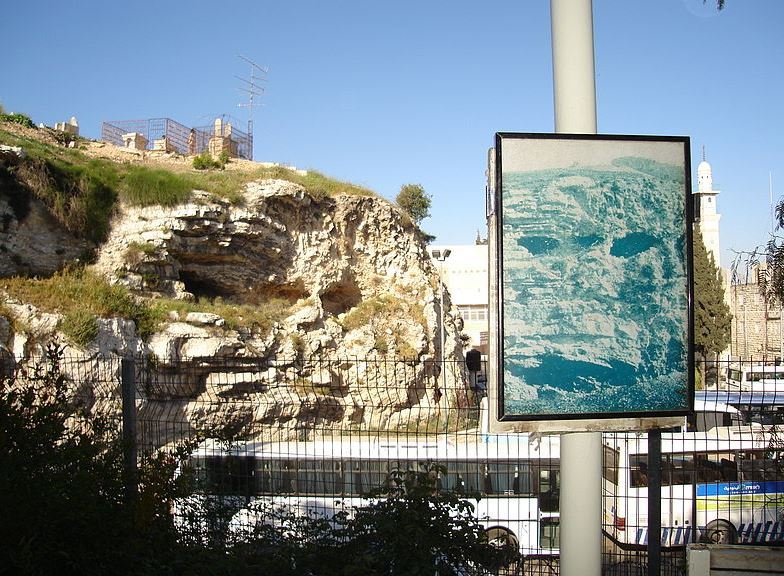
Mount Golgotha
Religious and Cultural Interpretations
The Church Fathers offered diverse explanations for the name Golgotha:
- Jerome suggested it was a place of executions by beheading.
- Origen connected it with the legend of Adam’s skull buried at the site, tying it to themes of original sin and redemption.
The association of Golgotha with a skull and death is deeply symbolic. It represents the intersection of sin, mortality, and the redemptive power of Christ’s sacrifice. The term “Mount Calvary,” often used in hymns and literature, highlights its centrality in Christian spirituality.
Archaeological Evidence
Archaeological excavations under the Church of the Holy Sepulchre reveal:
- Evidence of a first-century limestone quarry, suggesting the area was outside city limits during Jesus’ era.
- A large rock formation traditionally believed to be the remains of Golgotha, visible within the church.
The site was repurposed under Roman rule:
- Roman Emperor Hadrian built a temple to the goddess Aphrodite over Golgotha in the 2nd century CE. This was later replaced by Constantine’s basilica.
- The re-use of the site aligns with Roman practices of constructing pagan temples over significant religious locations.
Pilgrimage and Worship
Following Helena’s discovery, Constantine commissioned the construction of the Church of the Holy Sepulchre. The basilica, described in 4th-century writings, became a central pilgrimage site. Visitors, such as the author of the Itinerarium Burdigalense, recorded their experiences, emphasizing the site’s spiritual importance.
Today, Golgotha remains a focal point for Christian pilgrims. Devotees queue to touch the rock of Calvary, and liturgical rituals commemorate the crucifixion. The site is shared by multiple Christian denominations, reflecting its universal significance.

Pilgrims line up to touch the Calvary rock within the Chapel of the Crucifixion.
Alternative Theories and Debates
In the 19th century, British Major-General Charles Gordon championed Skull Hill near the Garden Tomb as Golgotha. Its resemblance to a skull and proximity to a tomb fueled speculation, though most scholars favor the traditional site.
Skepticism about the Holy Sepulchre’s authenticity arises from its location within modern Jerusalem’s walls. However, defenders argue that the 1st-century city had different boundaries, leaving the site outside city limits during Jesus’ time.
Theological and Historical Legacy
Calvary or Golgotha embodies profound theological significance as the site of Christ’s crucifixion, symbolizing sacrifice, redemption, and salvation. Its historical legacy continues to inspire debate, devotion, and pilgrimage, serving as a cornerstone of Christian faith and heritage.
Questions and Answers

What is the traditional location of Golgotha?
The traditional site is within the Church of the Holy Sepulchre in Jerusalem. This location was identified by Empress Helena in 325 CE and has been a Christian pilgrimage site since.
Are there alternative proposed locations for Golgotha?
Yes, Protestant scholars in the 19th century suggested Skull Hill near the Garden Tomb, and historian Joan Taylor proposed another site 175 meters south-southeast of the traditional location.
What biblical evidence supports Golgotha’s location?
The Gospels describe it as near Jerusalem, outside the city gate, and accessible to passersby. Hebrews 13:12 confirms it was outside the city walls.
Why is the Church of the Holy Sepulchre a strong candidate?
Archaeological evidence includes first-century graves found in the area, indicating it was outside the city’s boundaries during Jesus’ time. The site matches Constantine’s and Helena’s historical identifications.

“Resurrection of Jesus”, a painting by German painter Lucas Cranach.
What linguistic roots explain Golgotha’s name?
The term derives from the Aramaic Golgolta (“skull”), related to Hebrew Gulgōleṯ, and was translated into Latin as Calvariae (“skull”), influencing European language forms.
What is Gordon’s Calvary?
In the 19th century, Charles Gordon suggested a site called Skull Hill near the Garden Tomb as Golgotha due to its skull-like rock formation. This site remains a Protestant point of interest.
What role did Hadrian’s temple play in the site’s history?
Hadrian built a temple to Aphrodite on the site in the 2nd century. Constantine’s church replaced this temple, reclaiming the site for Christian veneration.





