English Clergyman and Writer Richard Pococke
Richard Pococke (1704–1765) was an English clergyman, bishop, and an accomplished writer, best known for his extensive travel diaries and descriptions of various lands. Despite his esteemed positions as Bishop of Ossory and later Bishop of Meath, his legacy is primarily shaped by his contributions to travel literature. His accounts provide valuable insights into 18th-century Europe and the Near East, making him one of the most significant travel writers of his time.
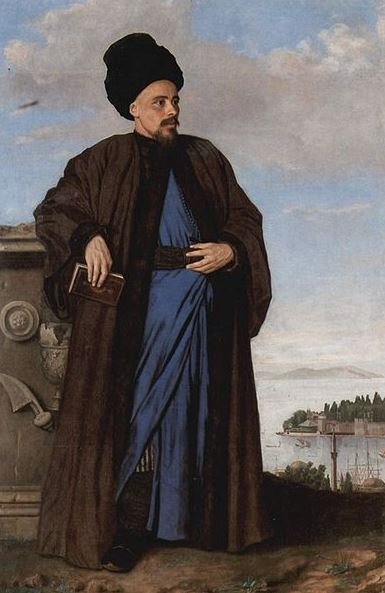
Portrait of Richard Pococke, created by an artist named Jean-Étienne Liotard.
Early Life and Education
Pococke was born in Southampton into a family with strong clerical ties. His father, Reverend Richard Pococke, and his mother, Elizabeth Milles, were well-connected within the ecclesiastical and academic circles. His maternal grandfather was the distinguished Rev. Isaac Milles, while his uncle, Thomas Milles, was a professor of Greek. Pococke was also distantly related to Edward Pococke, an eminent Orientalist and biblical scholar. These familial connections facilitated his advancement within the Church of Ireland.
Pococke pursued higher education at Corpus Christi College, Oxford, where he earned a Bachelor of Law degree. He was ordained in 1725 and quickly secured prestigious appointments, beginning with his role as Vicar-General of the Diocese of Waterford and Lismore.
Travels Across Europe and the Near East
Between 1733 and 1741, Pococke embarked on two Grand Tours, accompanied by his cousin Jeremiah Milles. His first journey (1733–1734) took him through France and Italy, exposing him to European culture, history, and religious practices. In 1737, he commenced another extensive tour across Europe, revisiting Italy and extending his travels to the Middle East.
Journey Through the Near East (1737–1741)
Pococke’s travels in the Near East, spanning Egypt, Palestine, Lebanon, Syria, Asia Minor, and Greece, are his most renowned. His observations were later compiled into the multi-volume A Description of the East and Some Other Countries (1743, 1745), which won praise from historians, including Edward Gibbon. These works contained detailed descriptions of landmarks, local customs, and historical contexts. His account of Egypt, including an early sketch of the Pyramid of Cheops, remains one of the earliest comprehensive Western depictions of the region.
His writings also provide a rare European account of the Achtiname of Muhammad, a medieval Arabic document that purportedly granted privileges to the monks of Saint Catherine’s Monastery in Egypt. Additionally, he explored libraries in Amsterdam, Vienna, and Mount Sinai, documenting their collections and scholarly practices.
Irish and Scottish Tours
Between 1747 and 1760, Pococke undertook several tours across Ireland, recording his observations meticulously. His most extensive Irish journey took place in 1752, covering more than half of the country’s counties. He documented landscapes, architecture, and local traditions. Although he never published his Irish tour, his notes were preserved and later edited by George Thomas Stokes in 1891.
Pococke conducted three major tours of Scotland. His first, lasting a month in 1747, covered key cities such as Edinburgh, Stirling, and Glasgow. His second tour in 1750 was brief but included Dumfries and Drumlanrig Castle. The most extensive of his Scottish travels occurred in 1760, lasting nearly five months. He traversed nearly the entire country, reaching the Orkney Islands, the northwest Highlands, Inverness, Perth, Fife, and Edinburgh. His Tours of Scotland (published in 1887) provide valuable historical insights, including a reference to Scottish breakfasts featuring marmalade, preserved orange peel, and jelly.
Episcopal Career
Despite his extensive travels, Pococke remained a dedicated churchman. He belonged to a family deeply entrenched in Anglicanism, and his ecclesiastical career was largely spent within the Church of Ireland. His notable positions included:
- Vicar-General of Waterford and Lismore (1734)
- Precentor of Waterford (1735)
- Archdeacon of Dublin (1745)
- Bishop of Ossory (1756–1765)
- Bishop of Meath (1765)
His promotion to bishoprics reflected his high standing within the Anglo-Irish clerical community. Pococke was known for his dedication to his diocese, as well as for his reputation as a compelling preacher. His visits to Scottish Episcopal congregations and confirmations were unusual for a Church of England bishop at the time.
Final Years and Death
In his later years, Pococke continued to travel extensively within Britain and Ireland. In 1751, he visited northeast Lancashire, stopping in Clitheroe and Whalley. His final journey occurred in 1765 when he was visiting Charleville Castle near Tullamore, County Offaly. He suffered a fatal stroke (apoplexy) and passed away shortly thereafter. He was buried at Ardbraccan, County Meath.
Many of his unpublished manuscripts were donated to the British Library, ensuring his work remained accessible for future generations.
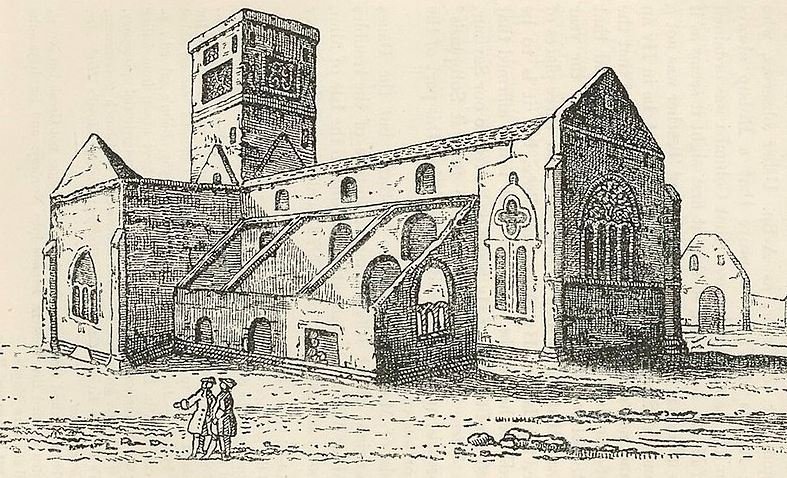
Iona Abbey – drawn by Pococke.
Legacy and Works
Pococke’s travel writings are among the most significant historical records of the 18th century. His works provide firsthand accounts of cultural, geographical, and historical aspects of various regions. His major publications include:
- A Description of the East and Some Other Countries (1743–1745)
-
- Vol. I: Observations on Egypt
- Vol. II: Observations on Palestine, Syria, Mesopotamia, Cyprus, and Greece
- Tours in Scotland (1887, Scottish History Society)
- The Travels through England of Dr. Richard Pococke (1888, Camden Society)
Pococke’s accounts, enriched with detailed observations and illustrations, were instrumental in shaping Western perceptions of the Near East. His influence extended beyond academia, reaching general readers fascinated by foreign cultures.
Contemporary Reception
Pococke was widely respected during his lifetime. His contributions to travel literature and scholarship earned him accolades from both clergy and historians. He was described by The Cambridge Chronicle in 1765 as “greatly regarded and esteemed by all ranks and degrees of people.” Mrs. Elizabeth Montagu, an English socialite and writer, wrote in 1750 of the intellectual wealth Pococke brought to conversations, particularly through his knowledge of Constantinople and the Nile.
Frequently Asked Questions
How did Pococke’s family background influence his career?
Coming from a family of Anglican clergymen and scholars, Pococke had strong church connections that helped him advance quickly within the Church of Ireland, securing prominent ecclesiastical positions.
What were the main destinations of Pococke’s travels?
He traveled extensively across Europe, the Near East, and the British Isles, including France, Italy, Egypt, Palestine, Syria, Greece, Ireland, and Scotland.
What significant works did Pococke publish?
His most notable publications include A Description of the East and Some Other Countries (1743–1745) and Tours in Scotland (published posthumously in 1887).
What role did Pococke play in the Church of Ireland?
He held various high-ranking positions, including Vicar-General of Waterford and Lismore, Archdeacon of Dublin, Bishop of Ossory, and later, Bishop of Meath.
How did Pococke contribute to the study of the Middle East?
His detailed observations of Egypt, the Holy Land, and surrounding regions provided one of the earliest comprehensive European accounts of these areas, influencing later scholarship.
What was the significance of Pococke’s Scottish tours?
His three tours of Scotland, particularly the extensive journey in 1760, documented cultural practices, landscapes, and local traditions, providing valuable historical records.
How did Richard Pococke die?
He suffered a fatal stroke while visiting Charleville Castle in County Offaly, Ireland, in 1765 and was buried in Ardbraccan, County Meath.





