English Composer Frederick Delius
Frederick Theodore Albert Delius (1862–1934), born Fritz Theodor Albert Delius, was an English composer celebrated for his distinctive musical style. Despite his upbringing in a prosperous mercantile family in Bradford, England, Delius resisted expectations to follow a commercial career, pursuing music instead. His life journey took him from the United States to Europe, where he developed a unique artistic voice influenced by African-American spirituals, the European Romantic tradition, and his own innovative approach to orchestration and harmony. Though his music faced intermittent popularity and criticism, Delius remains a significant figure in the world of classical music.
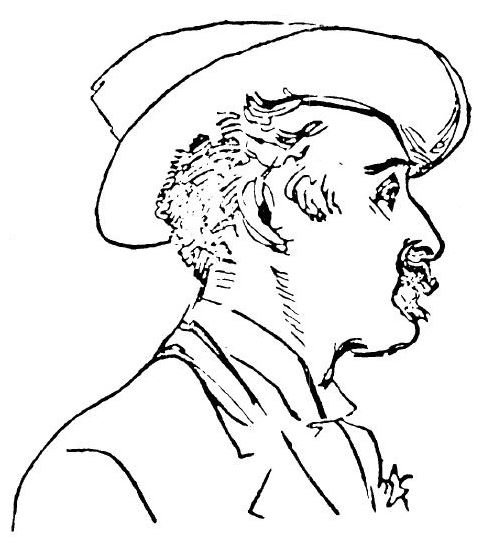
An illustration of Frederick Delius by Norwegian artist Christian Krohg.
Early Life
Delius was born on January 29, 1862, into a well-to-do family in Bradford, Yorkshire. His parents, Julius and Elise Delius, were of German descent, and his father was a successful wool merchant. The Delius household was musically inclined, hosting performances by notable musicians like Joseph Joachim. Despite this environment, young Fritz (as he was known at the time) showed little interest in the Germanic musical tradition of Mozart and Beethoven, gravitating instead toward the works of Chopin and Grieg.
Frederick Delius’s life and music reflect a journey of artistic perseverance and innovation.
Delius received early violin lessons from members of the Hallé Orchestra and displayed a natural talent for improvisation on the piano. However, his academic pursuits were unremarkable. After completing his studies at Bradford Grammar School and the International College at Isleworth, his father insisted he join the family business. Over the next few years, Delius reluctantly worked in the wool trade, with postings in Gloucestershire, Germany, Sweden, and France. His growing disinterest in commerce and increasing fascination with the arts led to conflicts with his father, culminating in his departure for the United States in 1884.
Florida Experience and Musical Awakening
In 1884, Delius was sent to Florida to manage an orange plantation near Jacksonville. This move, while intended to instill discipline and responsibility, became a transformative period in his life. At Solano Grove, a plantation along the Saint Johns River, Delius was captivated by the music of African-American workers and spirituals sung by passing riverboats. This exposure profoundly influenced his compositional style.
While in Florida, Delius began formal music studies under Thomas Ward, a local organist and composer. Ward’s instruction in counterpoint and harmony became a foundational influence on Delius’s early works. During this time, Delius composed and published his first piece, Zum Carnival, a polka for piano. Despite his duties on the plantation, he devoted increasing time to music and eventually abandoned agriculture entirely. In 1885, he moved to Virginia, where he briefly worked as a music teacher before returning to Europe to pursue a professional career as a composer.
Musical Education and European Influence
Upon his return to Europe in 1886, Delius enrolled at the Leipzig Conservatoire, where he studied under prominent instructors like Carl Reinecke and Hans Sitt. While he struggled with formal studies, Delius formed a pivotal friendship with the Norwegian composer Edvard Grieg, who became a mentor and champion of his work. Grieg encouraged Delius’s aspirations, leading to the first significant performance of Delius’s Florida Suite in Leipzig.
From his formative years in Florida to his mature works in Europe, Delius forged a unique path, defying conventions and embracing a deeply personal style.
In 1888, Delius moved to Paris, where he immersed himself in the city’s vibrant artistic community. During this period, he befriended notable figures such as August Strindberg and Paul Gauguin. His music, however, remained relatively unknown in France. Delius began composing larger works, including his operas Irmelin and The Magic Fountain, and orchestral pieces like Paris: The Song of a Great City. These compositions reflected his evolving style, blending lush orchestration with chromatic harmonies.
Key Compositions and Style
Delius’s musical language was shaped by a blend of influences. His exposure to African-American spirituals in Florida introduced him to a distinct melodic sensibility, while his admiration for Grieg and Wagner informed his use of chromatic harmony and orchestral color. As Delius matured, his music became uniquely his own, characterized by its impressionistic textures and seamless melodic flow.
Notable early works, such as Appalachia (1896) and Over the Hills and Far Away (1897), showcased his ability to evoke landscapes and emotions. Later compositions, including Brigg Fair (1907), On Hearing the First Cuckoo in Spring (1912), and A Song of Summer (1929), exemplified his mastery of atmospheric tone painting. Delius’s music often eschewed traditional forms, favoring a more organic, free-flowing structure.
Successes in Germany and Britain
Delius’s first major successes came in Germany, where conductors like Hans Haym and Fritz Cassirer championed his works. His compositions found a receptive audience, with performances in cities such as Elberfeld and Düsseldorf. However, it was not until 1907 that Delius gained significant recognition in his native Britain. This change was largely due to the efforts of Thomas Beecham, a conductor and lifelong advocate of Delius’s music.
Although Delius’s music remains a niche interest, its enduring appeal lies in its ability to transport listeners to a world of contemplation and serenity.
Beecham conducted the British premieres of several key works, including A Mass of Life (1909) and the opera A Village Romeo and Juliet (1910). He also organized a six-day Delius festival in London in 1929, further solidifying the composer’s reputation. Beecham’s recordings of Delius’s music played a crucial role in bringing it to a wider audience.
Health Decline and Late Works
After 1918, Delius’s health began to deteriorate due to syphilis, which he had likely contracted during his early years in Paris. By the late 1920s, he was blind and paralyzed, unable to compose without assistance. In 1928, Eric Fenby, a young English musician, offered to help Delius as an amanuensis. Over the next five years, Fenby transcribed several late works from Delius’s dictation, including Songs of Farewell, A Late Lark, and Idyll.
Despite his physical limitations, Delius retained his creative spirit, producing some of his most poignant compositions during this period. Fenby later documented their collaboration in his memoir Delius As I Knew Him, offering insights into the composer’s personality and artistic philosophy.
Critical Reception and Legacy
Delius’s music has often polarized audiences and critics. While admired for its lyrical beauty and evocative orchestration, it has also been criticized for its lack of structural rigor. Throughout his life, Delius’s works were performed sporadically, and his reputation fluctuated. However, the establishment of The Delius Society in 1962 helped to revive interest in his music, promoting performances, recordings, and scholarly research.
Timeline of Frederick Delius (1862-1934)
Frequently Asked Questions
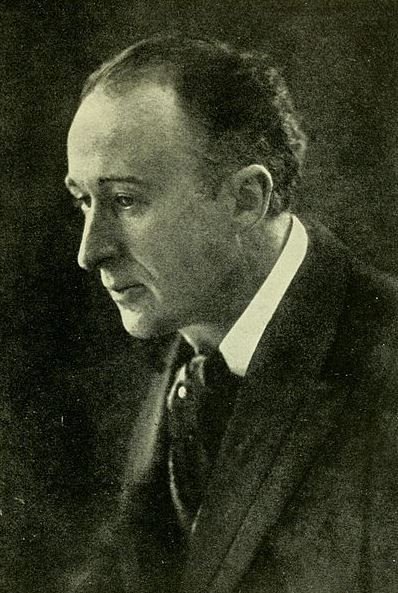
An 1907 photograph of Frederick Delius.





