English Novelist and Critic Samuel Butler
by World History Edu · November 16, 2024
Samuel Butler (1835–1902) was a multifaceted English writer, satirist, and critic whose work traversed literature, religion, evolution, and the arts.
Known for his groundbreaking novels Erewhon and The Way of All Flesh, Butler challenged Victorian orthodoxy, delved into evolutionary debates, and questioned religious dogma.
His unique intellectual journey, shaped by personal struggles and a rebellious spirit, left a lasting imprint on Western thought and literature.
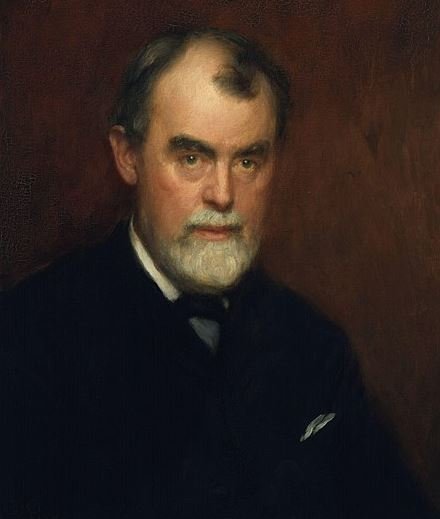
Image: Portrait of Butler by Charles Gogin.
Early Life and Education
Samuel Butler was born on December 4, 1835, in Langar, Nottinghamshire. His father, Rev. Thomas Butler, was a clergyman who harbored unrealized ambitions and imposed high expectations on his son.
The family’s strict religious values created a stifling and antagonistic home environment. Butler later described his father as overbearing and unsympathetic, a dynamic he explored in his semi-autobiographical novel The Way of All Flesh.
Butler’s early education began at home under his father’s supervision. At age 12, he attended Shrewsbury School, enduring the harsh regime of headmaster Benjamin Hall Kennedy, an experience he fictionalized as “Dr. Skinner” in The Way of All Flesh.
In 1854, he entered St. John’s College, Cambridge, where he excelled in Classics and graduated with first-class honors in 1858. Despite his academic achievements, Butler’s faith was shaken during his post-graduate work in a poor London parish, where he questioned the efficacy of religious rituals like infant baptism.
A New Life in New Zealand
In 1859, following a conflict with his father over his doubts about the priesthood, Butler emigrated to New Zealand. He sought both independence and a break from familial expectations. In Canterbury, he established Mesopotamia Station, a sheep farm, and found financial success. While farming, he began drafting ideas that later shaped his satirical utopian novel, Erewhon.
During his time in New Zealand, he also explored themes of evolution and technological advancement. His 1863 letter, “Darwin among the Machines,” published in The Press, speculated on the evolution of machines, predicting their dominance over humans. This early exploration of machine intelligence prefigured debates about artificial intelligence and the technological singularity.
Return to England and Literary Success
In 1864, Butler returned to England, settling in Clifford’s Inn, London. In 1872, he anonymously published Erewhon, which brought him fame for its satirical critique of Victorian society, organized religion, and conventional morality. The novel’s speculative nature and wit earned it a lasting place in the canon of utopian literature.
Butler’s later works included Erewhon Revisited (1901), a sequel, and The Way of All Flesh, completed in the 1880s but published posthumously in 1903. The latter novel offered a scathing critique of Victorian family life and religious hypocrisy, earning it recognition as one of the first modern psychological novels.
Evolution and Critique of Darwinism
Butler was deeply engaged with the debates surrounding evolution, particularly Charles Darwin’s theory of natural selection. While he admired Darwin’s work, he criticized him for failing to credit earlier thinkers like Erasmus Darwin and Jean-Baptiste Lamarck. Butler’s evolutionary theories, which emphasized the role of habit and memory in shaping organisms, were outlined in works such as Life and Habit (1878) and Evolution, Old and New (1879). He positioned himself as a neo-Lamarckian, opposing the strictly mechanistic views of Darwinism.
Butler’s critiques, though controversial, sparked valuable discussions in evolutionary thought. However, his unconventional ideas and biting satire alienated him from both scientific and religious communities.
Art, Music, and Travel
An enthusiastic traveler, Butler spent many summers in Italy, drawing inspiration from its landscapes, art, and architecture. His fascination with the Italian Sacri Monti informed works like Alps and Sanctuaries of Piedmont and the Canton Ticino (1881) and Ex Voto (1888).
Butler was also a composer, collaborating with his friend Henry Festing Jones on choral works influenced by Handel. Despite their musical amateurism, their pieces reflected Butler’s eclectic intellectual pursuits.
The Odyssey and Literary Criticism
In his later years, Butler turned his attention to the ancient Greek epic The Odyssey. In The Authoress of the Odyssey (1897), he controversially argued that the epic was written by a Sicilian woman, based on geographic and cultural evidence. While this theory remains speculative, it highlights Butler’s innovative approach to classical studies.
His critical work also extended to Shakespeare, as he reinterpreted the Sonnets in Shakespeare’s Sonnets Reconsidered (1899), proposing a narrative about a homosexual affair. These iconoclastic interpretations further cemented Butler’s reputation as a maverick thinker.
Personal Life and Relationships
Butler never married, and his sexuality has been the subject of academic debate. He maintained close, sometimes intense relationships with men, including Charles Pauli and Henry Festing Jones. While some scholars argue that Butler was a repressed or sublimated homosexual, evidence of his romantic life remains inconclusive.
Despite financial setbacks, such as failed investments in Canada, Butler managed to live comfortably in his later years, partly due to inheritances. His relationship with Jones remained a constant until his death.
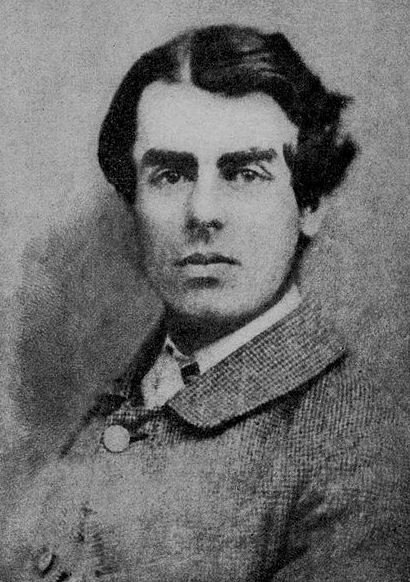
Image: Samuel Butler during his early 20s.
Death and Legacy
Samuel Butler died on June 18, 1902, in London at the age of 66. His cremation took place at Woking Crematorium, and his ashes were either dispersed or buried in an unmarked grave.
His influence extended beyond his lifetime. Writers like George Bernard Shaw and E.M. Forster admired his unflinching critique of Victorian norms. His speculative ideas in Erewhon inspired science fiction, while his psychological insights in The Way of All Flesh foreshadowed modern literary techniques.
Butler’s exploration of evolutionary thought, religious orthodoxy, and human nature positioned him as a thinker ahead of his time. Though he belonged to no particular literary school, his originality and refusal to conform ensured his enduring legacy in the realms of literature, philosophy, and cultural criticism.





