English Poet and Playwright Algernon Charles Swinburne
Algernon Charles Swinburne (April 5, 1837 – April 10, 1909) was a prominent English poet, playwright, novelist, and critic whose works left an indelible mark on Victorian literature.
Known for his innovative poetic forms, provocative themes, and association with the Decadent and Pre-Raphaelite movements, Swinburne’s life was as complex and multifaceted as his literary output.
His contributions to poetry and drama, characterized by their technical mastery and emotional depth, continue to be studied and appreciated for their artistic significance and daring exploration of taboo subjects.
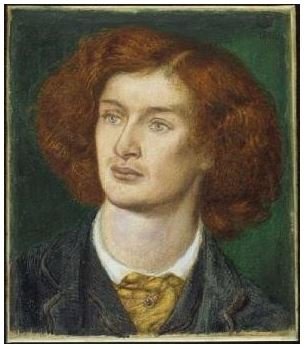
Algernon Charles Swinburne (5 April 1837 – 10 April 1909) was a prominent English poet, playwright, novelist, and critic. Image: Swinburne by English painter Dante Gabriel Rossetti.
Early Life and Family Background
Algernon Charles Swinburne was born on April 5, 1837, at 7 Chester Street, Grosvenor Place, London, into a distinguished family. He was the eldest of six children of Captain Charles Henry Swinburne, who later attained the rank of Admiral, and Lady Jane Henrietta Swinburne, daughter of the 3rd Earl of Ashburnham.
The Swinburne family hailed from an affluent Northumbrian lineage, providing Algernon with a comfortable and intellectually stimulating environment. The family’s primary residence was East Dene in Bonchurch on the Isle of Wight, complemented by a London home at Whitehall Gardens in Westminster. This dual residence allowed Swinburne to experience both the tranquility of the countryside and the vibrancy of urban life, influences that would later permeate his literary works.
Childhood and Education
Swinburne’s childhood was marked by a blend of fragility and intense energy. Described as both nervous and frail, he nonetheless exhibited a vibrant and almost reckless spirit. His early years were spent indulging in horseback riding and writing plays alongside his cousin, Mary Gordon, who lived nearby on the Isle of Wight. Their collaboration on Gordon’s second book, “Children of the Chapel,” which contained numerous depictions of beatings, hints at the early development of themes that Swinburne would later explore in his own work.
In 1849, at the age of twelve, Swinburne began his formal education at Eton College, one of England’s most prestigious schools. During his time at Eton (1849–1853), he started crafting poetry and demonstrated exceptional proficiency in languages, winning top prizes in both French and Italian. This academic excellence laid a strong foundation for his literary pursuits.
After Eton, Swinburne attended Balliol College, Oxford, from 1856 to 1860. His tenure at Oxford was notable not only for his academic endeavors but also for his involvement in political controversies. In 1859, Swinburne was temporarily expelled (rusticated) from the university for publicly supporting Felice Orsini’s attempted assassination of Napoleon III. This incident reflected his rebellious nature and willingness to engage in radical political discourse. Although he returned to Oxford in May 1860, Swinburne never completed his degree, choosing instead to pursue a career in writing and literature.
Influences and Early Literary Development
Swinburne’s summers were spent at Capheaton Hall in Northumberland, his grandfather Sir John Swinburne’s estate.
Capheaton Hall was not only a family residence but also housed a renowned library and served as the center of the Literary and Philosophical Society in Newcastle upon Tyne, where Sir John Swinburne was president. These summers deeply influenced Algernon, fostering a strong sense of patriotism and a deep appreciation for literature and the arts. This period of his life is reflected in his patriotic poems like “Northumberland” and “Grace Darling,” which celebrate the rugged beauty and historical significance of the region.
From 1857 to 1860, Swinburne was part of Lady Trevelyan’s intellectual circle at Wallington Hall. This association provided him with a stimulating environment that nurtured his literary and artistic growth, allowing him to interact with other intellectuals and artists of the time.
Travels and Personal Struggles
Following his grandfather’s death in 1860, Swinburne resided with William Bell Scott in Newcastle. In 1861, he traveled to Menton on the French Riviera to recover from excessive alcohol use, marking the beginning of a pattern of travel that would significantly impact his life and work. His journeys extended to Italy, where he immersed himself in the country’s rich cultural heritage, further influencing his literary output.
In December 1862, accompanied by Scott and likely Dante Gabriel Rossetti, Swinburne journeyed to Tynemouth. During this trip, he recited his unpublished poems, including “Hymn to Proserpine” and “Laus Veneris,” amidst the serene coastal landscape, demonstrating his commitment to his craft despite personal challenges.
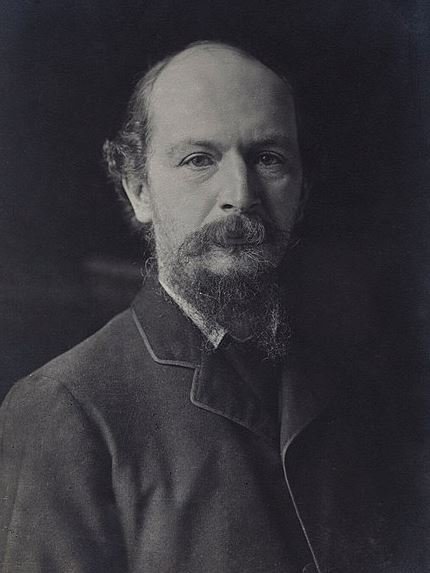
Image: A photograph of Swinburne during his early 50s.
Association with the Pre-Raphaelites and Literary Collaborations
At Oxford, Swinburne formed connections with members of the Pre-Raphaelite Brotherhood, including Dante Gabriel Rossetti and William Morris. These relationships were pivotal in shaping his literary career. The Pre-Raphaelites, known for their focus on vivid colors, intricate detail, and themes drawn from literature and mythology, influenced Swinburne’s early poetic style.
After leaving Oxford, Swinburne settled in London, where he embarked on a prolific writing career. His association with Rossetti and William Morris not only provided him with a supportive network but also facilitated collaborations that would define his contributions to literature and the arts. Rossetti affectionately referred to Swinburne as his “little Northumbrian friend,” a nod to his modest stature of 5’4″.
Personal Life and Later Years
Swinburne’s personal life was marked by significant struggles, including alcoholism and algolagnia—a condition characterized by deriving pleasure from pain. His volatile health and intense personality led to his being taken into care by his friend Theodore Watts-Dunton in 1879 when he was 42 years old. Watts-Dunton provided a stable and supportive environment at The Pines in Putney, where Swinburne lived until his death in 1909. Under Watts-Dunton’s care, Swinburne’s earlier rebelliousness softened, and he became a respected figure in society. However, some critics believe this transition diminished his poetic fervor, as his work became less provocative compared to his earlier pieces.
Major Literary Works
Poetry
Swinburne’s poetic oeuvre is extensive and varied, encompassing numerous collections that showcase his technical prowess and thematic boldness. His poetry is characterized by its innovative forms, rich imagery, and exploration of controversial subjects.
“Atalanta in Calydon” (1865)
This dramatic poem, though formally a tragedy, is traditionally classified with his poetry. It reflects Swinburne’s fascination with classical mythology and showcases his ability to weave complex narratives with lyrical beauty.
“Poems and Ballads” (1866)
This collection caused a sensation upon its release, particularly due to its bold themes such as lesbianism, sado-masochism, and anti-theism. Poems like “Anactoria” and “Sapphics” pay homage to historical figures like Sappho, while others like “The Leper” and “Hymn to Proserpine” delve into medievalism and naturalism. The collection’s controversial content sparked both acclaim and criticism, cementing Swinburne’s reputation as a daring poet.
“Songs Before Sunrise” (1871)
This volume continued Swinburne’s exploration of revolutionary and republican themes. Poems such as “A Song of Italy,” dedicated to Giuseppe Mazzini, and “Ode on the Proclamation of the French Republic,” dedicated to Victor Hugo, reflect his political convictions and support for liberal causes.
Swinburne’s work often explored taboo subjects such as lesbianism, sado-masochism, and anti-theism.
“Tristram of Lyonesse” (1882)
An epic-length poem, “Tristram of Lyonesse” stands out for its narrative depth and length. While it marks a shift towards less controversial subject matter compared to his earlier works, it remains a significant achievement in his poetic career, blending classical references with romantic and medieval elements.
“Poems and Ballads, Second Series” (1878) and “Poems and Ballads, Third Series” (1889)
These subsequent collections continued to showcase Swinburne’s mastery of poetic forms and his ongoing exploration of complex themes, maintaining his position as a leading figure in Victorian poetry.
“A Century of Roundels” (1883)
Demonstrating his innovative approach to poetic forms, this collection features the roundel—a variation of the French rondeau. Swinburne’s experimentation with structure and rhythm further highlights his technical versatility and creative ambition.
Drama
Swinburne also made significant contributions to drama, particularly through his verse tragedies. His plays often adapted historical and mythological subjects, infused with his characteristic lyrical intensity.
“The Queen Mother” (1860): One of Swinburne’s early dramatic works, this play explores themes of power and legacy through the lens of historical narrative.
“Rosamond” (1860): This tragedy delves into the complexities of love and betrayal, showcasing Swinburne’s ability to translate poetic sensibilities into dramatic form.
“Chastelard” (1865): Based on the historical figure Gilles de Rais, “Chastelard” examines themes of obsession and downfall, reflecting Swinburne’s interest in tragic heroes and moral ambiguity.
“Bothwell” (1874): Focusing on the historical figure James Hepburn, Earl of Bothwell, this play explores themes of ambition and power, characteristic of Swinburne’s dramatic works.
“Mary Stuart” (1881): Another historical tragedy, this play depicts the tumultuous relationship between Mary, Queen of Scots, and Queen Elizabeth I, highlighting Swinburne’s fascination with regal and political drama.
“Marino Faliero” (1885) and “Locrine” (1887): These plays continue Swinburne’s exploration of historical and mythological themes, maintaining his reputation for crafting emotionally intense and morally complex narratives.
“The Sisters” (1892) and “Rosamund, Queen of the Lombards” (1899): These later works further exemplify Swinburne’s commitment to dramatic poetry, blending lyrical beauty with intricate plotlines.
Novel
Though primarily known for his poetry and drama, Swinburne also ventured into novel-writing with “Lesbia Brandon,” which was published posthumously in 1952. The novel reflects his literary interests and provides insight into his narrative style and thematic concerns beyond his poetic works.
Critical Essays and Other Writings
Swinburne was also an accomplished critic, authoring numerous essays and studies that explored literature, drama, and the works of other authors.
- “William Blake: A Critical Essay” (1868): In this work, Swinburne offers an in-depth analysis of Blake’s poetry and artistic philosophy, demonstrating his engagement with contemporary and historical literary figures.
- “Under the Microscope” (1872): This collection of essays showcases Swinburne’s critical acumen and his ability to dissect and interpret complex literary themes.
- “A Study of Shakespeare” (1880): Swinburne’s analysis of Shakespeare’s works highlights his appreciation for the Bard’s mastery of drama and poetry, reflecting his own dramatic ambitions.
- “The Age of Shakespeare” (1908) and “Shakespeare” (1909): These later works further solidify Swinburne’s reputation as a critical thinker and literary scholar, offering comprehensive studies of Shakespeare’s contributions to literature.
Themes and Stylistic Innovations
Swinburne’s literary works are renowned for their exploration of controversial and taboo subjects, innovative poetic forms, and rich imagery. His poetry often delved into themes such as lesbianism, sado-masochism, anti-theism, the ocean, time, and death. Historical and mythological figures frequently appeared in his poems, exemplifying his fascination with the past and its influence on contemporary thought.
Exploration of Taboo Subjects
Swinburne did not shy away from subjects that were considered scandalous or provocative during his time. His willingness to explore lesbianism, sado-masochism, and anti-theism set him apart from many of his contemporaries, earning him both acclaim and criticism.
Poems like “Anactoria” and “Sapphics” pay homage to historical figures such as Sappho of Lesbos, exploring themes of female beauty and same-sex desire. These works challenged Victorian social norms and pushed the boundaries of acceptable subject matter in literature.
Technical Mastery and Poetic Forms
Swinburne was a master of various poetic forms, constantly experimenting with structure and rhythm to enhance his thematic expressions. He is particularly noted for his use of the Sapphic stanza, a form consisting of three hendecasyllabic lines followed by an Adonic line. This form allowed him to create a rhythmic and melodic quality in his poetry, enhancing the emotional resonance of his work.
Moreover, Swinburne devised the roundel, a variation of the French rondeau, which became a distinctive feature of his poetic experimentation. “A Century of Roundels” (1883) is a testament to his innovative approach, showcasing his ability to adapt and transform traditional forms to suit his creative needs.
Symbolism and Imagery
Swinburne’s poetry is rich in symbolism and vivid imagery, often drawing from nature, mythology, and historical contexts. His use of the ocean as a motif, for example, serves as a symbol of the infinite, the subconscious, and the tumultuous emotions that drive human experience. Similarly, motifs of time and death are recurrent, reflecting his contemplation of mortality and the passage of existence.
His poem “The Triumph of Time” exemplifies his ability to intertwine symbolic elements with lyrical beauty, creating a tapestry of meaning that invites deep reflection and interpretation. Swinburne’s imagery is often lush and evocative, painting vivid pictures that engage the reader’s senses and emotions.
Narrative and Epic Poetry
While Swinburne excelled in lyrical and short-form poetry, he also ventured into narrative and epic poetry, crafting long-form works that told intricate stories and explored complex characters. “Tristram of Lyonesse” is a prime example of his prowess in this domain. This epic poem reimagines the Arthurian legend of Tristram, blending romance, tragedy, and mysticism into a cohesive and compelling narrative. The poem’s length and depth allow Swinburne to develop its themes and characters thoroughly, showcasing his ability to sustain poetic intensity over extended passages.
Influence and Legacy
Algernon Charles Swinburne was a significant figure within the Decadent and Pre-Raphaelite movements, influencing a generation of writers and poets with his innovative style and daring themes. His works resonated with contemporaries and future literary figures alike, leaving a lasting impact on English literature.
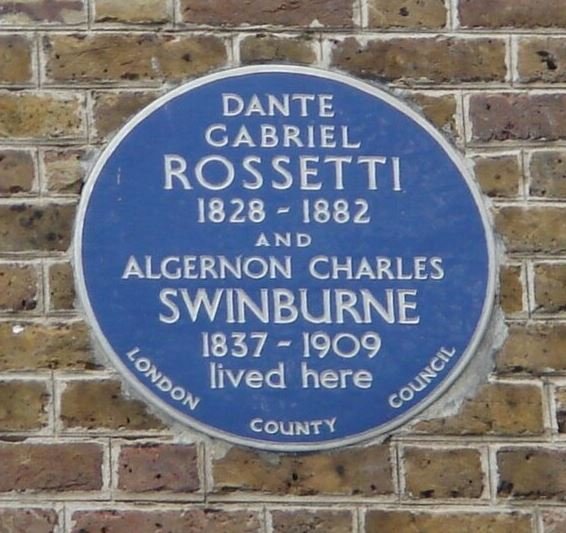
A blue plaque located at 16 Cheyne Walk.
Contemporary Influence
During his lifetime, Swinburne was highly regarded and enjoyed considerable popularity. His bold exploration of taboo subjects and his technical mastery of poetic forms earned him both admirers and detractors. Notable contemporaries such as Dante Gabriel Rossetti and William Morris admired his work, fostering collaborative relationships that furthered his influence within literary circles.
Swinburne’s association with the Pre-Raphaelites and the Decadent movement positioned him at the forefront of literary innovation during the Victorian era. His willingness to challenge societal norms and push the boundaries of acceptable literature inspired other writers to explore similar themes, contributing to the broader cultural shift towards more open and expressive artistic expressions.
International Influence
Swinburne’s influence extended beyond England, impacting literary movements internationally. His works were translated into several languages, allowing his themes and stylistic innovations to reach a global audience. French Symbolist poet Stéphane Mallarmé praised Swinburne’s work, and his poetry inspired Italian Decadent writer Gabriele D’Annunzio, who emulated Swinburne’s style in his own literary creations.
In the United States, horror fiction writer H.P. Lovecraft regarded Swinburne as “the only real poet in either England or America after the death of Mr. Edgar Allan Poe,” highlighting his profound impact on American literature and the development of horror and gothic genres.
Posthumous Recognition and Decline
Despite his popularity during his lifetime, Swinburne’s reputation experienced a decline after his death. Changing literary tastes and the evolving landscape of modernism overshadowed his contributions, leading to a decrease in his posthumous stature. However, scholarly interest in his work has seen a resurgence, with contemporary critics and academics re-evaluating his contributions to poetry and drama.
Swinburne’s legacy is preserved through extensive collections of his poems, dramas, and critical essays, which continue to be studied for their technical brilliance and thematic depth. His influence on poetic form and his fearless exploration of complex and controversial themes ensure his enduring relevance in the study of Victorian literature.
Preservation and Scholarly Work
Significant efforts have been made to preserve and compile Swinburne’s works, ensuring their accessibility for future generations. Major collections include:
- “The Complete Works of Algernon Charles Swinburne” (1925–7): Edited by Sir Edmund Gosse and Thomas James Wise, this comprehensive collection spans 20 volumes, encompassing his poems, dramas, and critical essays.
- “The Swinburne Letters” (1959–62): Edited by Cecil Y. Lang, this six-volume collection provides insight into Swinburne’s personal correspondences, offering a deeper understanding of his thoughts and creative processes.
- “Uncollected Letters of Algernon Charles Swinburne” (2004): Edited by Terry L. Meyers, this three-volume set includes previously unpublished letters, shedding light on his personal relationships and literary collaborations.
These collections are invaluable resources for scholars and enthusiasts seeking to explore the breadth and depth of Swinburne’s literary contributions.
Personal Traits and Health
Swinburne’s personal life was marked by intense emotions and struggles with mental and physical health. Described as highly excitable and possessing a volatile personality, his temperament often influenced his relationships and his creative output. His condition of algolagnia, which involves deriving pleasure from pain, added complexity to his personal interactions and contributed to his unique perspective in his works.
His battle with alcoholism was a significant challenge, leading to periods of instability and necessitating intervention from friends like Theodore Watts-Dunton. Watts-Dunton’s care provided Swinburne with a stable environment, allowing him to continue his literary pursuits despite his personal struggles. This period of his life saw a transformation from a rebellious and tumultuous figure to a more respected and socially stable individual, although some critics argue that this change tempered the intensity of his earlier works.
Death and Burial
Algernon Charles Swinburne passed away on April 10, 1909, at The Pines in Putney, where he had lived under the care of Theodore Watts-Dunton. He was 72 years old. Swinburne was buried at St. Boniface Church in Bonchurch on the Isle of Wight, a location that held significant personal and familial importance throughout his life.
Conclusion
Algernon Charles Swinburne remains a towering figure in English literature, celebrated for his technical innovation, lyrical beauty, and fearless exploration of themes that challenged Victorian societal norms. His contributions to poetry and drama, characterized by their emotional depth and structural complexity, have left a lasting legacy that continues to inspire and provoke thought among readers and scholars alike.
Swinburne’s life, marked by both creative brilliance and personal struggles, exemplifies the archetype of the passionate and tumultuous artist. His ability to blend classical references with Victorian sensibilities, coupled with his mastery of poetic forms, solidifies his place as a key figure in the transition towards modernist literary movements. Despite fluctuations in his posthumous reputation, the enduring study and appreciation of his works attest to the timeless quality and profound impact of his literary contributions.
Frequently Asked Questions
When and where was Algernon Charles Swinburne born?
Algernon Charles Swinburne was born on April 5, 1837, at 7 Chester Street, Grosvenor Place, London.
Swinburne’s father was Captain Charles Henry Swinburne, who later became an Admiral, and his mother was Lady Jane Henrietta, daughter of the 3rd Earl of Ashburnham. The family hailed from an affluent Northumbrian lineage, and they resided primarily at East Dene in Bonchurch on the Isle of Wight, with a London home at Whitehall Gardens, Westminster.
As a child, Swinburne was described as nervous and frail but also possessed vibrant, almost reckless energy. His childhood activities included horseback riding and writing plays with his cousin, Mary Gordon, with whom he secretly collaborated on her second book, “Children of the Chapel,” noted for its frequent depictions of beatings.
Where did Swinburne receive his formal education, and what achievements did he have during this time?
Swinburne began his formal education at Eton College (1849–1853), where he started crafting poetry and excelled in languages, winning top prizes in both French and Italian. He later attended Balliol College, Oxford (1856–1860), although his studies were interrupted when he was temporarily expelled in 1859 for publicly supporting Felice Orsini’s attempt to assassinate Napoleon III. He returned to Oxford in May 1860 but never completed his degree.
How did Swinburne’s summers at Capheaton Hall influence his poetry?
During summers at Capheaton Hall in Northumberland, Swinburne was deeply influenced by his grandfather Sir John Swinburne’s estate, which housed a renowned library and served as president of the Literary and Philosophical Society in Newcastle upon Tyne. These experiences instilled a strong sense of patriotism in Swinburne, reflected in his poems like “Northumberland” and “Grace Darling.” He also enjoyed daring horseback adventures across the moors, capturing the rugged beauty of the Scottish border in his writings.
What was Swinburne’s involvement with Lady Trevelyan’s intellectual circle?
From 1857 to 1860, Swinburne was part of Lady Trevelyan’s intellectual circle at Wallington Hall, which fostered his literary and artistic growth.
How did Swinburne’s time at Oxford influence his literary connections?
At Oxford, Swinburne formed connections with members of the Pre-Raphaelite Brotherhood, including Dante Gabriel Rossetti and William Morris. These connections were instrumental in his later literary and artistic collaborations.
What personal struggles did Swinburne face, and how did they affect his life?
Swinburne struggled with alcoholism and algolagnia, a condition characterized by deriving pleasure from pain. His volatile health and intense personality led to him being taken into care by his friend Theodore Watts-Dunton in 1879 when he was 42. Watts-Dunton provided a stable environment at The Pines in Putney, where Swinburne lived until his death in 1909. Under Watts-Dunton’s care, Swinburne’s earlier rebelliousness softened, and he became a respected figure, though some critics felt this transition diminished his poetic fervor.
What are some of Algernon Charles Swinburne’s notable poetry collections?
Notable poetry collections by Swinburne include:
- “Atalanta in Calydon” (1865)
- “Poems and Ballads” (1866): Caused a sensation upon release for its controversial themes like lesbianism, sado-masochism, and anti-theism.
- “Tristram of Lyonesse” (1882): An epic poem notable for its length and narrative depth.
What innovative poetic forms did Swinburne experiment with?
Swinburne experimented with various poetic forms, including the roundel, a variation of the French rondeau. He also utilized Sapphic stanzas, comprising three hendecasyllabic lines followed by an Adonic line.
How was Swinburne’s work received during his lifetime and posthumously?
During his lifetime, Swinburne was popular and his works caused significant sensations, especially for their bold themes and innovative forms. However, his reputation waned posthumously, although he remains a significant figure within the Decadent movement. His works continue to be studied and appreciated for their technical mastery and emotional depth.
Which literary figures influenced Swinburne, and how did they impact his work?
Swinburne was influenced by literary figures such as William Shakespeare, Percy Bysshe Shelley, Catullus, William Morris, Dante Gabriel Rossetti, Robert Browning, Alfred Lord Tennyson, and Victor Hugo. These influences are evident in his intertwining of classical references with Victorian sensibilities, enhancing the richness and complexity of his poetry.
What recognition did Swinburne receive for his literary contributions?
Swinburne was nominated for the Nobel Prize in Literature every year from 1903 to 1909. Additionally, his legacy is preserved through extensive collections of his poems, dramas, and critical essays.
When and where did Algernon Charles Swinburne pass away, and where is he buried?
Algernon Charles Swinburne died on April 10, 1909, at The Pines in Putney, aged 72. He was buried at St. Boniface Church in Bonchurch on the Isle of Wight.
In what ways did Swinburne’s works influence other writers and artists?
Swinburne’s works inspired contemporaries and future poets, including H.P. Lovecraft and Stéphane Mallarmé. His influence extended internationally through translations and emulations by writers like Gabriele D’Annunzio. His innovative poetic forms and exploration of complex themes paved the way for movements like Symbolism and Decadence.
What themes are prevalent in Swinburne’s poetry, and how did he address them?
Swinburne’s poetry often explored taboo subjects such as lesbianism, sado-masochism, and anti-theism. Common motifs included the ocean, time, and death. He also paid homage to historical figures like Sappho, Anactoria, and Catullus. His works blended romanticism and medievalism, creating rich, emotionally charged narratives.





