English Painter William Holman Hunt
William Holman Hunt OM (2 April 1827 – 7 September 1910) was a seminal English painter and one of the founding members of the Pre-Raphaelite Brotherhood (PRB), a movement that sought to revolutionize art by returning to the detailed, vibrant, and symbolically rich styles of early Renaissance painters. Hunt’s life was marked by artistic innovation, deep religious conviction, and a steadfast commitment to the principles of the PRB, which collectively left an indelible mark on 19th-century art.

William Holman Hunt is celebrated for his meticulous attention to detail, vibrant color palettes, and rich symbolic content in his paintings, which reflect his commitment to naturalism and spiritual themes. Image: Photo of Hunt by English photographer Julia Margaret Cameron.
Early Life and Education
Born in Kensington, London, William Holman Hunt was the son of Joseph Hunt, a merchant, and Ann Rosalie Dale. From an early age, Hunt displayed a profound interest in art, which was nurtured by his family’s support.
His formal education in the arts began at the Royal Academy Schools, where he studied under renowned artists such as John Rogers Herbert and Sir Charles Eastlake. Hunt’s time at the Academy provided him with a solid technical foundation, but he soon grew disillusioned with the institution’s rigid academic approach.
Artistic Development and Influences
Hunt’s artistic philosophy was heavily influenced by the writings of art critic John Ruskin and philosopher Thomas Carlyle. Ruskin, in particular, emphasized the importance of truth to nature and moral integrity in art, advocating for detailed observation and the faithful depiction of the natural world. Carlyle’s thoughts on the moral responsibilities of the artist also resonated deeply with Hunt. These influences shaped Hunt’s belief that art should not only represent beauty but also convey deeper moral and spiritual truths.
Founding of the Pre-Raphaelite Brotherhood
In 1848, alongside fellow artists John Everett Millais and Dante Gabriel Rossetti, Hunt co-founded the Pre-Raphaelite Brotherhood. The PRB emerged as a reaction against the prevailing artistic norms of the Royal Academy, which Hunt and his colleagues felt had become overly formalized and detached from genuine artistic expression. The Brotherhood sought to revive the vivid detail, intense colors, and complex compositions characteristic of Quattrocento Italian art, predating the influences of Raphael and Michelangelo.
William Holman Hunt was a visionary artist whose commitment to the ideals of the Pre-Raphaelite Brotherhood reshaped the trajectory of 19th-century art.
The members of the PRB aimed to infuse their work with sincerity, naturalism, and symbolic depth, rejecting the “mechanistic” and formulaic approaches they associated with Mannerism and academic art. Hunt’s role in the Brotherhood was pivotal; his dedication to its principles was unwavering, making him the most steadfast adherent among the founding members.
Major Works and Themes
William Holman Hunt’s oeuvre is distinguished by its meticulous detail, vibrant color schemes, and profound symbolic content. His major works often explore religious, moral, and historical themes, reflecting his deep spiritual convictions and commitment to the PRB’s ideals.
The Light of the World (1853–1854)
Perhaps Hunt’s most famous painting, The Light of the World depicts Christ as a figure knocking on a door, symbolizing the soul’s need to accept divine guidance. Commissioned by the Salvation Army in 1851, the painting took Hunt five years to complete. Its intricate detail and emotive power exemplify the PRB’s dedication to combining technical precision with deep spiritual meaning. The painting’s powerful symbolism and devotional nature made it a lasting icon of Christian art.
The Awakening Conscience (1853)
The Awakening Conscience portrays a woman in a lavish interior realizing the moral implications of her situation, likely an illicit relationship. The painting is renowned for its emotional depth and symbolic elements, such as the placement of the woman’s arm and the objects within the room, which convey themes of guilt, redemption, and moral awakening. Hunt’s ability to capture complex psychological states through detailed narrative scenes highlights his mastery of the Pre-Raphaelite style.
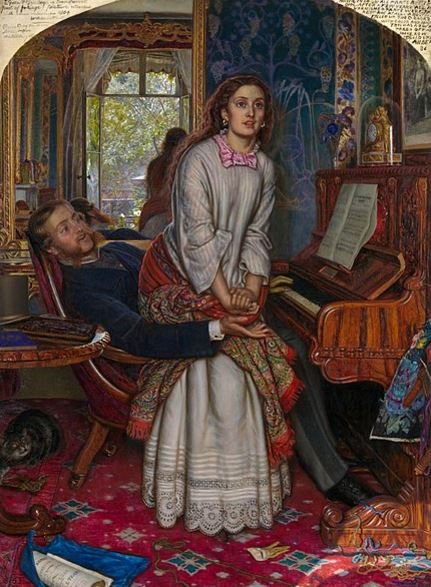
Image: “The Awakening Conscience”
The Scapegoat (1854)
Inspired by his travels to the Holy Land, The Scapegoat is a symbolic depiction of the biblical scapegoat, representing sin and redemption. Set against a stark, desolate landscape, the painting emphasizes the themes of sacrifice and spiritual cleansing. The meticulous rendering of the figure and the surrounding environment showcases Hunt’s commitment to naturalism and symbolic storytelling.
The Crown of Thorns (1859)
Commissioned by the Victoria and Albert Museum, The Crown of Thorns depicts Christ bearing the crown of thorns, highlighting themes of suffering and sacrifice. The painting’s intense colors and detailed textures reflect Hunt’s Pre-Raphaelite influences, while its emotional gravity underscores his dedication to conveying profound spiritual narratives through art.
The Finding of Moses (1860)
This work illustrates the biblical story of Moses being discovered as an infant in the Nile River. Hunt’s portrayal is rich in symbolic detail, capturing the moment with emotional sensitivity and vibrant naturalism. The painting exemplifies his ability to blend historical narrative with spiritual significance, a hallmark of his Pre-Raphaelite approach.
Techniques and Artistic Style
Hunt’s artistic style is characterized by several defining features:
- Meticulous Detail: Hunt’s paintings are known for their intricate detail, achieved through precise brushwork and careful observation of nature. This attention to minutiae enhances the realism and symbolic depth of his works.
- Vibrant Colors: Utilizing a rich and varied palette, Hunt’s use of color brings his subjects to life, adding emotional intensity and visual impact to his compositions.
- Symbolic Content: Hunt imbued his paintings with layers of symbolism, often drawing on religious, moral, and literary themes. Each element within his paintings serves to reinforce the overarching narrative and thematic concerns.
- Naturalism: Committed to the PRB’s principles, Hunt emphasized accurate and faithful representation of the natural world, integrating realistic landscapes and detailed textures into his work.
Later Life and Continued Influence
Throughout his career, William Holman Hunt remained dedicated to the principles of the Pre-Raphaelite Brotherhood, even as the movement evolved and expanded. After the Brotherhood dissolved in the mid-1850s, Hunt continued to produce significant works that adhered to its ideals of naturalism, detail, and symbolism. His influence extended beyond the immediate circle of the PRB, impacting later artists and movements.
William Holman Hunt life was dedicated to the pursuit of truth, beauty, and moral integrity through meticulous craftsmanship and symbolic depth.
Hunt’s commitment to making his art accessible and impactful led him to seek public commissions and exhibit widely. His works were displayed in major galleries and churches, ensuring that his vision reached a broad audience. Hunt also engaged in philanthropic activities, donating several of his works to institutions to promote art and moral values.
Legacy
William Holman Hunt’s legacy is firmly rooted in his contributions to the Pre-Raphaelite Brotherhood and his enduring influence on 19th-century art. His dedication to detail, vibrant coloration, and symbolic storytelling helped redefine the artistic landscape of his time. Hunt’s works remain celebrated for their beauty, emotional depth, and spiritual resonance, continuing to inspire artists and art enthusiasts alike.
Key aspects of Hunt’s legacy include:
- Revival of Naturalism and Detail: Hunt’s emphasis on meticulous detail and naturalism set new standards for realism in art, influencing subsequent artistic movements and generations of painters.
- Integration of Symbolism: By embedding rich symbolic content within his works, Hunt demonstrated the power of art to convey complex moral and spiritual messages, paving the way for future Symbolist artists.
- Influence on Religious and Moral Art: Hunt’s paintings often explored religious and moral themes with profound sincerity, contributing to the development of devotional art in the Victorian era.
- Educational Impact: Through his public commissions and accessible exhibitions, Hunt played a role in democratizing art, making it more relatable and meaningful to the general public.
- Enduring Recognition: Hunt is remembered as one of the most committed and influential members of the Pre-Raphaelite Brotherhood, with his works continuing to be studied and admired for their artistic and symbolic richness.
Frequently Asked Questions
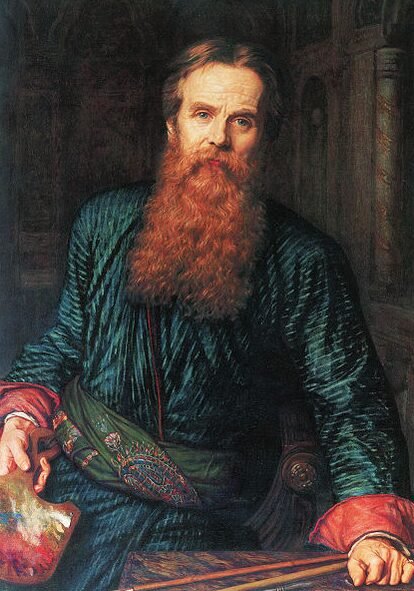
William Holman Hunt (1827–1910) was an influential English painter and a founding member of the Pre-Raphaelite Brotherhood. Image: A portrait of Hunt at the Galleria degli Uffizi museum in Italy.
What was the Pre-Raphaelite Brotherhood, and what was Hunt’s role in it?
The Pre-Raphaelite Brotherhood was a movement founded in 1848 to revive the sincerity and naturalism of early Renaissance art. Hunt was one of its founding members and remained the most loyal to its principles throughout his career, consistently embodying their ideals of detailed naturalism and symbolic storytelling in his works.
What were the main influences on Hunt’s artistic philosophy?
Hunt was influenced by the writings of art critic John Ruskin and philosopher Thomas Carlyle, who viewed the natural world as a system of divine signs. Hunt believed it was the artist’s duty to reveal the symbolic connections between objects and their spiritual meanings, a perspective reflected in the moral and allegorical layers of his art.
How did Hunt remain true to the ideals of the Pre-Raphaelite Brotherhood?
He adhered to the Brotherhood’s emphasis on direct observation of nature, vibrant colors, and rejection of academic conventions. His works consistently showcased these principles, making him the most steadfast of the original members in maintaining the group’s founding ideals.
What themes were central to Hunt’s paintings?
His paintings often explored moral, religious, and spiritual themes. His works are imbued with rich symbolism, aiming to engage viewers intellectually and emotionally by conveying deeper truths and ethical reflections through meticulous detail.
What is The Light of the World, and why is it significant?
The Light of the World (1853–1854) is an allegorical painting by Hunt that depicts Christ knocking on a closed door, symbolizing the soul’s need to accept divine guidance. Its detailed execution and profound symbolic content make it a defining work of Hunt’s career and a hallmark of Pre-Raphaelite art.
What is The Awakening Conscience, and what does it represent?
The Awakening Conscience (1853) portrays a woman realizing the moral implications of her situation, likely an illicit relationship. The painting uses intricate details, such as the objects in the room, to symbolize themes of guilt, redemption, and moral awakening.
How did The Scapegoat reflect Hunt’s travels and beliefs?
The Scapegoat (1854) was inspired by Hunt’s travels to the Holy Land and depicts the biblical scapegoat as a symbol of sin and redemption. The painting’s stark, desolate landscape and vivid details emphasize the theme’s spiritual gravity and Hunt’s commitment to symbolic storytelling.
How did Hunt’s works appeal to the public?
The English painter was committed to making his art accessible to the public and maximizing its impact. His detailed, vibrant, and symbolically rich works captured popular attention, solidifying his reputation as a leading figure in 19th-century art and a key proponent of Pre-Raphaelite ideals.





