Establishment of the Second Philippine Republic
The establishment of the Second Philippine Republic during World War II represents a critical moment in the history of the Philippines. It was a complex period that saw the Philippines under Japanese occupation and led to the creation of a government that was technically independent, but largely controlled by Japan. This republic, though short-lived, had long-term implications for Filipino identity, post-war governance, and the trajectory of the nation’s struggle for true sovereignty.
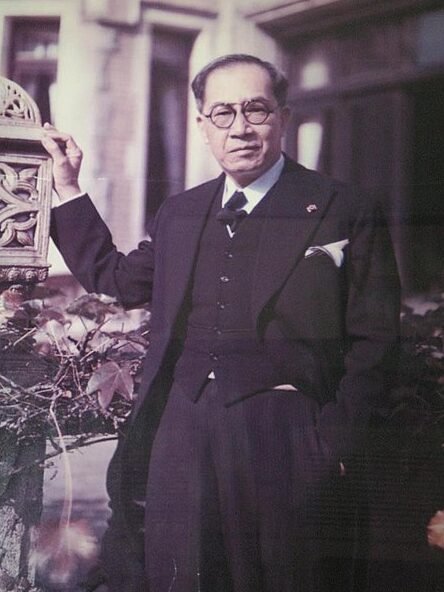
The Second Philippine Republic was formed under the shadow of Japanese occupation, with its leaders, including President José P. Laurel, caught between the demands of their occupiers and the interests of the Filipino people. Image: A 1943 photo of Laurel.
Background: Japanese Occupation and World War II
The roots of the Second Philippine Republic can be traced back to the outbreak of World War II, particularly the Pacific Theater, where Japan sought to expand its empire across Asia. The Philippines, a strategic U.S. territory, was inevitably drawn into the conflict following the attack on Pearl Harbor on December 7, 1941, and subsequent Japanese invasion of the islands. After intense fighting, U.S. and Filipino forces were overwhelmed, leading to the fall of Bataan and Corregidor in 1942.
The Japanese military occupation that followed was marked by brutality, as the occupiers aimed to establish control over the Filipino population and resources. During this time, the Japanese propagated the idea of the “Greater East Asia Co-Prosperity Sphere,” a concept in which Japan claimed it was liberating Asian nations from Western colonial powers and promoting regional cooperation under Japanese leadership. In the Philippines, this propaganda was used to justify the establishment of a Filipino-led government under Japanese auspices.
Initial Japanese Rule and the Preparatory Commission
Following the occupation, the Japanese military administration sought to create the appearance of an independent Philippine state to legitimize their rule. However, the Filipino public and leaders remained deeply suspicious of Japanese intentions, having suffered under brutal Japanese policies such as forced labor, executions, and food shortages.
In mid-1942, Japanese authorities began making moves toward the creation of a Philippine government. The initial step was the formation of the Philippine Executive Commission (PEC), led by Jorge Vargas. This commission was tasked with governing the Philippines under the supervision of Japanese military officials. While nominally Filipino-led, the PEC had limited power, and its main function was to implement Japanese policies.
By 1943, Japanese military forces were experiencing setbacks in the Pacific, and their position in the region was becoming more tenuous. In an effort to win Filipino support and present themselves as liberators rather than occupiers, the Japanese initiated plans for the creation of an ostensibly independent Philippine government. This was part of their broader strategy to bolster anti-American sentiment and gain legitimacy for their occupation.
Preparatory Commission for Philippine Independence
To further this agenda, Japan announced the formation of the Preparatory Commission for Philippine Independence (PCPI) in June 1943. José P. Laurel, a prominent Filipino lawyer and politician, was chosen to head the commission. Laurel was an influential figure in pre-war Philippine politics and had held various roles under both the American colonial government and the Japanese occupation. His appointment was meant to lend credibility to the Japanese plan, as he was seen as a highly educated and respected statesman.
The PCPI’s mandate was to draft a new constitution for the Philippines, paving the way for the formal establishment of a sovereign state. Despite the commission’s work being closely monitored and influenced by the Japanese, many Filipino politicians, including those in the PCPI, believed that cooperation with Japan could lead to genuine independence, or at least spare the population from the worst excesses of the occupation.
The new constitution, largely modeled on the 1935 Constitution of the Commonwealth of the Philippines, was quickly drafted and ratified by a National Assembly composed of appointed Filipino representatives. The document retained many features of the Commonwealth system, but placed greater executive power in the hands of the president. On October 14, 1943, the Second Philippine Republic was officially inaugurated, with José P. Laurel as president.
José P. Laurel and His Presidency
José P. Laurel’s presidency in the Second Philippine Republic was fraught with challenges and controversies. Though the Japanese portrayed the republic as fully independent, in reality, it was a puppet state, with significant control still wielded by the Japanese military. Laurel, like many other Filipino politicians of the time, faced a difficult dilemma. On one hand, he hoped to shield the Filipino people from further suffering by cooperating with the Japanese; on the other, he risked being seen as a collaborator or traitor.
Laurel’s government faced immense obstacles from the outset. The economy was in shambles due to the ongoing war, and food shortages were rampant. Japanese policies, including forced labor, conscription, and the confiscation of resources, exacerbated the hardships experienced by ordinary Filipinos. Guerrilla resistance against the Japanese, led by both Communist and pro-American groups, grew stronger during this period, further destabilizing the country.
One of Laurel’s first acts as president was to declare martial law, a measure he hoped would help maintain order in a nation racked by instability and violence. Laurel also attempted to balance his role as the head of state with his efforts to protect Filipino interests, often employing diplomatic language and strategies to negotiate with Japanese authorities.
Key Policies of the Second Philippine Republic
Despite its limitations, the Second Philippine Republic undertook various initiatives during its brief existence. Key policies included:
- Martial Law: Laurel declared martial law in 1944, citing concerns over law and order as well as the need to protect the population from guerrilla violence and Japanese reprisals.
- Economic Measures: With the economy in crisis, the Laurel administration introduced measures aimed at stabilizing food production and regulating prices. However, Japanese demands on Philippine resources, including food, raw materials, and labor, severely hindered these efforts.
- Education and Propaganda: The Japanese implemented an education system designed to promote pro-Japanese sentiment, with an emphasis on teaching the Japanese language and inculcating loyalty to the Co-Prosperity Sphere. The Laurel administration participated in these efforts, though many Filipinos remained resistant to Japanese ideology.
- Foreign Relations: The republic maintained formal diplomatic relations with Japan and other Axis powers, including Germany and Italy, as part of Japan’s broader diplomatic efforts. However, the legitimacy of these relationships was largely symbolic, given the republic’s puppet status.
Japanese Control and the Decline of the Republic
While the Second Philippine Republic was nominally independent, Japanese military leaders exercised significant control over its policies and actions. As the war progressed and the tide turned against Japan, the situation in the Philippines deteriorated. In late 1944, U.S. forces under General Douglas MacArthur returned to the Philippines as part of the Allied effort to liberate the archipelago from Japanese occupation.
As American forces made landfall in Leyte in October 1944, Laurel and his government found themselves in an increasingly untenable position. With the Japanese on the defensive, the republic’s already limited authority began to collapse. Laurel was urged by Japanese authorities to move the government to Baguio in northern Luzon to avoid capture by U.S. forces. By early 1945, with much of the country back under Allied control, the Second Philippine Republic effectively ceased to function.
In March 1945, Laurel formally dissolved the Second Philippine Republic, signaling its end. By then, American and Filipino forces had recaptured Manila and much of the Philippines, and the country was restored to U.S. military governance under the auspices of the Commonwealth government led by President Sergio Osmeña.
Legacy of the Second Philippine Republic
The legacy of the Second Philippine Republic is complex and controversial. Many Filipinos viewed the republic as a puppet state and saw those who served in it, including President Laurel, as collaborators. Laurel himself was arrested by U.S. authorities after the war, though he was later granted amnesty in 1948 by President Manuel Roxas.
However, some historians argue that Laurel’s actions were pragmatic, aimed at minimizing the suffering of Filipinos under Japanese occupation. Laurel and other officials involved in the republic believed that cooperation with Japan, while distasteful, was the best way to protect the population from the worst excesses of the occupation.
The Second Philippine Republic also raised important questions about Filipino sovereignty and independence. While the Japanese claimed to have granted the Philippines its independence, the reality of Japanese control meant that true autonomy was never achieved. Nevertheless, the establishment of the republic marked a significant chapter in the country’s long struggle for self-determination, which would culminate in the full recognition of Philippine independence in 1946 after the end of World War II.
Questions and Answers
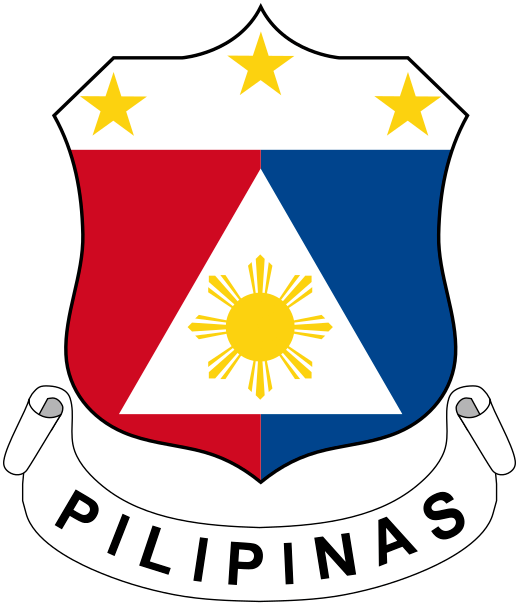
The Second Philippine Republic, also known as the Japanese-sponsored Philippine Republic, was a Japanese-backed government established on October 14, 1943, during the occupation, and dissolved on August 17, 1945. Image: Coat of arms of Second Philippine Republic.
What prompted President Manuel L. Quezon to declare Manila an “open city” during World War II?
President Manuel L. Quezon declared Manila an “open city” to prevent its destruction during the Japanese invasion of the Philippines in World War II. He left Jorge B. Vargas in charge as mayor before Japanese forces entered Manila on January 2, 1942.
What was the Philippine Executive Commission, and who led it?
The Philippine Executive Commission was a caretaker government established by the Japanese after the dissolution of the Commonwealth of the Philippines in 1942. It was led by Jorge B. Vargas as chairman.

Image: A 1978 photograph of Jorge B. Vargas.
What was the KALIBAPI, and how did it shape the political landscape during the Japanese occupation?
KALIBAPI (Kapisanan sa Paglilingkod sa Bagong Pilipinas) was an organization formed by the Philippine Executive Commission in December 1942. It banned existing political parties and formed a new governing alliance. It was led by Benigno Aquino Sr., and the pro-Japanese Ganap Party was absorbed into it.
What was the role of the Preparatory Committee for Philippine Independence?
The Preparatory Committee for Philippine Independence, created on June 19, 1943, drafted a constitution for the Second Philippine Republic. This committee, led by José P. Laurel, laid the groundwork for the establishment of the Japanese-backed republic.
When was the Second Philippine Republic officially inaugurated, and who was its first president?
The Second Philippine Republic was officially inaugurated on October 14, 1943. José P. Laurel was appointed as its first president during a ceremony at the Legislative Building in Manila.
How did the Japanese use the Greater East Asia Conference in relation to the Second Philippine Republic?
The Greater East Asia Conference, held in Tokyo in November 1943, was a propaganda event aimed at showcasing Japan’s leadership in liberating Asia from Western colonialism. The Philippines, under the Second Republic, participated to demonstrate alignment with Japan’s Pan-Asianism ideals.
What economic hardships did the Second Philippine Republic face during its existence?
The Second Philippine Republic faced severe food shortages, worsened by a typhoon in 1943 and the Japanese confiscation of crops. The widespread slaughter of carabaos, essential for farming, further hindered food production, contributing to a dire food crisis.
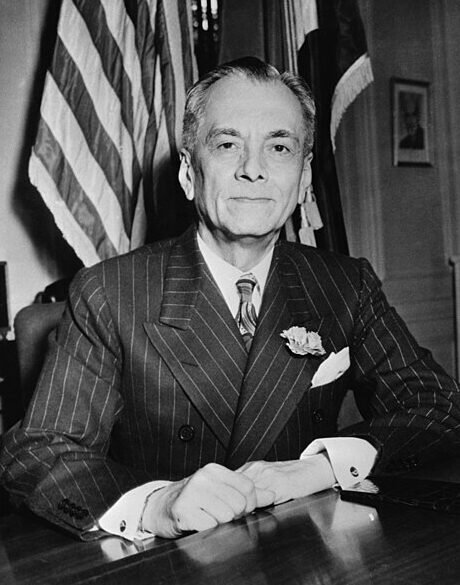
Image: Manuel L. Quezon in 1942
What was “Mickey Mouse money,” and how did it affect the Filipino economy?
“Mickey Mouse money” refers to the Japanese-issued currency in the Philippines, which became virtually worthless due to hyperinflation. Basic goods such as a box of matches cost over 100 pesos, contributing to widespread economic hardship.

How did President José P. Laurel react to the changing war situation in 1944?
On September 21, 1944, President José P. Laurel declared martial law, and on September 23, the Republic formally declared war on the United States and the United Kingdom. However, by October 1944, American forces had returned to the Philippines, and the Japanese-backed government began to collapse.
What happened to the Second Philippine Republic after the return of American forces?
The Second Philippine Republic evacuated Manila to Baguio in early 1945. It was officially dissolved by José P. Laurel on August 17, 1945, two days after Japan’s surrender, marking the end of the Japanese occupation in the Philippines.
How is the legacy of the Second Philippine Republic viewed today?
The legacy of the Second Philippine Republic remains controversial. Some view figures like President José P. Laurel as collaborators, while others see them as pragmatists who tried to protect Filipino interests under difficult circumstances.