Ford’s Theater, April 14th, 1865

Ford’s Theater, located in Washington, D.C., opened in 1863 and is best known as the site of President Abraham Lincoln’s assassination.
On the night of April 14, 1865, Ford’s Theater in Washington, D.C., became the site of one of the most infamous events in American history: the assassination of President Abraham Lincoln. The tragic event, which took place just days after the end of the Civil War, shocked the nation and plunged the country into mourning. The assassination had profound political and emotional consequences for the United States, marking a dark turning point in the nation’s recovery from the conflict.
In the article below, American historians at World History Edu delve into the history of Ford’s Theater, the events leading up to that fateful night, the assassination itself, and its aftermath.
Background: The Civil War and Ford’s Theater
Ford’s Theater was a popular venue in Washington, D.C., for live performances. Originally a church, it was converted into a theater by John T. Ford in 1861.
It quickly became one of the city’s leading entertainment venues, attracting audiences from all walks of life, including politicians, military officers, and common citizens. The theater often hosted plays, operas, and other performances, making it a cultural hub in the capital.
As the Civil War raged from 1861 to 1865, Washington, D.C., was at the center of political and military operations. President Abraham Lincoln, who had been in office since 1861, faced enormous challenges during the war, including leading the Union in its fight against the Confederacy and navigating deep political divisions within the country.
By April 1865, the war was coming to an end, with Confederate General Robert E. Lee surrendering to Union General Ulysses S. Grant at Appomattox Court House on April 9, 1865. The nation was beginning to celebrate the conclusion of a long and bloody conflict.
The Events Leading to April 14, 1865
As the war drew to a close, President Lincoln, who had just been reelected in 1864, was focused on the task of rebuilding the nation. His second inaugural address, delivered in March 1865, called for “malice toward none” and “charity for all” as the nation sought to heal from the deep wounds of war.
However, Lincoln’s policies, particularly his plans for Reconstruction, which included reintegrating the Southern states into the Union and providing greater rights to freed slaves, faced fierce opposition from some factions, including those sympathetic to the Confederacy.
One of the individuals who vehemently opposed Lincoln was John Wilkes Booth, a well-known actor and Confederate sympathizer. Booth was born into a prominent theatrical family and had achieved fame as a performer.
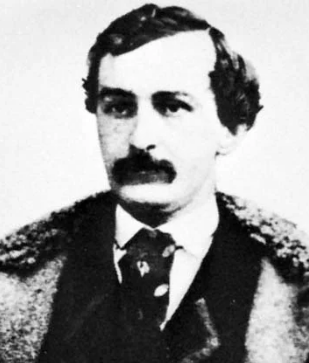
On the morning of April 14, 1865, actor John Wilkes Booth learned President Abraham Lincoln would attend Our American Cousin at Ford’s Theater, where Booth often performed. Image: John Wilkes Booth
However, his pro-Southern sentiments had radicalized him over the course of the war, and he grew increasingly enraged by Lincoln’s leadership and his plans to emancipate enslaved people. Booth initially plotted to kidnap Lincoln in hopes of using him as leverage to negotiate the release of Confederate prisoners, but after Lee’s surrender, Booth turned his attention to a more drastic plan: assassinating the president.
Booth recruited a small group of conspirators, including Lewis Powell, George Atzerodt, David Herold, and Mary Surratt, to carry out a coordinated attack on Lincoln and several other key members of his administration. The plan was to kill not only Lincoln but also Vice President Andrew Johnson and Secretary of State William Seward, in an attempt to destabilize the Union government.
The Night of April 14, 1865
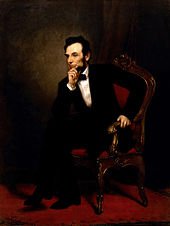
By 10:15 PM, as the comedy neared its final act, President and Mrs. Lincoln, along with their guests, Major Henry Rathbone and his fiancée Clara Harris, laughed with the audience—unaware Booth was just outside the Presidential Box.Image: Abraham Lincoln, painting by George Peter Alexander Healy in 1869
On the evening of April 14, 1865, President Lincoln and his wife, Mary Todd Lincoln, made plans to attend a performance of the play Our American Cousin at Ford’s Theater. The Lincolns invited several guests to join them, including General Ulysses S. Grant and his wife, but the Grants declined. Instead, the Lincolns were accompanied by Major Henry Rathbone and his fiancée, Clara Harris.
Lincoln arrived at the theater late, and the performance was already in progress when he and his party took their seats in the presidential box. The box was draped with flags, and the audience gave the president a warm reception as he entered. The presidential box was located on the second level of the theater, providing a clear view of the stage but also exposing Lincoln to anyone in the theater.

Incensed by the defeat of the South in the American Civil War, Booth joined a clandestine group of radical Americans that sought to kill Lincoln and top-ranking members of president’s cabinet, including Secretary of State William H. Seward and Vice President Andrew Johnson.
John Wilkes Booth, who was familiar with Ford’s Theater and its layout due to his acting career, knew the perfect time to strike. Booth slipped into the theater shortly after 10:00 PM, just as the play reached a humorous moment, which he knew would distract the audience and mask the sound of gunfire. He made his way to the presidential box, armed with a derringer pistol and a knife. As he approached, he was able to gain access to the box with little resistance, likely because of his status as a famous actor.
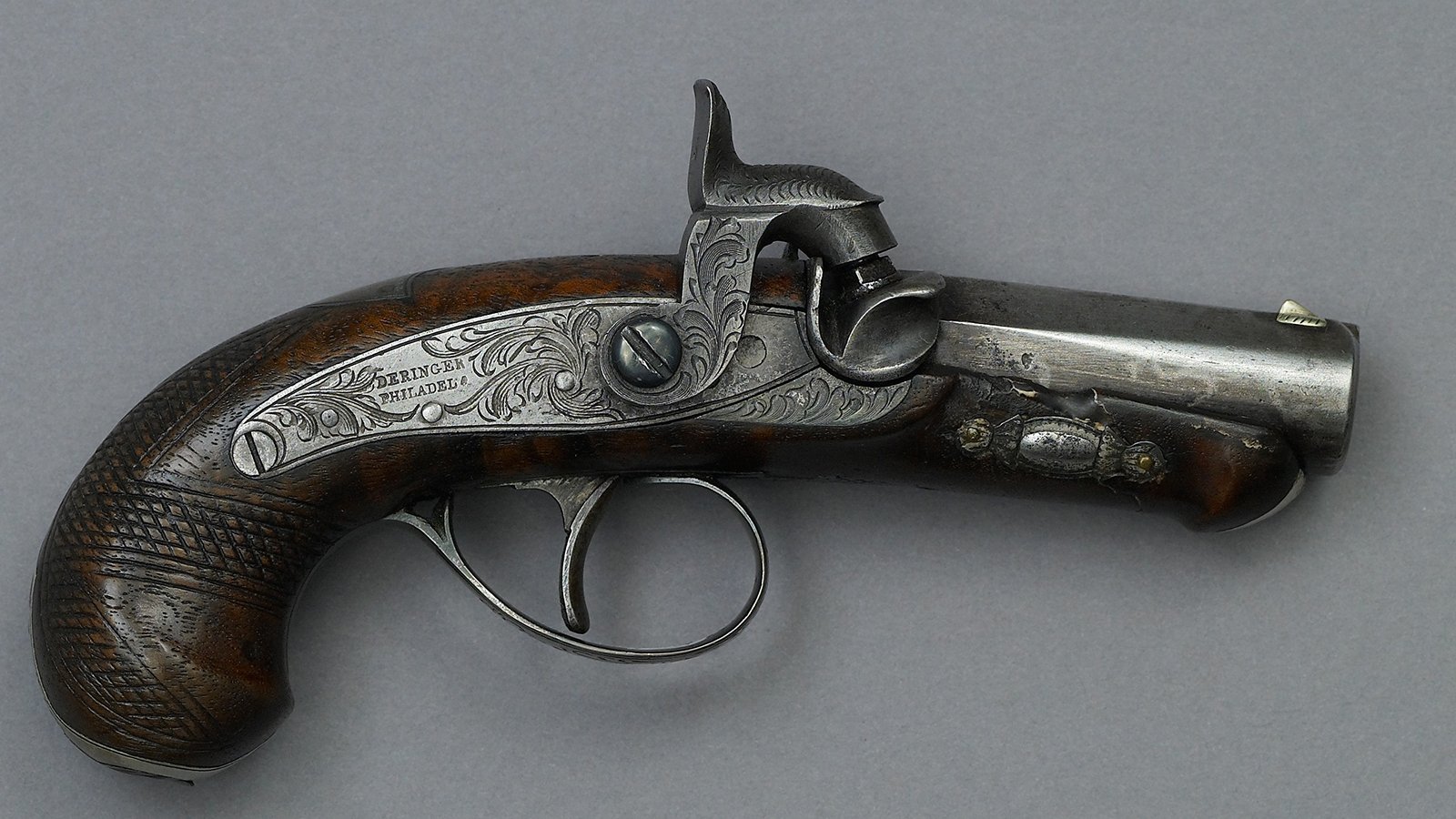
Derringer used to assassinate U.S. Pres. Abraham Lincoln; in the Ford’s Theater National Historic Site, Washington, D.C.
At approximately 10:15 PM, as the play’s audience laughed at one of its funniest lines, Booth entered the box, raised his pistol, and shot Lincoln in the back of the head at point-blank range. Major Rathbone attempted to stop Booth but was slashed by Booth’s knife, sustaining a serious wound to his arm.
Booth then leaped from the presidential box onto the stage, reportedly shouting “Sic semper tyrannis!” (“Thus always to tyrants,” the motto of Virginia) as he landed, though this account has been debated by historians. Booth broke his leg in the jump but managed to escape through the back of the theater, where a waiting horse allowed him to flee the city.

Pandemonium erupted in the theater as the audience and Lincoln’s guests realized what had happened. Medical personnel were quickly summoned, and a young army surgeon, Dr. Charles Leale, rushed to Lincoln’s aid. After examining the president, Leale determined that the wound was fatal, though Lincoln was still alive. The decision was made to move Lincoln across the street to a nearby boarding house, the Petersen House, where he could be made more comfortable.

Assassination of Abraham Lincoln – April 14, 1865
The Assassination of Secretary of State Seward
While Booth carried out his assassination of Lincoln, two other conspirators attempted to murder Secretary of State William Seward and Vice President Andrew Johnson. Lewis Powell attacked Seward at his home, stabbing him multiple times.
Seward, who was recovering from a carriage accident at the time, survived the attack, though he was severely wounded. Meanwhile, George Atzerodt, who was tasked with killing Vice President Johnson, lost his nerve and never followed through with the plan.
The Death of President Lincoln
President Lincoln was carried across the street to the Petersen House, where he was laid in a bed. Throughout the night, doctors attended to him, but it was clear that there was nothing they could do to save him. Mary Todd Lincoln, overcome with grief, stayed by his side, as did several members of the cabinet and military officials.
At 7:22 AM on April 15, 1865, Abraham Lincoln died. He was the first U.S. president to be assassinated, and his death sent shockwaves through the country. The news of his assassination plunged the nation, already weary from years of civil war, into a state of deep mourning.
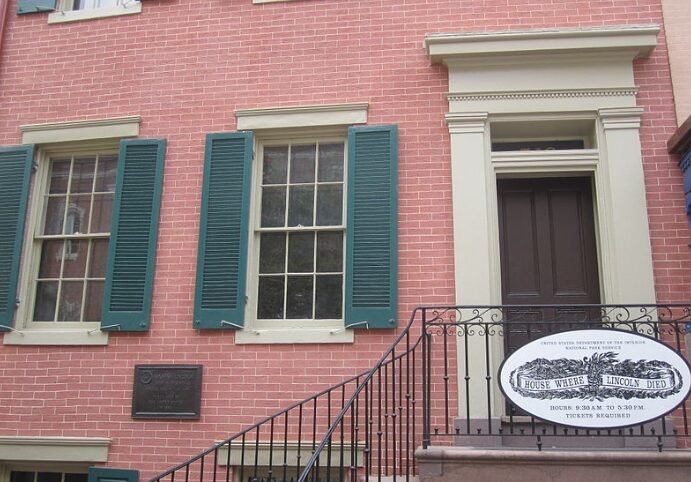
President Lincoln passed away at the Petersen House, located directly across the street from Ford’s Theater, following his assassination at the theater on April 14, 1865.
The Hunt for Booth and His Co-Conspirators
After escaping Ford’s Theater, John Wilkes Booth fled Washington, D.C., with the help of David Herold. The two men crossed the Potomac River into Maryland, where they sought shelter from Confederate sympathizers. Booth, suffering from his broken leg, was treated by Dr. Samuel Mudd, a local physician who set his leg but later claimed not to have known Booth’s identity.
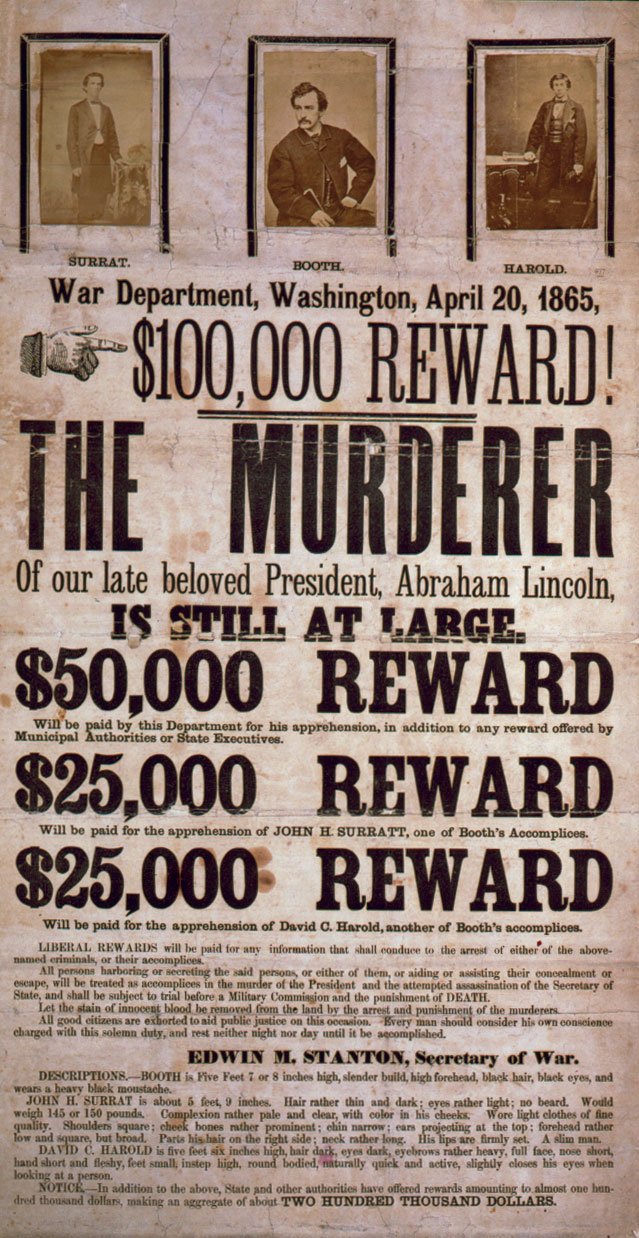
Wanted Poster for Booth, the actor responsible for the death of President Lincoln
A massive manhunt for Booth and his co-conspirators ensued, with federal troops and detectives searching the countryside. Booth and Herold were eventually tracked down to a tobacco barn on the Garrett farm in Virginia. On April 26, 1865, Union soldiers surrounded the barn and demanded that Booth surrender. Herold gave himself up, but Booth refused. The barn was set on fire, and Booth was shot and killed by Sergeant Boston Corbett. Booth died from his injuries a few hours later, bringing an end to the dramatic 12-day manhunt.
The Aftermath and Impact of Lincoln’s Assassination
The assassination of Abraham Lincoln had a profound and lasting impact on the United States. Lincoln’s death came at a critical time in the nation’s history, just as the Civil War was ending and the process of Reconstruction was beginning.
His assassination disrupted his plans for a more lenient and conciliatory approach to rebuilding the Union, and his successor, Andrew Johnson, struggled to maintain Lincoln’s vision. Johnson’s presidency was marked by conflict with Congress, particularly over issues related to the rights of freed slaves and the reintegration of Southern states.
In the immediate aftermath of Lincoln’s assassination, the country was plunged into mourning. Lincoln’s funeral procession traveled from Washington, D.C., to his hometown of Springfield, Illinois, where he was buried. The journey, which took nearly two weeks, was marked by massive public displays of grief, with tens of thousands of Americans lining the route to pay their respects.
The other members of Booth’s conspiracy were captured and brought to trial. Lewis Powell, George Atzerodt, David Herold, and Mary Surratt were all found guilty of conspiracy and hanged in July 1865. Several other conspirators received prison sentences for their roles in the plot. Mary Surratt was the first woman to be executed by the federal government, a fact that remains controversial to this day, as some argue that she may have been less involved in the plot than others.
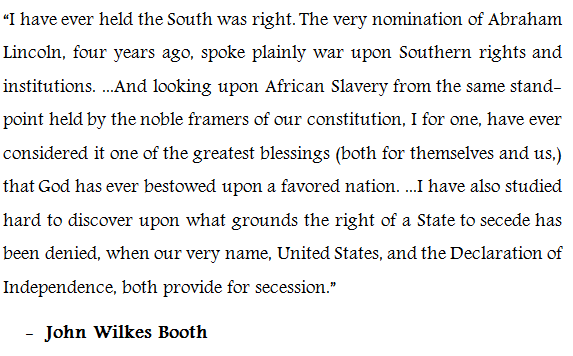
A staunch advocate of the institution of slavery in America, Booth supported the South’s cause and the perpetuation of slavery. Infamous for hating everything that President Lincoln stood for, Booth made many public statements criticizing the U.S. government and the Lincoln’s administration.
Legacy of Ford’s Theater
Ford’s Theater, the site of Lincoln’s assassination, was closed immediately after the tragedy. It remained shuttered for many years, and in 1866, the federal government purchased the building. It was later used as an office building and a warehouse before being converted into a museum dedicated to Lincoln’s life and legacy. In 1968, Ford’s Theater reopened as a working theater and a historic site, drawing visitors from around the world.
Today, Ford’s Theater is both a museum and a functioning theater. Visitors can tour the building, learn about the events of April 14, 1865, and explore exhibits that cover Lincoln’s presidency, the Civil War, and the lasting impact of his assassination. The Petersen House, located across the street, is also part of the Ford’s Theater National Historic Site, allowing visitors to see where Lincoln spent his final hours.
John Wilkes Booth – the American stage actor who killed U.S. President Abraham Lincoln
Questions and Answers

The events of April 14, 1865, at Ford’s Theater mark one of the darkest chapters in American history. The assassination of President Abraham Lincoln not only robbed the nation of its leader at a pivotal moment but also altered the course of U.S. history. Image: Ford’s Theater
When did Ford’s Theater open, and what is it best known for?
Ford’s Theater opened in 1863 in Washington, D.C., and is best known as the site where President Abraham Lincoln was assassinated on April 14, 1865.
Who assassinated President Abraham Lincoln, and when did it occur?
President Lincoln was assassinated by actor John Wilkes Booth on the night of April 14, 1865, during a performance of Our American Cousin at Ford’s Theater.

On April 14, 1865, John Wilkes Booth entered Lincoln’s theater box during a performance of Our American Cousin, drew a single-shot derringer, and fatally shot the president. Image: Ford’s Theater in 1865
What happened to President Lincoln after he was shot?
After being shot, President Lincoln was carried across the street to the Petersen House, where he died the following morning.
How was Ford’s Theater used after Lincoln’s assassination?
After Lincoln’s assassination, Ford’s Theater was used as a government office building and warehouse. In 1893, part of the interior floor collapsed, killing 22 people, which led to repairs.

A depiction of Abraham Lincoln’s assassination, featuring John Wilkes Booth, President Lincoln, Mary Todd Lincoln, Clara Harris, and Major Henry Rathbone in the theater box.
When did Ford’s Theater become a museum, and when did it reopen as a theater?
Ford’s Theater became a museum dedicated to Lincoln’s legacy in 1932 and reopened as a working theater in 1968 after renovations.
How are Ford’s Theater and the Petersen House preserved today?
Ford’s Theater and the Petersen House are preserved together as part of the Ford’s Theater National Historic Site, managed by the National Park Service.
History and Major Facts about Presidential Assassination Attempts in the United States





