The First U.S. Presidential Election: History & Facts
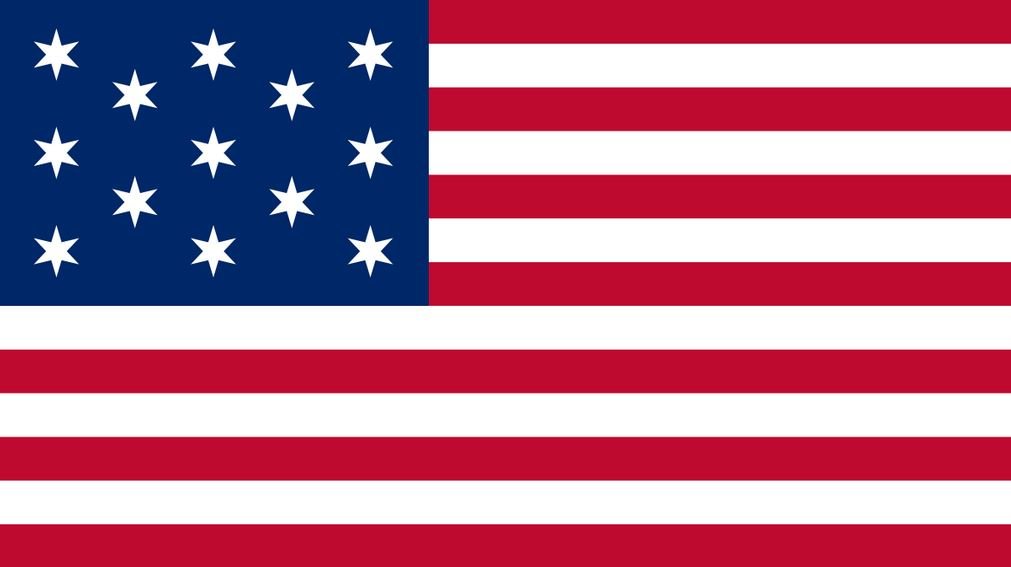
The first U.S. presidential election in 1788–1789 was a momentous event in American history, marking the establishment of the presidency and the beginning of the United States’ federal government under the Constitution. Image: Hopkinson Flag for the U.S. Navy, an interpretation
The first U.S. presidential election is a key milestone in American history, marking the birth of the executive branch of the federal government as established by the U.S. Constitution. The election of 1788–1789 set numerous precedents for how future presidential elections would be conducted and established the framework for American democracy. This election also resulted in the unanimous election of George Washington as the nation’s first president. The historical context, process, and outcomes of this election remain crucial for understanding the foundation of the U.S. political system.
Context: The Formation of a New Nation
The first U.S. presidential election took place in the aftermath of the American Revolutionary War (1775–1783) and the ratification of the U.S. Constitution in 1787. The United States had initially operated under the Articles of Confederation, which gave the central government very limited powers and did not provide for a strong executive leader. However, the weaknesses of the Articles became apparent, particularly in dealing with issues like interstate commerce, foreign relations, and economic stability. These challenges led to the Constitutional Convention of 1787, where delegates from the 13 original states drafted the U.S. Constitution.
The new Constitution established a federal government with three separate branches: the executive, legislative, and judicial. It also called for the creation of the presidency as the executive branch’s highest office, with powers including the enforcement of laws, command of the military, and the ability to conduct foreign policy. The president would be elected through an indirect voting system known as the Electoral College.
The Electoral College and Voting Process
The Electoral College, as outlined in Article II, Section 1 of the Constitution, was designed to ensure that both large and small states had a voice in choosing the president. Each state would have a number of electors equal to its total number of senators and representatives in Congress. These electors would cast votes to determine the president. At the time, political parties had not yet formed, and the framers of the Constitution envisioned the electors as independent agents who would vote for the best candidate for president, rather than being bound by party loyalties.
To be eligible to vote for electors, individuals had to meet the qualifications for voting in their respective states, which often meant being a white male landowner. Voting rights were not standardized across the states, and some states allowed voters to directly elect their electors, while others had their state legislatures choose them.
The first election was unique in that it was conducted before the establishment of political parties and with broad discretion given to states in determining how electors were chosen. Eleven states participated in the election, as North Carolina and Rhode Island had not yet ratified the Constitution, and New York’s legislature was deadlocked, preventing it from appointing electors.
The Candidates
In the first election, George Washington was the clear and overwhelmingly favored candidate for president. Washington had led the Continental Army during the American Revolution and had earned a reputation for his leadership, humility, and dedication to the new nation. He had presided over the Constitutional Convention, lending his support to the new government. Although Washington was reluctant to seek the presidency, he agreed to run at the urging of his peers, who believed he was the best person to unite the country and give legitimacy to the new office of president.

George Washington was a popular candidate for president because of his leadership in the Revolutionary War and his reputation as a guiding statesman for independence. Portrait by Charles Willson Peale (1776)
While Washington was expected to be the first president, the vice presidency was less certain. According to the original rules of the Electoral College, each elector cast two votes for president. The candidate with the most votes would become president, and the runner-up would become vice president. This meant that several other candidates were also in the running for the second-highest office.

John Adams
John Adams, a leading statesman and diplomat, was one of the most prominent candidates for vice president. Adams had played a key role in the American Revolution and had served as a diplomat in Europe, helping to negotiate the Treaty of Paris, which ended the war with Britain. Other candidates included John Jay, the first Chief Justice of the United States; John Rutledge, a former governor of South Carolina; and other notable figures from the Continental Congress and state governments.
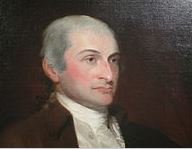
Founding Father John Jay
The Election Results
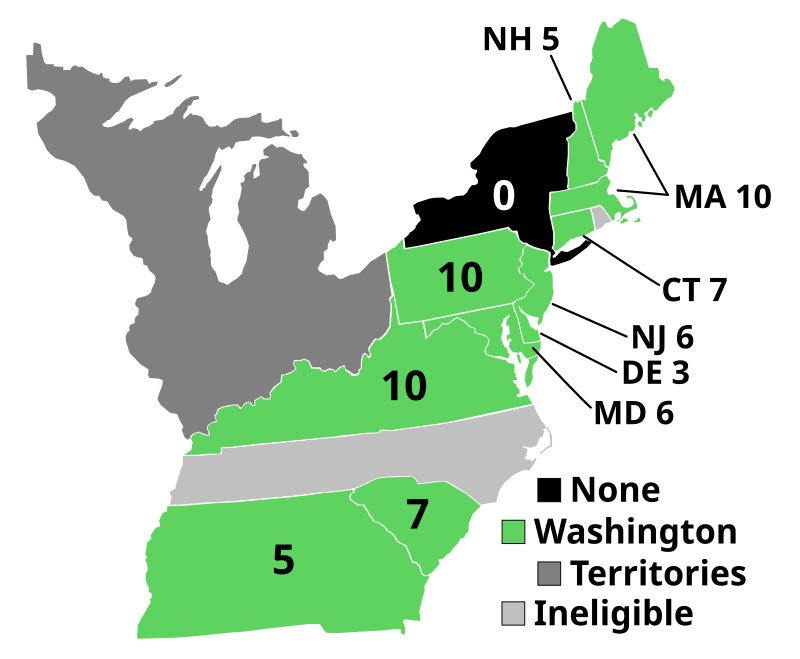
The presidential election results map shows states won by Washington in green and states that didn’t appoint electors in black. Numbers indicate each state’s electoral votes cast.
The election was held from December 15, 1788, to January 10, 1789, with electors being chosen during this period. After the votes were cast, it was no surprise that George Washington won a unanimous victory. All 69 electors who cast ballots voted for Washington, making him the first and only president to be unanimously elected by the Electoral College. Washington’s election remains a testament to his immense popularity and the widespread trust that Americans had in his leadership.
The vice presidency was determined by the second-highest number of votes. John Adams received 34 votes, making him the runner-up and the first vice president of the United States. Other candidates received scattered votes: John Jay received nine votes, Robert Harrison six votes, John Rutledge six votes, John Hancock four votes, and several other individuals received a few votes each. Adams, although he received fewer votes than Washington, accepted the vice presidency and became a key figure in the early years of the U.S. government.

George Washington’s unanimous election set a high standard for leadership, and the election process established important traditions and precedents that continue to shape the U.S. political system. The election remains a defining moment in the history of American democracy and governance.
George Washington’s Inauguration
George Washington’s inauguration as the first president took place on April 30, 1789, in New York City, which was the temporary capital of the United States at the time. Washington took the oath of office on the balcony of Federal Hall on Wall Street. His inauguration was a momentous occasion, symbolizing the peaceful transition of power and the beginning of a new era in American governance.
In his inaugural address, Washington expressed humility and a sense of duty. He acknowledged the immense responsibility of leading the new nation and called for unity and cooperation among the states. His leadership style, characterized by restraint and respect for the Constitution, set a lasting precedent for future presidents.
Key Facts about the First Presidential Election
- First Election Under the U.S. Constitution: The election of 1788–1789 was the first presidential election held under the new U.S. Constitution, which had been ratified in 1787.
- Unanimous Election of George Washington: George Washington remains the only U.S. president to be unanimously elected by the Electoral College. He received all 69 electoral votes cast in the election.
- Indirect Voting System: The president was chosen through the Electoral College, with electors casting two votes each. The candidate with the most votes became president, and the runner-up became vice president.
- Eleven States Participated: Only eleven of the thirteen original states participated in the first election. North Carolina and Rhode Island had not yet ratified the Constitution, and New York was unable to select electors due to a deadlocked legislature.
- Voting Rights: Voting rights were determined by individual states, with most limiting the right to vote to white male landowners. Some states allowed voters to directly elect electors, while others had electors appointed by state legislatures.
- John Adams as Vice President: John Adams received the second-highest number of electoral votes (34), making him the first vice president of the United States.
- The Absence of Political Parties: The first election was conducted before the establishment of political parties, which later became a defining feature of American presidential elections.
- Inauguration of Washington: George Washington was inaugurated as the first president of the United States on April 30, 1789, in New York City.
Impact and Legacy
The first U.S. presidential election set the foundation for the American political system and established important precedents that continue to shape U.S. democracy. The indirect election of the president through the Electoral College remains a central feature of the election process, and the peaceful transition of power from one administration to the next has become a hallmark of the U.S. political tradition.
George Washington’s leadership during his presidency helped stabilize the new government and establish the executive branch as a vital part of the federal system. His commitment to remaining above partisan politics and focusing on national unity laid the groundwork for future presidents.
The election of 1788–1789 also highlighted the evolving nature of voting rights in the United States. While the electorate was limited in the early years of the republic, the expansion of suffrage and the growth of democratic participation would become key issues in the nation’s history.
Questions and Answers

Electoral Vote at the First U.S. Presidential Election
Why was George Washington a popular candidate for the first U.S. presidential election?
George Washington was a popular candidate due to his successful leadership as a general in the Revolutionary War and his reputation as a statesman who helped guide the country to independence.
What governed the United States before the first presidential election?
Before the first presidential election, the United States was governed by the Articles of Confederation, which granted limited power to the Congress of the Confederation.
How did the presidency of the Continental Congress differ from the office of President under the Constitution?
The presidency of the Continental Congress was largely ceremonial, whereas the office of President under the Constitution had real executive powers, such as enforcing laws and leading the military.
When did the U.S. Constitution take effect?
The U.S. Constitution took effect on June 21, 1788, after being ratified by nine states.
How were electors chosen for the first presidential election?
States had different methods for selecting electors, with some being chosen by state legislatures and others through a limited popular vote. Voting rights were restricted to white male landowners.
When was the first U.S. presidential election held?
The first U.S. presidential election was held from December 15, 1788, to January 7, 1789.
How many states participated in the first election, and why didn’t all states take part?
Ten states participated in the election. North Carolina and Rhode Island hadn’t ratified the Constitution, and New York failed to appoint electors.
What was the outcome of the first U.S. presidential election?
George Washington won unanimously with 69 electoral votes, and John Adams became Vice President with 34 votes.

Results from the First U.S. Presidential Election
When was George Washington inaugurated as the first U.S. president?
George Washington was inaugurated on April 30, 1789, in New York City.
Was George Washington reelected?
Yes, George Washington was reelected in 1792, despite his reluctance and declining health.





