Founding Father George Mason
George Mason (1725–1792) was an American statesman and one of the most influential figures in the founding of the United States. Despite being less well-known than contemporaries like Thomas Jefferson or James Madison, Mason made profound contributions to American political thought and governance. He was a major advocate for individual rights and had a lasting influence on the creation of both the U.S. Constitution and the Bill of Rights.
American historians at World History Edu explore the life of George Mason, his significant role in the early development of American democracy, and his major accomplishments, particularly focusing on his authorship of the Virginia Declaration of Rights, his contributions to the U.S. Constitution, and his persistent advocacy for the inclusion of a Bill of Rights.

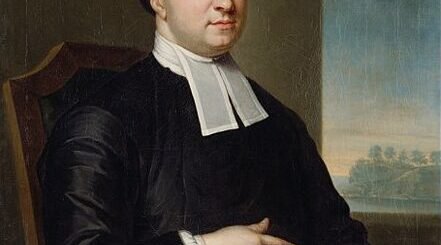
George Mason’s contributions to the revolutionary cause, his role in shaping the American republic, and his unwavering insistence on the inclusion of a Bill of Rights make him one of the most important but often overlooked figures in American history. Image: A portrait of Mason.
Early Life and Education
George Mason was born on December 11, 1725, in Fairfax County, Virginia, into a prominent Virginia family. His father, also named George Mason, was a successful planter who died in a boating accident when George was 10 years old. Mason was primarily educated at home by tutors, which was common among the gentry in Virginia. Although he did not receive formal schooling, Mason became an avid reader and developed a deep knowledge of history, philosophy, law, and political theory. These studies would later serve him well as he became one of the leading political thinkers of the revolutionary period.
Mason inherited a substantial estate upon his father’s death, and over time, he became one of the wealthiest landowners in Virginia, managing a large plantation known as Gunston Hall. While Mason prospered as a planter, his primary interest was always in public affairs.
Political Involvement Before the Revolution
George Mason’s political career began slowly, but he gradually became more involved in local politics, serving on the Fairfax County Court and the Virginia House of Burgesses. Initially, his political role was more advisory than active, and he was better known for his sharp legal mind than for holding public office. Nevertheless, Mason’s influence grew steadily as tensions between the American colonies and Great Britain escalated.
One of Mason’s first major contributions came in 1758 when he helped draft the Fairfax Resolves, a document that outlined the grievances of the colonies against British rule. The resolves condemned the British government’s heavy taxation and interference in colonial affairs, specifically in response to the Stamp Act and other oppressive measures passed by the British Parliament. The Fairfax Resolves also advocated for the colonies to adopt non-importation agreements, which were essentially boycotts of British goods. This document was a precursor to the more widespread revolutionary sentiment that would emerge in the following decade.
Virginia Declaration of Rights (1776)
One of George Mason’s most significant contributions came in 1776, when he was selected to draft the Virginia Declaration of Rights as part of the process of writing Virginia’s state constitution. Mason’s Declaration of Rights was groundbreaking and would go on to influence not only the U.S. Constitution and Bill of Rights but also the French Declaration of the Rights of Man and of the Citizen.
The Virginia Declaration of Rights set forth a comprehensive list of individual rights and liberties, asserting that all men are born equally free and independent and that they possess inherent rights, such as the right to life, liberty, and the pursuit of happiness. It also outlined specific protections for freedom of the press, freedom of religion, and the right to a fair trial, among other civil liberties.
Mason’s Declaration of Rights was the first document in the American colonies to set forth the notion of inalienable rights—those which governments are created to protect, and which cannot be infringed upon by the government itself. It was a bold assertion of the fundamental principles of republican government and individual liberty, serving as a model for other state constitutions and later the U.S. Constitution.
The Virginia Declaration of Rights had a direct impact on Thomas Jefferson’s Declaration of Independence (1776) and was also used by James Madison when drafting the Bill of Rights (1791). In this way, Mason’s contributions to the revolutionary cause had an enduring legacy, shaping the founding principles of the United States.
Role in the Constitutional Convention
In 1787, George Mason was selected as one of Virginia’s delegates to the Constitutional Convention in Philadelphia, where the U.S. Constitution was drafted. Mason’s participation in the convention was critical, though his ultimate decision not to sign the final document was one of the most important actions of his career.
Mason was deeply concerned with the structure of the federal government proposed in the Constitution. While he supported a strong national government, he feared that the Constitution, as written, did not do enough to protect individual rights or prevent the possibility of tyranny. Mason’s primary objections were rooted in the lack of a Bill of Rights and the excessive power he believed was granted to the executive branch.
During the debates at the Constitutional Convention, Mason spoke frequently, advocating for stronger protections for individual liberties and greater accountability for government officials. He proposed limiting the president’s powers and ensuring that the judiciary was independent but not too powerful. He also sought to include a provision banning the slave trade, which he saw as a moral and political evil. While Mason himself owned slaves, he believed that the continuation of the slave trade would eventually destabilize the country and undermine its moral foundations.
Mason’s greatest disappointment came when the convention rejected his proposal for a Bill of Rights. He believed that the new Constitution needed explicit protections for freedom of speech, religion, and assembly, among other rights, and argued that without these guarantees, the government would inevitably become oppressive. His refusal to sign the Constitution reflected his deep conviction that it was incomplete and posed a potential threat to liberty.
Advocacy for the Bill of Rights
After the Constitutional Convention, George Mason became one of the leading voices of the Anti-Federalist movement, a group of politicians and thinkers who opposed the ratification of the U.S. Constitution as it was originally written. The Anti-Federalists believed that the Constitution gave too much power to the federal government and lacked sufficient protections for individual liberties.
Mason’s advocacy against the Constitution was particularly influential in Virginia, where the ratification debate was especially heated. He, along with Patrick Henry, led the opposition to the Constitution in Virginia’s ratifying convention. Mason argued forcefully that the new government would trample on the rights of citizens without a Bill of Rights. His influence helped delay Virginia’s ratification of the Constitution and encouraged other states to push for amendments.
Mason’s efforts were not in vain. In response to the growing opposition from Anti-Federalists like Mason, James Madison and other Federalists agreed to add a Bill of Rights to the Constitution. In 1791, the first ten amendments, collectively known as the Bill of Rights, were ratified, fulfilling Mason’s vision for a constitutional government that protected individual liberties.
Although he did not live to see the full impact of his advocacy, Mason’s insistence on the inclusion of a Bill of Rights stands as one of his most important legacies. His refusal to compromise on this issue helped shape the American system of government and ensured that fundamental rights were enshrined in the nation’s founding document.

Views on Slavery
George Mason’s views on slavery were complex and somewhat contradictory. As a wealthy Virginia planter, Mason owned slaves and benefited economically from the institution of slavery. However, he was also a vocal critic of the slave trade and expressed concerns about the long-term impact of slavery on American society.
At the Constitutional Convention, Mason denounced the importation of slaves and argued that the continued practice would bring ruin to the nation. He feared that slavery would lead to conflict between the states and create a moral stain on the new republic. Despite his opposition to the slave trade, Mason stopped short of advocating for the immediate abolition of slavery itself, reflecting the entrenched nature of the institution in Virginia and the South as a whole.
Mason’s views on slavery illustrate the tensions that existed among the Founding Fathers regarding the institution. While he recognized the inherent contradictions between slavery and the ideals of liberty and equality, Mason, like many of his contemporaries, was unable or unwilling to fully break away from the economic and social realities of his time.
Legacy and Death
George Mason retired from public life after the Constitutional Convention and lived out his remaining years at Gunston Hall. He continued to correspond with other leaders of the American Revolution, though he largely withdrew from active politics. Mason died on October 7, 1792, at the age of 66.
Mason’s legacy is perhaps best encapsulated in his role as a staunch defender of individual rights and a skeptic of unchecked government power. His Virginia Declaration of Rights set a standard for the protection of civil liberties that influenced the founding documents of not only the United States but also democratic movements around the world. His refusal to sign the U.S. Constitution, while controversial at the time, underscored his commitment to the principle that government must serve the people and respect their rights.
Despite being overshadowed by more famous figures like Thomas Jefferson and James Madison, Mason’s contributions to the founding of the United States were substantial. He is often remembered as the “Father of the Bill of Rights” because of his pivotal role in advocating for the inclusion of protections for individual liberties in the U.S. Constitution.
Mason’s home, Gunston Hall, is now a museum and historic site, preserving the memory of his life and accomplishments. His legacy continues to be studied and celebrated by historians and political scholars, and his ideas about government and individual rights remain relevant to contemporary debates about the balance between liberty and authority.
Conclusion
George Mason was a critical figure in the founding of the United States, whose ideas helped shape the nation’s foundational principles of government and individual rights. His Virginia Declaration of Rights laid the groundwork for the Declaration of Independence and the Bill of Rights, and his advocacy for limiting government power and protecting civil liberties continues to influence American political thought.
Questions and Answers
George Mason was an American planter, politician, and Founding Father who played a key role in shaping early American political thought. He was a delegate to the U.S. Constitutional Convention in 1787 and is known for refusing to sign the Constitution due to concerns over the lack of a Bill of Rights. His writings significantly influenced the founding principles of the United States.
Below are some frequently asked questions about George Mason:
What were some of George Mason’s most influential writings?
Some of Mason’s most influential writings include the Fairfax Resolves of 1774, the Virginia Declaration of Rights of 1776, and his Objections to this Constitution of Government (1787), which expressed his concerns about the U.S. Constitution. These documents played a significant role in shaping the United States Bill of Rights.
What was the Virginia Declaration of Rights, and why was it significant?
The Virginia Declaration of Rights, drafted by George Mason in 1776, outlined fundamental civil liberties such as the right to life, liberty, property, and the pursuit of happiness, as well as freedoms of speech, religion, and press. It served as a key inspiration for the United States Bill of Rights and was influential in defining American notions of individual rights.
What objections did George Mason raise at the Constitutional Convention in 1787?
At the Constitutional Convention in 1787, Mason raised concerns about the lack of a Bill of Rights, the continuation of the slave trade, and the ease with which navigation acts could be passed, fearing they might harm Virginia’s economy. These objections led him to refuse to sign the final draft of the Constitution.
Why did George Mason refuse to sign the U.S. Constitution?
George Mason refused to sign the U.S. Constitution because it lacked a Bill of Rights to protect individual liberties, allowed the continuation of the slave trade, and did not include provisions to protect states’ economic interests regarding navigation acts.
What role did George Mason play in the Virginia Ratifying Convention in 1788?
At the Virginia Ratifying Convention in 1788, George Mason voiced his concerns about the U.S. Constitution, particularly the absence of a Bill of Rights. Despite his efforts, the Constitution was eventually ratified without his support.
How did George Mason’s advocacy influence the inclusion of the Bill of Rights in the Constitution?
Mason’s persistent advocacy for individual rights, especially his fight for a Bill of Rights, influenced James Madison to introduce the amendments during the First Congress in 1789. These amendments, known as the Bill of Rights, were ratified in 1791, a year before Mason’s death.

U.S. Founding Father George Mason is remembered as a principled advocate for liberty and justice, whose vision for a government that safeguards individual rights remains a cornerstone of American democracy. Image: A statue of Mason at the George Mason University in Virginia.
What legacy did George Mason leave behind after his death?
Though George Mason remained relatively obscure after his death, his contributions to the foundation of American democracy, particularly his influence on the Bill of Rights and his defense of civil liberties, have been increasingly recognized in modern times. His legacy as a key architect of the American constitutional framework endures.
What was George Mason’s role in Virginia’s early governance?
George Mason played a central role in Virginia’s early governance, drafting the Virginia Declaration of Rights and the state’s first constitution. He also served in the House of Burgesses and the House of Delegates of the Virginia General Assembly, influencing policies during the American Revolutionary War.
How did George Mason’s early life influence his political career?
Mason’s early life was marked by the tragic death of his father, leaving him to inherit significant landholdings. His experience as a wealthy planter and involvement in local affairs, along with his knowledge of political and legal matters, helped shape his political career and his strong advocacy for individual rights and civil liberties.