Francis I of France
Francis I was King of France from 1515 to 1547, known for his patronage of the arts, promotion of the French Renaissance, and rivalry with Emperor Charles V.
Early Life and Accession
Francis I was born on 12 September 1494 at the Château de Cognac in Saintonge, then part of the Duchy of Aquitaine. He was the only son of Charles of Orléans, Count of Angoulême, and Louise of Savoy. Although his family was not initially expected to inherit the throne, the untimely deaths of Charles VIII and later Louis XII, both without male heirs, positioned Francis as heir presumptive. At the age of four, he was made Duke of Valois.
In 1505, King Louis XII, recognizing the need for a secure succession, arranged Francis’ engagement to his daughter Claude. The marriage took place on 18 May 1514. When Louis XII died on 1 January 1515, Francis ascended the throne and was crowned at Reims Cathedral on 25 January 1515.

A 1515 painting of Francis I.
Cultural Patronage and the Renaissance in France
Francis I played a pivotal role in the development of the French Renaissance. He was an ardent patron of the arts, attracting Italian artists such as Leonardo da Vinci, who spent his final years in France and brought the Mona Lisa with him. Francis also supported painters such as Rosso Fiorentino, Giulio Romano, and Primaticcio. His contributions extended to architecture, commissioning grand structures like Château de Chambord and the expansion of Fontainebleau.
He also invested in literature, significantly expanding the royal library, appointing Guillaume Budé as chief librarian, and establishing the Collège de France to promote humanist scholarship. His efforts to elevate the French language led to his title as “Father and Restorer of Letters.”
Military Campaigns and the Italian Wars
Francis’ reign was marked by continued involvement in the Italian Wars. His rivalry with Charles V, the Holy Roman Emperor, defined much of his military strategy. In 1515, he secured a major victory at the Battle of Marignano, gaining control over Milan. However, his fortunes changed in 1525 when he suffered a humiliating defeat at the Battle of Pavia, leading to his capture by Charles V.
Imprisoned in Madrid, Francis was forced to sign the Treaty of Madrid (1526), relinquishing claims to Italy and Burgundy. Upon his release, he repudiated the treaty, reigniting hostilities. Seeking allies, he formed the controversial Franco-Ottoman alliance with Suleiman the Magnificent, marking a rare collaboration between a Christian and Muslim ruler.
Relations with England and Internal Policies
Francis sought diplomatic ties with England, famously meeting Henry VIII at the Field of the Cloth of Gold in 1520. Despite the opulence of the event, their alliance remained unstable. Francis later engaged in conflicts with England as part of his struggles against Charles V.
Domestically, Francis sought to consolidate royal authority. He enacted the Ordinance of Villers-Cotterêts (1539), making French the official administrative language and implementing mandatory record-keeping for births, marriages, and deaths. He also established France’s first standing army.
Exploration and Colonial Expansion
Under Francis, France began its foray into the New World. He sponsored the voyages of Jacques Cartier, who explored the St. Lawrence River and claimed parts of Canada for France in 1534. Francis also supported expeditions to Brazil and Southeast Asia, positioning France as a growing maritime power.

Portrait of Francis I.
Religious Policies and the Reformation
Initially tolerant of the Protestant Reformation, Francis later adopted a stricter stance after the Affair of the Placards in 1534, which denounced the Catholic Mass. In response, he intensified persecution against Protestants, culminating in the Massacre of Mérindol in 1545. His religious policies oscillated between repression and diplomacy, as he also sought alliances with Protestant German princes against Charles V.
Death and Legacy
Francis I died on 31 March 1547 at the Château de Rambouillet. He was succeeded by his son, Henry II. His reign had a lasting impact on French culture, language, and international relations. Despite military setbacks, his contributions to the arts and humanism solidified his reputation as a true Renaissance monarch
Timeline of Francis I of France (1494–1547)
- 1494: Born on September 12 in Cognac, France.
- 1498: Becomes heir presumptive when Louis XII ascends the throne.
- 1514: Marries Claude of France, daughter of Louis XII.
- 1515: Becomes King of France on January 1; wins the Battle of Marignano, securing Milan.
- 1516: Signs the Concordat of Bologna, giving the French monarchy control over Church appointments.
- 1520: Holds the Field of the Cloth of Gold summit with Henry VIII of England.
- 1525: Captured at the Battle of Pavia and imprisoned in Madrid.
- 1526: Released after signing the Treaty of Madrid but later repudiates it.
- 1534: Sends Jacques Cartier to explore Canada.
- 1539: Issues the Ordinance of Villers-Cotterêts, making French the official administrative language.
- 1547: Dies on March 31 at Château de Rambouillet.
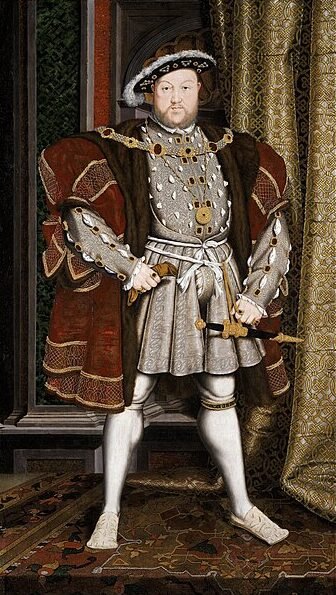
Portrait of Henry VIII of England.
Frequently Asked Questions
How did Francis I come to the throne?
He became heir presumptive in 1498 due to the lack of male heirs in the royal family and ascended the throne in 1515 after the death of Louis XII.
What was Francis I’s role in the Italian Wars?
He continued the Italian Wars, winning a major victory at the Battle of Marignano (1515) but later suffering defeat and capture at the Battle of Pavia (1525).
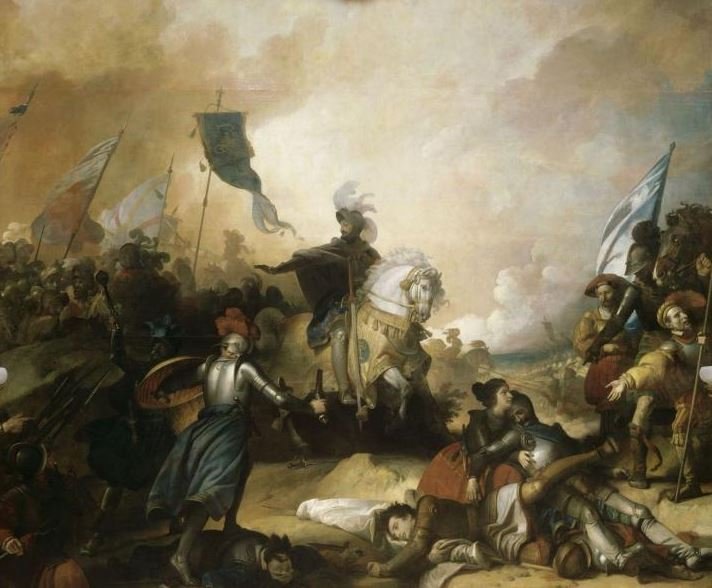
A depiction of Francis I during the Battle of Marignano.
How did Francis I support the arts and Renaissance?
He invited Italian artists like Leonardo da Vinci to France, expanded the royal art collection, and initiated grand architectural projects, including Château de Chambord.
What was the significance of the Franco-Ottoman alliance?
It was a groundbreaking alliance between a Christian king and a Muslim sultan, helping France counter Habsburg power in Europe.
READ MORE: 10 Greatest Ottoman Sultans and their Accomplishments
How did Francis I contribute to the development of the French language?
He issued the Ordinance of Villers-Cotterêts (1539), making French the official administrative language of France.
What was Francis I’s role in French exploration?
He sponsored explorers like Jacques Cartier, leading to France’s early claims in North America.
How did Francis I handle religious conflicts?
Initially tolerant, he later persecuted Protestants, especially after the Affair of the Placards (1534), leading to executions and repression.
What was Francis I’s relationship with Henry VIII of England?
They were rivals and occasional allies, notably meeting at the Field of the Cloth of Gold (1520), though their alliance ultimately failed.
Francis I strengthened royal power, promoted Renaissance culture, expanded exploration, and left a lasting impact on French language and arts.





