History of the College of Cardinals
The College of Cardinals, formally known as the Sacred College of Cardinals, is the body that consists of all cardinals of the Catholic Church. As of January 22, 2025, there are 252 cardinals, with 138 eligible to vote in a papal conclave. Cardinals are appointed by the pope for life, but their voting rights cease once they reach the age of 80. The college plays a significant role in advising the pope, assisting in governing the Church, and, most notably, electing a new pope when the papacy becomes vacant.
Since its formation in the early Middle Ages, the size of the College of Cardinals has been regulated by various popes, ecumenical councils, and historical events.
Below, World History Edu explores the history, structure, and functions of the College of Cardinals, shedding light on its evolution and continued significance in the Catholic Church.

St. Peter’s Basilica, located in Vatican City, stands as the world’s largest Catholic church.
The Historical Development of the College of Cardinals
Origins and Early Evolution
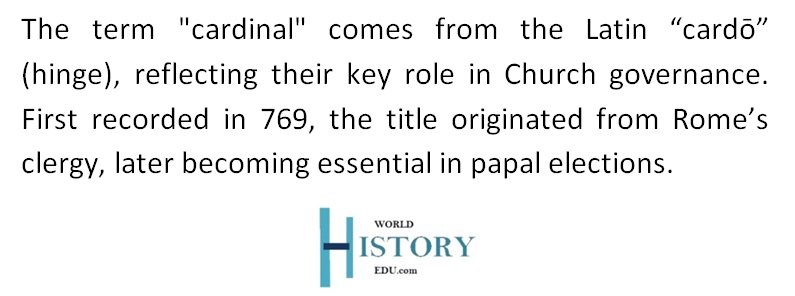
The term “cardinal” is derived from the Latin cardō, meaning “hinge,” signifying their pivotal role in Church governance. The office of cardinal evolved gradually, originating from the clergy of Rome. The earliest recorded use of the title occurred in the Liber Pontificalis, describing events from Pope Stephen III’s reign in 769, when it was decided that future popes should be elected from among cardinal priests and deacons.
The College of Cardinals is a central institution in the governance of the Catholic Church.
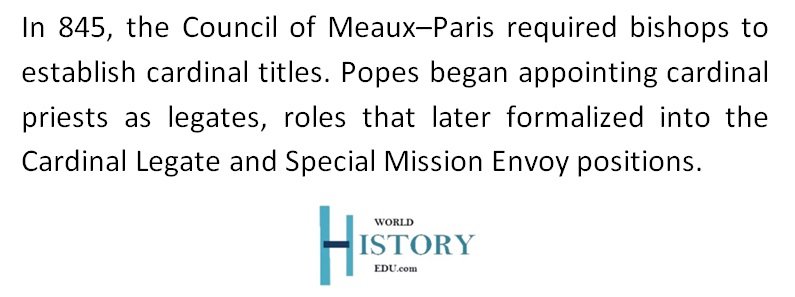
By the 9th century, the Council of Meaux–Paris (845) mandated that bishops establish cardinal titles or parishes within their dioceses. At the same time, popes began assigning cardinal priests to serve as legates, representing the pope in both Rome and diplomatic missions abroad. These roles evolved into the official Cardinal Legate (Legatus a latere) and Special Mission Envoy (Missus Specialis).
The structure of the college took a more formal shape during Pope Stephen V’s pontificate (816–817). By then, cardinals were divided into three distinct orders:
- Cardinal-Deacons (originating from the seven deacons mentioned in Acts 6),
- Cardinal-Priests (overseers of Rome’s major churches), and
- Cardinal-Bishops (bishops of the seven suburbicarian sees surrounding Rome).
Medieval Developments and Election Reforms
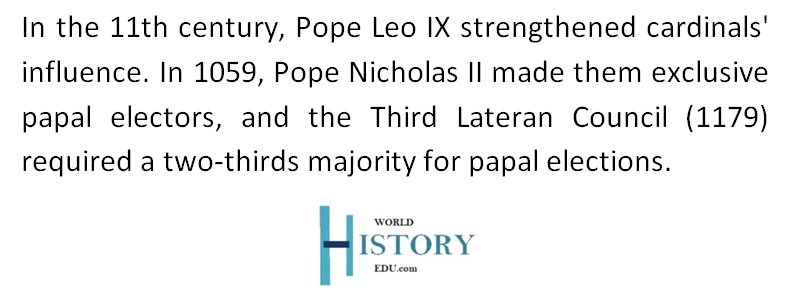
During the 11th century, Pope Leo IX (1049–1054) initiated reforms that increased the influence of cardinals within the Church. In 1059, Pope Nicholas II issued the bull In Nomine Domini, which made the College of Cardinals the exclusive electors of the pope. The Third Lateran Council (1179) further solidified this process by requiring that popes be elected by a two-thirds majority of the college.
From the 13th to 15th centuries, the size of the college was typically small, often limited to 30 members. Pope John XXII (1316–1334) formalized this practice, capping the number at 20 cardinals. However, popes later expanded the college to maintain control, fund projects, or counter political opposition.
In 1431, the Council of Basel attempted to limit the college to 24 members, but this restriction was short-lived. Over the following centuries, the number fluctuated based on the needs of various pontiffs, reflecting the political and spiritual struggles of the time.
The Expansion and Structure of the College
Increasing the Size of the College
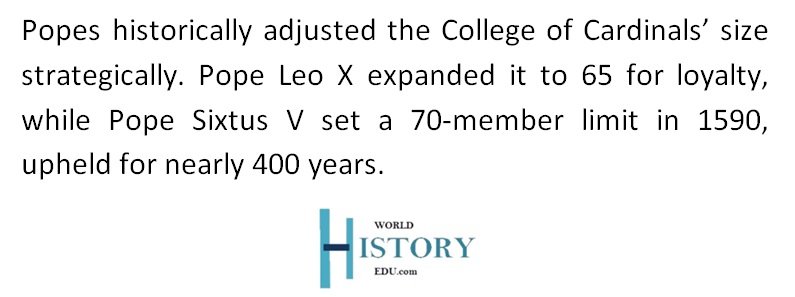
Throughout history, the size of the College of Cardinals was a strategic tool for popes. During the 16th century, Pope Leo X (1513–1521) expanded the college to 65 cardinals to ensure a loyal voting majority. Pope Sixtus V (1585–1590) later set the number at 70, a limit respected for nearly four centuries.
However, in the 20th century, popes began increasing the number of cardinals once again. Pope John XXIII (1958–1963) expanded the college beyond 70 members, reaching 88 cardinals by 1961. His successor, Pope Paul VI (1963–1978), continued this expansion, bringing the total to 134 by 1969.
A key shift occurred in 1970, when Paul VI decreed that only cardinals under the age of 80 could vote in papal conclaves. In 1975, he set the maximum number of voting cardinals at 120, though popes have often exceeded this limit temporarily. For example:
- John Paul II reached 135 electors in 2001 and 2003.
- Benedict XVI surpassed 120 electors three times, peaking at 125 in 2012.
- Pope Francis has consistently exceeded 120 electors, with a record 140 electors in December 2024.
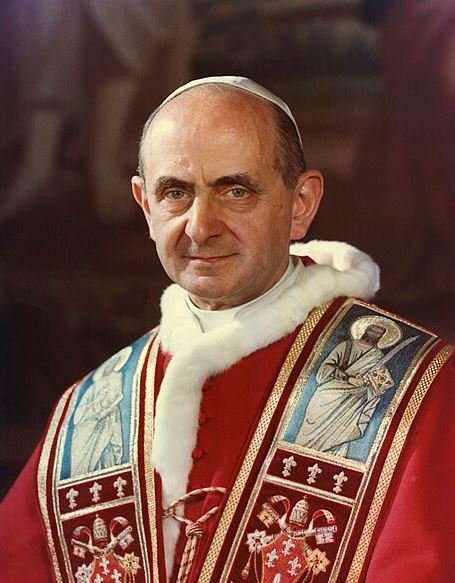
A 1969 photo of Pope Paul VI
Internationalization of the College
Historically, the College of Cardinals was heavily dominated by Italians, as the papacy was long associated with Rome. However, in the 19th and 20th centuries, the Church began a global shift, appointing more cardinals from diverse regions. As of 2024, only 20.3% of cardinals are Italian, reflecting the Church’s increasingly international leadership.
The Orders and Functions of Cardinals
Three Orders of Cardinals
The College of Cardinals consists of three ranks:
- Cardinal Bishops – Originally assigned to the seven suburbicarian dioceses near Rome, this rank now includes Eastern Rite Patriarchs and other senior prelates.
- Cardinal Priests – The largest group, historically tied to Roman parishes.
- Cardinal Deacons – Traditionally associated with the administration of the Vatican and serving in various Curial offices.
Changes in the 20th century further formalized these roles. The 1917 Code of Canon Law mandated that all cardinals must be priests or bishops, ending the practice of appointing deacons or laymen as cardinals. Pope John XXIII (1962) later required all cardinals to be bishops, though some elderly priests were exempted from this rule.
Key Responsibilities
Cardinals serve the Church in various ways, including:
- Advising the Pope – They assist the pope in governing the Church, particularly through Consistories (formal meetings of the College of Cardinals).
- Electing a New Pope – When a pope dies or resigns, the cardinal electors gather in a conclave to choose his successor.
- Managing Vatican Affairs – Many cardinals oversee Vatican departments, known as Congregations, which handle matters such as doctrine, clergy, and diplomacy.
During the sede vacante (when the papal seat is vacant), the College has limited authority. The Camerlengo, a senior cardinal, temporarily manages Church affairs until a new pope is elected.
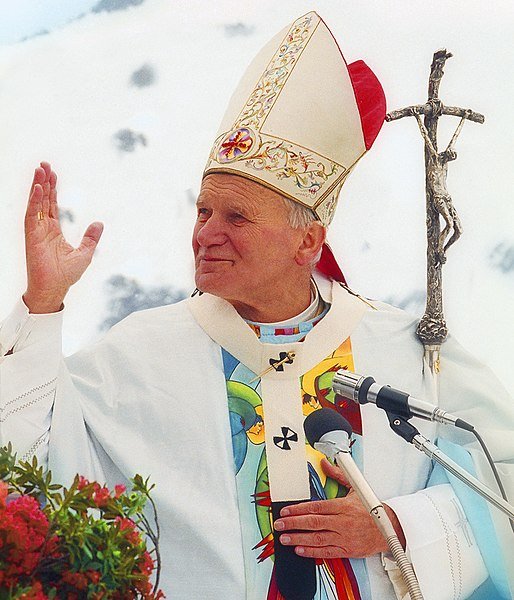
Pope John Paul II
Electing the Pope: The Role of Cardinals in the Conclave
The Papal Conclave Process
A papal conclave occurs when the pope dies or resigns. Cardinals under 80 are sequestered in the Sistine Chapel, where they vote in secrecy to elect a new pope. The process includes:
- Oath of secrecy – Cardinals vow to keep all discussions confidential.
- Voting rounds – Each cardinal casts a written ballot.
- Smoke signals – Black smoke signals an inconclusive vote, while white smoke indicates a successful election.
- Acceptance – The elected cardinal is asked if he accepts the papacy, after which he chooses a papal name.
- Proclamation – The “Habemus Papam” announcement is made from St. Peter’s Basilica, introducing the new pope.
Despite changes in its size and composition, the College of Cardinals remains a vital body ensuring continuity and stability in the leadership of over 1.4 billion Catholics worldwide.
Timeline
- 769: Roman Synod decrees that the pope must be elected from among deacons and cardinal priests.
- 1059: Pope Nicholas II limits papal electors to cardinals.
- 1130: Pope Innocent II allows all three cardinal orders to vote in papal elections.
- 13th–15th centuries: The College’s size does not exceed 30 members.
- 1517: Pope Leo X expands the College to 65 members.
- 1586: Pope Sixtus V formally sets the limit at 70 cardinals.
- 1961: Pope John XXIII surpasses the limit, increasing the College to 88.
- 1970: Paul VI limits electors to cardinals under 80.
- 1975: A cap of 120 electors is set.
- 1996: John Paul II reaffirms the 120-elector limit.
- 2013: Pope Francis continues exceeding the limit.
- 2025: The College has 252 members, with 138 eligible to vote.
History of the Catholic Church: How and When Did Catholicism Begin?
Frequently Asked Questions
How many cardinals are there, and how many can vote?
As of January 22, 2025, there are 252 cardinals, with 138 eligible to vote in a papal conclave. Cardinals lose their right to vote when they turn 80.
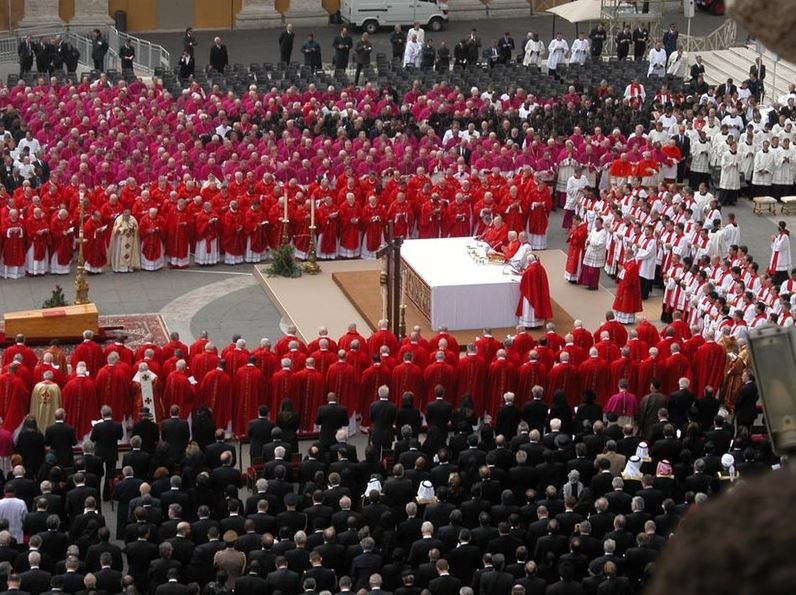
Cardinals gathered for Pope John Paul II’s funeral ceremony.
When was the College of Cardinals established?
The office of cardinal evolved over the first millennium from the clergy of Rome. The first recorded use of the title “cardinal” was in 769 during the Roman Synod under Pope Stephen III.
What are the ranks within the College of Cardinals?
The three ranks are cardinal-bishops, cardinal-priests, and cardinal-deacons. These distinctions originally reflected their duties in Rome but now mainly signify seniority.
Has the size of the College of Cardinals changed over time?
Yes, historically, the college was limited in size, with numbers as low as 20. Pope Sixtus V set the limit at 70 in 1586, but modern popes have exceeded this, with Pope Francis reaching 140 electors in 2024.
How did papal elections change due to the College of Cardinals?
In 1130, all cardinals were allowed to participate in papal elections. Since the Third Lateran Council (1179), a two-thirds majority has been required to elect a pope.
Why did Pope Paul VI set a voting age limit for cardinals?
In 1970, Paul VI established that only cardinals under 80 could vote in conclaves, aiming to ensure that active and engaged church leaders select the pope.
Can a non-cardinal be elected pope?
Yes, in theory, any baptized male Catholic can be elected pope. However, since 1389, every pope has been chosen from the College of Cardinals.
9 Greatest Catholic Saints of All Time and Their Accomplishments





