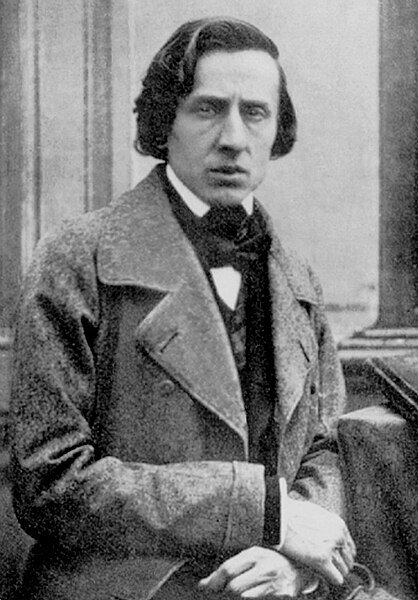
Frédéric Chopin
Chopin was a composer and virtuoso pianist of the Romantic period, renowned for his piano compositions, including nocturnes, mazurkas, polonaises, and études.
Birth and Family Origins
Frédéric François Chopin was born on 1 March 1810 in Żelazowa Wola, a village near Warsaw, in the Duchy of Warsaw, a Polish state established by Napoleon. His father, Nicolas Chopin, was a Frenchman who had emigrated to Poland, while his mother, Justyna Krzyżanowska, was of Polish descent. Chopin’s upbringing was deeply rooted in Polish culture, and the family spoke Polish at home.
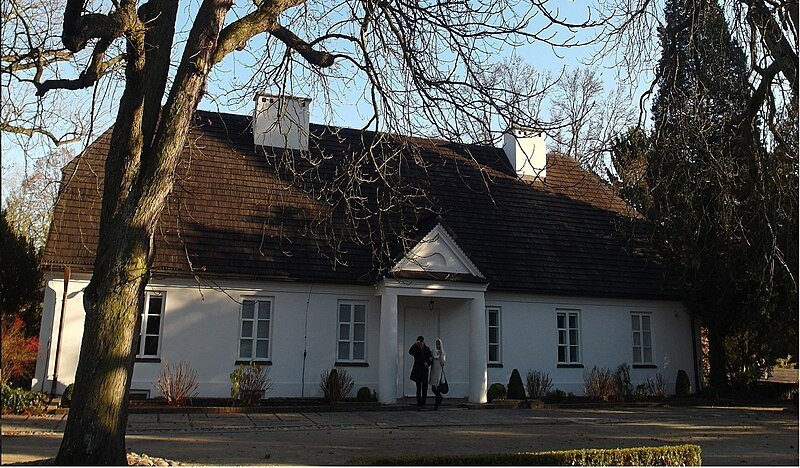
Chopin’s birthplace in Żelazowa Wola, located in east-central Poland.
Childhood and Musical Beginnings
From an early age, Chopin exhibited extraordinary musical talent. By age seven, he had composed his first pieces, two polonaises, and performed publicly. His early musical education was guided by Wojciech Żywny, a Czech pianist, and later, by Józef Elsner at the Warsaw Conservatory, where he studied theory, counterpoint, and composition.
Education and Early Works
Chopin’s formative years were spent in Warsaw, where he was immersed in the city’s vibrant artistic and intellectual culture. His compositions during this period, including his piano concertos in E minor and F minor, demonstrate a unique blend of Polish folk influences and the classical traditions of Mozart and Schubert.
Departure from Poland
In November 1830, just before the outbreak of the November Uprising against Russian rule, Chopin left Poland to pursue his career in Western Europe. Though he intended to return, the uprising’s failure and subsequent political repression made his exile permanent.
Arrival in Paris
Chopin arrived in Paris in 1831, where he became part of a thriving artistic community that included figures such as Franz Liszt, Hector Berlioz, and Eugène Delacroix. In Paris, he adopted the French version of his name and achieved fame as a composer, teacher, and salon performer.
Professional Life
Chopin performed infrequently, preferring intimate salon settings to large concert halls. He supported himself through teaching and the publication of his works, which were in high demand. His music appealed to both the aristocracy and the burgeoning middle class, cementing his reputation as a leading Romantic composer.
Relationships
Chopin’s personal life was marked by a brief engagement to Maria Wodzińska and a turbulent relationship with French writer George Sand (Aurore Dupin). His years with Sand, particularly their stay in Mallorca during the winter of 1838–1839, were both productive and challenging, as his health deteriorated in the island’s damp climate.
Health Struggles
Chopin suffered from poor health throughout his life, likely from tuberculosis or a related condition. Despite this, he continued to compose and perform, though his declining health increasingly limited his activities.
Piano-Centric Compositions
Chopin wrote almost exclusively for the piano, creating a body of work that includes études, nocturnes, waltzes, polonaises, mazurkas, preludes, and sonatas. His works are celebrated for their emotional depth, technical brilliance, and innovative use of harmony and form.
National and Folk Influences
Chopin infused his music with Polish nationalist elements, drawing inspiration from traditional Polish dances such as the mazurka and polonaise. These works resonated with his compatriots and symbolized the resilience of Polish culture under foreign domination.
Innovations in Form and Technique
Chopin expanded the expressive possibilities of the piano, pioneering new forms such as the instrumental ballade and elevating genres like the nocturne and étude. His use of rubato, chromaticism, and unconventional harmonic progressions influenced subsequent generations of composers.
Decline in Health
By the mid-1840s, Chopin’s health had worsened significantly. Despite his frailty, he continued to compose, teach, and give occasional performances. In 1848, he toured Britain and Scotland but returned to Paris exhausted and gravely ill.
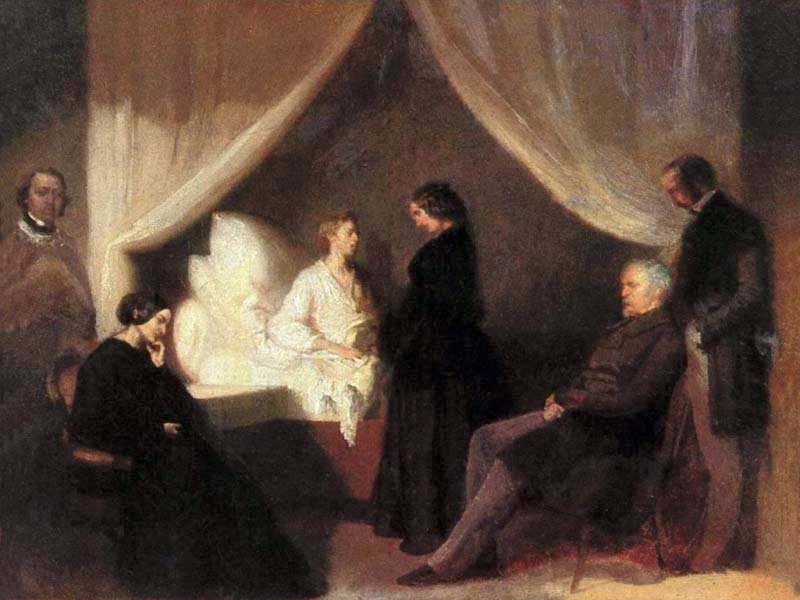
“Chopin on His Deathbed”, painted by Polish artist Teofil Kwiatkowski in 1849.
Final Days
Chopin died in Paris on 17 October 1849 at the age of 39. His funeral at the Church of the Madeleine drew thousands of mourners, reflecting his immense popularity. He was buried at Père Lachaise Cemetery, and his heart was returned to Poland, as he had requested.
Legacy
Chopin’s music remains central to the classical piano repertoire. His works are celebrated for their technical demands, poetic expressiveness, and universal appeal.
Chopin’s innovations in harmony, form, and pianistic technique influenced composers such as Liszt, Debussy, Rachmaninoff, and Scriabin. His blending of national and universal elements set a precedent for later nationalist composers.

Frequently Asked Questions about Chopin
Where was Chopin born, and where did he spend most of his career?
He was born in Żelazowa Wola, Poland, and spent most of his career in Paris, where he achieved fame as a composer and piano teacher.
What makes Chopin’s compositions unique?
His works are noted for their poetic expressiveness, technical demands, innovative harmonies, and integration of Polish folk music elements.
How did Chopin earn his living?
He supported himself primarily through teaching piano and selling his compositions rather than giving public concerts, which he performed only sparingly.
What were the key influences on Chopin’s music?
Chopin drew inspiration from Polish folk music, the classical traditions of Mozart and Bach, and the intimate salon culture of Paris.
What role did Chopin’s health play in his life and career?
He suffered from poor health throughout his life, possibly tuberculosis, which influenced his productivity and contributed to his early death at 39.
What major events shaped Chopin’s personal life?
Key events include his relationships with Maria Wodzińska and George Sand, his exile from Poland after the November Uprising, and his struggles with illness and financial insecurity.





