French Painter and Sculptor Gustave Doré: Life and Major Works
Paul Gustave Doré (1832–1883) was a prolific French artist celebrated for his illustrations, engravings, paintings, and sculptures. His works spanned a wide array of genres, but he is most famous for his illustrations of classic literature, including works by Dante, Cervantes, Milton, and Poe. Though primarily recognized as an illustrator, Doré also achieved success as a painter and sculptor, with his work reflecting the dramatic and often dark themes that defined much of 19th-century art.
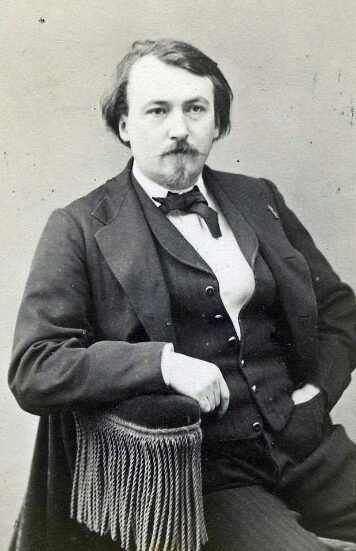
Gustave Doré’s work achieved international acclaim, primarily for his designs, although he did not personally carve the blocks.
Early Life and Career Beginnings
Born on January 6, 1832, in Strasbourg, France, Doré demonstrated an extraordinary talent for drawing at an early age. By age 15, he was working professionally as a caricaturist for Le Journal pour rire, a popular French satirical magazine.
His skill and creativity attracted attention quickly, and he began producing humorous, text-based comics. These early works included Les Travaux d’Hercule (1847) and L’Histoire de la Sainte Russie (1854), which showcased his flair for narrative and his mastery of visual storytelling. These formative projects helped him refine his wood-engraving technique, a medium that would define much of his later work.
Doré’s early artistic influences included J.J. Grandville, a renowned French illustrator known for his surreal and whimsical drawings. Grandville’s influence can be seen in Doré’s highly detailed and imaginative style, which combined humor with a strong sense of drama. This blend of humor and the macabre became a hallmark of Doré’s work and allowed him to build a reputation as a skilled artist capable of capturing both the fantastical and the grim aspects of his subjects.
Major Illustrative Works and Success
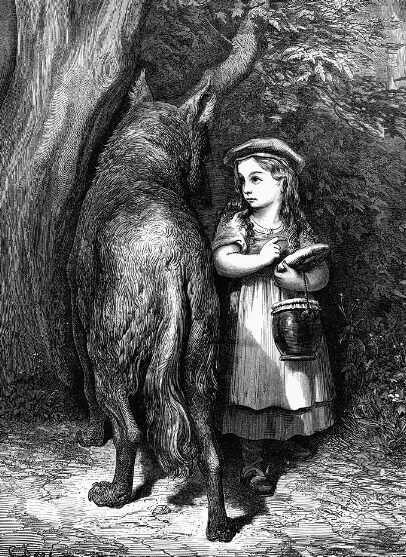
Doré created over 9,500 illustrations, and his most significant works were reproduced using electrotype and cylinder presses, enabling simultaneous large-scale print runs in multiple countries, which spread his influence widely. Image: Little Red Riding Hood
Doré’s talents quickly earned him commissions to illustrate major literary works. By his early twenties, he was illustrating texts by some of the most influential writers in Western literature. His 1854 illustrations for François Rabelais’ Gargantua et Pantagruel, a satirical novel filled with grotesque humor and social critique, demonstrated his unique ability to bring complex literary characters to life through expressive detail and imaginative settings.
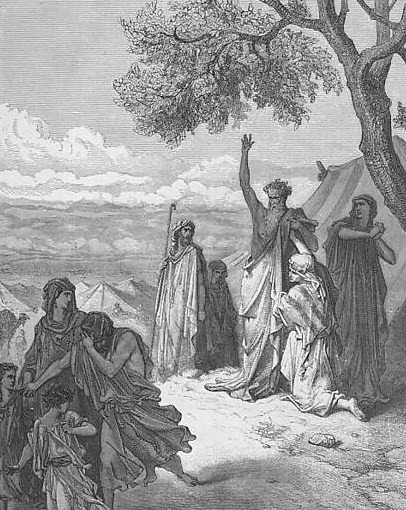
Noah curses Ham by French artist Gustave Doré
In 1853, he received a significant commission to illustrate the works of Lord Byron. This project marked his entry into the British publishing world, where his career would flourish. The success of these illustrations led to additional commissions, including illustrations for Dante Alighieri’s Divine Comedy, John Milton’s Paradise Lost, and Cervantes’ Don Quixote. Each of these projects allowed Doré to further hone his artistic approach and stylistic versatility.
Don Quixote illustrated by Gustave Doré.
Doré’s illustrations for Don Quixote (1863) are among his most famous works and have had a lasting influence on how the novel’s characters are visualized. His portrayals of the aging knight Don Quixote and his loyal squire, Sancho Panza, became iconic, setting the standard for how readers and artists envisioned these characters for generations. Doré’s illustrations captured the tragicomic essence of Cervantes’ work, combining elements of adventure, satire, and poignancy.

The Deluge, 1866
Another major project that cemented Doré’s reputation was his series of illustrations for the Bible, published in 1866. This edition of the Bible, featuring more than 200 of Doré’s engravings, achieved widespread popularity and became one of the most celebrated illustrated editions of the text.
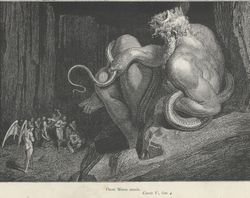
Gustave Doré’s illustration of King Minos for Dante Alighieri’s Inferno
Doré’s ability to convey religious themes with a sense of grandeur and mysticism resonated with audiences, and his biblical illustrations were praised for their emotional depth and dramatic compositions. These images, marked by intense contrasts of light and shadow, emphasized the profound and often tumultuous emotions of the Bible’s stories.
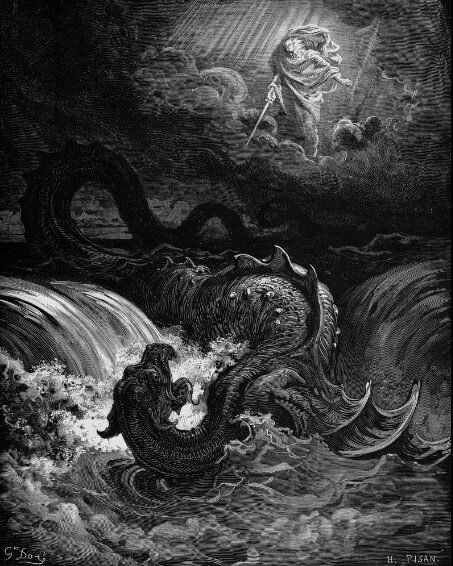
Destruction of Leviathan, 1865
The Bible and Beyond: Continued Success
The success of Doré’s illustrated Bible led to further recognition. In 1867, he held an exhibition of his works in London, which attracted great interest and led to the founding of the Doré Gallery on Bond Street. This gallery allowed him to showcase his art to an international audience and further solidified his reputation in England, where his works were widely admired.
The establishment of the Doré Gallery was significant, as it demonstrated that Doré’s art had transcended the boundaries of illustration to become recognized as fine art in its own right.
Following this success, Doré was commissioned to create illustrations for a wide range of other classic texts. His works for The Rime of the Ancient Mariner by Samuel Taylor Coleridge, Paradise Lost by John Milton, and Idylls of the King by Alfred, Lord Tennyson are among his most well-known. Each of these projects allowed Doré to explore new themes and styles, ranging from the supernatural to the heroic.
His dramatic and detailed engravings for The Rime of the Ancient Mariner, in particular, captured the haunting atmosphere of Coleridge’s poem, blending elements of the natural world with supernatural forces.
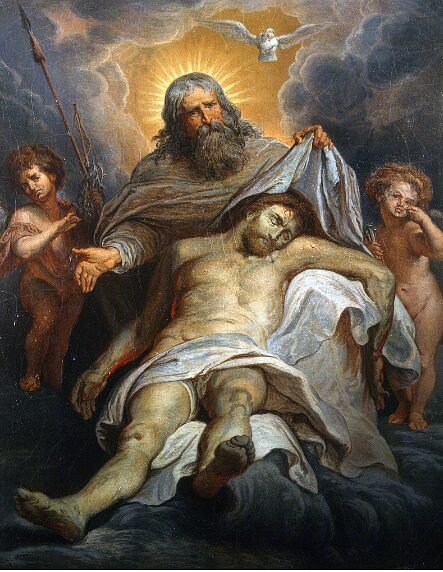
La Sainte Trinité, Glynn Vivian Art Gallery
In addition to his literary illustrations, Doré worked on a series of engravings for London: A Pilgrimage, a collaboration with journalist Blanchard Jerrold. This ambitious project documented the social contrasts of Victorian London, showcasing both its splendor and its stark poverty. The project, published in 1872, included 180 engravings that offered a vivid, and sometimes controversial, view of London’s social landscape.
While London: A Pilgrimage was commercially successful, some critics accused Doré of exaggerating the conditions of the poor, claiming his depictions were too bleak. Despite the criticism, the work highlighted Doré’s skill in social commentary and demonstrated his empathy for the marginalized and his fascination with urban life’s complexities.
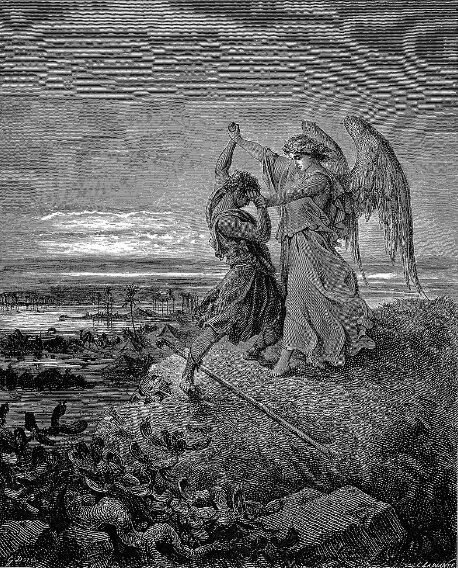
Jacob wrestling with an angel
Painting and Sculpture
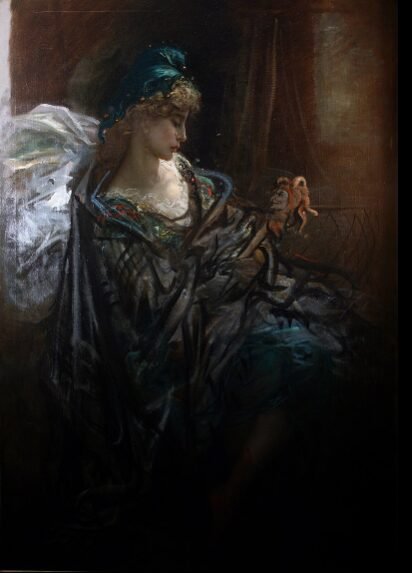
La folie, Glynn Vivian Art Gallery
Though Doré is best known as an illustrator, he was also a painter and sculptor. His paintings often shared the dark and dramatic tone of his engravings, and he frequently depicted themes of suffering, redemption, and mortality. One of his most famous paintings is The Enigma (1871), which was inspired by the devastation of the Franco-Prussian War. The painting features an allegorical figure of France grieving over dead soldiers, while a sphinx symbolizing the mystery of fate looks on. This work was praised for its emotional intensity and symbolic depth, as it captured the national grief and sense of loss following the war.
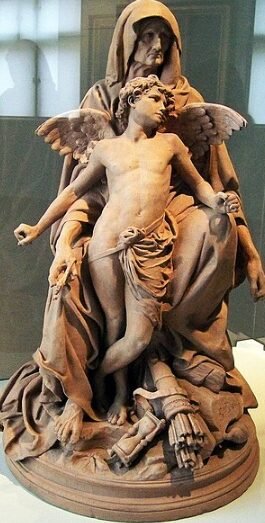
Cupid and Time, modello in terracotta
Doré’s paintings, though not as widely recognized as his illustrations, reflect his interest in themes that were both universal and deeply personal. He experimented with different styles and subject matter, ranging from historical and biblical scenes to landscapes. His approach to painting was heavily influenced by Romanticism, a movement that emphasized emotion, nature, and the sublime. The Romantic influence is evident in his use of dramatic lighting and sweeping compositions, which evoke a sense of awe and reverence.
As a sculptor, Doré produced a limited number of works, but his sculptures are notable for their detail and expressiveness. One of his most well-known sculptures is The Poet and the Muse, a marble statue depicting a poet receiving inspiration from his muse. This sculpture reflects Doré’s deep admiration for the creative process and his belief in the transformative power of art. While his sculpture did not receive the same level of acclaim as his illustrations, it demonstrated his versatility and his commitment to exploring different forms of artistic expression.
Later Years and Legacy
Doré never married and led a relatively private life, devoted to his work and his mother, with whom he lived until his death. Despite his success, Doré remained humble, focusing on his art rather than the social circles of Paris. Throughout his career, he produced over 10,000 illustrations, an impressive output that showcased his dedication and passion for visual storytelling.
In his later years, Doré continued to work on various illustration projects. In 1883, he began illustrating an edition of Shakespeare’s plays, but he passed away before completing the project. On January 23, 1883, Doré died of a heart attack in Paris, leaving behind a legacy that would continue to influence artists and illustrators for generations.
Doré’s influence on visual storytelling and illustration is profound. His dramatic, highly detailed style set a standard for illustrating literary works, and his engravings shaped how readers and audiences around the world visualized some of the greatest characters and scenes in Western literature. Doré’s work not only popularized these stories but also gave them new life, allowing readers to experience the characters and narratives through his unique vision.
Impact and Continuing Influence
Doré’s work remains highly influential in the fields of illustration and visual art. His illustrations for Don Quixote, The Divine Comedy, and the Bible are considered definitive interpretations that have shaped how these stories are imagined. His mastery of wood engraving and his ability to capture complex emotions and scenes have inspired countless artists and illustrators. Even today, his illustrations are studied as masterpieces of visual storytelling and technique.
Artists across different mediums, including painting, film, and digital art, have drawn inspiration from Doré’s work. His interpretation of Dante’s Inferno, with its eerie landscapes and haunting figures, has influenced visual portrayals of hell and the underworld in both classical and contemporary art. Filmmakers have also been inspired by his compositions and his ability to convey emotion through light, shadow, and perspective. For example, cinematic depictions of dark, surreal landscapes often reflect Doré’s influence.
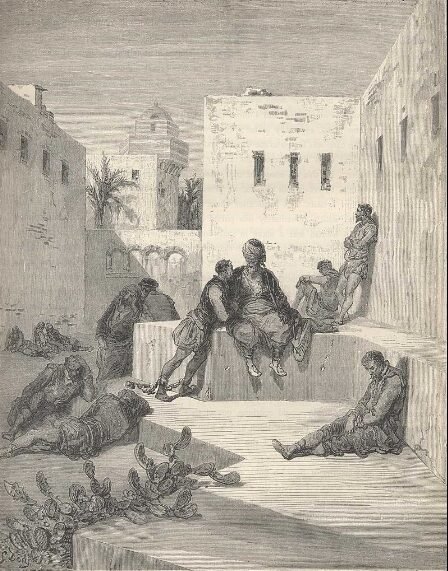
Vincent van Gogh was one of the artists notably impacted by Doré’s work. Van Gogh painted a version of Doré’s engraving Prisoners’ Round from London: A Pilgrimage, inspired by the composition and emotional weight of the piece. Doré’s illustrations captured a sense of empathy and humanity, qualities that resonated with Van Gogh and other artists interested in social realism.
In modern times, Doré’s work is frequently featured in exhibitions and retrospectives, reflecting his status as one of the most important illustrators of the 19th century. His influence extends beyond illustration into popular culture, where his style can be seen in everything from fantasy book covers to film set designs. Doré’s ability to visualize epic narratives and his unique blend of realism and imagination have ensured his place in art history, making him a lasting icon of Romantic art.
Conclusion
Gustave Doré’s life and work embody the spirit of 19th-century Romanticism, with its fascination for drama, emotion, and the sublime. From his early days as a caricaturist to his prolific career illustrating the classics of Western literature, Doré demonstrated an exceptional talent for bringing stories to life. His work in wood engraving, his contributions to painting and sculpture, and his dedication to capturing both the beauty and tragedy of human existence have left an indelible mark on the world of art.
Through his illustrations, Doré opened up new possibilities for visual storytelling, transforming words into vivid, unforgettable images. His impact on how literature is visualized and interpreted is still felt today, and his works continue to inspire and captivate audiences. Doré’s legacy is a testament to the power of art to transcend time and place, connecting viewers to stories and emotions that resonate across generations.
Frequently Asked Questions
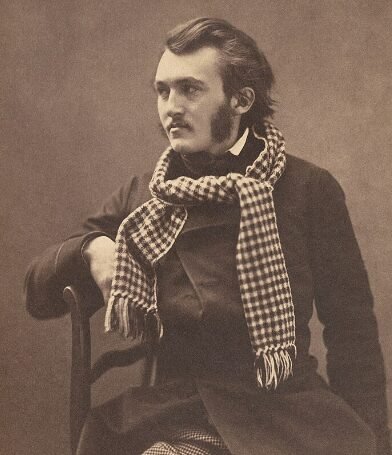
Paul Gustave Doré (1832–1883) was a French artist celebrated for his detailed and expressive wood engravings illustrating classic literature, especially the Vulgate Bible and Dante’s Divine Comedy.
Where and when was Paul Gustave Doré born?
Paul Gustave Doré was born on January 6, 1832, in Strasbourg, France.
At what age did Doré start his career, and for which publication?
Doré began his career at age 15 as a caricaturist for the French satirical magazine Le Journal pour rire.
Who influenced Doré’s early work, and what technique did he primarily use?
He was influenced by illustrator J.J. Grandville, and his primary technique was wood engraving.
What kind of early projects did Doré create, and what did they demonstrate?
He created text-based comics, such as Les Travaux d’Hercule (1847) and L’Histoire de la Sainte Russie (1854), showcasing his dynamic style and storytelling ability.
Which authors’ works did Doré illustrate in the 1850s?
In the 1850s, Doré illustrated works by renowned writers, including John Milton, Cervantes, François Rabelais, and Dante.
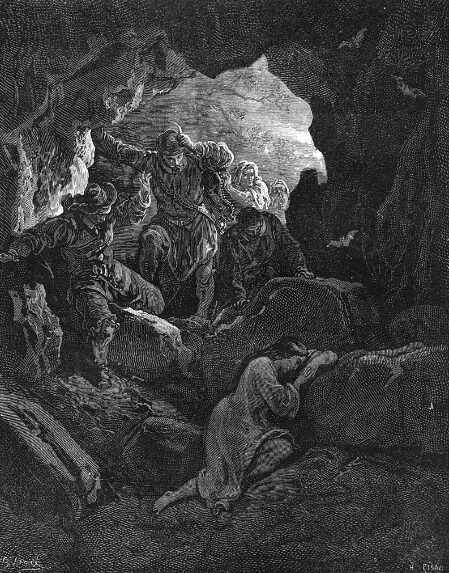
Miguel de Cervantes’s Don Quixote illustrated by Gustave Doré
What project marked Doré’s introduction to British publishers?
Doré’s illustrations for Lord Byron’s works in 1853 marked his entry into the British publishing market.
What was controversial about Doré’s illustrations for The Legend of The Wandering Jew?
His illustrations for The Legend of The Wandering Jew included antisemitic themes, reflecting stereotypes of that era.
Why are Doré’s illustrations of Don Quixote (1863) significant?
Doré’s illustrations of Don Quixote became iconic, influencing how readers and artists visualized Don Quixote and Sancho Panza.
Which American author’s work did Doré illustrate, and what was its impact?
Doré illustrated Edgar Allan Poe’s The Raven, earning 30,000 francs from Harper & Brothers, marking a high point in his career.
What honor did Doré receive from the French government in 1861?
Doré was awarded the title of Knight of the Legion of Honour by the French government in 1861.
How did Doré’s illustrated Bible impact his career?
Doré’s illustrated Bible (1866) was highly successful, boosting his fame and leading to an exhibition in London in 1867.
What inspired London: A Pilgrimage, and who collaborated on it with Doré?
Inspired by The Microcosm of London, writer Blanchard Jerrold suggested they create London: A Pilgrimage, capturing Victorian London’s diversity.
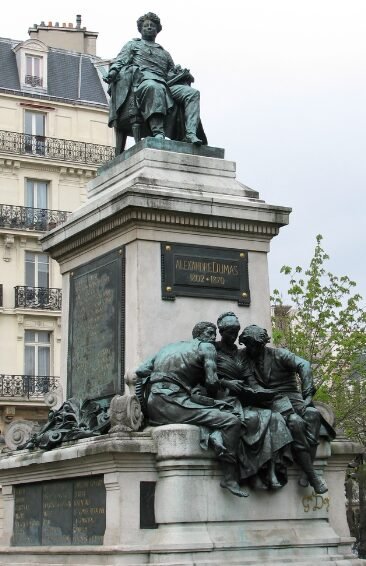
The Dumas Monument in Paris
How was London: A Pilgrimage received by critics and the public?
While commercially successful, London: A Pilgrimage drew criticism from British critics who accused Doré of exaggerating London’s poverty.
What artwork by Doré inspired Vincent van Gogh, and when?
Doré’s Prisoners’ Round inspired Vincent van Gogh, who painted his version of it in 1890.
What genres did Doré illustrate later in his career?
Doré illustrated works by Coleridge, Milton, Tennyson, and others, solidifying his reputation with works like Paradise Lost and Idylls of the King.
How did Doré live his personal life, and with whom?
Doré remained unmarried and lived with his mother after his father’s death in 1849.
When did Doré die, and what was he working on at the time?
The French artist died of a heart attack in Paris on January 23, 1883, while working on illustrations for an edition of Shakespeare’s plays.
How many illustrations did Doré create throughout his career, and how did his work reach a wide audience?
Doré created over 9,500 illustrations, and his use of wood engraving allowed for large print runs across multiple countries.
What impact did Doré’s style have on visual storytelling?
Doré’s blend of dramatic realism and intricate detail left a lasting influence on art and illustration, particularly through iconic depictions of Dante’s inferno, biblical scenes, and Don Quixote’s adventures.