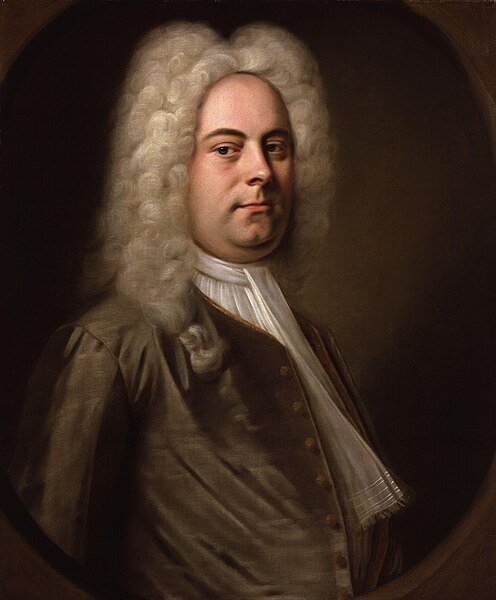
George Frideric Handel (1726–1728)
George Frideric Handel (1685–1759) stands as one of the most influential composers of the Baroque era. Known for his operas, oratorios, anthems, and instrumental works, Handel’s music bridged the cultural worlds of Germany, Italy, and England. His genius reshaped the genres of opera and oratorio, leaving behind a legacy that continues to inspire musicians and audiences worldwide.
Early Life and Family Background
Born on February 23, 1685, in Halle, Germany, Handel shared his birth year with two other Baroque giants: Johann Sebastian Bach and Domenico Scarlatti. He was the son of Georg Händel, a barber-surgeon who served the court of Saxe-Weissenfels, and Dorothea Taust, the daughter of a Lutheran pastor. Although his family did not belong to the musical elite, the cultural vibrancy of Halle exposed Handel to music early in life.

Birthplace of Handel
Handel’s father strongly opposed his son pursuing music, intending for him to become a lawyer. Despite this, young Handel showed exceptional musical talent. According to accounts, he practiced secretly on a clavichord hidden in the attic. His determination would later convince his family of his potential.

Musical Training and Early Education
During a visit to Weissenfels, Handel’s talent caught the attention of Duke Johann Adolf I. This encounter led to his formal music education under Friedrich Wilhelm Zachow, a renowned organist and composer. Under Zachow’s guidance, Handel mastered the organ, harpsichord, violin, and oboe while studying counterpoint and composition.
Zachow introduced Handel to a vast array of German and Italian compositions, which greatly influenced his style. Handel absorbed the polyphonic traditions of Germany and the melodic richness of Italian music, blending these into his distinctive sound.
Early Career in Germany and Italy
In 1703, Handel moved to Hamburg, where he joined the orchestra of the Oper am Gänsemarkt as a violinist and harpsichordist. Here, he composed his first operas, Almira and Nero (1705), which showcased his flair for dramatic music.
In 1706, Handel traveled to Italy, the center of Baroque opera and sacred music. He composed cantatas, operas, and oratorios while collaborating with prominent patrons such as the Medici family and Cardinal Ottoboni. Works like La Resurrezione and Agrippina solidified his reputation as a master composer.
Establishing a Career in England
In 1710, Handel became Kapellmeister to the Elector of Hanover, who later became King George I of Britain. Handel’s opera Rinaldo (1711), premiered in London, marked his English debut and was a resounding success. He decided to settle permanently in England by 1712.
Handel influenced the development of English oratorio and organ concerto genres, making lasting contributions to Western music.
Handel quickly gained the support of aristocratic patrons, including Queen Anne, who granted him an annual pension. His works during this period, including Water Music (1717), showcased his skill in creating celebratory and ceremonial compositions.
Transformation from Opera to Oratorio
Handel founded several opera companies to promote Italian opera in London, including the Royal Academy of Music in 1719. However, the growing preference for English-language works and financial challenges forced Handel to rethink his approach. His health also declined during this period, culminating in a breakdown in 1737.
After his recovery, Handel turned to oratorios, which appealed to middle-class audiences. These works, often based on biblical themes, combined the drama of opera with the grandeur of choral music. His Messiah (1742), first performed in Dublin, became one of the most celebrated compositions in Western music.

Major Works and Contributions
Handel composed 42 operas and 24 oratorios, with notable works including Giulio Cesare, Samson, Israel in Egypt, and Solomon. His oratorios often featured monumental choruses, such as the famous “Hallelujah Chorus” from Messiah.
Handel’s instrumental works, such as the Concerti Grossi and organ concertos, highlight his mastery of structure and melody. Pieces like Water Music and Music for the Royal Fireworks remain staples of orchestral repertoire.
Among Handel’s ceremonial compositions, Zadok the Priest (1727) stands out. Written for the coronation of King George II, it has been performed at every British coronation since.
Later Years and Legacy
In his later years, Handel suffered from failing eyesight, eventually becoming completely blind. Despite this, he continued to compose and conduct, with his final public appearance being a performance of Messiah. He passed away on April 14, 1759, and was buried in Westminster Abbey with full state honors.
Handel’s music regained prominence in the mid-20th century, with operas, oratorios, and instrumental works widely performed. He is recognized as one of the greatest composers in history.
Handel’s music influenced composers such as Mozart, Haydn, and Beethoven. The revival of his works in the 19th century, led by figures like Mendelssohn, cemented his status as one of the greatest composers in history.
Frequently Asked Questions
How did Handel’s career evolve?
He trained in Halle, worked in Hamburg and Italy, and settled in London in 1712, becoming a naturalized British subject in 1727. He shifted from Italian operas to English choral works after a breakdown in 1737, achieving monumental success with Messiah in 1742.
What are George Frideric Handel’s most famous works?
His celebrated works include the oratorio Messiah, Water Music, Music for the Royal Fireworks, and the coronation anthem Zadok the Priest, performed at every British coronation since 1727.
What impact did Handel’s Messiah have?
Messiah, first performed in 1742, became a cornerstone of choral music, blending powerful solo and choral sections. It remains one of the most performed works in the Western classical repertoire.
What was Handel’s role in the opera world?
Handel founded three opera companies in London and composed over 40 operas, bringing Italian opera to its peak. However, declining public interest in opera led him to focus on oratorios.
How was Handel influenced by other composers, and how did he influence others?
Handel drew from the German polyphonic tradition, Italian Baroque styles, and mentors like Friedrich Zachow. Later composers, including Mozart, Haydn, and Beethoven, admired his dramatic genius and melodic mastery.
What marked Handel’s later years?
Despite blindness in his final years, Handel continued composing. He remained active in charitable causes, particularly supporting the Foundling Hospital. He died in 1759, receiving a state funeral at Westminster Abbey.





