Gustave Doré: Life, Major Works, & Accomplishments
French artist Gustave Doré’s contributions to art and literature are unparalleled. His ability to translate complex narratives into powerful visual imagery revolutionized the way stories were told and perceived. While he faced criticism during his lifetime, his legacy as a master illustrator has only grown in the years since his death, cementing his place as one of the most influential artists of the 19th century.
Early Life and Influences
Paul Gustave Louis Christophe Doré was born on January 6, 1832, in Strasbourg, France. From an early age, he displayed an extraordinary talent for drawing, and by the age of 15, he began his professional career as a caricaturist for Le journal pour rire. Doré’s early inspirations included the works of J. J. Grandville, whose fantastical illustrations left a lasting impression on the budding artist.
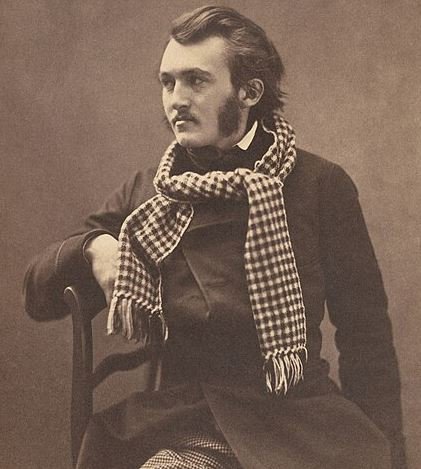
A photo of Gustave Doré by French photographer Nadar
Rise to Fame Through Printmaking
Doré’s mastery of wood-engraving soon became his defining trait. While his contemporaries focused on painting or sculpture, he excelled in creating visual narratives through intricate engravings. His early work included text-based comics such as Les Travaux d’Hercule (1847) and L’Histoire de la Sainte Russie (1854). These works showcased his unique ability to combine storytelling with detailed illustration.
Landmark Projects and Literary Illustrations
Doré’s career skyrocketed with commissions to illustrate classic works of literature. Among these were:
- Gargantua et Pantagruel (1854), where his vivid imagination brought Rabelais’ characters to life.
- The Works of Lord Byron (1853), marking his entry into the British publishing market.
- Cervantes’ Don Quixote (1860s), which defined the visual identity of the iconic knight and Sancho Panza for generations to come.
One of his most notable achievements was his work on Dante Alighieri’s Divine Comedy. His illustrations for Inferno (1857) captured the epic’s dramatic and otherworldly scenes with unparalleled depth. His depictions of the Bible in 1866 were equally celebrated, solidifying his reputation as a master illustrator.
Innovative Techniques and Global Reach
Doré’s success was facilitated by innovative techniques that allowed his illustrations to reach a global audience. The use of electrotype processes and cylinder presses enabled mass production of his work. These advancements made it possible for his engravings to be widely published, ensuring his art was appreciated in multiple countries simultaneously.
The Doré Gallery and Major Exhibitions
In 1867, Doré held a major exhibition in London, which led to the establishment of the Doré Gallery on Bond Street. This space became a hub for showcasing his works, attracting both public and critical acclaim.
Doré created 180 wood engravings for the book, capturing London’s poverty and earning mixed critical reception.
His collaboration with Blanchard Jerrold on London: A Pilgrimage (1872) provided a gritty yet poetic depiction of Victorian London, featuring 180 wood engravings. Although criticized by some for focusing on urban poverty, the book was a commercial success and influenced artists like Vincent van Gogh.

Artistic Versatility
Beyond printmaking, Doré was an accomplished painter, sculptor, and watercolorist. His paintings, such as Christ Leaving the Praetorium, demonstrated his ability to convey emotion and grandeur on canvas. During a trip to Scotland in 1873, he refined his watercolor techniques, producing evocative landscapes that captured the natural beauty of the region.
His sculptures, including the Dumas Monument in Paris, showcased his talent in three-dimensional art. Works like The Vintage Vase in San Francisco remain celebrated examples of his skill.
Challenges and Mixed Reception
Despite his popularity with the general public, Doré faced criticism from art critics of his time. Publications like The Art Journal accused him of prioritizing imagination over accuracy. However, these critiques did little to diminish his commercial success or his influence on future generations.
Influence on Popular Culture and Legacy
Doré’s influence extended far beyond his lifetime. Writers like H. P. Lovecraft admired his work, drawing inspiration from the haunting imagery of his illustrations. His visual interpretations of The Divine Comedy and Don Quixote shaped the way these stories were perceived by audiences and artists alike.
Modern descendants, such as the French singer-songwriter Julien Doré, continue to carry the family name, ensuring his legacy endures in cultural memory.
Death and Posthumous Recognition
Doré passed away on January 23, 1883, in Paris, after a brief illness. At the time of his death, he was working on illustrations for Shakespeare’s plays. Although he never married, Doré’s dedication to his craft left an indelible mark on the world of art and literature.

An 1867 picture of Doré,
Notable Works
Some of Doré’s most celebrated works include:
- Dante’s Divine Comedy: Iconic illustrations of Inferno, Purgatorio, and Paradiso.
- The Bible (1866): A visual masterpiece of biblical narratives.
- Don Quixote (1863): Definitive illustrations that influenced stage and film adaptations.
- Edgar Allan Poe’s The Raven (1883): A haunting visualization of the famous poem.
- London: A Pilgrimage (1872): A poignant depiction of Victorian life.
Artistic Techniques and Style
Doré’s artistic style combined meticulous detail with dramatic contrasts of light and shadow. His engravings often featured dynamic compositions that brought a sense of movement and emotion to static images. His ability to evoke the sublime and the grotesque in equal measure made his work particularly suited to epic literature and fantastical tales.
Frequently Asked Questions
What was Gustave Doré’s role in printmaking?
He primarily designed the illustrations, while teams of block-cutters executed the engravings.
How prolific was Doré as an illustrator?
He created over 10,000 illustrations, reproduced using electrotype processes for large-scale publication.
What major literary works did Doré illustrate?
He illustrated works by Dante, Cervantes (Don Quixote), Milton (Paradise Lost), and Poe (The Raven), among others.
How was Doré viewed during his lifetime?
He was popular with the public but faced criticism from art critics, who accused him of exaggeration.
What honors did Doré receive?
He was made a Knight of the Legion of Honour in 1861 by the French government.





