H. P. Lovecraft
H.P. Lovecraft (1890–1937) was a pioneering American writer renowned for his unique contributions to weird, science, fantasy, and horror fiction. Best known for creating the Cthulhu Mythos, his works remain a cornerstone in supernatural literature. A Rhode Island native, Lovecraft’s personal philosophy, “cosmicism,” and his intricate fictional worlds resonate with themes of human insignificance in the vast universe.
Early Life and Family Background
Born on August 20, 1890, in Providence, Rhode Island, Lovecraft grew up in a family that experienced significant tragedy. His father, Winfield Scott Lovecraft, was institutionalized when Howard was three, dying five years later from syphilis-related complications. Raised by his mother, Sarah Susan Phillips Lovecraft, and extended family, Lovecraft enjoyed a privileged childhood under the care of his grandfather, Whipple Van Buren Phillips, who nurtured his literary curiosity.
However, the family’s fortunes declined following Whipple’s death in 1904. Lovecraft and his mother moved to a modest home, a period Lovecraft described as one of the darkest of his life. This financial downturn, coupled with Lovecraft’s own health issues, marked his early years with fragility and isolation.
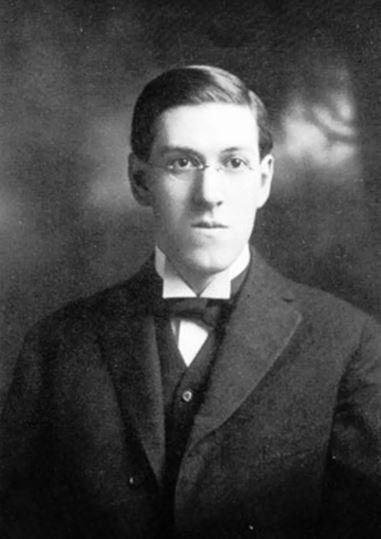
A 1915 image of Lovecraft.
Early Influences and Writing Beginnings
Lovecraft displayed literary talent early on, writing poems and essays influenced by classical mythology, Gothic tales, and scientific exploration. His childhood fascination with astronomy led him to self-publish a scientific periodical, blending his interests in literature and science. His teenage years were marked by personal struggles, including a nervous breakdown in 1908 that prevented him from completing high school.
Despite this, Lovecraft’s passion for writing endured. By 1913, he began contributing letters to pulp magazines, critiquing popular fiction and gaining recognition within amateur press circles. These experiences laid the foundation for his later works and established him within the speculative fiction community.
Development as a Writer
Lovecraft’s professional writing career began in earnest during the 1920s, with his works appearing in pulp magazines like Weird Tales. Influenced by writers like Edgar Allan Poe, Lord Dunsany, and Algernon Blackwood, he developed a style marked by dense prose, cosmic themes, and a unique mythos.
H.P. Lovecraft is best known for creating the Cthulhu Mythos, a shared fictional universe exploring cosmic horror and humanity’s insignificance.
In 1924, Lovecraft married Sonia Greene, a writer and entrepreneur. The couple moved to New York City, where Lovecraft struggled with alienation and financial instability. His experiences in the city, particularly his discomfort with its diverse population, influenced stories like “The Horror at Red Hook.” After separating from Greene, he returned to Providence in 1926, entering a period of prolific creativity.
Key Works and Thematic Elements
Lovecraft’s fiction is characterized by cosmic horror—a genre emphasizing humanity’s fragility in the face of incomprehensible forces. Key works from his later years include:
- “The Call of Cthulhu” (1928): Introduces the titular deity and explores themes of forbidden knowledge and humanity’s insignificance.
- At the Mountains of Madness (1936): A chilling exploration of ancient alien civilizations in Antarctica.
- The Shadow over Innsmouth (1936): Examines themes of miscegenation and the grotesque consequences of human-alien interaction.
- The Shadow Out of Time (1936): Explores time travel, memory, and the vastness of cosmic history.
These stories are set in a fictionalized New England, featuring recurring elements such as ancient texts (Necronomicon), malevolent deities (e.g., Cthulhu, Nyarlathotep), and secretive cults. Lovecraft’s mythos provides a shared universe for subsequent writers, collectively known as the Cthulhu Mythos.
Philosophy: Cosmicism
Central to Lovecraft’s writing is cosmicism, the belief that humanity is insignificant in an uncaring universe. Lovecraft rejected anthropocentrism, portraying a cosmos governed by alien entities indifferent—or hostile—to human existence. His protagonists often grapple with the psychological toll of confronting these truths, embodying Lovecraft’s ambivalence toward knowledge.
H.P. Lovecraft’s unique vision redefined horror and speculative fiction, offering a chilling exploration of humanity’s place in the cosmos.
This worldview of Lovecraft was influenced by scientific discoveries of his time, particularly in astronomy and biology, which reinforced his materialistic and mechanistic perspective.
Racism and Controversy
Lovecraft’s legacy is marred by his explicitly racist views, reflected in his personal writings and some of his fiction. He held supremacist beliefs that influenced his depiction of “the other” in stories like The Shadow over Innsmouth. While some scholars contextualize his views within early 20th-century racial attitudes, they remain a subject of significant critique and debate.
Legacy and Posthumous Recognition
During his lifetime, Lovecraft struggled financially, earning little from his writing and editing. He died in obscurity on March 15, 1937, from intestinal cancer at age 46. However, his influence grew posthumously, thanks to the efforts of contemporaries like August Derleth and Donald Wandrei, who preserved and published his works through Arkham House.
Lovecraft’s creations influence literature, film, games, and pop culture, though his somewhat racist views spark ongoing debate.
In the decades following his death, Lovecraft’s reputation shifted from cult author to a central figure in horror literature. His works have inspired numerous adaptations in film, literature, and gaming, cementing his influence on popular culture. The Cthulhu Mythos, expanded by later writers, remains a vibrant part of speculative fiction.
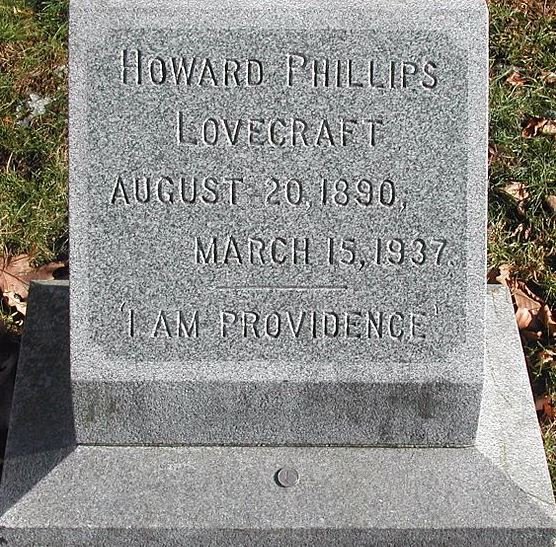
Gravestone of Lovecraft.
Did you know…?
Critical Reception
Lovecraft’s literary style, characterized by archaic language and dense descriptions, has drawn both praise and criticism. While some critics deride his prose as overwrought, others, like Stephen King, hail him as the “20th century’s greatest practitioner of the classic horror tale.”
Initially obscure, H.P. Lovecraft’s work gained prominence in the 1970s, and he is now considered one of the most influential authors of supernatural horror fiction.
Modern scholarship has reevaluated Lovecraft’s contributions, with collections of his works appearing in prestigious series like Penguin Classics and the Library of America. Scholars like S.T. Joshi have played a pivotal role in establishing Lovecraft as a significant literary figure.
H.P. Lovecraft’s Influence on Media and Culture
Lovecraft’s impact extends beyond literature, inspiring creators across various media:
- Literature: Authors like Neil Gaiman and Alan Moore have incorporated Lovecraftian elements into their works.
- Film: Directors like Guillermo del Toro and John Carpenter draw heavily from Lovecraft’s themes and aesthetics.
- Gaming: Tabletop and video games like Call of Cthulhu and Bloodborne reflect Lovecraftian motifs, including cosmic horror and insanity mechanics.
- Music: Bands like Metallica and Black Sabbath have produced songs inspired by Lovecraft’s stories.
Timeline of H.P. Lovecraft’s Life and Legacy
- 1890: Howard Phillips Lovecraft is born on August 20 in Providence, Rhode Island.
- 1893: Lovecraft’s father, Winfield, is institutionalized for psychosis and dies in 1898.
- 1904: Lovecraft’s grandfather, Whipple, passes away, resulting in financial decline and relocation for the family.
- 1908: Health issues cause Lovecraft to withdraw from high school, ending his formal education.
- 1913: A critical letter to a pulp magazine marks Lovecraft’s entry into professional writing.
- 1914: Joins the United Amateur Press Association, boosting his literary aspirations.
- 1924: Marries Sonia Greene and moves to New York City; begins contributing to Weird Tales.
- 1926: Returns to Providence after his marriage falters; writes significant works including The Call of Cthulhu.
- 1931: Publishes At the Mountains of Madness; reflects his cosmic horror themes.
- 1936: Lovecraft’s friend, Robert E. Howard, dies by suicide; Lovecraft’s own health deteriorates.
- 1937: Dies of intestinal cancer on March 15.
Frequently Asked Questions
What influenced Lovecraft’s writing?
His influences included Edgar Allan Poe, Lord Dunsany, classical literature, Gothic tales from his grandfather, and scientific advancements.
What is the central theme of H.P. Lovecraft’s work?
The central theme is cosmicism, which posits that humanity is insignificant in an indifferent universe dominated by incomprehensible forces.
What challenges did Lovecraft face in his lifetime?
Lovecraft endured financial hardship, health issues, and limited recognition during his life, relying on pulp magazines for publication.
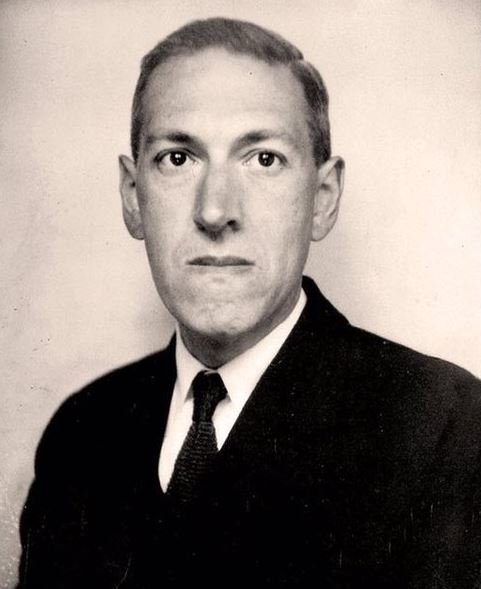
A 1934 photo of Lovecraft
How did Lovecraft view knowledge?
He depicted knowledge as dangerous, often leading to madness or ruin when humans confronted the horrifying truths of the cosmos.
What role did racism play in Lovecraft’s legacy?
Lovecraft held racist views, reflected in his personal writings and some works, which have sparked ongoing controversy about his legacy.
Why is Lovecraft significant in modern horror?
He pioneered themes of cosmic horror and influenced numerous authors, filmmakers, and game designers, cementing his place in 20th-century literature.





