Han Dynasty Art
The Han Dynasty (c. 202 BCE – 220 CE) marked a significant era in Chinese history, characterized by remarkable advancements in politics, culture, and art. As one of China’s longest-reigning dynasties, the Han period was a golden age of cultural development, leading to artistic expressions that reflected the sophisticated tastes and beliefs of its society. The art of the Han Dynasty is distinguished by its diversity, technological innovation, and symbolic richness. From elaborate tomb murals to exquisite bronze vessels, jade carvings, and ceramic sculptures, Han art provides valuable insights into the lives, beliefs, and aesthetics of ancient China.

Remains of a Han dynasty watchtower.
The Cultural Context of Han Art
The Han Dynasty was established by Liu Bang, who became Emperor Gaozu in 206 BCE, following the collapse of the Qin Dynasty. Unlike the rigid legalist approach of the Qin, the Han rulers promoted Confucian ideals, emphasizing moral virtue, education, and artistic refinement. The flourishing economy and political stability of the Han era enabled the patronage of arts, leading to artistic achievements that reflected both state ideology and private tastes.
Religious and philosophical beliefs greatly influenced Han art. Confucianism emphasized ancestor worship and the importance of ritual, which inspired the creation of tomb art and funerary objects. Simultaneously, Daoist thought celebrated harmony with nature, encouraging artistic representations of natural landscapes and mythical beings. Buddhism, which entered China towards the end of the Han period, also began to exert a subtle influence on artistic themes.
Emperor Qin Shi Huang (259 BC – 210 BC), the First Emperor of a unified China
Tomb Art and Funerary Objects
A significant portion of surviving Han art comes from tombs and burial sites, reflecting the belief in an afterlife and the importance of ensuring the deceased’s comfort and status in the next world. Elaborate burial practices included the construction of underground chambers filled with funerary goods, including pottery figurines, jade suits, and lacquerware.
Tomb Murals
Han tomb murals, painted directly onto the walls of burial chambers, offer a vivid portrayal of contemporary life. These murals often depict scenes of banquets, hunts, and processions, serving both decorative and symbolic purposes. The scenes reflected the social status of the deceased, while also offering protection and companionship in the afterlife.
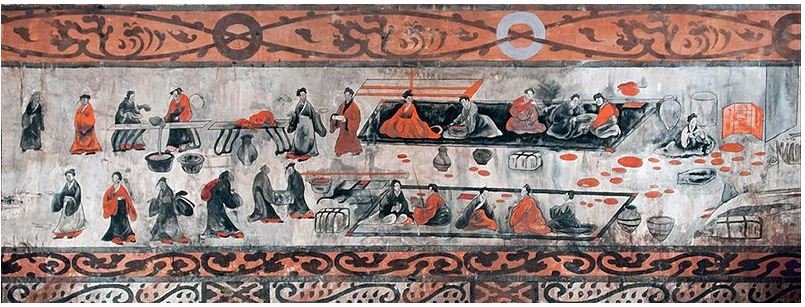
A late Eastern Han tomb mural from the Dahuting Tomb in Zhengzhou, Henan, depicting a lively banquet, dance and music, acrobatics, and wrestling scenes.
Jade Burial Suits
Among the most remarkable funerary artifacts are the jade burial suits. Believed to preserve the body and soul, these suits were composed of thousands of meticulously cut jade plaques sewn together with gold or silver threads. The use of jade symbolized purity and immortality, reflecting the Han belief in the transformative power of the material.
Ceramic Figurines
Han tombs frequently contained ceramic figurines, known as mingqi, which served as substitutes for human and animal attendants. These figurines represented servants, soldiers, musicians, and livestock, ensuring the deceased had all the comforts of earthly life. Realistically detailed, mingqi also provide valuable insights into the clothing, hairstyles, and daily activities of Han society.
Sculpture and Bronze Art
Sculpture during the Han Dynasty demonstrated both artistic sophistication and technical mastery. Bronze, a favored medium, was used for creating ritual vessels, lamps, and mirrors. The intricate designs on these objects often included mythical creatures, geometric patterns, and auspicious symbols.
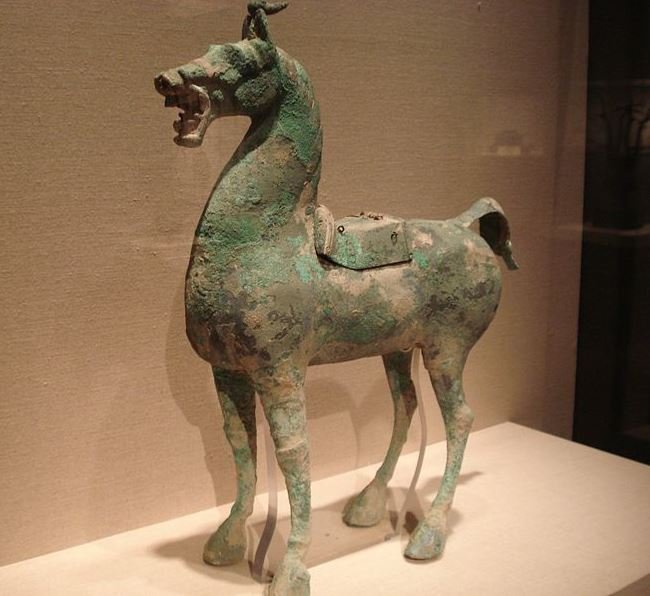
A bronze horse statuette from the Western or Eastern Han dynasty.
Bronze Vessels and Mirrors
Bronze vessels, often used in ancestral rituals, were decorated with elaborate motifs that conveyed religious significance. The art of bronze mirror-making also reached its height during the Han era. Polished to a reflective shine, these mirrors were adorned with inscriptions and intricate designs on their reverse sides, sometimes featuring cosmological symbols and depictions of mythical beings.
Stone and Clay Sculptures
Sculptors also created monumental stone carvings, including tomb reliefs and statues of guardian animals. The stone carvings often depicted scenes of courtly life, mythological narratives, and historical events, serving both commemorative and decorative functions.
Painting and Calligraphy
Although few examples of Han paintings on silk or paper have survived, evidence from tomb murals and decorative lacquerware indicates the sophistication of Han-era painting. Han painters were known for their skillful use of line and composition, with a focus on realistic depictions of people, animals, and landscapes.
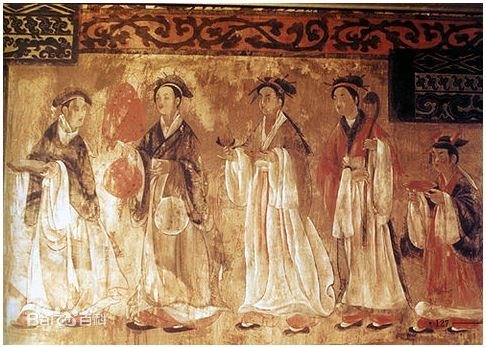
A mural from the late Eastern Han-era Dahuting Tomb in Zhengzhou, Henan, depicting women in traditional hanfu.
Narrative Painting
Narrative painting, often used to illustrate historical stories and moral lessons, was a popular genre. These paintings served as visual narratives of Confucian ideals, depicting virtuous deeds and exemplary figures. Some surviving murals from Han tombs illustrate scenes from popular myths and historical tales, emphasizing the cultural significance of storytelling in Han society.
Calligraphy
Calligraphy also emerged as a highly esteemed art form during the Han Dynasty. The clerical script, known as “Lishu,” became the dominant style, characterized by its broad, angular strokes. Calligraphy was not only a means of written communication but also a reflection of the writer’s character and intellect. Influential calligraphers like Cai Yong contributed to the development of this refined art form.
Han calligraphers used brushes made from animal hair and ink derived from pine carbon mixed with glue. The flexibility of these materials allowed for the creation of various styles, ranging from flamboyant characters to precise and rapid strokes.
Lacquerware and Decorative Arts
Lacquerware production reached new heights during the Han Dynasty, reflecting both artistic ingenuity and technical prowess. The application of multiple layers of lacquer on wood or bamboo objects resulted in glossy, durable surfaces that were often embellished with gold, silver, and painted designs.
Lacquerware objects included trays, cups, and boxes, often featuring detailed motifs of dragons, phoenixes, and floral patterns. These objects were highly prized, serving as luxury items for the aristocracy. The exceptional craftsmanship of Han lacquerware is evident in the intricate inlays and vibrant colors that have endured for centuries.
Silk and Textile Arts
Silk production flourished during the Han Dynasty, and the art of silk weaving and embroidery attained remarkable sophistication. Han textiles often featured elaborate designs, including geometric patterns, floral motifs, and representations of mythical creatures. Silk garments were a symbol of wealth and status, frequently worn by the nobility and used as diplomatic gifts along the Silk Road.
Silk also served as a canvas for painting and writing, with artists creating elegant scroll paintings that depicted scenes of nature, court life, and historical events. The durability and luxurious quality of silk ensured its continued prominence in Han art and culture.

Artistic Symbolism and Religious Influence
Han art was deeply symbolic, often conveying philosophical and religious beliefs. Dragons and phoenixes, representing imperial authority and harmony, were common motifs in Han decorative arts. Other symbolic creatures, such as the qilin (a mythical hoofed beast) and the immortal crane, reflected beliefs in longevity and divine protection.
Daoist and Confucian influences permeated Han art, with representations of immortals, celestial beings, and auspicious landscapes. The Han fascination with the afterlife also gave rise to elaborate depictions of spiritual realms and mythical journeys, reflecting the complex interplay between religious belief and artistic expression.
Legacy of Han Art
The artistic achievements of the Han Dynasty left a lasting legacy in Chinese art and culture. The techniques and motifs developed during this period continued to influence subsequent dynasties, including the Tang and Song Dynasties. Han bronze mirrors, jade carvings, and ceramic figurines remain celebrated examples of ancient Chinese craftsmanship.
Furthermore, the Han emphasis on narrative storytelling and expressive realism laid the foundation for later developments in Chinese painting and sculpture. The legacy of Han calligraphy, particularly the Lishu script, also continued to inspire generations of Chinese scholars and artists.
Questions and Answers
What distinguishes the art of the Han Dynasty from earlier periods?
The art of the Han Dynasty reflected a shift from ritualistic and ceremonial functions to the depiction of scenes from daily life, mythology, and history. This change was influenced by political stability, economic prosperity, and technological advancements in brushes, ink, and paper.
How did Han rulers use art to unify their vast empire?
Han rulers recognized the power of art in unifying diverse cultures and traditions within their empire. They used art to present a cohesive and distinctly “Chinese” worldview by depicting hunting, farming, and domestic life scenes, while decorative motifs on pottery, lacquerware, and bronze mirrors emphasized uniformity and cultural continuity.
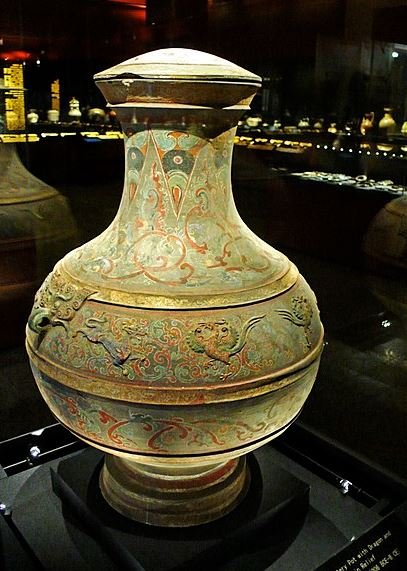
Western Han ceramic jar
What advancements led to the rise of calligraphy during the Han Dynasty?
The Han Dynasty’s introduction of paper, along with improvements in brushes and ink, allowed calligraphers to experiment with new styles. Previously, calligraphy had been engraved on bronze, stone, and bone, but paper enabled greater fluidity and stylistic diversity, establishing calligraphy as a highly esteemed art form.
Why did painting become more prominent during the Han Dynasty?
Painting gained popularity due to the increased availability of paper and the stability brought by the Han government, which allowed wealthy patrons to commission artworks. Han paintings often depicted historical narratives, moral lessons, and mythological scenes, serving as both decorative and narrative art forms.
What is an outstanding example of Han tomb painting?
The famous painting from the Mawangdui tomb in Changsha, dating to around 167 BCE, is an exceptional example. This artwork portrays various levels of human existence, from the underworld to the heavens, illustrating the Han belief in the afterlife and demonstrating the era’s mastery of narrative painting.
How did Han artists approach perspective in their paintings?
Unlike Western art, which often used a single-point perspective, Han artists employed multiple perspectives to capture the essence of their subjects. This approach allowed them to present a more comprehensive and expressive representation of scenes, emphasizing the symbolic and narrative qualities of their work.
What innovations in sculpture emerged during the Han period?
Sculpture during the Han period saw significant innovations, particularly in the form of stone and brick reliefs depicting historical scenes and mythological narratives. Notable examples include the relief slabs from the Wu Liang Shrine at Jiaxiang, which chronicle Chinese history in pictorial form.
What types of smaller-scale sculptures were common in Han tombs?
Small cast bronze statues of horses and servants were commonly placed in Han tombs to accompany the deceased. One notable piece is a gilded bronze oil lamp in the form of a kneeling servant girl from the late 2nd century BCE, showcasing the technical skill and creativity of Han artisans.
Why was jade highly valued in Han art?
Jade was esteemed for its association with purity, durability, and immortality. Han jade carvers used advanced techniques to create intricate carvings of animals, mythical creatures, and human figures, reflecting both artistic skill and symbolic significance.

What was unique about the Han jade burial suits?
Jade burial suits were made from thousands of jade plaques sewn together with gold or silver wire. These suits were reserved for royalty and intended to preserve the body and protect the soul in the afterlife. The tombs of Prince Liu Sheng and Princess Dou Wan at Mancheng contain some of the finest examples.
How did lacquerware production thrive during the Han Dynasty?
Lacquerware production thrived due to state sponsorship and oversight. Lacquer, derived from tree resin, was used to coat objects of wood and other materials, resulting in durable and glossy surfaces. Han lacquerware often took the form of plates, cups, and jars, decorated with intricate scenes of mythical creatures symbolizing the spirit world.
What advancements were made in Han pottery and ceramics?
Pottery production advanced with the introduction of high-fired ceramics and the first glazed pottery. Han pottery often imitated the shapes and decorations of bronze vessels, with popular forms including low circular jars and tall vases. Clay was also used to create small models of houses placed in tombs to provide symbolic homes for the deceased.





