Hawthornden Castle
Hawthornden Castle, located in Midlothian, Scotland, stands as a testament to centuries of Scottish history, literature, and architecture. Perched above the River North Esk and surrounded by natural beauty, the castle is both a historic fortress and a place of cultural importance, symbolizing the evolution of Scottish society and its connections to the arts.

Hawthornden Castle, in Midlothian, Scotland, overlooks the River North Esk near Roslin. It features a 15th-century ruin and a 17th-century L-plan house, now restored as a writer’s retreat.
Early Ownership and Medieval Beginnings
The origins of Hawthornden Castle trace back to the 13th century when it was owned by the Abernethy family. The castle’s strategic location on a rocky promontory overlooking the river made it an ideal site for defense. In the 14th century, the property transitioned to the Douglas family, marking the beginning of its association with some of Scotland’s most influential families.
The earliest surviving structures of the castle date to the 15th century. These include a three-storey tower and the south curtain wall, which enclosed a triangular courtyard. These fortifications reflected the medieval necessity for defense against both local and foreign threats. The castle played a defensive role during a tumultuous period in Scotland’s history, notably suffering two attacks by the Earl of Hertford in 1544 and 1547 during “The Rough Wooing,” a conflict driven by English attempts to force a marriage alliance with Scotland.
Renaissance Enhancements and Literary Connections
Hawthornden’s importance extended beyond its military role. In 1540, timber from its woods was sold to James V, highlighting its value as a source of natural resources. Later in the 16th century, the castle passed to Sir John Drummond, an usher to King James VI. His son, Sir William Drummond of Hawthornden, born at the castle, was a prominent poet and an important figure in Scotland’s Renaissance literary scene.
Sir William Drummond expanded the castle in 1638, constructing the L-shaped north range. This addition replaced earlier structures on the courtyard’s northern side and introduced Renaissance architectural features, reflecting the cultural aspirations of the period. His literary reputation attracted esteemed guests, including English poet Ben Jonson, who visited in 1618. Drummond’s library at Hawthornden became a center for intellectual exchange, symbolizing the castle’s transition from a medieval stronghold to a cultural hub.
18th and 19th Century Transformations
The castle underwent significant transformations in the 18th and 19th centuries, modernizing its facilities while preserving its historical essence. In 1795, Dr. William Abernethy Drummond, Bishop of Edinburgh, installed the arms of the Abernethy family above a door and erected a memorial commemorating Sir William Drummond and Sir Lawrence Abernethy, emphasizing the castle’s ancestral ties.
By the mid-19th century, major renovations updated the castle’s interiors and restored some of its decayed structures. These changes ensured the castle’s survival into the modern era while enhancing its architectural appeal. During this period, the castle’s literary legacy continued to flourish, attracting visitors like Dr. Samuel Johnson.
Twentieth-Century Evolution
Hawthornden Castle remained with the Drummond family until the 1970s. Upon the death of the last Drummond, the castle was inherited by the family’s butler before being sold to Douglas Adamson, a fine art and antiques dealer from Edinburgh. Adamson restored the castle as a private residence and briefly opened it to the public, ensuring that its cultural and historical value was shared more widely.
The next phase of the castle’s history began when British-born American actor and philanthropist Drue Heinz, widow of H.J. Heinz II, acquired it. As a patron of the arts, Heinz transformed the castle into the Hawthornden Literary Retreat in the 1980s.
A major restoration project by architects Simpson and Brown revitalized the castle, using reclaimed stone from Edinburgh’s demolished Caledonian Railway station. The retreat provides a tranquil space for writers from around the world to work on their craft, blending the castle’s literary legacy with contemporary creativity.
Architectural Features
The castle’s architecture is a blend of medieval, Renaissance, and modern influences. The triangular courtyard, approximately 24 meters long and 12 meters at its widest point, is set on a rocky promontory. The 15th-century tower, now partially ruined, dominates the south-east corner and contains a library in its renovated basement and a rib-vaulted pit prison below. The south curtain wall once supported a range of structures, now lost, while a well in the courtyard provided essential water.
The 16th-century north range, linked to the tower by a wall containing the entrance, is a three-story structure with an attic. Notable features include a Renaissance-style doorway and an iron knocker inscribed with the initials of Sir William Drummond and his wife, Dame Barbara Scott. A single-story range added in the late 18th or early 19th century completes the architectural ensemble.
The Caves and Legends
Beneath the castle, man-made caves carved into the cliffs add another dimension to its historical significance. These caves, predating the castle itself, include a doocot with 370 nesting compartments. According to tradition, King Robert the Bruce and Sir Alexander Ramsay of Dalhousie once sought refuge in these caves. Nearby, Wallace’s Cave is named after William Wallace, adding a layer of national mythology to the site.
Cultural and Historical Significance
Hawthornden Castle represents a rich tapestry of Scotland’s history, from medieval warfare to Renaissance cultural achievements and modern literary pursuits. Its architecture, ancestral ties, and association with historical figures and legends highlight its importance as a symbol of Scotland’s evolving identity. Now a sanctuary for writers, the castle continues to inspire creativity, ensuring its legacy endures for future generations.
Frequently Asked Questions
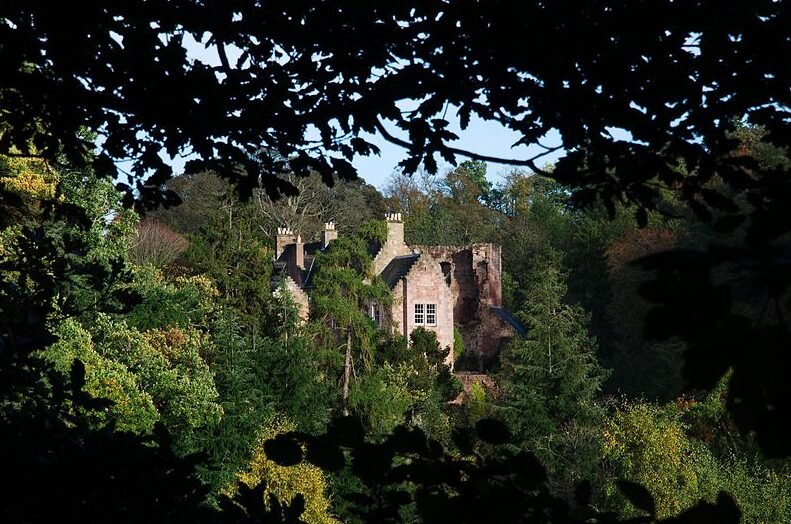
Image: Hawthornden Castle
What is the historical origin of Hawthornden Castle?
Hawthornden Castle originated in the 13th century as a property of the Abernethy family before transitioning to the Douglas family in the 14th century.
What are the earliest structures of the castle, and when were they built?
The earliest structures, built in the 15th century, include a three-storey tower and the south curtain wall forming part of a triangular courtyard.
What significant events impacted the castle during the 16th century?
During “The Rough Wooing,” the Earl of Hertford attacked the castle twice, in 1544 and 1547. Additionally, timber from its woods was sold to James V in 1540.
Who was Sir William Drummond, and what was his contribution to the castle?
Sir William Drummond, a poet and son of Sir John Drummond, enhanced the castle by constructing the L-shaped north range in 1638, replacing earlier courtyard buildings with a Renaissance-inspired design.
What role has literature played in the castle’s history?
Literary connections include visits by Ben Jonson in 1618 and Dr. Samuel Johnson in the following century. The castle is now a literary retreat fostering creativity.
What are some key architectural features of Hawthornden Castle?
The castle has a triangular courtyard, a 15th-century tower with a library and pit prison, a Renaissance-style doorway, and a late 18th or early 19th-century western range addition.
What is the significance of the man-made caves beneath the castle?
The caves, some serving as a doocot with 370 compartments, are tied to legends involving Robert the Bruce and William Wallace, adding to the site’s historical and cultural depth.
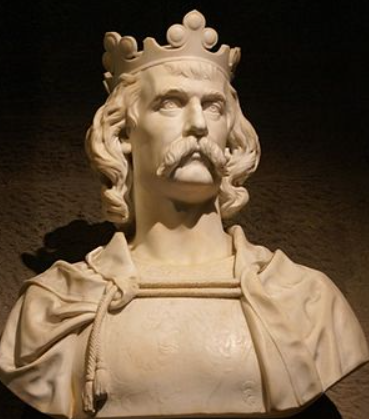
Robert the Bruce
What modern renovations and uses does the castle have?
Restorations in the 1980s by Simpson and Brown included using reclaimed stone. The castle now serves as the Hawthornden Literary Retreat, established by Drue Heinz to support writers.