The Iceni: History and Major Facts
The Iceni were a significant tribe in ancient Britain, primarily settled in what is now known as East Anglia. Their influence and resilience against Roman occupation have left a notable legacy in British history.
From their early interactions with Rome to the famed revolt led by Queen Boudica, the Iceni demonstrated a unique blend of cultural pride, resistance, and adaptation to changing powers.
In the article below, World History Edu delves into the historical background, key events, and cultural markers that define the Iceni.
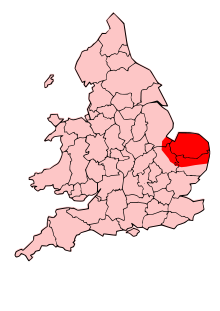
Approximate extent of the Iceni Territory
Origins and Territory
The Iceni emerged as a prominent tribe during the Iron Age in eastern Britain, occupying areas that now include Norfolk, Suffolk, and parts of Cambridgeshire.
Their geographic location bordered other tribal territories, including those of the Corieltauvi to the west and the Trinovantes to the south. The Iceni’s proximity to coastal areas likely enabled them to engage in trade and interactions with other British tribes and possibly even communities across the sea.
Archaeological evidence suggests that they were a relatively prosperous tribe, with access to resources that allowed them to develop a distinctive material culture.
The territory of the Iceni bordered that of the Corieltauvi, Catuvellauni, and Trinovantes tribes.
The exact meaning of “Iceni” remains unclear, although several theories attempt to interpret its origin. Some linguists connect it to the Welsh word “echen,” meaning “origin” or “tribe,” emphasizing the Iceni’s identification as a distinct community with a strong sense of lineage.
Other interpretations link the name to geographic features or the Brittonic word “ychen,” which translates to “oxen.” The Romans referred to them as “Icēnī,” a Latinized plural form, reflecting how Roman texts would often adapt British tribal names for their records.
Society and Economy
Iceni society appeared to be organized around tribal leadership and was likely led by a hierarchy of chieftains or kings. Like other Iron Age British tribes, the Iceni used symbols of status, such as torcs—neck rings made of gold, silver, or bronze. These torcs are thought to signify rank and authority within the tribe, and their craftsmanship reflects the skill and resources the Iceni possessed. The presence of finely crafted torcs, some found as ceremonial deposits, suggests a culture that valued both wealth and ritual.
The Iceni economy was based on agriculture, with evidence of crop cultivation and animal husbandry. They likely traded surplus goods within their region and possibly beyond, facilitated by the Icknield Way, an ancient route that connected East Anglia to the Chiltern Hills. This pathway may have also served as a cultural and commercial conduit for the Iceni, enabling them to establish broader connections with other tribes.
READ MORE: Medical Practices in Iron Age Britain
Coinage and Early Rulers
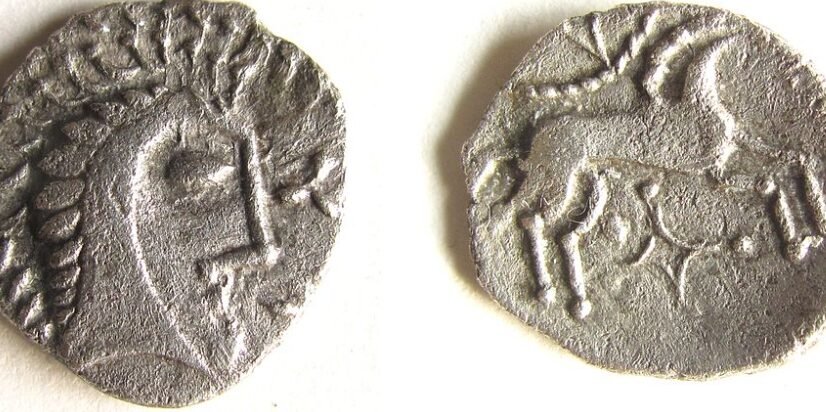
Icenian silver coin, found in Norfolk.
The Iceni were one of the few British tribes to mint their own coins, a significant marker of their autonomy and economic sophistication. Their coinage began around 10 BC and adapted designs from continental European tribes, especially the Gallo-Belgic “face/horse” motif. Early Iceni coins featured abstract or stylized images, often depicting a horse, a symbol likely associated with strength and prestige.
What sets Iceni coinage apart is its transition from using rulers’ names to displaying the tribe’s name. The coins initially bore names like “Antedios,” believed to be an early ruler, and later transitioned to “ECEN” around AD 47, which may coincide with the reign of Prasutagus.
Prasutagus’ coins bore the inscription “PRASTO,” which scholars interpret as an abbreviated form of his name. The appearance of a ruler’s name on coins marked a formalized leadership and perhaps reflected the increasing interaction with Rome.
Roman Conquest and the Client Kingdom Status
When the Romans began their conquest of Britain under Emperor Claudius in AD 43, the Iceni initially avoided direct conflict. Tacitus, a Roman historian, noted that the Iceni were not immediately subjugated and may have even welcomed Roman presence as a counterbalance to neighboring tribes.
The Romans sought alliances with various tribes, establishing them as “client kingdoms,” which allowed these tribes to retain nominal independence while pledging loyalty to Rome.

The Iceni allied with Rome during Claudius’ conquest in AD 43 but revolted in AD 47 due to Roman interference. Image: Bust of Roman Emperor Claudius
It is likely that Prasutagus, a pro-Roman leader, became king of the Iceni during this period, ruling as a client king under Roman oversight. This arrangement allowed the Iceni some degree of autonomy, though they were expected to provide resources and maintain peace with their Roman overseers. However, Roman demands soon created tensions within Iceni society, as they increasingly interfered with the tribe’s affairs.
The Iceni Rebellion of AD 47
The first recorded Iceni rebellion occurred in AD 47 when the Roman governor Publius Ostorius Scapula ordered British client kingdoms to disarm. Viewing this demand as a threat to their sovereignty, the Iceni resisted, leading to open conflict with the Romans.
Ostorius’ forces swiftly defeated the Iceni in a fierce battle, yet Rome allowed them to maintain their client status afterward. This event signaled the rising discontent between the Iceni and their Roman allies, foreshadowing more significant conflicts to come.
The Boudican Revolt

Boadicea and Her Daughters by English sculptor Thomas Thornycroft
The most defining moment in Iceni history came shortly after the death of Prasutagus, around AD 60. Prasutagus had attempted to secure his family’s position by leaving his estate jointly to his daughters and the Roman Emperor, intending to preserve his lineage and maintain the Iceni’s autonomy.
However, the Romans ignored his will, seizing Iceni lands and mistreating his family. Boudica, Prasutagus’ widow, was publicly flogged, and her daughters were assaulted—a grave affront that ignited widespread outrage among the Iceni and neighboring tribes.
After King Prasutagus’ death around AD 60, his wife, Boudica, led a fierce uprising against Roman rule.
Galvanized by this injustice, Boudica led a massive uprising, uniting her people and allies, including the neighboring Trinovantes. Her forces launched a series of attacks on Roman settlements, starting with Camulodunum (modern Colchester), the Roman provincial capital, which they sacked and burned. Boudica’s army then turned to Londinium (London) and Verulamium (St. Albans), both of which suffered similar fates. Boudica’s revolt left a path of destruction, with thousands killed and several major Roman cities in ruins.

Map showing how Boudicca’s Revolt occurred.
Despite the formidable numbers and ferocity of Boudica’s army, the Romans ultimately quashed the rebellion. Governor Suetonius Paulinus, using superior military discipline and tactics, defeated Boudica’s forces in a decisive battle at an unknown location, possibly along Watling Street.
Following the suppression of the revolt, Boudica is believed to have either taken her own life or died from illness, ending the Iceni’s challenge to Roman rule.
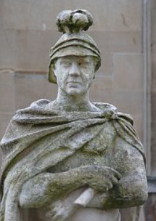
Gaius Suetonius Paulinus was a skilled Roman general who famously conquered Mauretania (what is today Morocco and Algeria). His other distinguishing feat came during his time as governor of Roman Britain, where he defeated Queen Boudica of Iceni and ended fierce revolt.
Aftermath of the Revolt
The Iceni’s defeat brought severe consequences. Suetonius Paulinus imposed harsh reprisals, which included the confiscation of Iceni lands and wealth, forcing the surviving tribe members into Roman rule.
The revolt’s destruction had lasting impacts on the Iceni economy and society, with much of their agricultural land left untended. The Romans eventually recognized the unrest caused by Suetonius’ repressive measures and replaced him with a more conciliatory governor, whose policies aimed to stabilize the province.
The capital of the Iceni was Venta Icenorum, near today’s Caistor St Edmund.
The Iceni were subsequently integrated into the Roman province, losing their independence and seeing significant shifts in their cultural and political structures. Venta Icenorum, near present-day Norwich, likely became the administrative center for the region, serving as a Romanized hub for governance and trade.
Archaeological Evidence and Legacy
Numerous archaeological findings illuminate aspects of Iceni life and their interaction with the Romans. The town of Venta Icenorum, identified as their capital, shows signs of Roman urban planning, although it is believed to have been established only after the revolt. Artefacts such as torcs, pottery, and coins illustrate the Iceni’s craftsmanship, wealth, and trade networks, offering insights into their daily life and social hierarchy.
Iceni coins, some bearing names and others with symbolic images, remain among the most distinctive material evidence of the tribe’s presence. Temple sites and ceremonial locations discovered in East Anglia indicate that the Iceni valued religious observance and likely held periodic fairs and gatherings at these sites. The Iceni appear to have balanced practical trade and cultural traditions, blending Iron Age customs with selective Roman influence.
In modern Britain, Boudica’s legacy remains a powerful symbol of resistance and determination against oppression. Her story has been commemorated through statues, notably the bronze depiction of Boudica in a chariot on the north bank of the Thames near Westminster Bridge. This imagery of Boudica captures her defiance and leadership, evoking a sense of British identity rooted in resilience.
Decline and Transformation
By the fourth century, Iceni territories experienced depopulation, likely due to shifts in Roman control and economic hardships. As Roman influence waned, waves of Germanic settlers began to arrive in Britain, initiating what would become the Anglo-Saxon period. The Iceni homeland, along with much of East Anglia, saw the gradual assimilation of these new populations, leading to a blending of cultural influences and the eventual decline of distinct Iceni identity.
Certain place names, such as Chatteris and King’s Lynn, contain elements suggesting a lingering Brittonic presence, possibly reflecting the remnants of Iceni lineage or cultural impact in the region. Some historians argue that the Iceni’s legacy persisted in the Fenlands and other secluded areas, where their descendants may have continued traditional practices into the early medieval period.
Conclusion
The Iceni’s history is marked by their strategic location, cultural distinctiveness, and fierce resistance to outside control. While their alliance with Rome initially preserved some independence, increasing interference eventually drove the Iceni to rebellion. Boudica’s revolt stands as one of the most memorable episodes in Britain’s resistance to Roman rule, and her legacy as a warrior queen symbolizes the Iceni spirit and defiance against domination.
In the centuries following the Iceni’s defeat, their identity and traditions were gradually absorbed into the evolving cultural landscape of post-Roman Britain. Today, the Iceni are remembered for their resilience and their contributions to Britain’s cultural heritage, particularly through the figure of Boudica, whose legacy as a defender of her people endures in British historical consciousness.
Frequently Asked Questions
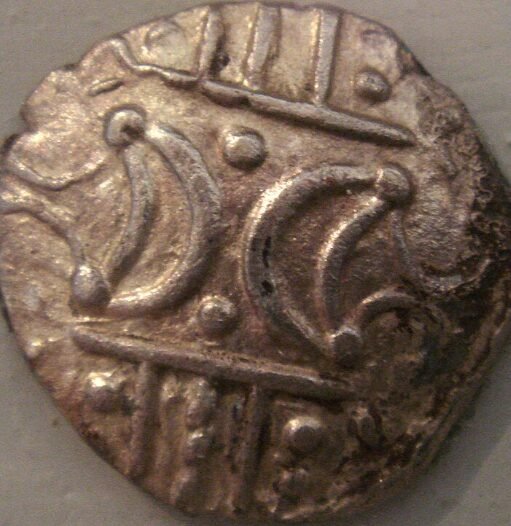
Iceni Coin
What is the origin of the name “Iceni”?
The meaning of “Iceni” is uncertain, though some scholars suggest it may relate to the Welsh word “echen,” meaning “origin” or “tribe.” Other theories propose connections to geographic locations or animals, but no consensus exists.
How did the spelling on Iceni coins evolve over time?
Early Icenian coins used the spelling “ECE,” but by the first century AD, they displayed “ECEN,” believed to mark the start of Prasutagus’ reign around AD 47. Prior coins often featured rulers’ names, like Antedios, rather than the tribe’s name.
What unique features were present on Icenian coins compared to other British tribes?
The Iceni were distinct in inscribing their tribal name on coins, unlike most tribes, who used only symbolic imagery. Early coins featured Antedios’ name, later replaced with abbreviations like AESU and SAEMU.

Bronze coins of the Iceni. Museum of London
What does the Icknield Way suggest about the Iceni’s influence?
The Icknield Way, an ancient pathway from East Anglia to the Chilterns, implies that the Iceni’s territory and influence may have extended beyond their immediate homeland.
How did the Iceni interact with Roman economic systems before AD 60?
Archaeologists found that before AD 60, Iceni territory primarily used Icenian coins, not Roman, suggesting limited Roman influence. Iceni temple sites acted as marketplaces, emphasizing local trade over widespread Roman commerce.
What happened during the Iceni rebellion of AD 47?
A Roman order for client kingdoms to disarm led the Iceni to revolt. Although Governor Ostorius Scapula swiftly defeated them, the Iceni retained a level of independence following this rebellion.
What prompted Boudica’s uprising against the Romans?
After Prasutagus’ death around AD 60, the Romans seized his estate, mistreating his widow, Boudica, and their daughters. This injustice led Boudica to rally the Iceni and Trinovantes in a large-scale revolt, destroying key Roman towns.

Queen Boudicca and her daughters – 1855 Bronze statue of Boadicea (Boudica) and her daughters, at Captain’s Walk in Brecon, Powys, Wales; by sculptor John Thomas.
How did the Romans respond to Boudica’s revolt?
Though Boudica’s forces outnumbered the Romans, superior Roman tactics led to her defeat. The Romans imposed harsh retaliatory measures, prompting unrest and eventually a change in governorship to restore stability.
What evidence links the Iceni to Venta Icenorum?
Ptolemy’s Geographia mentions a British people near a city called “Venta,” identified as Venta Icenorum, now near modern Norwich. This likely served as the Iceni’s administrative center under Roman rule.
How did Iceni territories change after the Roman period?
Following the Romans, Iceni lands saw population decline in the fourth century and later received Germanic settlers. This shift is reflected in the scarcity of Celtic place names in East Anglia.
Are there indications of the Iceni’s legacy in East Anglia?
Yes, eighth-century records mention Brittonic-speaking people in the Fens, potentially Iceni descendants. Place names like Chatteris and King’s Lynn also suggest a lasting Brittonic presence into the Anglo-Saxon era.

Boudica is memorialized by a statue on the north bank of the Thames near Westminster Bridge, symbolizing her fierce resistance and the Iceni’s legacy in British history and identity. Image: Statue of Queen Boudica and her daughters riding her chariot





