History and Major Facts about the Vandals, the Germanic People who Sacked Rome
The Vandals were a Germanic people whose activities during the late Roman Empire are often synonymous with senseless destruction, giving rise to the modern term “vandalism.” However, their history is more complex, featuring migrations across Europe, the establishment of a kingdom in North Africa, and interactions with the Roman Empire.

Origins and Migration
The Vandals are believed to have originated from the region that is now Sweden. By the 2nd century AD, they moved into the area between the Oder and Vistula rivers, now part of modern Poland. During the 3rd and 4th centuries, the Vandals, along with other Germanic tribes such as the Goths, began moving south and west in response to population pressures, climatic changes, and invasions from the Huns in the east.
By 406 AD, the Vandals, together with the Alans and Suebi, crossed the Rhine River into Roman Gaul during a particularly cold winter when the river was frozen. This migration was part of the broader movement of peoples during this period, often referred to as the “Migration Period” or “Völkerwanderung.” The groups moved through Gaul, into Spain where they settled for several years. In Spain, the Vandals split into two groups: the Silingi Vandals settled in southern Spain, while the Asding Vandals took control of parts of the north.
Establishment in North Africa
Under King Genseric, the Vandals seized the opportunity to cross into North Africa in 429 AD. By 439, they captured Carthage, turning it into the capital of their new kingdom. The Vandal Kingdom in North Africa quickly became a naval power, controlling the Western Mediterranean with their fleets.
The Vandals used their powerful navy to raid the coasts of the Roman Empire, even sacking Rome itself in 455 AD. Unlike the earlier sack of Rome in 410 by the Visigoths, which was relatively restrained, the Vandals’ sack lasted several weeks and was much more destructive, cementing their legacy in history.
Interaction with the Roman Empire
The Vandals’ relationship with the Roman Empire was complex. While often at war, they also engaged in diplomacy and treaties. The Vandal kingdom maintained a level of Roman administrative practices and allowed freedom of religion, though they were staunchly Arian Christians in a predominantly Orthodox Christian world. This religious difference often put them at odds with their subjects and neighboring powers.
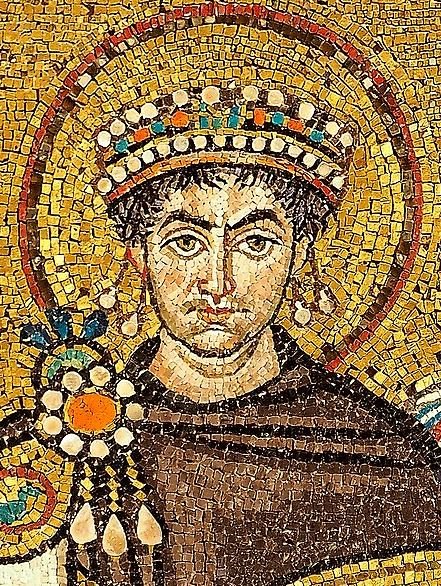
Image: An artwork portraying Justinian I
Decline and Fall
The Vandal Kingdom began to decline in the late 5th and early 6th centuries. Internal strife, economic difficulties, and external pressures weakened the state. In 533 AD, the Byzantine Empire under Emperor Justinian I (also known as Justinian the Great) launched a campaign to reconquer North Africa. Led by General Belisarius, the Byzantines defeated the Vandals at the Battle of Tricamarum, and by 534, the Vandal kingdom was incorporated into the Byzantine Empire.
Who were the greatest military generals of the Byzantine Empire?
Legacy of the Vandals
The Vandals are often remembered more for their acts of destruction than for their contributions to the cultural and political landscapes of their time. However, their kingdom in North Africa was a significant power in the Mediterranean, influencing maritime trade and military tactics. The Vandals also played a key role in the complex interactions between the Roman and Germanic worlds, contributing to the transformation of the Western Roman Empire into medieval Europe.

From their origins in northern Europe to their establishment of a kingdom in North Africa, and their eventual absorption into the Byzantine Empire, the Vandals’ story is one of migration, conquest, and ultimately, integration into the broader tapestry of European history. Image: A mosaic work depicting a Vandal warrior.
9 Frequently Asked Questions about the Vandals
The legacy of the Vandals, marred by the modern negative connotation of “vandalism,” obscures a more nuanced understanding of their impact on the historical and cultural development of the Late Antique period.
Below are some of the most frequently asked questions about the Vandals:
Who were the Vandals and where did they originally come from?
The Vandals were a Germanic tribe originally residing in Northern Europe. They were divided into two main groups, the Hasdingi and the Silingi. By the late second and early third centuries AD, they migrated and came into contact with the Roman Empire, ultimately settling within the Roman territory of Pannonia under the reign of Constantine the Great.
What led to the Vandals’ migration from Pannonia?
The Vandals’ migration from Pannonia was primarily driven by the threat from the Huns, pushing them to seek new territories. This situation culminated in their dramatic crossing of the frozen Rhine River on New Year’s Eve in 406/407 AD, alongside other barbarian groups. This marked a significant shift in the dynamics of the Roman West and was indicative of the beginning of its downfall.
How did the Vandals establish their kingdom in North Africa?
Under the leadership of King Gaiseric, the Vandals crossed into Roman North Africa in 429 AD, initially invited by the Roman general Bonifacius to aid in a political power struggle. However, the Vandals quickly turned against Bonifacius, defeating the Roman forces and capturing Carthage by 439 AD, thus establishing the Vandal Kingdom.

Image: Coin of Bonifacius
What was the significance of Carthage in the Vandal kingdom?
Carthage was transformed into the capital of the Vandal Kingdom and represented a major economic and strategic gain. Its capture was a significant blow to the Roman Empire as North Africa was a crucial region, vital for its economic wealth and agricultural output, comparable only to Egypt.
How did the Vandals manage to dominate the Western Mediterranean?
After securing Carthage, the Vandals gained control over the key Mediterranean islands of Sicily, Corsica, and Sardinia. This allowed them to effectively challenge and dominate the remaining Roman naval forces, making them a major power in the Western Mediterranean.
What were some aspects of Roman culture that the Vandals adopted in North Africa?
The Vandals maintained many aspects of Roman governance and continued to foster urban and architectural developments. They built luxurious villas and continued the Roman artistic traditions of elaborate mosaics and frescos, demonstrating their integration and appreciation of Roman culture.
Why is the sack of Rome in 455 AD so significant in the history of the Vandals?
The sack of Rome in 455 AD, led by King Gaiseric, is significant because it cemented the Vandals’ reputation as destroyers, despite the plunder being less destructive than previous sacks such as that by the Visigoths in 410. This event contributed to the negative connotation of the term “vandalism,” influencing how history remembers the Vandals.

What led to the decline and fall of the Vandal Kingdom?
The prosperity and strategic location of the Vandal Kingdom attracted the attention of the Byzantine Empire. The deposition of King Hilderic, a pro-Catholic ruler, by the Arian Vandals provided Emperor Justinian with a pretext to intervene. In 533 AD, General Belisarius launched a swift military campaign, culminating in the defeat of the Vandals by 534 AD and the reintegration of North Africa into the Roman realm.
How do modern perspectives reconcile the Vandals’ role as both rulers and raiders?
Modern perspectives on the Vandals recognize their dual role as both astute rulers who established a significant Mediterranean power and raiders who are historically noted for their sack of Rome. This nuanced view underscores their sophisticated governance and cultural prosperity, balancing their historical depiction as mere destroyers with their contributions to the political and cultural landscapes of the time.





